
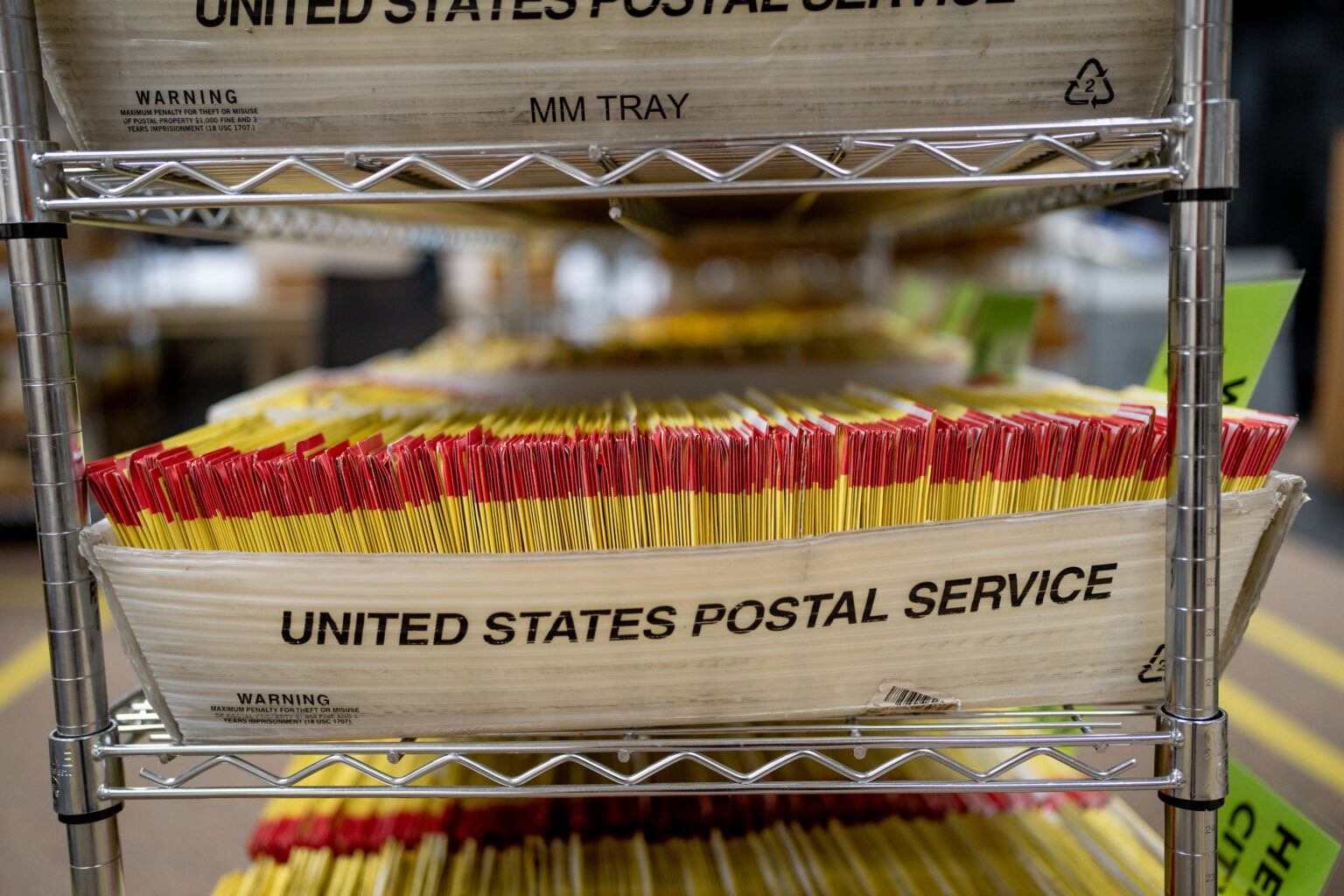
Mail-in voting can feel like a single national system because the envelopes look familiar and the Postal Service is federal. But constitutionally, elections are mostly not federal programs. They are state-run events with a federal overlay.
That is why executive orders aimed at mail ballots often run into the same limit: the President can manage the executive branch, but he cannot rewrite state election codes. If an order appears to cross that line, courts can pause it through the same emergency tools they use in many other contexts, like temporary restraining orders and preliminary injunctions. Whether a judge does so depends on things like standing, timing, and the normal equitable factors.
Join the Discussion
What an executive order can and cannot do
An executive order is not a law. It is a directive from the President to officials inside the executive branch about how to use existing lawful authority. That difference matters because election rules are typically created by state legislatures and administered by state and local election officials.
So when a president issues an order touching mail ballots, the first question is structural: is the order telling federal agencies how to operate, or is it effectively trying to set voting conditions for the states?
A helpful way to see the line is with concrete examples.
- What an order can do: direct federal agencies to prioritize election mail within their existing authorities, clarify internal USPS processing guidance, or coordinate federal resources to support timely delivery where the law already permits it.
- What an order generally cannot do: change state rules for when ballots must be received, what counts as a valid signature, who qualifies to vote by mail, or what evidence a voter must provide to obtain a ballot.
If an order is effectively changing ballot access or ballot validity, courts will typically examine statutory authority and federalism concerns. For federal elections, they also ask whether Congress has legislated in the area and how that legislation interacts with state rules.
The default rule: states run elections
Two constitutional provisions explain why this is difficult for any president.
The Elections Clause (Article I, Section 4)
The Elections Clause assigns the “Times, Places and Manner” of congressional elections primarily to the states, while allowing Congress to “make or alter” those regulations.
Notice what is missing: a presidential role. The Constitution gives the main pen to state legislatures, and a backup pen to Congress. It does not hand the pen to the White House.
The Presidential Electors Clause (Article II, Section 1)
For presidential elections, states appoint electors “in such Manner as the Legislature thereof may direct.” That language is why fights about mail voting can become fights about whether a change came from the legislature (the constitutionally designated rule-maker) or from someone else.
States can, of course, use absentee and mail voting. But the legal rules for who can vote by mail and what makes a ballot valid are state choices unless Congress has lawfully displaced them for federal elections, or a constitutional constraint forbids what the state is doing.
Where federal power exists
The federal government is not powerless over elections. It is just that the major federal actors are Congress and the courts, not the President acting alone.
- Congress can regulate federal elections under the Elections Clause, including national baseline rules for congressional races.
- Congress can enforce constitutional voting guarantees through the enforcement clauses of the Reconstruction Amendments and later voting-related amendments.
- Congress has enacted election statutes that shape administration, including the Voting Rights Act, the National Voter Registration Act (NVRA), the Help America Vote Act (HAVA), and the Uniformed and Overseas Citizens Absentee Voting Act (UOCAVA).
- Congress can regulate the mails through its postal power, and create agencies like USPS to carry out those laws.
- Courts enforce constitutional constraints directly, including Equal Protection and Due Process limits, and they can review state and federal actions for compliance.
When courts analyze an election-related executive order, they often ask a simple question: what statute, exactly, authorizes this? If the answer is vague or indirect, the order is vulnerable.
USPS is federal, but it does not decide who has voted
The Postal Service can set mailing standards and operational policies that help deliver election mail on time. It can also follow federal statutes about mail fraud and obstruction.
What it generally cannot do is create new voter-facing ballot-validity requirements for states. USPS delivers. Election officials count. That division is not just tradition. It reflects the constitutional allocation of election administration to states, plus the idea that federal agencies need clear statutory authority before they alter something as sensitive as ballot access.
This is one reason judges sometimes look carefully at mail-ballot executive actions that try to influence the pipeline states rely on, even if the order is not styled as a direct command to states.
Why a judge can block an order quickly
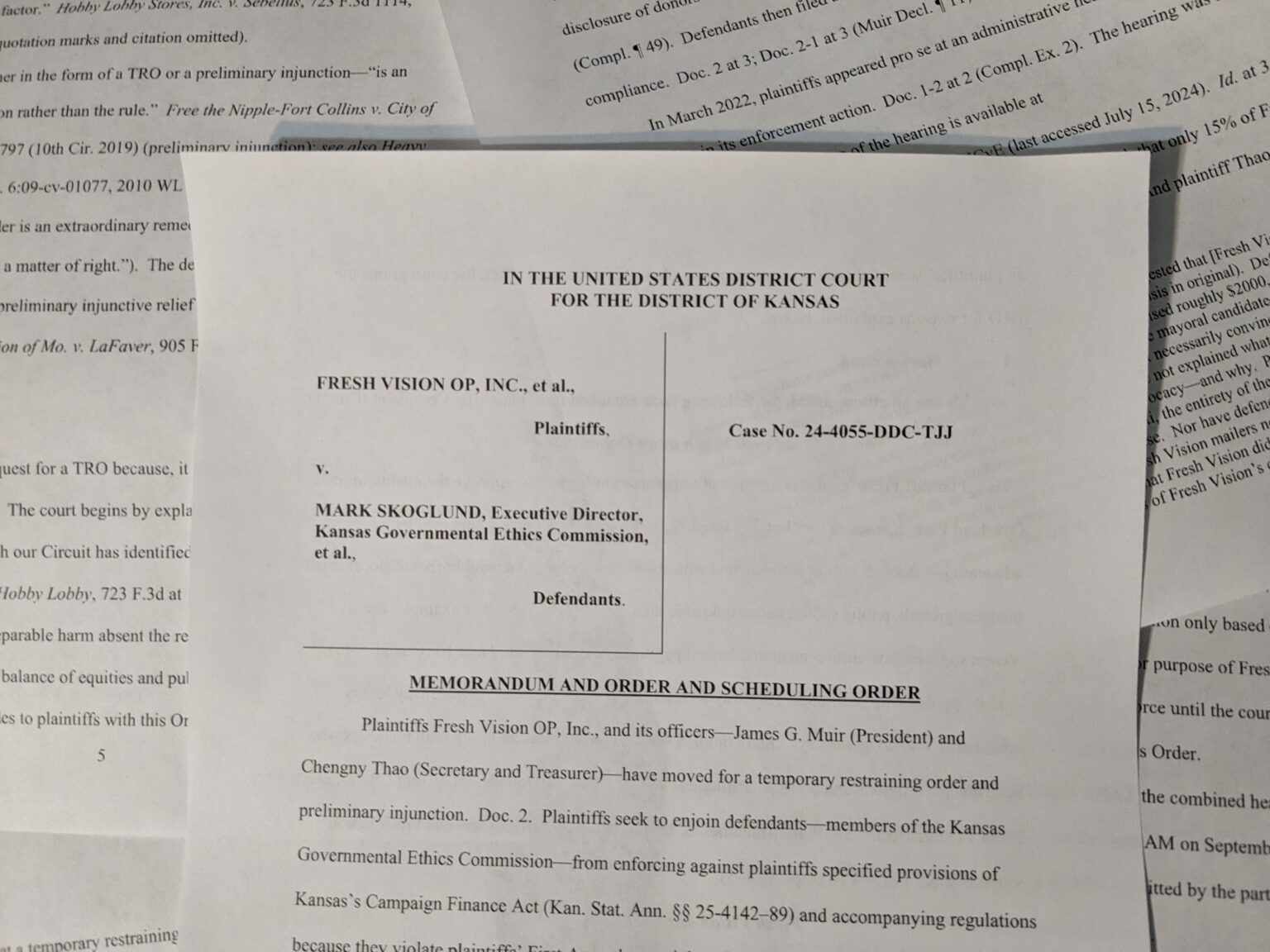
When a federal judge temporarily blocks an executive order, the court is not “overruling the President” as a matter of preference. The judge is applying ordinary judicial review, the same basic power courts use to stop government action that likely violates the Constitution or federal law.
Most of these disputes arrive as requests for emergency relief: a temporary restraining order or preliminary injunction. Courts look at factors like:
- Likelihood of success on the merits: Is the order probably unauthorized or unconstitutional?
- Irreparable harm: Would voters, candidates, or election administrators face harm that cannot be fixed later?
- Balance of equities: Who bears the risk and cost of the order taking effect?
- Public interest: Does stability in election administration favor pausing the change?
Timing matters. Changes close to an election can create confusion, uneven administration, and lost votes. Courts often describe this concern through what election lawyers call the Purcell principle: a strong judicial preference for avoiding last-minute rule changes that could disrupt voting.
Separation of powers: execute, do not legislate
The constitutional hook here is separation of powers. If election rules need changing nationally for federal elections, Congress is the branch with the tools to do it. If state rules need changing, state legislatures are the branch with the tools to do it.
The President’s job is to execute the law. He can direct federal agencies to do what existing law allows. But he cannot use an executive order to create new voting conditions that states must follow unless Congress has clearly authorized that move.
Federal supremacy: more than just preemption
There is a pathway for federal law to override state election practices: federal preemption. If Congress passes a valid law regulating some aspect of federal elections, that law can override inconsistent state rules under the Supremacy Clause.
But preemption is not the only way federal law shapes elections. Federal courts can also enforce direct constitutional constraints on state election rules, and Congress can create enforceable statutory rights and protections through laws like the VRA, NVRA, HAVA, and UOCAVA.
So a dispute about a mail-ballot executive order often turns into two practical questions: did Congress actually authorize the executive branch to do this, and does the action collide with state control over election administration or with constitutional protections for voters?
Practical answers
Can the President restrict mail-in voting by executive order?
Not directly. He cannot rewrite state election codes. He can direct federal agencies, including USPS, but only within existing statutory authority. If the order effectively changes ballot access or ballot validity, it is likely to face serious constitutional and statutory challenges.
Can the federal government control mail ballots at all?
Yes, in specific ways. Congress can regulate federal elections and the postal system, and federal courts can enforce constitutional limits. States still administer elections day to day, including most details of absentee and mail voting.
Why would a judge block an order for only two weeks?
Because emergency election cases often move on compressed timelines. A short block can preserve the status quo while the court reviews the record, hears arguments, and decides whether a longer preliminary injunction is warranted.
Does blocking an executive order mean courts are “running elections”?
No. It means courts are doing what Article III courts do: stopping government action that likely exceeds legal authority. In election law, that often serves a separate value too, minimizing late-breaking rule changes that can confuse voters and administrators.
The deeper lesson
Mail-in voting sits at an awkward intersection: the federal government carries the mail, but states decide what a ballot is. That overlap is exactly the sort of place where Americans assume someone in Washington must be in charge.
The Constitution chose the opposite design. It made election administration decentralized, then gave Congress limited ways to standardize for federal elections and gave courts a role in enforcing constitutional guarantees. The President was not meant to be the national election regulator.
When an executive order tries to act like one, the predictable result is not always an injunction, but it often invites fast litigation and a serious risk of being paused by a court.