
When courts block a presidential executive order aimed at mail-in voting, it is tempting to treat it like a political headline. Constitutionally, it is something more basic: a reminder that American elections are not run by presidential decree.
The question underneath the news is simple and surprisingly durable: Can a president unilaterally restrict mail-in voting nationwide? The short answer is no, not in the way most people mean it. The longer answer lives in three places: Article II’s limits on executive authority, the Constitution’s Elections Clause and Electors Clause, and the judiciary’s role in policing the boundary between them.
Editor’s note for readers: This piece is written as an evergreen constitutional explainer. Specific disputes turn on the exact text of an executive order, the statute it invokes, and the posture of the litigation. If you are looking for analysis of a particular order or case, compare the order’s operative provisions to the agency authority it claims and to the state laws it would displace.
Join the Discussion
What an executive order can do
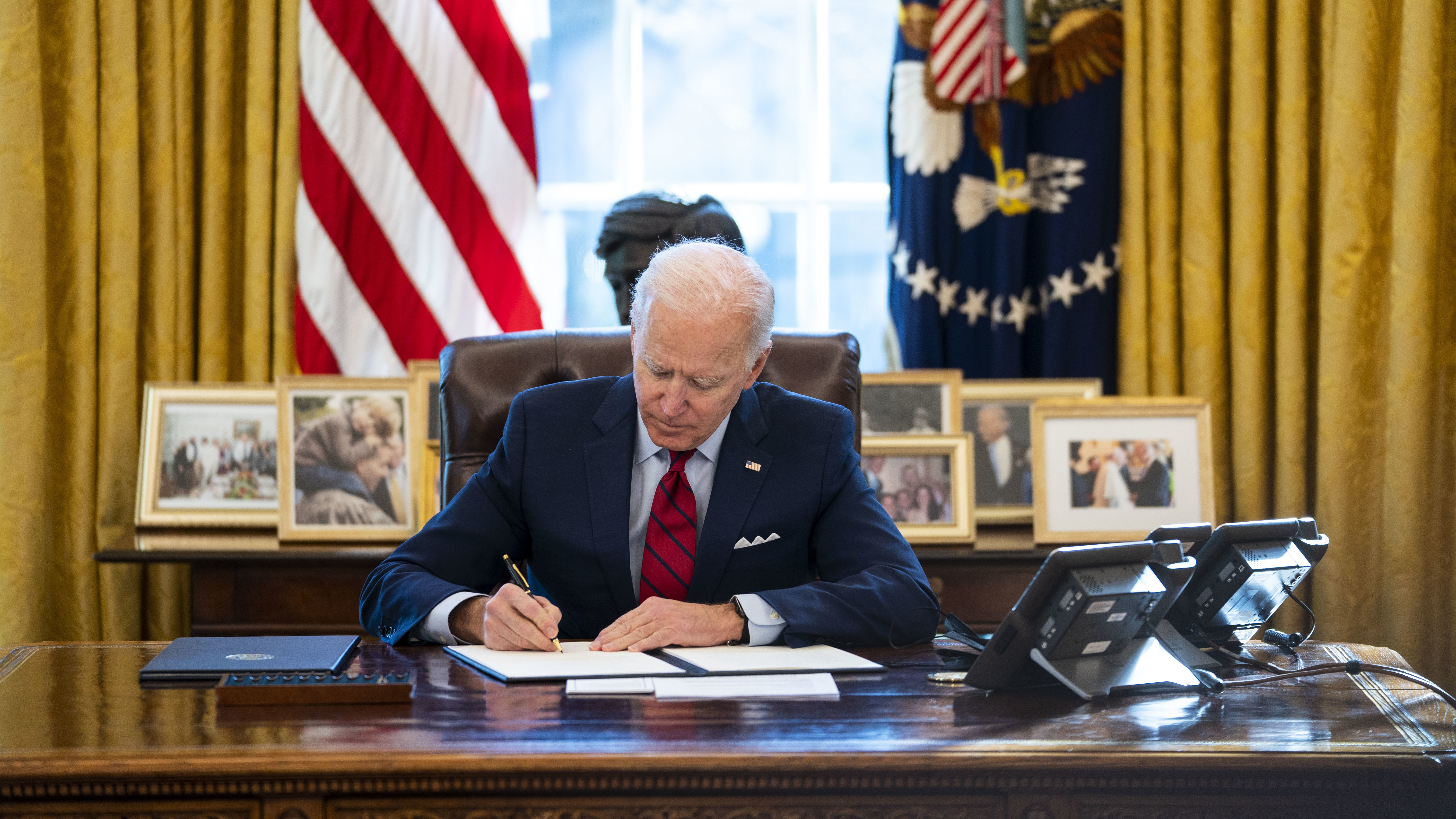
Executive orders feel like law because they look like law. They are written commands, signed with ceremony, followed by agencies with real power.
But constitutionally, an executive order is not legislation. It is a set of instructions from the President to the executive branch about how to carry out existing law.
That limitation comes from the structure of Article II. The President must “take Care that the Laws be faithfully executed.” That is a duty, not a blank check. If Congress has not granted the President a power, and the Constitution does not independently supply it, an executive order cannot conjure it into existence.
So any executive order that aims to change state voting rules raises two questions courts typically ask:
- Where is the statutory authority? Did Congress authorize the executive branch to do what the order demands?
- Where is the constitutional authority? If not statutory, is the President relying on a power the Constitution gives the President directly?
Why mail voting is mainly state-run
The Constitution’s default setting is federalism: states run most of the machinery of elections. That includes the method of voting, ballot design, registration systems, early voting, and the rules governing absentee and mail ballots, subject to federal constitutional limits and valid federal statutes.
The textual anchor is the Elections Clause in Article I, Section 4:
“The Times, Places and Manner of holding Elections for Senators and Representatives, shall be prescribed in each State by the Legislature thereof; but the Congress may at any time by Law make or alter such Regulations…”
Notice what is missing: the President. The clause assigns the primary role to the states, then gives Congress the power to override states by law. “By law” means bicameralism and presentment, a bill passed by both chambers and either signed by the President or enacted over a veto. It does not mean a unilateral executive order.
Two clarifications keep readers from taking the word “Legislature” too literally. First, the Supreme Court has read “Legislature” in this context to mean a state’s lawmaking process as defined by its own constitution, which can include things like a governor’s veto and, in many states, citizen initiatives. Second, even when states are in the driver’s seat, they remain constrained by constitutional guarantees such as Equal Protection and Due Process, plus federal statutes that regulate election administration and protect voting rights.
That is why laws like the Voting Rights Act, the National Voter Registration Act, the Help America Vote Act, and UOCAVA can shape state practices. States administer elections, but they do not get to do it on whatever terms they like.

How orders collide with state law
Mail voting rules are usually written into state statutes, and sometimes state constitutions, administered by state and local election officials, and supervised through state courts and state administrative processes.
An executive order that purports to require states to change those rules is not just “strong leadership.” It is the executive branch attempting to do what the Constitution typically assigns to state lawmaking, or to Congress through federal statutes.
Could an order indirectly affect elections by directing federal agencies or conditioning federal program administration? Sometimes. The federal government can influence the field through lawful spending conditions, agency rules tied to genuine statutory authority, enforcement actions by the Justice Department, and operational decisions by federal actors like the Postal Service. But an influence lever is not the same thing as a direct command to rewrite state election codes.
When the practical effect is to rewrite the manner of voting inside the states, courts ask for a level of authority executive orders often do not have.
Article II limits
The most useful way to understand courts blocking election-related executive orders is through a classic separation-of-powers framework, often associated with Justice Robert Jackson’s concurrence in Youngstown Sheet & Tube Co. v. Sawyer (1952).
Under that framework, presidential power is strongest when Congress has clearly authorized the action, weakest when Congress has opposed it, and uncertain in the middle when Congress is silent.
Election administration is an area where Congress has legislated, states have legislated even more, and the Constitution itself assigns roles with unusual clarity. So a presidential attempt to impose new, binding election rules often lands on the weak end of the spectrum unless the order is tightly rooted in a valid federal statute and stays within that statute’s lane.
Congressional and presidential elections
Two different constitutional provisions matter here, and they point in the same general direction while using different text.
1) Congressional elections
For House and Senate elections, the Elections Clause gives states primary responsibility and gives Congress a backstop power to “make or alter” rules. That power is exercised through statutes, not executive orders.
2) Presidential elections
Presidential elections are mediated through electors. Article II provides that each state shall appoint electors “in such Manner as the Legislature thereof may direct.” Modern practice is statewide popular elections, but the constitutional text again points to the state’s lawmaking process as the key actor in setting the method.
Congress has roles too, such as setting the day for choosing electors and the day they vote. But again, those roles come through statutes passed by Congress, not unilateral executive action. Congress’s strongest textual hook for detailed “manner” regulation is Article I, Section 4 for congressional elections. For presidential elections, congressional influence over mail voting is generally more indirect, operating through generally applicable constitutional protections and election administration statutes rather than a comprehensive national mail ballot code.
Why courts block orders
The Constitution does not enforce itself. When a president issues an order that states or affected parties believe exceeds executive authority, they can ask federal courts for emergency relief, such as a temporary restraining order or a preliminary injunction.
In those emergency settings, courts usually focus on familiar equitable factors: likelihood of success on the merits, irreparable harm, the balance of equities, and the public interest. Timing matters in election cases because late-breaking rule changes can create confusion, uneven administration, and unequal burdens on voters.
The judiciary’s authority to invalidate unconstitutional executive actions is grounded in judicial review, a principle established early in the republic in Marbury v. Madison (1803).
Could the Supreme Court take it
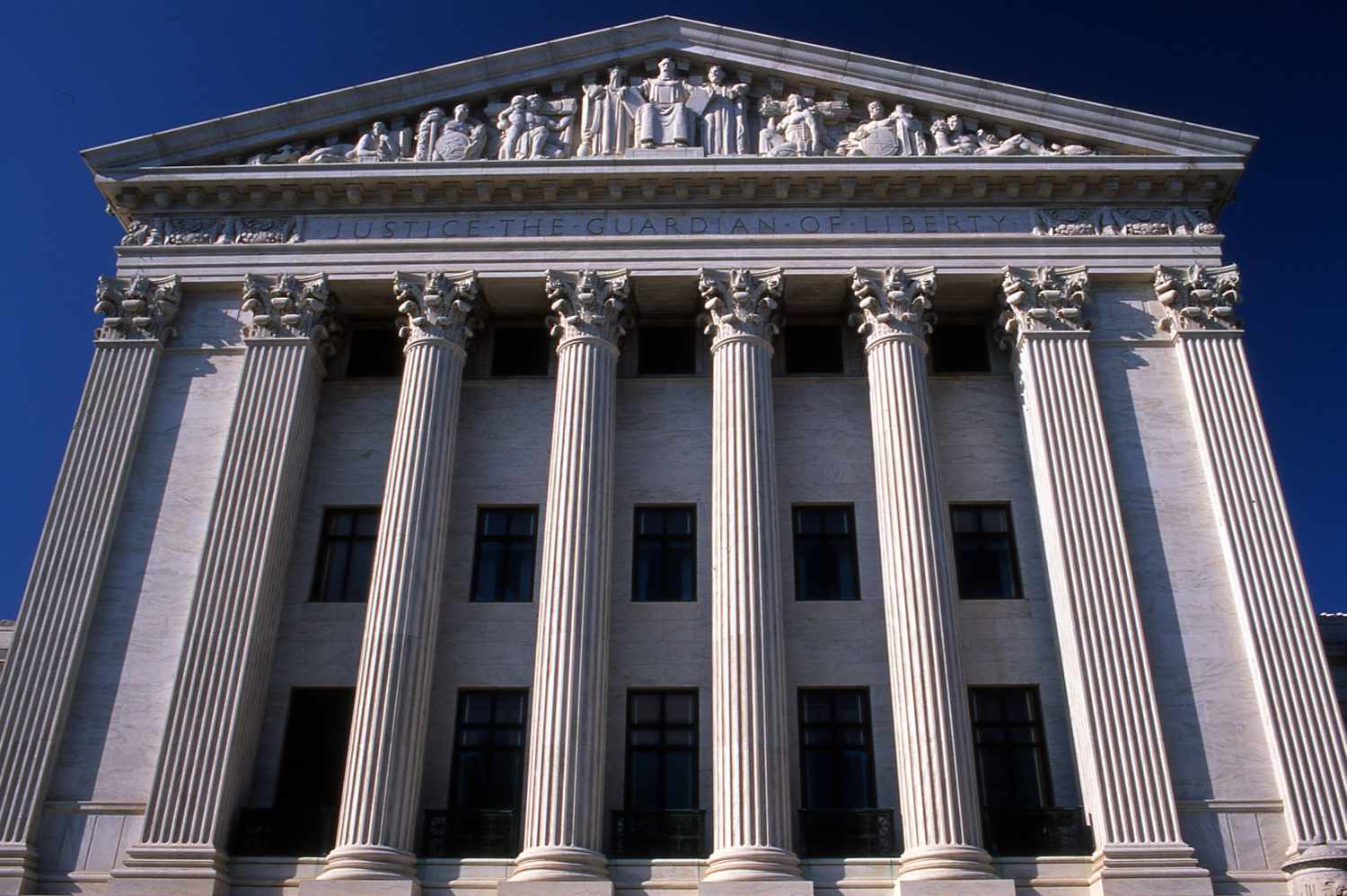
Yes. A dispute involving presidential power, election administration, and multi-state effects can reach the Supreme Court, either through an emergency application or a petition for full review.
But the key point for constitutional readers is this: even if the Supreme Court takes such a case, the question is not “Is mail-in voting good or bad?” The question is: who has the power to set these rules, and by what process?
The Court can disagree about policy outcomes and still agree on the basic architecture: states set the manner of elections by default, Congress can override by statute in defined areas, and the President cannot replace that system with a signature.
What a president can do
The President is not powerless on election issues. But the tools are different from what an executive order headline implies.
- Sign or veto federal election legislation passed by Congress.
- Direct federal agencies to enforce existing federal election laws, such as protections against discrimination in voting, within the scope Congress has authorized.
- Litigate: the Justice Department can bring suits when federal law is violated, again within statutory limits.
- Manage federal operations that touch elections, such as certain rules affecting federal enclaves or the administration of military and overseas voting under UOCAVA, where federal authority is clearer.
What a president generally cannot do is order states to accept, reject, count, or not count categories of ballots when the state’s own law sets those rules and Congress has not validly displaced them.
The takeaway
Mail-in voting sits at the intersection of three American instincts: fear of fraud, fear of disenfranchisement, and fear of the other side gaining an advantage.
The Constitution’s instinct is different. It is structural. It assumes power will be abused if concentrated, so it splits authority over elections across institutions that must fight their way to a decision: state lawmaking processes, Congress, and the courts.
That is why a president cannot simply “ban mail-in voting” nationwide by executive order. It is not a matter of willpower. It is a matter of constitutional plumbing. The pipes do not connect that way.
Quick answers
Can the President ban mail-in voting nationwide?
Not unilaterally. States generally set the manner of voting, subject to constitutional limits and federal statutes. A President cannot replace state election law with an executive order without clear congressional authorization rooted in a valid statute.
Why would a court block an election-related executive order?
Because the order likely exceeds Article II authority, conflicts with state control under the Elections Clause and Electors Clause, or threatens disruptive last-minute rule changes that burden voters and administrators. Courts can issue emergency injunctions or stays while the legality is reviewed.
Could Congress restrict mail-in voting?
Congress has its clearest, most direct power over the “times, places and manner” of congressional elections under Article I, Section 4, and it can set nationwide baselines through other constitutional powers and federal election statutes. For presidential elections, Congress’s tools are generally narrower and more indirect, and any nationwide change would still typically require a federal statute, not a presidential directive.