
You can tell this dispute is not really about envelopes when the pressure point is not “fix your postage,” but “make your ballot mail match our data format.” Critics frame it that way, anyway. USPS frames it differently: as a modernization and visibility effort for election mail. The gap between those two frames is where the fight lives.
On August 24, 2024, the U.S. Postal Service placed a Federal Register public inspection document online (document number 2024-17238). “Public inspection” is the preview stage that typically precedes formal Federal Register publication, so “published” can be a misleading verb here.
The primary source is here:
USPS Federal Register public inspection document 2024-17238 (PDF)
Reader note: This explainer summarizes what is stated in the public inspection PDF itself. For operational compliance, election offices and vendors should treat the Domestic Mail Manual (DMM) and USPS Election Mail guidance as controlling if there is any conflict.
Join the Discussion
What it is
Document 2024-17238 is a USPS Federal Register notice (posted for public inspection) titled “Intelligent Mail Barcode Requirements for Ballot Mail.” It describes USPS’s plan to identify ballot mail using USPS-compatible barcodes and to link those physical identifiers to electronic documentation submitted into USPS systems.
In plain terms, USPS is trying to make ballots legible to its automation and to make scan events attach to a known record, not to a one-off barcode scheme that differs by vendor, county, or state.
Key dates
The anchor date is the public inspection posting: August 24, 2024, for document 2024-17238.
Verify before you publish a compliance calendar: The notice lists dates for Federal Register publication, the comment deadline, and an effective date. Those dates should be confirmed directly in the PDF (and then rechecked against the final Federal Register entry once it posts), because this section is where readers will treat mistakes as disqualifying.
Based on what this notice states, the timeline is:
- Federal Register publication date: August 26, 2024 (as listed in the notice)
- Comment deadline: September 25, 2024 (as listed in the notice)
- Effective date: January 1, 2025 (as listed in the notice)
USPS also describes a transition period in which ballot mailers move to USPS-compatible Intelligent Mail barcodes and matching electronic documentation workflows, with January 1, 2025 as the endpoint the notice points to. If these dates land too close to a live election in your jurisdiction, the compliance debate will not be theoretical. It will be contractual and operational.

What changes
At a high level, the notice ties two things together:
- Identifiers on the mailpiece that USPS automation can read to recognize ballot mail in processing.
- Electronic documentation that lets USPS match what it scans on the piece to a corresponding record in USPS systems.
This is not a new voter requirement. It is a systems requirement aimed at election offices and the vendors who design, print, barcode, and submit mailings.
Concrete takeaway: The notice is not written as “ballots without this will not be delivered.” It is written as “ballots should be prepared in a standardized way so USPS can recognize them, track them consistently, and report on them through USPS visibility tools.” Where the practical pressure shows up is in what USPS systems will and will not treat as fully legible ballot mail for scan-based reporting and troubleshooting.
What the notice says
Document identification: USPS Federal Register public inspection document number 2024-17238, posted August 24, 2024.
Title: Intelligent Mail Barcode Requirements for Ballot Mail.
Core idea: USPS is standardizing how ballot mail pieces are identified (the barcode on the piece) and how those identifiers are introduced to USPS systems (the electronic documentation). The notice is about making those two layers match.
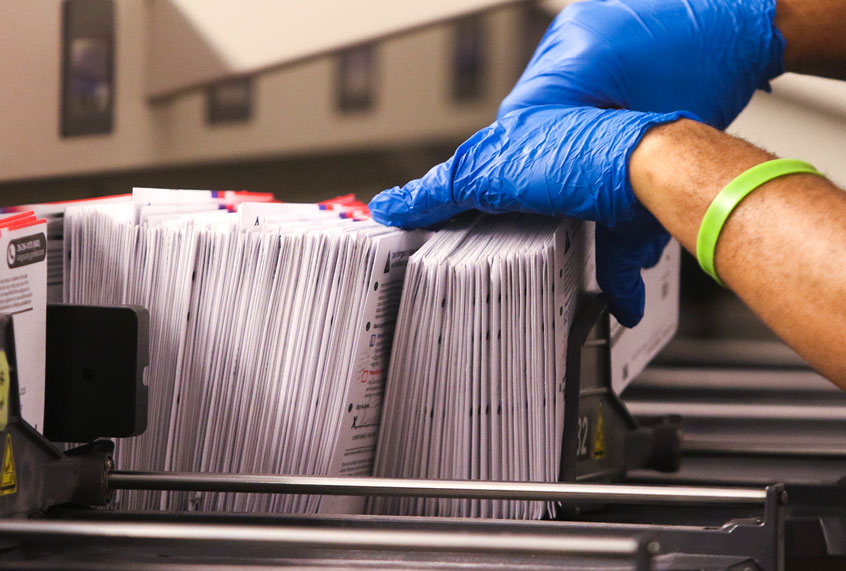
Mailpiece identifiers: The notice focuses on the Intelligent Mail barcode (IMb) and on using barcode construction and placement that USPS automation can actually read. In practice, that means the barcode needs to be both present and machinable. A barcode that is technically printed but unscannable, low contrast, or placed where equipment cannot reliably read it functions like a missing barcode.
Electronic documentation: The notice pairs the physical IMb on the piece with electronic documentation (eDoc) submitted through USPS systems, commonly implemented using Mail.dat or Mail.XML workflows. The operational point is matching: USPS scan events can be tied to a known electronic record keyed to that same IMb.
What is mandatory versus what is conditioned: Read the notice carefully on this point, because USPS often uses “requirements” language for eligibility for specific operational programs and visibility products, not as a threat to refuse delivery of First-Class Mail. This notice is framed as a ballot-mail standard that enables USPS visibility, reporting, and operational handling at scale. If a piece does not conform, the most foreseeable consequence described by USPS is reduced or inconsistent scan-based visibility, plus more friction in exception handling.
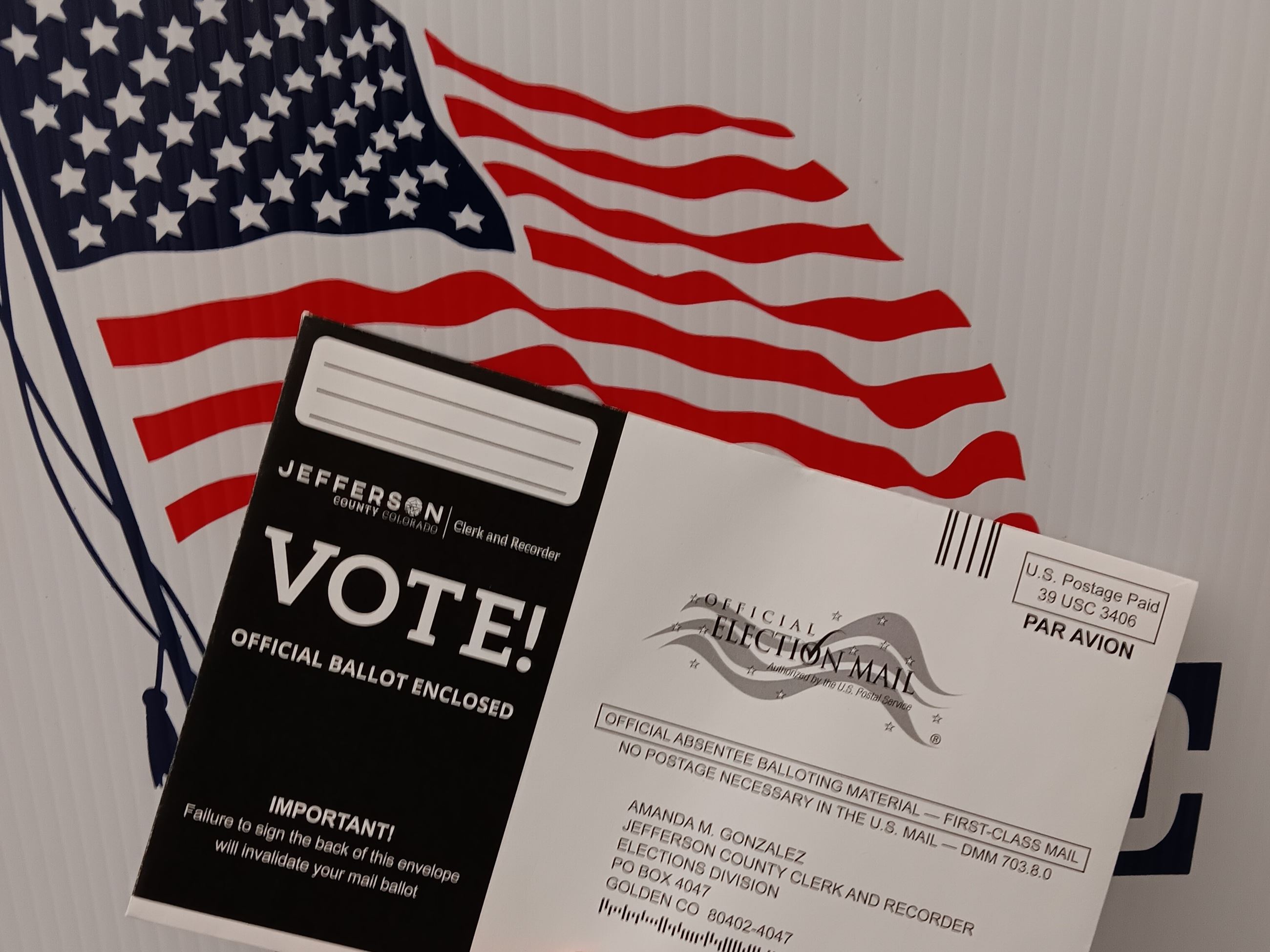
Mini-example (what this changes): Many jurisdictions already print a proprietary 2D code or vendor tracking ID on outgoing packets and return envelopes, and they may not transmit USPS-standard eDoc keyed to a USPS IMb for each piece. Under the notice’s approach, that proprietary code may still be useful to the vendor, but it is not the same thing as a USPS-readable IMb tied to USPS eDoc. The practical shift is from “our barcode, our database” to “USPS barcode, USPS matching record,” at least for the parts of the workflow that live inside USPS scan visibility.
USPS rationale
USPS’s argument is operational and not subtle: election mail runs on deadlines. Deadlines do not mix well with ambiguity. The more consistently ballot mail is identified and documented, the more predictable USPS can make:
- Plant and equipment recognition of ballot mail in processing.
- Visibility through scan events tied to a known identifier in USPS systems.
- Error reduction by cutting down vendor-by-vendor variation.
This is the best version of the USPS story: standardize the technical layer so the logistics layer becomes more predictable.
Tracking or gatekeeping
States already track ballots. Many already use vendor barcodes and fulfillment systems. That is not the novelty.
The novelty is standard setting plus a USPS eDoc workflow that can change how ballot mail is recognized and treated inside USPS processing and visibility systems.
In practice, a design like this can do three things at once:
- Restructure compliance costs. Jurisdictions may have to change envelope layouts, barcode construction, vendor workflows, and data exports to match USPS requirements.
- Shift failure points. A critical failure point can become whether the piece is correctly associated with its electronic record on time, and what USPS systems do when that association fails.
- Concentrate operational metadata. This can raise governance questions. What data elements are in the eDoc? Do they include voter PII or only mailpiece attributes? What does USPS say about retention and access? If the notice does not answer those questions explicitly, treat them as open questions, not as settled facts.
The constitutional argument
Most Americans have an instinctive civics answer to “who runs elections?” They say: the states.
That answer is mostly right, but incomplete. The Constitution gives states a front line role, and then gives the federal government multiple ways to regulate federal elections. The hook matters here because USPS is acting under federal postal statutes and postal operations authority, not under a standalone elections statute.
The Elections Clause
Article I, Section 4 begins with the states: the “Times, Places and Manner” of congressional elections “shall be prescribed in each State by the Legislature thereof.” It then adds: “but the Congress may at any time by Law make or alter such Regulations.”
Congress’s Elections Clause power is broad, but it does not automatically answer whether USPS can do a specific thing in a specific way. USPS authority must come from statute and must be exercised through lawful procedure.
The Electors Clause
Presidential elections sit in a different constitutional lane. Article II gives states power to appoint presidential electors “in such Manner as the Legislature thereof may direct.” That language is why fights over “mere process” turn into major litigation. Process is the election.
So where does USPS fit
USPS is an “independent establishment of the executive branch” (39 U.S.C. § 201). It can set mail acceptance and processing standards. The harder question is how far USPS can use postal standards to induce state and local election administrators to format ballot-mail identifiers and transmit ballot-mail documentation through USPS systems.
Supporters will frame this as core postal operations: standard barcodes, standardized documentation, improved processing visibility. Challengers tend to frame it as an election-adjacent chokepoint and argue courts should demand clear authorization and careful procedure, especially if the real-world effect is to pressure states into a specific, federally managed data exchange model. That is not a conclusion. It is the fault line.

How the rule works
The procedural question matters because “Federal Register notice” can describe different things. This notice is posted for comment, and USPS uses it to describe changes it intends to implement in how ballot mail is prepared and documented.
In practice, the operational endpoints usually include (1) Federal Register publication and (2) updates or cross references to the Domestic Mail Manual and USPS Election Mail guidance that govern acceptance and processing standards. If you are looking for what becomes binding on mailers, the DMM and the final USPS implementation guidance are where compliance staff will live.
If the notice names specific USPS systems or programs for eDoc submission or visibility, treat those names as part of the requirement scope. If it does not, do not assume more than it says.
What it means for voters
The voter-level impact follows the operational design and how tightly USPS links conformance to service treatment inside its own systems.
- Upstream failures matter. If a vendor fails to format envelopes correctly or transmit the required eDoc on time, the voter may only see the downstream symptom: fewer scan events, less reliable tracking, or slower processing during a deadline window.
- Timing becomes policy. Even small shifts in preparation and acceptance can matter near election deadlines.
Voters will not see the plumbing. They will see whether their ballot moved and whether tracking looks normal.
FAQ
Is this a national ID requirement
No. A USPS standard about ballot-mail identifiers and associated documentation is not a national ID card.
Privacy concerns depend on what fields are included in the electronic documentation and how they can be used. If the notice specifies that eDoc includes personally identifiable information, the questions are sharper: retention, access, and disclosure controls. If the notice limits eDoc to operational mailpiece attributes and identifiers, the privacy profile changes. If the notice is silent on PII, treat that silence as a reason to ask, not as proof either way.
Does it apply to in-person voting
No. It addresses ballot-related mail entering or moving through USPS, as the notice defines it.
Does it affect state-only elections
Potentially as a practical matter. Many jurisdictions mail a single ballot that includes federal, state, and local races. If USPS standards affect how that mailpiece is handled or tracked, the effects can spill across the whole ballot.
What happens if the workflow fails or data is wrong
The stress test is error handling: what USPS does when a piece is missing the expected identifier, when the barcode is unscannable, or when the electronic record does not match. The more benefits and internal handling are conditioned on matching, the more important fallback and correction procedures become.
The point
The Constitution does not give us a single referee for elections. It gives us overlapping jurisdictions and then acts surprised when they collide.
States administer elections. Congress can regulate congressional elections. Federal courts police constitutional violations. And an agency that moves the nation’s paper can, by standards and workflows, reshape the practical pathway by which ballots travel.
The durable story here is not that one side is pro-democracy and the other is anti-democracy. The durable story is structural: once mail voting is part of the election infrastructure, the Postal Service becomes part of the election itself. And once infrastructure becomes a gate, the constitutional question follows: who gets to hold the keys?