
Birthright citizenship feels like one of those constitutional “obvious truths.” If you are born here, you are American. End of story.
Except the rule is not written as a bumper sticker. It is written as one sentence in the Fourteenth Amendment , plus more than 150 years of debate and litigation about what that sentence means, who it covers, and who falls outside it.
That is why periodic efforts, including executive branch proposals, to narrow birthright citizenship keep running into the same wall: the Constitution’s text, and a Supreme Court case from 1898 that still does most of the heavy lifting today.
Join the Discussion
The clause everyone cites
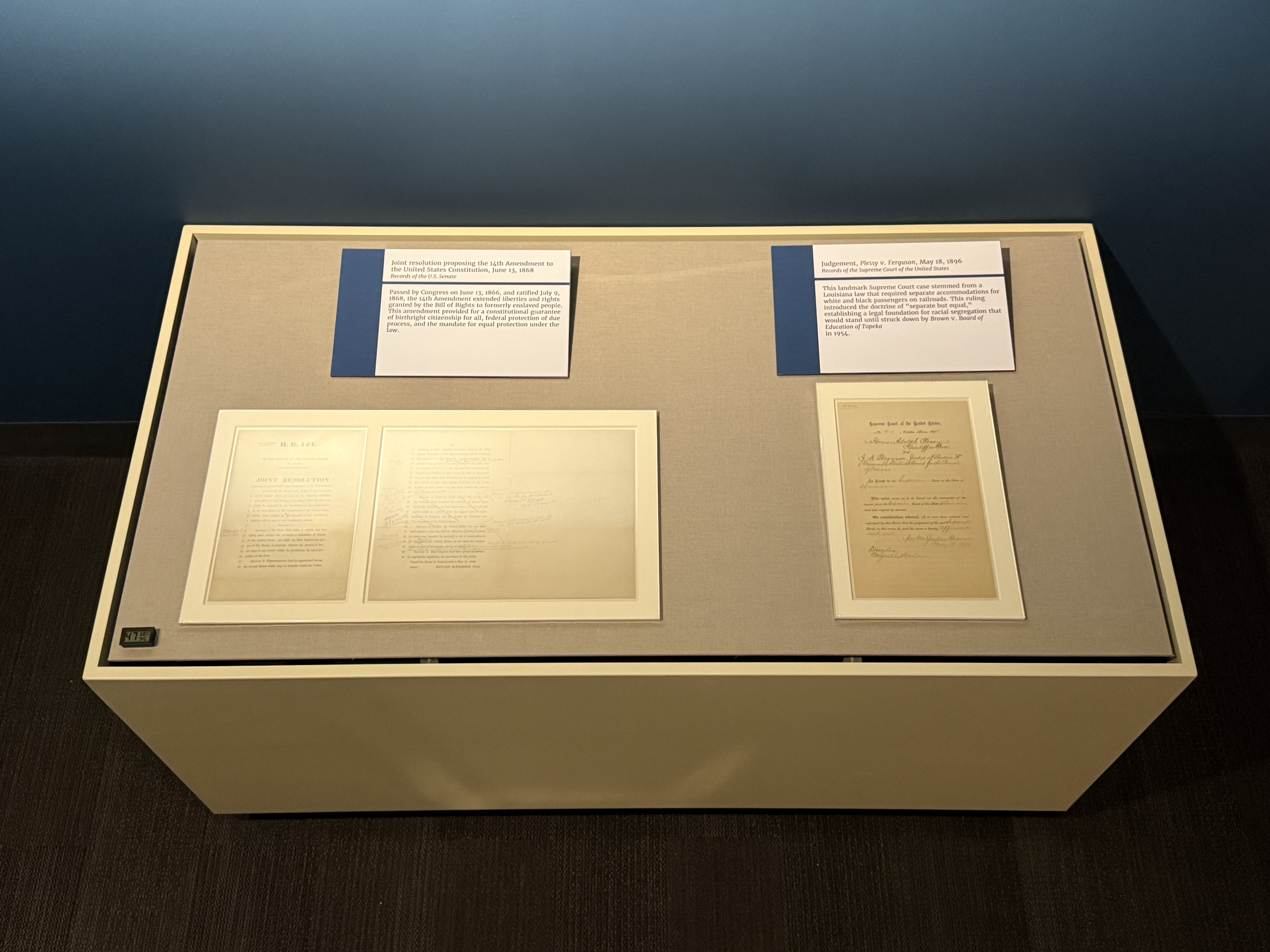
The Citizenship Clause is the first sentence of Section 1 of the Fourteenth Amendment:
“All persons born or naturalized in the United States, and subject to the jurisdiction thereof, are citizens of the United States and of the State wherein they reside.”
Two phrases do the work:
- “Born … in the United States” is the geographic rule. It is the reason the debate starts here at all.
- “Subject to the jurisdiction thereof” is the limiting rule. It is where the fights happen.
Most modern attempts to restrict birthright citizenship do not deny the “born in the United States” part. They argue for a narrower reading of “subject to the jurisdiction.”
What “jurisdiction” excludes
In ordinary English, “jurisdiction” can sound like “the government has authority over you.” By that standard, nearly everyone physically present in the United States is under U.S. law in some sense.
But the Fourteenth Amendment was written in a specific historical moment, with a specific purpose: to constitutionalize citizenship for formerly enslaved people and to prevent states from undoing that citizenship through hostile laws. In the congressional debates, the “jurisdiction” phrase was widely understood to preserve a handful of well known exceptions drawn from principles of allegiance and international law, rather than to create a broad new loophole.
In those debates, the most consistently referenced exclusions were:
- Children of foreign diplomats , because accredited diplomats with full immunity are not subject to U.S. legal process in the ordinary way. Diplomatic immunity is the classic example.
- Children born to enemy forces in hostile occupation, because an occupying army is not treated as owing allegiance to the sovereign it is occupying.
- Certain categories tied to tribal sovereignty, often discussed in the nineteenth century in terms such as “Indians not taxed,” reflecting the view at the time that many tribal members were not fully incorporated into U.S. political jurisdiction. Citizenship status for Native Americans varied through treaties and statutes until Congress extended citizenship broadly by statute in 1924.
Those exceptions are narrow on purpose. They are not a general license for the political branches to decide, case by case, which U.S. born children count as Americans.
Wong Kim Ark
If you only learn one name in this debate, learn this one: United States v. Wong Kim Ark (1898).
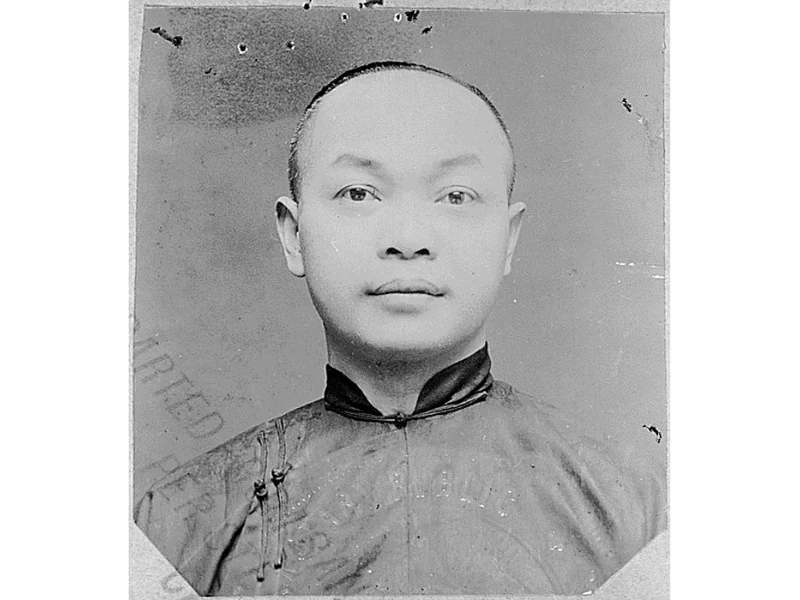
Wong Kim Ark was born in San Francisco to Chinese parents who were lawfully domiciled in the United States. At the time, Chinese immigrants faced severe legal restrictions, including exclusion laws and widespread discrimination. After traveling abroad, Wong was denied reentry on the theory that he was not a citizen.
The Supreme Court rejected that argument and held that the Fourteenth Amendment generally constitutionalized a rule of citizenship by birth on U.S. soil, tracking the common law tradition of jus soli.
Importantly, the holding is at its strongest for children born in the United States to noncitizen parents who are not diplomats, not part of a hostile occupying force, and who are present in the country and subject to U.S. law in the ordinary way. That framing is why people keep mapping Wong Kim Ark onto modern disputes about noncitizen parents.
The Court also emphasized that the “subject to the jurisdiction” language preserved limited exceptions, including familiar categories involving children of diplomats and children of hostile occupying forces.
In other words, Wong Kim Ark did not invent birthright citizenship. It stabilized it. It treated birth on U.S. soil as the baseline, with narrow exceptions.
What new proposals try to do
In recent years, some politicians, including former President Donald Trump, have said they want to restrict birthright citizenship, sometimes by executive action. The specific legal theory varies by proposal, and any particular plan should be evaluated by its actual text, not by a headline summary.
As framed by advocates, the strategy is often to push the “subject to the jurisdiction” language toward a more demanding idea of jurisdiction, closer to complete political allegiance, rather than ordinary subjection to U.S. law. Some versions also try to carve out narrower categories that are presented as analogous to the classic exceptions, such as people with formal immunity or people tied to foreign sovereign functions.
The key question is whether any targeted category truly matches historic exceptions recognized in the Fourteenth Amendment debates and in Wong Kim Ark, or whether it stretches them beyond their traditional meaning.
The diplomat exception
If a child is born in the United States to an accredited foreign diplomat with full diplomatic immunity, that child has long been treated as outside the Fourteenth Amendment’s automatic citizenship rule.
This is the simplest “yes, there is an exception” part of the birthright citizenship discussion because it tracks the logic of jurisdiction. Diplomats are physically here, but they are not fully subject to U.S. legal process in the way ordinary residents are.
That does not mean every person who works for a foreign government fits the diplomat exception. Diplomatic status is a formal legal category. Consular officers, for example, typically have more limited immunity than diplomats under the Vienna Convention framework, and outcomes can turn on accreditation and the scope of any immunity in a particular case.
The hostile occupation exception
The other classic exception is the child born to a hostile occupying force. That is a real concept in the history of citizenship law. But it is also a concept that usually arises in wartime occupation, where the United States is not exercising normal sovereign control over the territory.
Modern proposals that try to analogize other categories to “enemy forces” tend to run into a practical and doctrinal problem: the United States is not an occupied territory. The government is exercising ordinary criminal and civil jurisdiction. It arrests people, prosecutes criminal offenses, and places noncitizens into removal proceedings through regular legal processes.
So if a policy tries to treat a category like “terrorists” as functionally equivalent to “occupying forces,” courts are likely to ask whether the analogy fits the constitutional exception it is borrowing from.
Children of undocumented immigrants
This is the heart of the national argument, and it is also where constitutional law is currently least forgiving to sweeping executive action.
Wong Kim Ark is widely read to mean that children born in the United States to noncitizen parents are citizens at birth so long as those parents are subject to U.S. law in the ordinary sense. Undocumented immigrants can be arrested, sued, taxed, and placed in removal proceedings under U.S. law. Many immigration violations are civil matters handled through the removal system, though certain conduct and some immigration-related violations can be prosecuted as crimes.
To carve them out, a court would need to accept a more restrictive reading of “subject to the jurisdiction,” one closer to “complete political allegiance” than to territorial legal authority. Some scholars argue for that reading, but it is not the dominant understanding in modern doctrine or in longstanding administrative practice.
Why executive orders fall short
Even if the Constitution left room for debate, there is a separation of powers problem. Citizenship rules are implemented through statutes and agencies, but they rest on constitutional bedrock. A president cannot amend the Fourteenth Amendment with a pen.
One statutory anchor is 8 U.S.C. § 1401, which lists categories of people who are “nationals and citizens of the United States at birth,” including people born in the United States and subject to its jurisdiction. Statutes can implement the constitutional rule, but they cannot override it.
Executive orders can:
- Direct agencies on how to prioritize enforcement of existing laws.
- Set internal procedures for adjudicating claims and issuing guidance, within legal limits.
- Take positions that invite litigation, hoping courts will adopt the administration’s interpretation.
They cannot:
- Override Supreme Court precedent on the meaning of the Citizenship Clause.
- Create new citizenship disqualifications that contradict the Fourteenth Amendment as it is currently understood.
In practice, that means lasting change runs through one of two doors: the courts (reinterpretation) or a constitutional amendment (changing the text). Executive action can tee up the fight, but it cannot finish it alone.
What litigation turns on
If a narrow policy targets children of diplomats or people with formal immunity, the government is standing on familiar ground. The more a policy drifts into broader categories, the more courts will ask whether it is trying to redefine “jurisdiction” to exclude people not historically treated as exceptions.
Modern government practice has long treated U.S. birth as the baseline for citizenship, with narrow exceptions like diplomats and hostile occupation. Later case law often assumes that baseline even when the Supreme Court has not squarely resolved every imaginable edge case about parental status.
Expect the legal battle to revolve around a few recurring questions:
- Who exactly is being excluded? Courts will want clear, administrable definitions, not slogans.
- What is the legal basis for the exclusion? Diplomatic immunity is documentary. Other status labels can be contested, classified, or based on executive designation.
- Does the category match a historic exception? The government will argue continuity with the diplomat or hostile force exceptions. Challengers will argue it is an expansion.
- What do text, precedent, and practice require? Courts will have to wrestle with Wong Kim Ark, later cases that assume broad jus soli citizenship as the baseline, and the government’s long-running practice of recognizing citizenship for U.S. born children of noncitizens subject to U.S. law.
One underappreciated practical point is how these disputes surface. Litigation often follows a denial of a passport, a certificate of citizenship, or another federal recognition of citizenship. Disputes can also surface through SSA records and benefits determinations, or as a defense posture in immigration enforcement when the government alleges a person is removable and the person asserts U.S. citizenship.
Quick answers
Can a president end birthright citizenship?
Not unilaterally. A president can press an interpretation, but lasting change would require courts to adopt that interpretation or the country to amend the Constitution.
Are children of foreign diplomats U.S. citizens if born here?
Generally no, if the parent is an accredited diplomat with full diplomatic immunity. This is the clearest, most widely recognized exception.
Does the Fourteenth Amendment require citizenship for every child born on U.S. soil?
Not literally every child. The text includes “subject to the jurisdiction” and the historic exceptions are real. The dispute is about how wide that exception can be without swallowing the rule.
What does Wong Kim Ark say in plain terms?
If you are born in the United States, you are a citizen at birth, with narrow exceptions like diplomats and hostile occupying forces.
The deeper point
Birthright citizenship is not just an immigration debate. It is a debate about what kind of Constitution we have.
The Fourteenth Amendment was written to prevent American citizenship from becoming a moving target controlled by political majorities. That is why it is constitutional text, not ordinary legislation. And that is why attempts to narrow it tend to be framed as “exceptions.” The country is still arguing about where those exceptions stop.
If a new proposal stays tightly tied to formal immunity or other historically recognized edge cases, it may be more about enforcement at the margins. If it tries to build new exclusions that functionally reclassify U.S. born children as outsiders, the fight will not be about administrative discretion. It will be about whether Wong Kim Ark still means what it has meant for more than a century.