
Some estimates are sometimes cited in public discussions suggesting that a share of U.S. births involve parents who are either in the United States unlawfully or present on a temporary legal status. Those estimates can vary depending on definitions and methods, and there is not a single universally accepted public estimate that functions as a settled baseline in debate.
This overview summarizes common lines of argument in public debate and legal commentary, rather than settling the issue.
Whatever the exact number, a constitutional question has long been debated in modern legal and political discourse: when a child is born on American soil, is the Constitution simply recognizing a fact, or establishing membership in the political community itself?
One way the question shows up in ordinary life is procedural: a hospital documents a birth, a state issues a birth certificate, and later that record may be used as proof of citizenship. Beneath that routine chain sits a deeper legal argument about what the Constitution treats as decisive.

Join the Discussion
The 14th Amendment
Birthright citizenship is often summarized as resting on one sentence, and in many summaries of the debate the dispute turns on the qualifier:
“All persons born or naturalized in the United States, and subject to the jurisdiction thereof, are citizens of the United States…”
That is the Citizenship Clause of the Fourteenth Amendment. In many modern debates, the disagreement is not mainly about the words “born… in the United States.” It is about the qualifier: “subject to the jurisdiction thereof.”
In some introductory explanations and legal commentary, the jurisdiction language is described as covering nearly everyone born on U.S. soil, with narrow exceptions sometimes listed to show where the edges might be. Examples that are sometimes mentioned include children of foreign diplomats and, in some historical discussions, other limited categories that are described as exceptions in certain eras.
That leaves a recurring question in modern arguments: when parents are in the country unlawfully or only temporarily, are they, and therefore their U.S.-born children, “subject to the jurisdiction” in the constitutional sense?
In some legal writing and public debate, that question is framed as a dispute about what “jurisdiction” is doing in the sentence: whether it is best read as practical legal authority, or as something closer to political allegiance. How any future dispute might be resolved can depend on facts, framing, and how judges choose to read the text in a particular case.
One additional distinction is often worth keeping clear in civics discussions: what the constitutional text says versus how courts might apply it when a real dispute reaches them. Public arguments frequently move back and forth between those two levels, even when people use the same words to mean different things.
Status questions
Public debate often groups people together in ways that immigration law does not.
A parent who is unlawfully present and a parent who is in lawful status temporarily are different in immigration law. But in some public arguments, both categories can trigger the same concern. Critics sometimes describe the connection as limited in duration or intent, and supporters of broad birthright citizenship sometimes respond that the rule is meant to be simple and equal at birth.
Even so, the legal arguments are sometimes described differently:
- Unlawful presence is sometimes framed as a fairness issue: someone who violated immigration law should not, in that view, be able to create a citizen simply by crossing a border.
- Temporary lawful presence is sometimes framed as a permanence issue: someone who is lawfully present but not permanently attached to the nation should not, in that view, produce automatic citizenship, especially if they are here on time-limited visas.
Constitutionally, however, both arguments still have to engage the same text. The Fourteenth Amendment does not say “lawful” parents. It does not say “permanent” parents. It speaks in the language of jurisdiction, not paperwork.
Reading the data
People who agree on the Constitution can still disagree on measurement.
When figures are cited about births to parents without permanent legal status, they can bundle categories that are easy to argue about at the margins: what counts as temporary status, how “unlawfully present” is estimated, and how births are matched to a parent’s status at the time. That does not make the numbers meaningless. It means they are often best read cautiously and as a proxy for possible scale, not as a courtroom-grade finding.
From there, the downstream question stays the same: how much should citizenship at birth depend on the parents’ legal relationship to the country?
Paths to change
This is where civic education matters, because some public discussion can be framed as if there is a simple shortcut.
In broad terms, the approaches sometimes proposed in public debate for significantly narrowing birthright citizenship for children born on U.S. soil include:
- A constitutional amendment, which is politically difficult by design.
- A new Supreme Court interpretation that redefines what “subject to the jurisdiction” means.
- A federal statute attempting to redefine citizenship at birth, which could be challenged on constitutional grounds and could be reviewed by the Supreme Court.
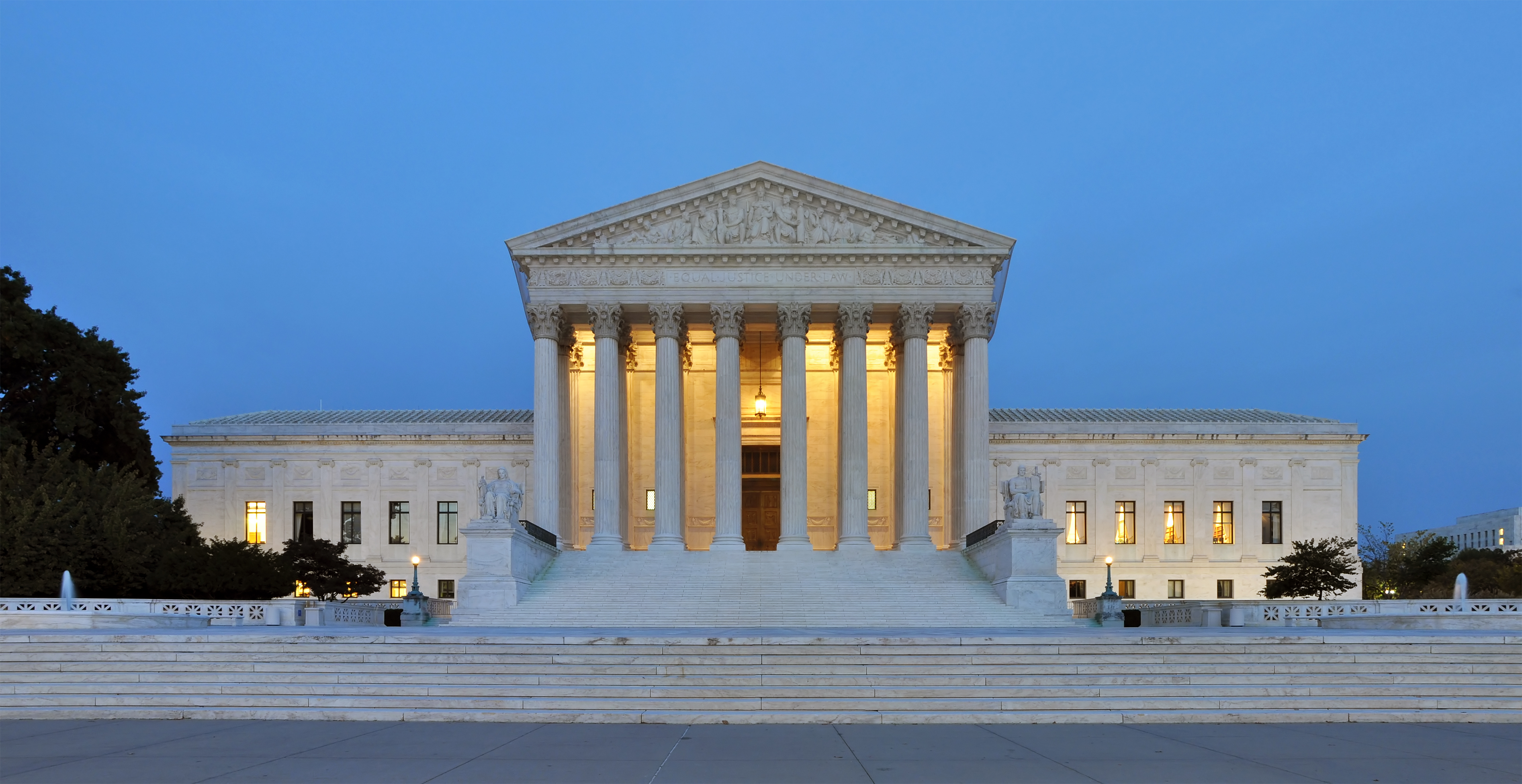
In other words, Congress is not the only institution that matters here. In many cases, the Constitution, as interpreted by the Court, often sets the boundaries.
If the issue were to return to litigation, one framing that appears in some summaries of the debate is a split between: (1) an argument that jurisdiction implies something like full political allegiance, and (2) an argument that it means being subject to U.S. law and courts, which would include virtually everyone physically present. Observers do not all agree on how a future Court might resolve competing readings of that qualifier, and any outcome would depend on the case that is brought and the reasoning a majority adopts.
Benefits
One recurring point in public discussion is practical, not philosophical: some people assume that if a baby is born a citizen, the whole household instantly becomes eligible for every public benefit. In many programs, eligibility rules are more layered than that.
A U.S.-born child can qualify for certain benefits tied to the child’s own status, but eligibility rules often consider:
- household income
- residency requirements
- the immigration status of adult applicants
- state-specific rules layered on top of federal law
So the constitutional tension is not always “one citizen baby equals automatic benefits for everyone.” The tension is narrower: citizenship is often understood to secure equal legal treatment for the child as a citizen, and over time that status can affect family and community life.
Even then, those effects are shaped by other rules: family-based immigration pathways, eligibility timelines, state policy choices, and the reality that many legal and economic barriers have nothing to do with citizenship at birth.
Citizens and voters
Some discussions focus on immediate impacts and give less attention to the long timeline.
Children born this year will not vote for many years. But citizenship at birth is not only a legal label. It is also a path into the electorate, the jury pool, and the set of people who can hold public office. Over time, births can shape:
- the size of the citizen population
- the distribution of political power as families settle, move, and grow
- representation, because population counts generally drive apportionment even when voting eligibility is decades away
At a high level, that is one of the Citizenship Clause’s major effects: it helps determine who counts as “us” through a rule that ordinary majorities cannot easily change.
Depending on where you stand, that design is sometimes described as stability and equal treatment, or as reduced flexibility for ordinary politics. Either way, the mechanism is the same: membership defined by a principle rather than by the politics of the moment.

What it changes
Numbers do not determine how the Constitution should be read. But they can influence which arguments get emphasized and how urgently the issue is contested in politics and in public discussion.
A small number of edge cases can sit quietly under a broad constitutional rule for a long time. A larger and more visible number of cases, even if disputed, can encourage political movements, litigation strategies, and possible Supreme Court tests.
Concretely, that can look like state agencies facing recurring questions about documentation, or a family learning that the child’s citizenship does not automatically resolve the parents’ status but may create future options through existing family-based immigration rules. None of that answers the constitutional question. It helps explain why the question persists.
That is one practical effect of estimates in this space, when they circulate in public debate. They do not resolve the Citizenship Clause. They can increase attention around it, and they invite every actor in the system to ask the same question in different language:
Is birth on U.S. soil a sufficient constitutional fact, or should the parents’ legal relationship to the United States be part of the equation?
If you want the short civics answer, it is this: narrowing birthright citizenship could require either an amendment or a Supreme Court willing to reinterpret the Fourteenth Amendment’s jurisdiction language in a way that some legal analysts describe as a substantial change from many common modern explanations.
If you want the longer civics answer, it is this: in any constitutional system, disputes about jurisdiction language are also disputes about membership, and the question is whether that membership rule is set mainly by constitutional principle or by ordinary politics.