
You can rename almost anything in Washington by simply deciding to call it something else. The harder question is whether anyone else is required to play along.
That is the real constitutional story behind a recurring kind of controversy: reports that a president might try to rebrand a major geographic feature by executive order , and counter-moves in Congress to block or reverse it. Even when the headline is loud, the legal issue is quiet and durable: what power does a president actually have to change an official geographic name, and what tools do Congress, states, and even Canada have to resist it?
One important caveat up front: if a specific renaming effort is being debated in the news, the details matter. The legal analysis depends on what, exactly, the White House did (a speech, a memorandum, an executive order with a number and date), and what Congress proposes (a bill text and bill number). This explainer focuses on the underlying legal mechanics.
Join the Discussion
Start with the basics
A president cannot, by executive order, legally require the rest of the country or the rest of the world to recognize a new name for an international body of water.
What a president can do is direct federal executive branch agencies to use a particular name in their own documents, signage, datasets, communications, and maps. That may sound like splitting hairs, but it is the difference between:
- Changing a label inside the federal government (often possible through executive direction and agency policy), and
- Changing the name as a matter of law for everyone (typically requiring legislation, and even then limited by federalism and international reality).
Executive orders are powerful because they move the machinery of the executive branch. They are not powerful because they rewrite the world.
Where naming power comes from
The Constitution does not contain a “things shall be called what the President says” clause. So any renaming effort has to trace back to ordinary sources of executive power:
- Article II’s duty to execute the laws , which includes supervising executive agencies and setting policy priorities.
- Statutes Congress has passed that create agencies and delegate discretion to manage federal records, lands, and communications.
Geographic names in federal usage are mostly an administrative problem. Agencies need consistency so one map does not contradict another and one database does not break a thousand others.
That is why, for well over a century, the federal government has standardized “official federal usage” through an interagency process centered on the U.S. Board on Geographic Names, an entity first created by executive action in 1890 and later continued and structured by statute. The Board is administered within the Department of the Interior, with support from the U.S. Geological Survey.
The Board on Geographic Names
The U.S. Board on Geographic Names (BGN) exists to standardize place names for federal use. Its decisions are reflected in federal mapping and data systems, including the U.S. Geological Survey’s Geographic Names Information System (GNIS), which functions as the federal names repository and is widely reused by other mapmakers and data users.
In practice, the BGN is where “official federal usage” is coordinated. That does not mean it controls what your state calls something, what a private atlas prints, or what another country recognizes. It means that when a federal agency publishes a map, issues a navigation notice, writes an environmental impact statement, or maintains a dataset, the naming is supposed to be consistent.
The BGN also does not operate on gut instinct. Its published policies emphasize standardization and practical criteria, including things like local and established usage, historical usage, avoiding unnecessary duplication and confusion, and applying naming rules consistently across federal products.
Could a president influence that process? Yes, in the most Article II way possible: by directing executive policy and by appointing and supervising the officials who implement it. But that influence still runs into limits because the point of the BGN is coordination and continuity across agencies. If a sudden shift would ripple into regulated contexts, the executive branch still has to manage the consequences.
What an executive order does
Most executive orders are not magic spells. They are management directives with legal consequences, written as commands to executive agencies.
So if an order said “Lake Ontario shall be known as Lake America,” the immediate legal effect would likely be internal. Implementation would typically happen through follow-on agency directives and, where relevant, through the usual BGN and GNIS update workflows, not because the executive order itself instantly rewrites every federal database overnight.
- Federal agencies could be instructed to use the preferred term in agency publications and public-facing communications.
- Federal map and data products could shift, usually through existing processes, including BGN standardization and downstream updates in systems like GNIS.
- Signage and materials on federally controlled property could be updated, again subject to funding and agency procedure.
But an executive order generally cannot:
- Bind Congress on what it calls the lake in statutes.
- Bind states in their own official maps and education standards.
- Bind private parties, including textbook publishers, map companies, or broadcasters.
- Bind foreign governments, including Canada, which shares the Great Lakes system.
This is why naming fights often feel symbolic. The executive branch can change the federal government’s speech. It cannot, by itself, change everyone else’s speech.
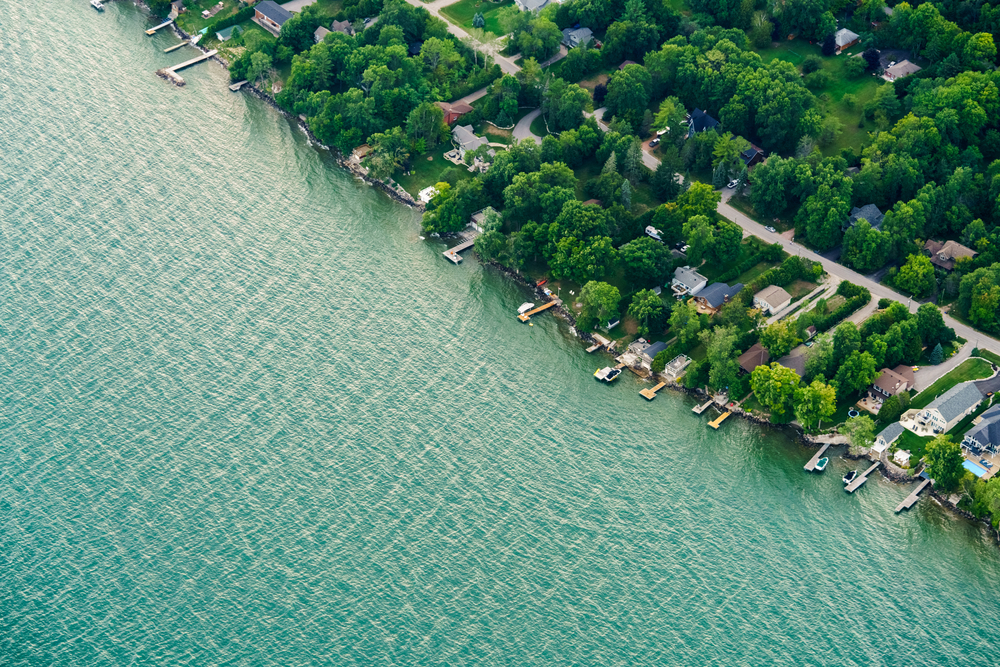
Lake Ontario is binational
Lake Ontario is part of a shared system of waters used for shipping, environmental regulation, fisheries, and regional planning across a U.S. and Canadian border.
That matters because names in high-stakes domains are often anchored in standards and coordination: NOAA nautical charts, Coast Guard navigation publications, cross-references in regulations, and binational bodies such as the International Joint Commission, alongside other operational stakeholders on both sides of the border. Naming itself is not typically a treaty “right,” but consistency is an operational need. A unilateral U.S. executive order may shift federal U.S. usage, but it cannot compel international adoption. If a change created confusion, agencies would likely manage the transition with guidance, crosswalks in datasets, and dual references (for example, the new term followed by the traditional name in parentheses) for a time in charts and publications.

Can Congress reverse it?
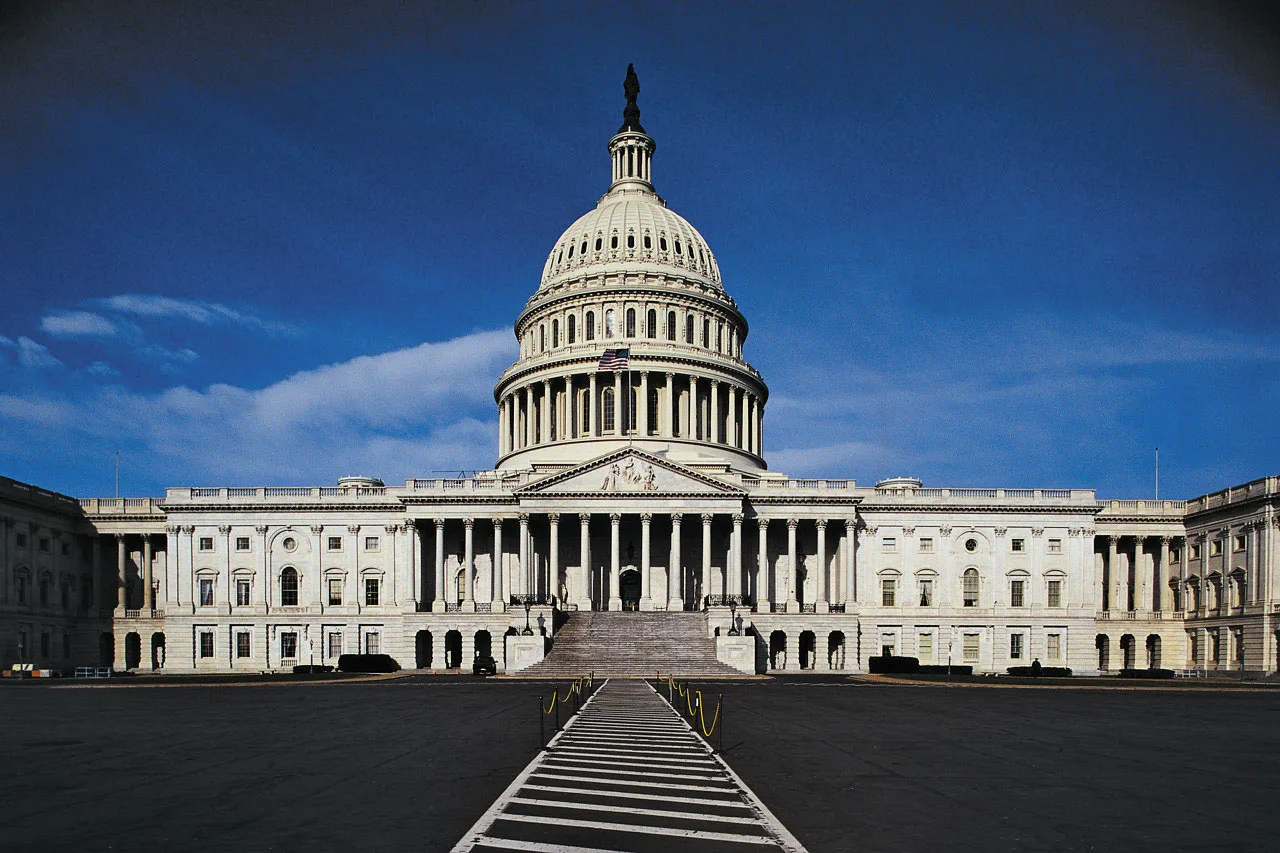
Yes, and Congress has more than one way to do it. The cleanest way is the obvious one: pass a law.
There are two basic models:
1) Legislate the name for federal purposes
Congress can pass a statute saying, in substance, that “Lake Ontario” is the name to be used in federal law and federal documents. Because statutes outrank executive orders, that would force the executive branch to comply.
2) Cut off the money
Through appropriations, Congress can prohibit spending to update signage, databases, publications, and agency materials to reflect a new name. This approach does not always settle the naming question in principle, but it can stop implementation in practice.
The catch is political, not constitutional. Legislation must pass both houses and survive either presidential signature or a veto override. In other words, Congress can reverse an order, but it has to do Congress things to do it.
What about the courts?
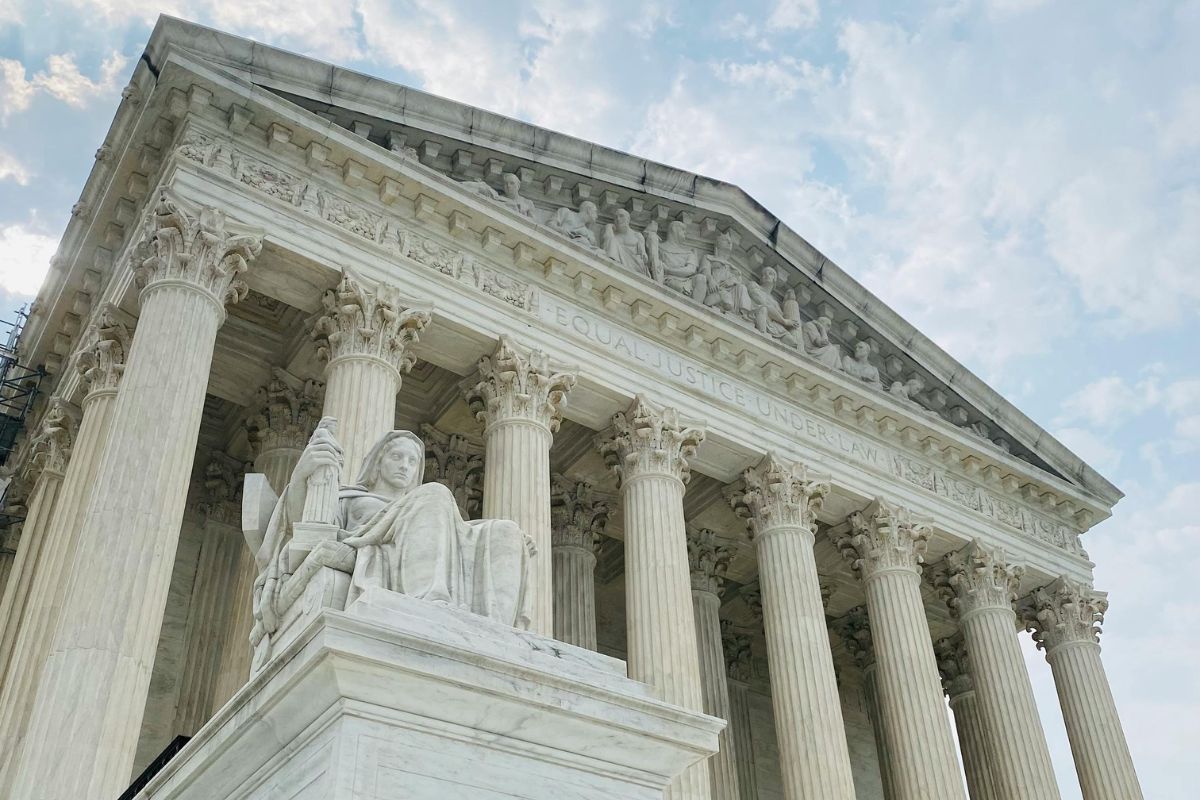
A lawsuit is possible, but not automatic. Courts do not exist to referee every political argument over terminology. To get into federal court, a plaintiff needs standing, meaning a concrete, particularized injury that is traceable to the action and likely to be redressed by a court order.
Who would be injured by the federal government choosing a different label? Possibly a party that must rely on federal datasets for regulatory compliance, navigation, or contracted services. Possibly a state or local government that can show specific administrative costs. But generalized disagreement, confusion, or offense is usually not enough.
Even with standing, the legal hook matters. Some purely internal style guidance may not be “final agency action” reviewable under the Administrative Procedure Act . By contrast, a terminology change tied to a rule, permit, compliance obligation, or other concrete agency action is more likely to be reviewable.
And of course, if an order forces an agency action that conflicts with a statute, courts are more likely to take a hard look.
What states can do
States are not subordinate mapmakers. New York does not need permission from the White House to print “Lake Ontario” on state park signs, tourism brochures, school materials, or official state maps.
But states do run into a practical limit: federal systems are sticky. If federal datasets change, downstream users sometimes inherit the terminology. A state can keep its own usage while still having to translate federal data in shared programs. That is a bureaucracy problem, not a constitutional crisis, but it is exactly the kind of friction that turns symbolic naming fights into real administrative cost.
So, can a president rename it?
Here is the most accurate answer:
- A president can direct federal agencies to use a new name for their own purposes, subject to statutory constraints and the established processes the executive branch uses to standardize geographic names.
- A president cannot, by executive order, force states, private publishers, or other countries to adopt that new name.
- Congress can reverse or block a federal naming change by statute or by funding restrictions, but it must run the legislative gauntlet to do it.
If you want the constitutional takeaway, it is this: executive power is strongest when it is managing the executive branch, and weakest when it tries to behave like a legislature, a state government, or an international authority.
Quick FAQ
Does the Constitution say who names lakes?
No. Naming is handled through statutes, agency practice, and the federal government’s need for standardized usage.
Is an executive order “law”?
It can be legally binding inside the executive branch, and it can have real external effects when it is tied to statutory authority. But it cannot override statutes, and it does not automatically bind states or private parties.
If Congress passes a bill to keep “Lake Ontario,” does the president have to follow it?
If it becomes law, yes. A statute controls over an executive order. The real question is whether it can become law over a presidential veto.
Will maps change immediately?
Some federal publications could change quickly if agencies are directed to do so. Authoritative federal datasets and cross-agency products usually change through established processes. Private and state maps would vary, and international usage is unlikely to change simply because one country’s executive branch prefers a different name.