
Birthright citizenship is one of those American commitments that feels too foundational to keep relitigating. And yet it keeps returning, election after election, lawsuit after lawsuit, executive order after executive order.
On June 30, 2026, the Supreme Court rejected President Trump’s 2025 executive order attempting to narrow citizenship at birth. Five weeks later, the White House tried again with a new pair of executive orders. One targets so called “birth tourism”. The other tries to carve out new categories of U.S.-born children who, the administration says, should not automatically become citizens.
There is a civic question underneath the headlines: when the Supreme Court answers a constitutional question, does the executive branch accept the answer, or treat it as something to work around?
That is not how the 14th Amendment is designed to work.
Join the Discussion
The Court already ruled
In Trump v. Barbara, decided June 30, 2026, the Supreme Court held that children born in the United States to parents who are unlawfully present or temporarily present are “subject to the jurisdiction” of the United States and therefore citizens at birth under the 14th Amendment. The judgment was 6 to 3.
Chief Justice John Roberts wrote for five justices on the constitutional question. Justice Brett Kavanaugh supplied the sixth vote for the judgment on statutory grounds, focusing on federal citizenship law. That split matters for how the decision is cataloged. It does not change what the government may do next.
The Court’s language was pointed. Roberts recalled that Reconstruction-era lawmakers sought to settle the citizenship question “once and forever [to] rest.” Near the conclusion, he described citizenship as “the right to have rights” and declared: “We keep that promise today.”
What Trump signed next
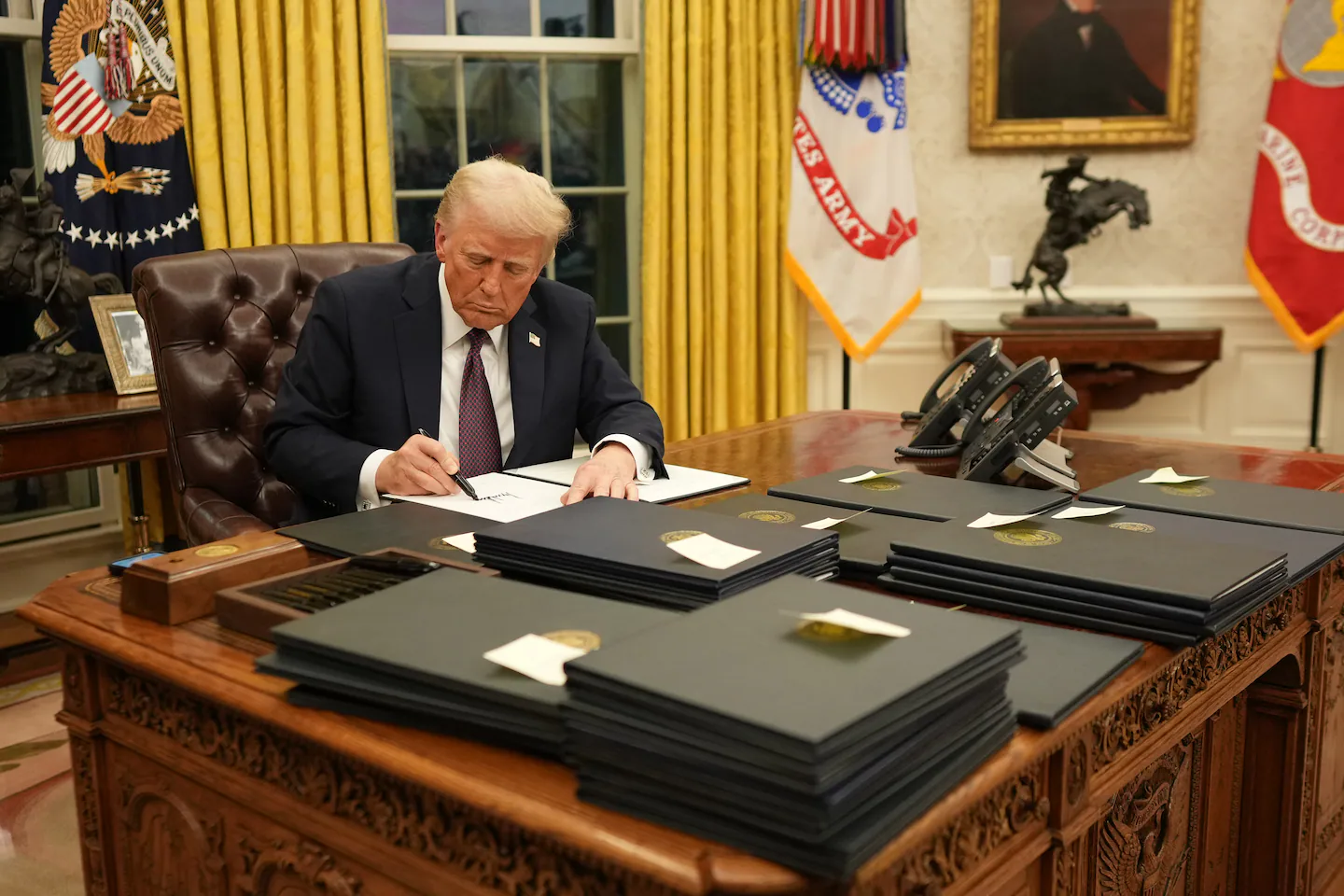
Five weeks after the decision, President Trump signed two new executive orders that press at the same boundary from two directions.
Ending Birth Tourism directs the Department of State and the Department of Homeland Security to take stronger measures against people using temporary visas to enter the United States principally to give birth.
Continuing to Protect the Meaning and Value of American Citizenship identifies additional categories of children whom the administration says should not receive citizenship at birth, including some children it associates with alleged “alien enemies,” foreign government employees, and parents involved in commercial arrangements intended to obtain birthright citizenship.
The first order is mostly about screening and enforcement. The second is an effort to reopen constitutional territory the Supreme Court addressed only weeks ago.
Enforcement is not citizenship
The phrase “birth tourism” tends to bundle two separate questions into one: who may enter the United States, and what follows for a child once born here.
On the first question, the federal government has real tools. Existing visa regulations already treat travel primarily to give birth in the United States to secure citizenship for a child as an illegitimate basis for a visitor visa, and they create a presumption against applicants believed to be traveling mainly for that purpose. Officials can apply those rules, investigate suspected fraud, deny visas where applicants do not qualify, and bring criminal cases where the evidence warrants it.
But that is not the same as citizenship. The government can regulate entry and punish fraud by parents or businesses. What it cannot do is transform misconduct by a parent into a constitutional disability for a newborn child.
What the 14th Amendment says
The Citizenship Clause is short on purpose:
“All persons born or naturalized in the United States, and subject to the jurisdiction thereof, are citizens of the United States and of the State wherein they reside.”
Notice what the text does not require. It does not say citizenship belongs only to children of lawful permanent residents. It does not condition citizenship on parental conduct, honesty on visa applications, or motives the government approves. It turns on birth in the United States and being “subject to the jurisdiction,” full stop.
The narrow exceptions
Birthright citizenship has never been literally without qualification. The American legal tradition has recognized narrow jurisdiction-based exceptions.
Children of foreign diplomats traditionally fall outside the general rule because diplomats have a special jurisdictional status. The Supreme Court has also recognized a historic exception for children born to enemy forces during hostile occupation.
Those examples help define the outer edge. They are not a license for presidents to create new exclusion categories whenever immigration policy becomes politically inconvenient.
Congress wrote it into law
Congress also codified essentially the same definition of citizenship at birth in federal statute. Under 8 U.S.C. § 1401(a), a person born in the United States and subject to its jurisdiction is a citizen at birth.
That statutory protection mattered especially to Justice Kavanaugh. He disagreed with the majority’s constitutional interpretation but concluded that Trump’s earlier executive order could not stand because it conflicted with § 1401(a). Congress, he wrote in substance, had not enacted the additional exceptions the administration wanted.
Even on that narrower route, a president cannot invent a new citizenship code by executive order.
Back to court, fast
Legal challenges moved quickly. On August 11, 2026, the organizations that prevailed in Trump v. Barbara returned to federal court in New Hampshire and asked the court to clarify that children covered by the class action remain protected despite the new order.
Procedurally, that matters because class-action relief is meant to protect an identified group without forcing each affected family to file a separate lawsuit. The motion asks the court to make clear that the government cannot sidestep existing protections for that class by issuing a revised order with a new label.
Cody Wofsy, deputy director of the ACLU’s Immigrants’ Rights Project and lead counsel in the litigation, summarized the core issue: “President Trump may not like the fact that birthright citizenship is a constitutional right,” but that is “beside the point.”
Amia Trigg, deputy director of litigation at the Legal Defense Fund, accused the President of trying to “double down” after the Supreme Court rejected the attempt to redefine American citizenship through executive action.
And Aarti Kohli, executive director of the Asian Law Caucus, put the principle cleanly: “It’s the Constitution, not the president, who determines who is American.”
The civics point
Presidents lose cases. Every administration does. Accepting those losses is part of governing under the rule of law.
Our system is designed so that no president is sovereign. Congress legislates. Courts interpret the law. The Constitution stands above both. Presidents have enormous authority, particularly in immigration and foreign affairs, but they do not have a royal prerogative to rewrite constitutional terms by proclamation.
Trump has lawful tools available if he wants a different policy outcome:
Use existing screening, fraud, and visa rules more aggressively.
Ask Congress to change immigration statutes within constitutional bounds.
Advocate a constitutional amendment if the goal is to change the constitutional rule itself.
What is not on that list is issuing slightly revised executive orders in hopes the Court’s answer becomes negotiable.
What to watch
The immediate fight will be both procedural and substantive: whether courts view the new executive order as meaningfully different from the one the Supreme Court already rejected, and whether the administration can fit its new categories into the historically narrow jurisdictional exceptions.
The larger fight is about stability. Citizenship is the legal starting point of belonging and rights. Once citizenship at birth begins turning on categories devised by executive officials, the certainty the 14th Amendment was intended to establish starts to disappear.
FAQ
Can a president end birthright citizenship by executive order?
No. An executive order cannot override the 14th Amendment, and it cannot override federal citizenship statutes like 8 U.S.C. § 1401(a).
Does “subject to the jurisdiction” mean your parents must be citizens?
No. The controlling framework, including the narrow exceptions discussed in connection with United States v. Wong Kim Ark, treats birth on U.S. soil as conferring citizenship for those who are “subject to the jurisdiction” of the United States, with limited jurisdiction-based exceptions such as children of foreign diplomats and children born to enemy forces during hostile occupation.
Can the government deny visas to people it suspects are coming primarily to give birth?
Yes. Existing regulations permit stronger scrutiny, including a presumption against applicants believed to be traveling primarily for that purpose. That screening power is separate from the question of whether a child born in the United States is a citizen.