
Birthright citizenship is one of those American ideas that feels so basic we can forget it is also deeply technical. If you are born here, you are a citizen. In practice, that is how most people understand it.
Except the 14th Amendment does not actually say “born here, therefore citizen” with no conditions. It says: “All persons born or naturalized in the United States, and subject to the jurisdiction thereof, are citizens of the United States and of the State wherein they reside.” That middle phrase is where the modern political and legal fight lives.
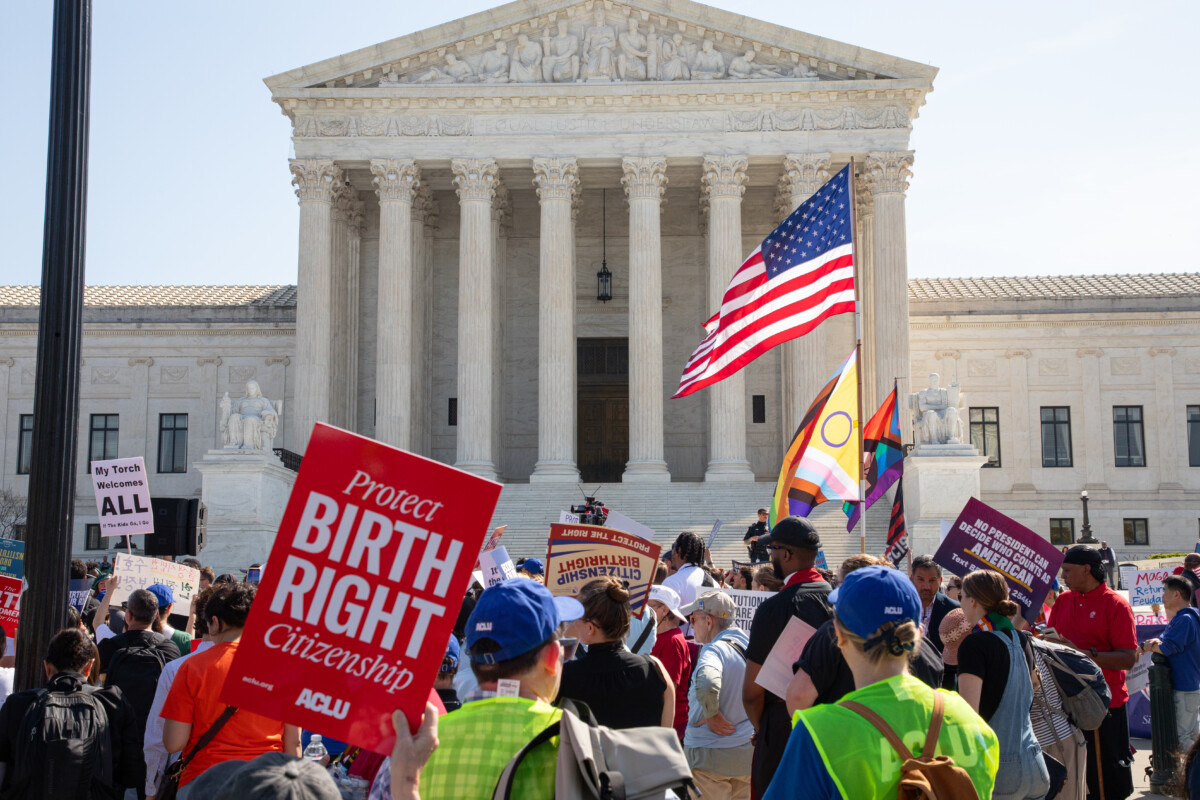
Last month, the Supreme Court ruled 5-4 in Trump v. Barbara that President Trump’s executive order aimed at restricting birthright citizenship for some U.S.-born children ran into the 14th Amendment. After that decision, Sen. Jim Banks released a framework aimed at Republicans and the Trump administration to try a different route: legislation. The question is not just whether Congress can want an exception. The question is whether Congress can do it without changing the Constitution.
Join the Discussion
The key phrase
The Citizenship Clause was written after the Civil War to settle, decisively, that formerly enslaved people were citizens. In broad strokes, it constitutionalized a baseline rule for citizenship at birth and put that baseline beyond routine political bargaining.
But it also inserted a qualifier. “Subject to the jurisdiction” is not decorative. A common reading is that there are some people born in the United States who are not citizens at birth.
In most modern explanations of the clause, the commonly cited examples are narrow, such as children of foreign diplomats. The controversy is whether unlawful presence or temporary presence is enough to take a newborn outside U.S. jurisdiction for 14th Amendment purposes. That is where interpretation, not just politics, starts doing the work.
What the Court did
In Trump v. Barbara, the Supreme Court ruled 5-4 that President Trump’s executive order seeking to end birthright citizenship for U.S.-born children of illegal aliens, often labeled “anchor babies,” violated the 14th Amendment.
That ruling sets the immediate boundary for what a president can do unilaterally. What comes next is a separate question: whether Congress can pass a statute that fits within the Court’s interpretation of the Citizenship Clause, or instead triggers a new round of litigation over what “subject to the jurisdiction” means.
Congress and citizenship
Congress unquestionably has constitutional authority over naturalization. Article I gives Congress power “To establish an uniform Rule of Naturalization.” That means Congress sets the rules for how non-citizens become citizens.
Birthright citizenship is different. It is not a naturalization program. It is a constitutional definition of who is a citizen at birth.
Still, Congress does legislate about citizenship. Federal law contains provisions that mirror the 14th Amendment’s baseline rule for people born in the United States. That overlap creates a tempting strategy: amend the statute and argue that the Constitution’s phrase “subject to the jurisdiction” allows exceptions Congress can specify.
Justice Brett Kavanaugh, who partly joined the majority’s ruling in the case, argued that while Trump’s order does not violate the 14th Amendment, it did violate existing federal law, which could be changed through legislation. “Congress could, consistent with the Fourteenth Amendment, amend §1401(a) or otherwise enact new legislation establishing exceptions to birthright citizenship for children born to foreign citizens unlawfully or temporarily in the country,” he wrote. “But Congress has not yet done so.”
It helps to keep the lanes clear. The Court’s decision, as described here, struck down the executive order on 14th Amendment grounds. Kavanaugh’s comment points to a statutory pathway that would still face judicial review if Congress tried it. It is a possible legislative route, not a guarantee of how courts would rule.
Banks’ plan
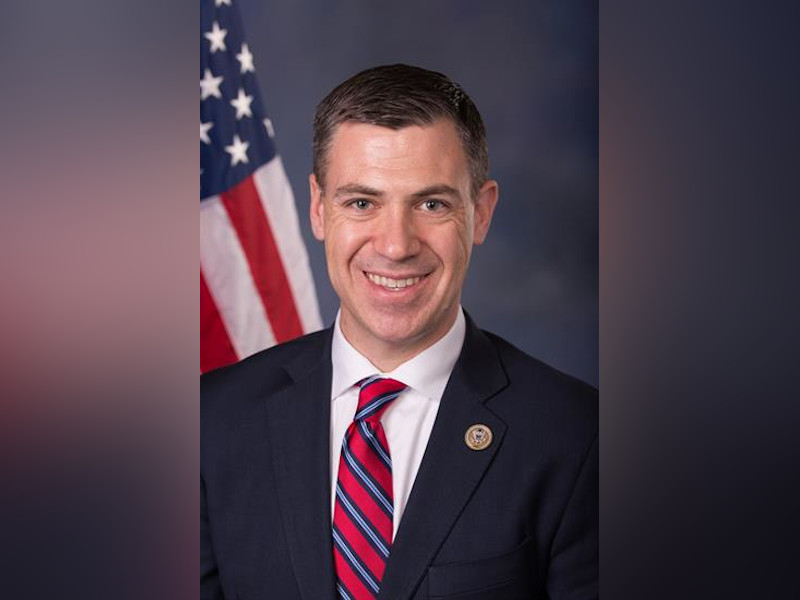
Sen. Jim Banks (R-IN) is now pushing a legislative approach after the Supreme Court rejected the administration’s executive-order effort in Trump v. Barbara. His goal is straightforward: stop birthright American citizenship for U.S.-born children of illegal aliens and foreign tourists, but do it through Congress rather than the White House.
The vehicle is what he calls the Citizenship Act. Banks’ theory begins with a blunt premise: he wants Congress to codify that the United States is under “invasion” by illegal aliens. He then points to Article I and Congress’s power to establish “a uniform rule of naturalization” as the constitutional hook for legislation.
In practical terms, the proposal would classify illegal aliens as foreign invaders for purposes of the statute. Under that classification, Banks argues, their U.S.-born children would not receive citizenship at birth.
Banks framed the effort as a sovereignty issue and a response to the Court’s ruling. “The Supreme Court’s birthright citizenship decision was an unprecedented assault on American sovereignty, and we must do whatever it takes to save our country,” Banks said. “I’m leading the Citizenship Act to reverse the effects of this consequential ruling and ensure the millions of illegal aliens that invaded our country can’t continue to exploit our immigration system.”
The constitutional question that would follow is narrower than the political message: can Congress change the meaning of “subject to the jurisdiction” by declaring a legal status like “invasion,” and have that reclassification carry weight in court?
Can a statute do it
Here is the core legal tension, stated as analysis rather than prediction:
- If courts read the 14th Amendment as conferring citizenship at birth on nearly everyone born on U.S. soil, with only narrow and traditional exceptions, then a statute trying to exclude “anchor babies” would likely be struck down as inconsistent with the Constitution.
- If courts accept that “subject to the jurisdiction” leaves room for Congress to define additional exclusions, then a statute could potentially survive, especially if drafted as a direct test of §1401(a) and related citizenship provisions.
So the fight is not just about what Congress can pass. It is about what the judiciary will accept as a faithful reading of the 14th Amendment’s text when confronted with a statute designed to probe its boundaries.
What would need to change
If a political movement wants an outcome that is stable across administrations and courts, there are only a few real options.
1) A constitutional amendment
This is the cleanest method legally and the hardest method politically. An amendment could rewrite the Citizenship Clause or add clarifying language about who is included and excluded. It would require two-thirds of both houses of Congress and ratification by three-fourths of the states.
2) A new Court reading
Even without an amendment, the Court could re-interpret “subject to the jurisdiction” in a way that narrows birthright citizenship. In practical terms, that would likely require a direct test case in which Congress has enacted a statute and the executive branch enforces it.
3) A statute built to force a test
This is what today’s proposals are really doing. They are not merely policy. They are litigation strategy. A bill can create a conflict between statutory language and constitutional doctrine, forcing courts to decide whether the statute is valid under the 14th Amendment.
But it is important to be clear with readers: a statute alone does not “end” birthright citizenship unless the courts accept that statute’s theory.
Why labels and numbers stick
The phrase “anchor baby” is a political label, not a constitutional category. Still, it matters because it is how the public often understands what is at stake: citizenship at birth for children whose parents are not lawfully or permanently present.
Supporters of restricting birthright citizenship often point to the scale of the practice. One estimate frequently cited is that about a quarter of a million anchor babies each year are born in the United States to illegal aliens and foreign tourists.
Opponents respond with a different kind of scale: if citizenship can be narrowed by statute, then citizenship becomes contingent on Congress’s definition of belonging, and the 14th Amendment’s promise becomes less of a guarantee and more of a political decision.
The real question
Birthright citizenship is not merely an immigration policy lever. It is also a constitutional line between a nation that grants citizenship by place of birth and a nation that grants it by bloodline, legal status, or legislative grace.
The 14th Amendment’s Citizenship Clause was written to remove one question from ordinary politics: who counts as an American. The modern debate is an attempt to put part of that question back into the hands of lawmakers, and then ask courts to bless the shift.
So when you hear “Can Congress end birthright citizenship for anchor babies?” translate it into the real constitutional question: Does the phrase “subject to the jurisdiction” give Congress room to define exceptions, or does it lock in a broad rule that only an amendment can change?
That is the hinge. Banks’ framework is one attempt to lean on it through legislation, and the next court fight will likely be about whether that hinge actually moves.