
Birthright citizenship feels like one of those American rules that is too basic to argue about, like the idea that the Constitution outranks ordinary politics or that courts can say what the law is.
Then a headline comes along suggesting a president might be able to “end” it, maybe even without the Supreme Court weighing in. That is the moment when a civics question becomes an operational one. Not: what is the law, but: who can make the law real in practice, and what happens when courts move slowly or never reach the final word.
This explainer breaks down what birthright citizenship is, what the Constitution actually says, what a president can do by executive action, and how things could change even if the Supreme Court never issues a neat, definitive ruling.
Join the Discussion
What it is
In the United States, “birthright citizenship” usually means this: if you are born on U.S. soil, you are a U.S. citizen at birth. Lawyers often describe this as jus soli, Latin for “right of the soil.”
That idea is not just tradition. It is tied to a specific constitutional sentence that was written after the Civil War for a specific purpose: to make citizenship permanent for formerly enslaved people and their children, and to prevent states from manipulating who counted as a member of the political community.
One note up front: this article is about citizenship at birth under the Fourteenth Amendment’s Citizenship Clause. Citizenship rules for U.S. territories and certain other edge categories can involve additional statutes and distinct legal history.
What the Fourteenth says
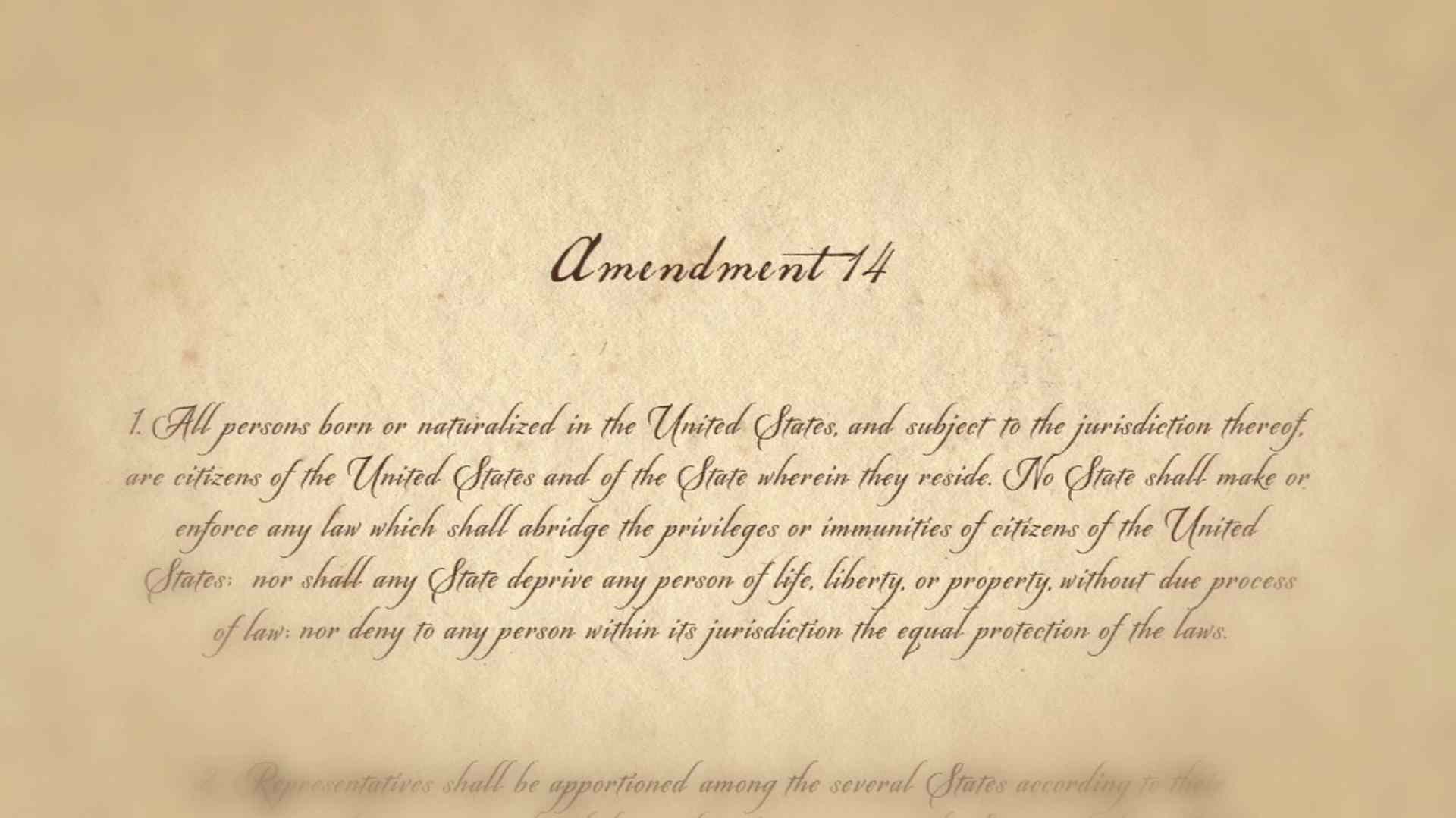
The Citizenship Clause of the Fourteenth Amendment reads:
“All persons born or naturalized in the United States, and subject to the jurisdiction thereof, are citizens of the United States and of the State wherein they reside.”
Most of the legal fight sits inside the phrase “subject to the jurisdiction thereof”. Most constitutional lawyers and courts agree the clause constitutionalizes citizenship by birth on U.S. soil for many people. The dispute is about which categories of people, if any, are excluded even though they are born here.
The baseline view
For well over a century, the mainstream legal understanding has been that a child born in the United States is a citizen even if the parents are not citizens, with narrow exceptions tied to diplomatic or comparable sovereign status.
The commonly cited exceptions are:
- Children of accredited foreign diplomats, who are not generally subject to U.S. legal authority in the ordinary way.
- Some narrow, historically discussed scenarios involving children born to hostile forces in an actual invasion or military occupation.
The key case
The case that anchors modern discussion is United States v. Wong Kim Ark (1898). The Court held that a man born in San Francisco to Chinese parents was a U.S. citizen under the Fourteenth Amendment.
Wong Kim Ark is frequently summarized as: the Fourteenth Amendment adopts a broad rule of citizenship by birthplace, consistent with common-law tradition, excluding only limited categories such as children of foreign diplomats and certain enemy occupation scenarios.
It is also where a lot of modern argumentation starts. Wong Kim Ark involved parents who were lawfully domiciled in the United States, so some advocates argue the decision leaves room to treat children of unlawfully present parents differently. The counterargument is that the Court’s reasoning, and the way “subject to the jurisdiction” has been understood in practice, points toward a broad rule that covers almost everyone physically present and governed by U.S. law.
Either way, an attempt to narrow birthright citizenship runs straight into longstanding constitutional interpretation, not a blank policy canvas.
Can a president change it
A president can issue an executive order directing the executive branch on how to administer the law. But an executive order cannot amend the Constitution. And the Citizenship Clause is constitutional text, not a statute Congress can tweak with a simple majority vote.
What an order could try to do
- Redefine agency policy for when federal officials will treat a U.S. birth as sufficient proof of citizenship.
- Direct agencies (such as the State Department or agencies within the Department of Homeland Security) to adopt a narrower reading of “subject to the jurisdiction.”
- Change procedures around passports, consular reports, Social Security records, or documentation disputes, which can matter a lot in individual cases.
Here is what “administrative friction” can look like in practice: a passport application that used to be routine is put on hold pending “secondary evidence,” a birth certificate is treated as insufficient without additional parental documentation, or a person is forced into an appeal track that takes months while school, work, travel, or benefits deadlines do not wait.
What an order cannot do
- It cannot erase constitutional citizenship for people who qualify under the Fourteenth Amendment as interpreted by binding precedent.
- It cannot bind courts to accept the executive’s interpretation of the Constitution.
- It cannot directly command state officials to change how they issue birth certificates. States control vital records, though federal statutes and program rules can influence how state documents are used and what downstream consequences attach.
So the clean constitutional answer is: no executive order can “end” birthright citizenship in the way an amendment could.
But that is not the only question people are asking in real time.
Why people say “without SCOTUS”
Because law is not only what is written. It is also what is implemented, what is challenged, and what becomes stable over time.
Even if the Supreme Court never issues a final decision, policy can still shift through a few mechanisms that are less dramatic than a constitutional amendment but still consequential.
1) Friction arrives before clarity
If federal agencies adopt a narrower rule, some people could face delayed passports, requests for extra evidence, or denials that must be appealed. Even if those individuals eventually win, the interim burden is real.
This is not the same thing as changing the Constitution. It is changing how hard it is to access what the Constitution already guarantees.
2) Lower courts can function as “final” for years
Most cases never reach the Supreme Court. If a policy is upheld by one or more federal circuit courts and the Supreme Court declines review, the policy can effectively stand, at least in those regions, until another conflict forces the issue.
That can create a patchwork where your practical citizenship experience depends on where you live and which circuit’s precedent governs.
3) The Court can avoid the merits
The Court can reject a case for procedural reasons, find no jurisdiction, dismiss as improvidently granted, or decide on narrower grounds without answering the biggest constitutional question. In politically charged disputes, that happens more often than the public expects.
So “without SCOTUS” can mean “without a clear nationwide merits ruling,” not “without any judicial involvement.”
How litigation plays out
If an administration tries to implement a restrictive policy, lawsuits would likely move fast, but not always fast enough to prevent disruption.
- Early phase: plaintiffs seek a temporary restraining order (TRO) or preliminary injunction to pause implementation.
- Appeals: the government appeals, sometimes on an expedited schedule. A stay can pause an injunction, or an injunction can remain in force while the case proceeds.
- Split risk: different circuits can reach different answers, especially if courts frame the issue as “citizenship” versus “proof of citizenship.”
- Supreme Court choice: the Court can step in to resolve a split, or decline review and let regional rules persist.
Can Congress change it
Congress has power over naturalization under Article I, and Congress writes many of the statutes that structure immigration and citizenship administration.
But Congress cannot pass a statute that contradicts the Fourteenth Amendment. If the Constitution confers citizenship at birth for a class of people, Congress cannot legislate that citizenship away.
Congress can do things around the edges, including:
- Define and standardize evidentiary rules for proving citizenship in federal processes.
- Create procedures for adjudicating contested claims.
- Fund or restrict certain administrative enforcement priorities, within constitutional limits.
Those are meaningful, especially because “citizenship” and “proof of citizenship” do not always function the same way in day to day systems.
What “jurisdiction” means
The phrase “subject to the jurisdiction” is sometimes treated like a loophole. In reality, it is the hinge of the clause, and it carries a specific historical purpose.
The common exceptions that have long been recognized are:
- Children of foreign diplomats, because diplomats are not fully subject to U.S. legal authority in the ordinary way.
- Children born to invading or occupying enemy forces, in narrow, historically discussed scenarios.
The modern flashpoint is usually this: whether children born in the United States to unlawfully present (or otherwise noncitizen) parents are “subject to the jurisdiction” in the relevant constitutional sense.
Opponents of narrowing argue that nearly all people physically present in the United States are subject to U.S. criminal and civil law, and that the clause was meant to be broad. Supporters of narrowing tend to frame “jurisdiction” more like political allegiance. If this dispute returns to litigation, courts will likely wrestle with the difference between:
- Being subject to U.S. law in everyday life, and
- Owing full political allegiance, which is a different concept and not the text the Fourteenth Amendment uses.
Can courts be ignored
In our system, judicial review is not an optional feature. Courts can enjoin executive action that violates the Constitution or federal law.
Agencies that ignore final court orders invite contempt proceedings, compliance fights, and extensive litigation risk. Remedies vary by claim and defendant, and damages are not always straightforward, but the legal and institutional pressure is real.
However, the separation-of-powers reality is that enforcement depends on process. If injunctions are limited in scope, if cases take years, or if plaintiffs struggle to find the right procedural vehicle, an administration can sometimes operate in the gaps.
That is one reason birthright citizenship debates are often less about lofty constitutional theory and more about the mechanics of documentation, agency discretion, and how quickly courts can respond.
What it would take
A durable, nationwide end to birthright citizenship as commonly understood would most likely require one of these:
- A constitutional amendment revising the Citizenship Clause, which requires two-thirds of both houses of Congress and ratification by three-fourths of the states.
- A Supreme Court merits decision dramatically reinterpreting “subject to the jurisdiction” in a way that narrows who qualifies at birth, while surviving the weight of precedent from Wong Kim Ark and subsequent reliance.
Everything else is a form of pressure on the system: administrative narrowing, documentation barriers, and litigation strategy. Those can be powerful, but they are not the same as rewriting the Constitution.
Bottom line
Can a president end it without the Supreme Court?
Not in the constitutional sense. A president cannot erase the Fourteenth Amendment by executive order.
Can things still change without a clear ruling?
Yes. Agencies can alter documentation and adjudication practices, lower courts can uphold or block policies regionally, and the Supreme Court can delay or avoid a definitive nationwide merits answer for a long time.
That is the uncomfortable civics lesson hiding in the background: constitutional rights and statuses are strongest when the text is clear, the precedent is settled, and the government machinery treats them as routine. When any one of those becomes contested, the argument moves from theory into the daily life of paperwork, proof, and procedure.
Questions to ask next
- Which federal agencies would implement a narrower definition, and what documents would they accept or reject?
- What would the new “proof of citizenship” rules look like for passports, Social Security records, and federal benefits systems?
- Who has legal standing to sue quickly, and in which federal circuits would the first challenges likely land?
- If different circuits split, would the Supreme Court take the case, or let the split persist?
- How would state-issued birth certificates interact with federal determinations in passport and benefits systems?
Birthright citizenship is one sentence long. The fight over it is not.