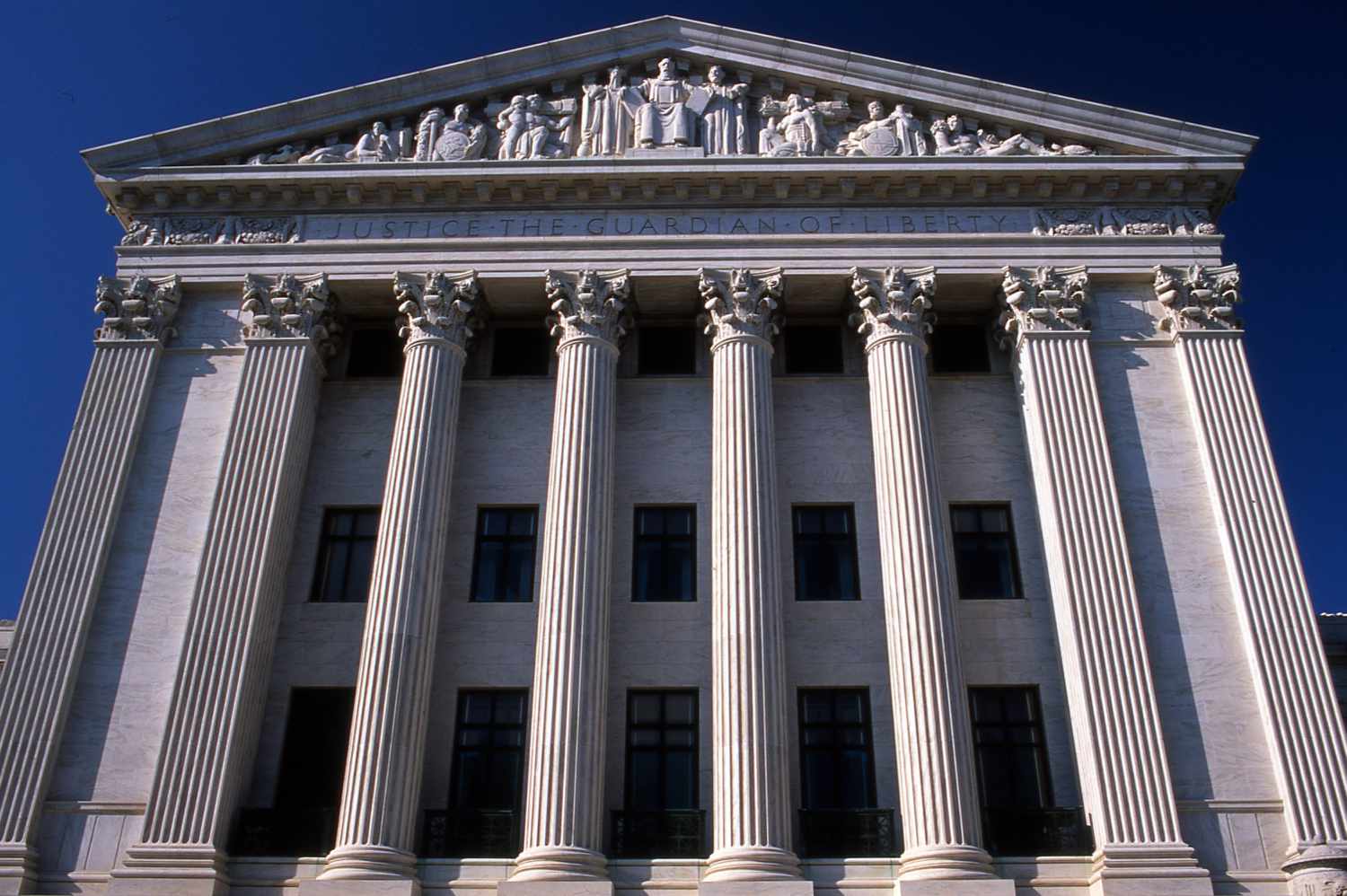
Most people experience the Supreme Court the way you experience weather. One morning you wake up to a new legal climate, and the only question that seems to matter is whether you should grab an umbrella.
But the Court is not a storm. It is a machine. And if you want to understand why it can seem to keep producing familiar kinds of outcomes, it helps to look closely at the justice whose ascent captures how this Court was built and how it now moves.
That justice is Neil Gorsuch.

Join the Discussion
Why he matters
It is tempting to treat Supreme Court power like a personality contest. Who is the swing vote? Who is the sharpest questioner at oral argument? Who writes the most quotable dissents?
Gorsuch matters for a more structural reason. His rise to the Court ran through a precedent-shattering path to power, and for many observers it is tied up with the 6-3 Roberts Court becoming a defining feature of national legal and political debate.
He also matters because many observers describe him as a justice with a theory of judging, one he aims to carry across topics. You do not have to agree with the results to notice the pull of a consistent approach, or the effort to project one.
Early years
Gorsuch did not come out of nowhere. His worldview was shaped early. The key ingredients show up repeatedly in accounts of his formation: an iconoclastic mother, a reaction to life on a liberal college campus, and the young conservative movements of the 1980s.
Those influences do not mechanically dictate outcomes. But they help explain a posture that shows up again and again in his public story: comfort in dissenting spaces, skepticism toward elite consensus, and an instinct for rules that are meant to discipline power rather than track social fashion.
In other words, the through-line is not gossip. It is method, or at least a commitment to the idea that method should be doing the driving.
How method works
When people talk about the conservative legal instinct Gorsuch is often associated with, they are usually talking about a broader approach: the law is not a mood. It is words on paper enacted through a legitimate process, and judges do not have authority to improve the product after the fact.
In practice, this kind of text-first judging starts with the language and how it is structured, rather than with what a policy result should be. It also spends time on what counts as legitimate legal material. Are you reading the words as ordinary readers would? Are you sticking to what a statute actually says? Are you treating the Constitution’s allocation of power as a set of enforceable boundaries?
As a general illustration, a text-first judge will often ask a simple, limiting question before anything else: where, exactly, does the enacted language authorize this action, create this right, or assign this power? If the best answer is a chain of implied steps rather than a clear grant, the analysis tends to narrow, not expand.
Even a disciplined approach has consequences. Treating text and structure as primary tools does not remove judgment from judging. It relocates it. The winners and losers can depend on which texts exist, which ones do not, and how broadly the Court believes enacted language should be read.
Path to power
Gorsuch is also the product of an institutional moment that changed how Americans think about the Court. His path to the bench ran through a nomination fight that was widely described as precedent-shattering, and that became a flashpoint over norms, procedure, and what each side believed the other was willing to do to secure a seat.
That description matters because it points to something larger than any one justice. A Supreme Court seat is not supposed to feel like a trophy that changes hands by brute procedural force. When it does, the story of how a justice got there can become inseparable from the story of what the Court is.
You do not have to pick a partisan team to recognize the constitutional consequence. The Supreme Court’s authority is not enforced by the purse or the sword. It runs on acceptance.
When the public begins to see seats as prizes in a bare-knuckle political fight, the Court’s decisions are heard less as legal judgments and more as political victories. That is not Gorsuch’s doing alone, but his arrival is often treated as a marker for when that perception hardened into a lasting backdrop.

Change and pace
Another shift of the era is less about any single case and more about what many people perceive as the Court’s willingness to revisit old settlements. Old bargains do not always feel like bargains anymore.
That matters because many modern rights and rules are built on inference, on lines of interpretation that accumulate over time. When a Court is more willing to revisit interpretive compromises, things that once felt stable can start to look contingent.
This is not simply a conservative phenomenon. Courts have always revisited old rules. The difference today is often described as pace, as if the Court is more willing to move quickly, even when reversal reshapes daily life.
What it changes
Understanding Gorsuch does not tell you how every case will come out. It tells you something more useful: what kinds of arguments are increasingly being treated as legitimate constitutional reasoning inside a 6-3 Court.
- Method is the message. The fight is often over what materials judges are allowed to use and how much discretion they are allowed to exercise.
- Text and structure rise. Expect more decisions that turn on the boundaries of enacted language and on who, constitutionally, gets to decide.
- Pace matters. When the Court is comfortable revisiting long-standing doctrines, legal change can come in bursts, not inches.
The Supreme Court is often described as an oracle. In reality it is a set of working theories about law, power, and legitimacy. Neil Gorsuch is one of the clearest expressions of the Court’s current theory.
If you want to understand today’s Supreme Court, you can start with headlines. But if you want to understand where it might be headed, start with the justice whose public story is, in many ways, man with a plan.