
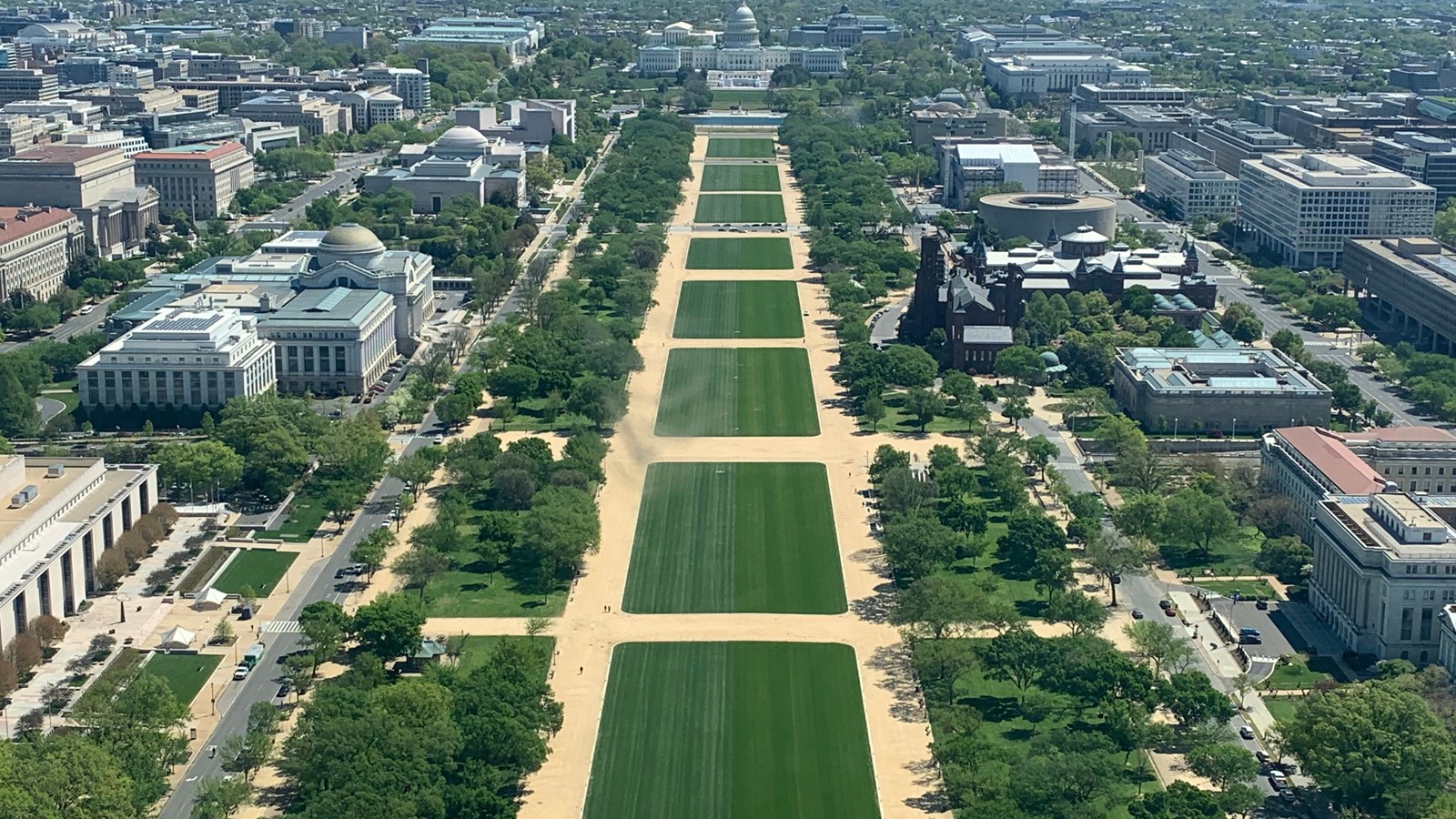
The National Mall feels like America’s front yard. You can walk from the Capitol to the Lincoln Memorial without ever leaving a space that is legally unusual: a dense patchwork of federal land, multiple layers of policing authority, and federal charging decisions, all sitting inside the District of Columbia.
So when you see a headline about a Lincoln Memorial Reflecting Pool vandalism case being dismissed, it can sound like the system simply shrugged. More often, a dismissal is the result of how jurisdiction is allocated on federal sites, what prosecutors must prove, and how protest-adjacent property damage cases collide with evidence rules and constitutional limits.
Note on scope: This is a general explainer about how these cases typically work on National Mall and National Park Service sites. If you are reading it in response to a specific dismissal, consult the court docket and charging documents for the precise reason, because “dismissed” can mean several different things procedurally.
Join the Discussion
Federal land changes the case
The first question in any National Mall vandalism case is not moral. It is geographic.
Much of the Mall and its memorials are managed by the National Park Service (NPS), a federal agency in the Department of the Interior. But “federal land” is not a single jurisdictional switch. Depending on the parcel, the federal government may have exclusive, concurrent, or more limited forms of jurisdiction.
In practice, incidents on NPS-managed Mall property are often handled through federal processes, sometimes beginning with a citation and proceeding as a petty offense before a U.S. magistrate judge (with more serious matters charged by information or indictment in U.S. District Court).
Federal enclave jurisdiction, in plain English
- The United States owns or controls the land (such as a national memorial or park property).
- Federal enforcement is often primary, especially for NPS regulations and federal property crimes.
- Local law can sometimes be borrowed through the Assimilative Crimes Act (18 U.S.C. § 13), but only when there is no federal statute or regulation that already covers the specific conduct. Even then, the case stays in federal court.
That last point matters. Even when the charge looks like a local vandalism offense, the courtroom and prosecutor are often federal.
Who investigates on the Mall?
On the ground, enforcement is commonly carried out by the U.S. Park Police, supported in some situations by the National Park Service (including park rangers) and, depending on the incident, other federal or DC law enforcement.
Investigation is not just about identifying someone at the scene. In property cases, investigators need details that become make-or-break later, like:
- exact location (was it within the relevant NPS or federal jurisdiction boundary?)
- the nature of the damage (permanent, temporary, cleaning required, restoration required)
- the dollar amount of damage or “loss” (often affects charge level)
- who did what (individual conduct, not just crowd presence)
- intent (accident, recklessness, knowing damage, or willful defacement)
If any of those pieces are weak, a case can look strong in a video clip but fragile in court.
Who prosecutes in DC?
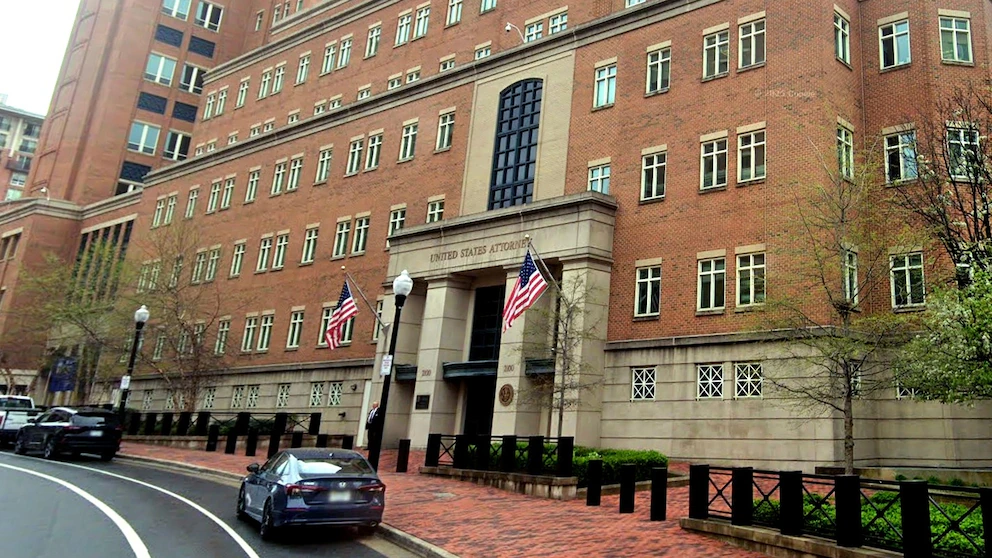
For incidents on federal property in DC, charging decisions often run through the U.S. Attorney’s Office for the District of Columbia. That office is unusual because it does two jobs at once:
- It functions like a state prosecutor for many local DC crimes.
- It functions like a federal prosecutor for federal offenses in DC, including many cases arising on federal land.
Not every case looks the same. Some lower-level offenses on NPS lands are handled through citations and proceed as petty offense matters before a U.S. magistrate judge. Others are charged by information or indictment and proceed in U.S. District Court. Charging practices vary with the facts, the available evidence, and the legal fit.
What laws can apply?
There is no single “National Mall vandalism” statute that cleanly covers every scenario. Prosecutors choose from a toolbox, and the best fit depends on the facts.
1) Depredation of government property
A common federal pathway is 18 U.S.C. § 1361, which criminalizes willfully injuring or committing depredation against property of the United States. In practice, three issues dominate:
- Willfulness: the government must show the act was intentional, not merely accidental.
- Loss amount: § 1361 has penalty tiers. If the damage or attempted damage is $1,000 or less, the charge is generally treated as a misdemeanor; above that threshold, it can be charged as a felony. The line sounds simple, but the number can be contested.
- How “loss” gets proven: repair and restoration costs are commonly supported with invoices, contractor estimates backed by testimony, agency records, and witness testimony from the people responsible for cleanup and site maintenance. Defense counsel often challenges whether the government is counting cleaning versus restoration, whether the work was necessary, and whether the documentation is reliable and admissible.
2) National Park Service regulations
NPS lands are governed by federal regulations that prohibit damaging, defacing, or vandalizing park property, including 36 C.F.R. § 2.31 (see, for example, § 2.31(a) for prohibitions related to damaging, destroying, injuring, defacing, or removing property). These are frequently used for lower-level misconduct, but they still require courtroom-grade proof tying an individual to the act.
3) Assimilative Crimes Act (borrowing DC law)
Sometimes federal statutes and NPS regulations do not match the specific conduct at issue. The Assimilative Crimes Act, 18 U.S.C. § 13, can allow federal prosecutors to apply the relevant local criminal law to conduct on qualifying federal enclaves, but only when federal law does not already cover that conduct.
That does not turn the case into a local case. It remains a federal prosecution in a federal forum.
4) Related charges in protest settings
Some protest-related incidents generate additional potential charges, such as unlawful entry into restricted areas, disorderly conduct, failure to obey lawful orders, permit-related violations, or other NPS public-order regulations that apply on parklands. These are not vandalism charges, but they can appear in the same incident file.
Why charges get dismissed
“Dismissed” sounds like a judgment on what happened. In court, it is usually a judgment on what can be proved, by the required standard, with admissible evidence, and under the correct statute or regulation.
1) Identification problems
In crowded events, the hardest element is often tying a specific person to a specific act. Video can help, but only if it is clear, authenticated, and actually shows the relevant conduct. If the defense can raise a credible doubt about identity, the case may not survive.
2) Proving intent and harm
Many federal damage statutes and vandalism regulations require proof that the defendant acted willfully or knowingly, and that real damage occurred. Even when harm is obvious to the public, the courtroom questions can be narrower: what exactly did the defendant do, and was it deliberate?
3) Proving the loss amount
Damage thresholds and penalty tiers can turn on the dollar value of the harm. That sounds simple until the government must prove the number with evidence that withstands cross-examination. Was the cost cleaning? Restoration? Contractor invoices? Materials? If an agency witness cannot lay the foundation for those records, or if the invoices do not match the alleged act, valuation can unravel quickly.
4) Jurisdiction and charging fit
Federal land boundaries are not always intuitive. If the conduct occurred outside the relevant federal jurisdiction, or if the chosen statute does not actually fit the facts, dismissal becomes a real risk. Even inside federal jurisdiction, cases sometimes fail because they were charged too aggressively, or under the wrong legal theory.
5) Procedural failures
Some dismissals happen because of case mechanics, not because the underlying conduct was trivial. Common examples include:
- Suppression of evidence after a successful Fourth Amendment challenge (unlawful stop, search, seizure, or arrest).
- Authentication and chain-of-custody problems with video, photos, or physical evidence.
- Witness issues, including nonappearance or credibility problems that make proof unrealistic.
- Speedy Trial and scheduling constraints that can force hard choices in lower-level cases.
- Prosecutorial discretion, including diversion, deferred resolution, or dropping charges when proof or valuation cannot be supported.
6) First Amendment adjacency
The First Amendment protects speech, assembly, and petition. It does not protect defacing government property. But in protest-adjacent cases, defendants often argue selective or retaliatory enforcement, or contend the government is criminalizing expressive conduct rather than damage.
Courts generally allow the government to enforce neutral rules protecting public property, especially on parklands open to the public, as long as restrictions are content-neutral and appropriately tailored. Still, when a case is built on shaky proof, constitutional arguments can become the wedge that opens the door to dismissal.
Public forum rules
Public forum doctrine matters here because courts generally treat major portions of the National Mall as a traditional public forum: a place historically open for speech and assembly. That does not immunize property damage. It does, however, make courts cautious about broad enforcement tactics that risk chilling speech.
At the same time, not every part of the Mall is treated identically in every circumstance. Specific zones and uses, like security perimeters, temporary restricted areas, or permit-controlled spaces, can be governed by different rules that are often litigated under time, place, and manner principles.
In plain terms: the Mall is where Americans go to speak loudly at the government. Prosecutors still have to prove who crossed the line from protected protest into criminal damage.
Why dismissals can still make sense
Public officials can be frustrated for understandable reasons. Repairs are expensive. Memorials are symbolic. And the federal government has an obvious interest in protecting sites that function as civic landmarks.
But the constitutional system is not built around symbolic stakes. It is built around procedure.
- The government must prove every element beyond a reasonable doubt.
- Courts enforce evidentiary rules even when the public is angry.
- Prosecutors have discretion to drop cases they cannot prove or that do not fit the law cleanly.
A dismissal is not always a claim that the conduct was acceptable. It can be a claim that the government, in this instance, did not build a case it could ethically and lawfully win.
Quick FAQ
Is vandalizing the Lincoln Memorial Reflecting Pool a federal crime?
It can be. The Reflecting Pool sits on National Mall grounds managed by the National Park Service. Damage there often implicates federal jurisdiction and federal property damage laws (including 18 U.S.C. § 1361) or NPS regulations (including 36 C.F.R. § 2.31). Whether a specific incident is charged federally depends on the parcel’s jurisdictional status and the evidence.
Why would the U.S. Attorney in DC handle this instead of DC police or the DC Attorney General?
Because incidents on federal property in DC are often charged federally, and the U.S. Attorney for the District of Columbia is the primary prosecuting office for federal crimes in the District. DC agencies may assist, and some matters are resolved through the federal petty-offense process before a U.S. magistrate judge.
If it happened during a protest, does the First Amendment block prosecution?
No. The First Amendment protects protest activity, but it does not protect willful damage to government property. Protest context can still raise legal questions about intent, identity, and whether the government is enforcing rules neutrally, especially in restricted or permit-controlled areas.
What is the biggest reason these cases fail?
Usually proof problems: identifying the right defendant, proving intent, and proving damage or loss amount with admissible evidence. High visibility does not automatically equal courtroom-ready evidence.