“Birth tourism” is the term commonly used for a practice critics often describe as a loophole. A nonresident travels to the United States late in pregnancy, gives birth here, and returns home. The goal is straightforward: if the baby is a U.S. citizen at birth, that status can matter later, from easier travel to the ability to sponsor certain family members as an adult.
In the wake of renewed political attention and legislative proposals aimed at the practice, the real question most people are asking is not about the travel. It is about the Constitution. Does birth on U.S. soil still confer citizenship? And if it does, what exactly can Congress regulate or punish without trying to rewrite the 14th Amendment by statute?

Join the Discussion
What birth tourism is, and what it is not
Birth tourism is not a term found in the Constitution. It is also not generally a standalone offense label in federal criminal law. The phrase does appear in modern policy and enforcement contexts, including U.S. consular guidance about how to evaluate certain visa applications. In other words, it is a real-world category used by officials and commentators, even if it is not a neatly defined statutory crime.
In practice, “birth tourism” is used to describe a range of conduct that can include:
- Lawful entry with a valid visa (often a B-2 visitor visa) followed by giving birth in the U.S.
- Misrepresentation at the border or on a visa application, such as lying about the purpose of travel if asked.
- Use of brokers or “maternity hotels” that coordinate housing, hospital arrangements, and travel.
- Failure to pay medical bills, which is not unique to nonresidents but can become part of the public controversy.
The constitutional issue, though, does not turn on whether the trip feels “fair.” It turns on the rules for citizenship at birth, and those rules sit in the first sentence of the 14th Amendment.
The key sentence in the 14th Amendment
The Citizenship Clause reads:
“All persons born or naturalized in the United States, and subject to the jurisdiction thereof, are citizens of the United States and of the State wherein they reside.”
That is a sweeping grant. If you are born in the United States, you are presumptively a citizen.
The phrase that drives nearly every modern dispute is the qualifier: “subject to the jurisdiction thereof.” It is the hinge between a broad rule (birth on U.S. soil) and a limited set of exceptions.
What “subject to the jurisdiction” has meant
In ordinary terms, being “subject to the jurisdiction” of the United States means being under U.S. legal authority while you are here. A practical way to think about it is whether you are generally bound by U.S. law and can be made to answer in U.S. courts (civil or criminal). This is less about day-to-day contact with the government and more about legal amenability to U.S. authority.
Historically, American law has treated the Citizenship Clause as adopting a form of jus soli, citizenship by place of birth, with narrow carveouts. The most commonly cited exceptions involve people who are not fully subject to U.S. law because of a distinct legal status.
Commonly recognized exceptions
- Children of foreign diplomats accredited to the U.S., who are typically treated as outside full U.S. jurisdiction because of diplomatic immunity.
- Children born to an occupying enemy force in extraordinary wartime scenarios. This is a historically discussed exception that appears in legal commentary and in the background discussion in older cases, but it is not a common modern category.
Everything else is where the fight begins: visitors, students, temporary workers, asylum seekers, and people present without authorization. The key point is that the dominant reading for more than a century has been that most non-diplomat non-citizens physically present on U.S. soil are “subject to the jurisdiction” in the 14th Amendment sense.
The Supreme Court anchor: Wong Kim Ark
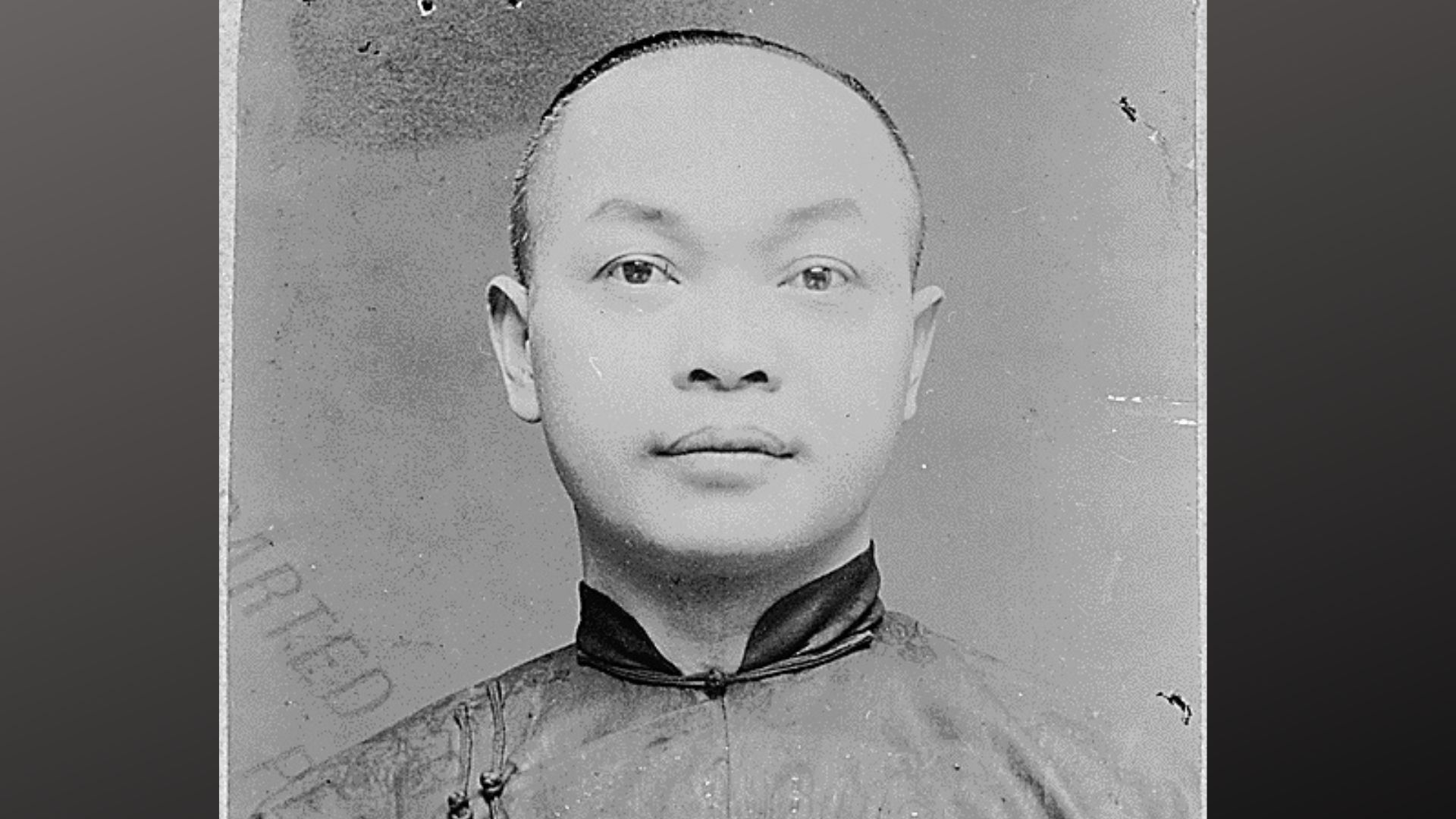
If there is a single Supreme Court case that defines modern birthright citizenship doctrine, it is United States v. Wong Kim Ark (1898).
Wong Kim Ark was born in San Francisco to Chinese parents who were subjects of the Emperor of China and not eligible to naturalize under the laws of the time. After traveling abroad, he was denied reentry on the theory that he was not a U.S. citizen. The Supreme Court rejected that view and held that a child born in the United States is a citizen under the 14th Amendment, even if the parents are not citizens, so long as the child is born “subject to the jurisdiction” of the United States.
Two nuances matter in modern debate:
- Wong Kim Ark involved parents who were lawfully domiciled in the United States. The Supreme Court has not squarely decided, in a single modern holding, the specific scenario of a child born to parents who are unlawfully present.
- Even so, longstanding executive practice and lower-court treatment have generally assumed that births on U.S. soil (outside the narrow diplomat-style exceptions) confer citizenship, regardless of the parents’ immigration status.
Wong Kim Ark is frequently invoked because it treated birthright citizenship as a constitutional rule grounded in text, history, and common law practice. It also signals that Congress cannot simply redefine “born in the United States” or nullify the Citizenship Clause by ordinary legislation.
Does birth in the U.S. still mean citizenship?
In the overwhelming majority of situations, yes. Under the prevailing interpretation of the 14th Amendment, a baby born on U.S. soil is a U.S. citizen at birth even if the parents are not citizens or permanent residents, so long as the parents are not in one of the narrow exception categories like accredited diplomats.
This is why birth tourism exists at all. The practice depends on the assumption that place of birth, not the parents’ immigration status, is doing the constitutional work.
Two practical clarifications often get lost in the shorthand:
- A U.S.-citizen child generally cannot sponsor parents until age 21. So the “doors later” framing is real, but it is delayed and not automatic.
- Citizenship at birth is separate from the parents’ immigration status. Parents do not become lawful residents simply because a child is a citizen.
Could the Supreme Court narrow the rule in the future? Courts can revisit doctrine, and constitutional language can be reinterpreted. But as a matter of current law, Wong Kim Ark remains the central precedent and the Citizenship Clause remains the text.
Can Congress end birthright citizenship by law?
Congress has substantial power over immigration and naturalization. Article I gives Congress authority “To establish a uniform Rule of Naturalization,” and modern immigration regulation is built on a mix of enumerated powers, implied powers, and long-standing federal practice.
But naturalization power is not the same thing as power to redefine constitutional citizenship at birth.
Congress can:
- Define rules for naturalization (citizenship acquired after birth).
- Set visa categories, entry requirements, and removal rules.
- Criminalize certain conduct connected to immigration, such as fraud, smuggling, and unlawful entry.
Congress cannot, by ordinary statute, erase a constitutional guarantee. If the 14th Amendment’s Citizenship Clause covers a category of people, Congress cannot simply declare by law that it does not.
That said, proponents of restricting birthright citizenship sometimes argue that Congress could attempt to define or narrow what “subject to the jurisdiction” means by statute and then ask the courts to uphold that interpretation. That theory exists, but it would be tested against the constitutional text and controlling precedent, and it is far from a legally settled path.
This is why serious proposals to “end birthright citizenship” usually run into the same wall: to change the rule cleanly, you would likely need either (1) a constitutional amendment, or (2) a Supreme Court decision adopting a narrower meaning of “subject to the jurisdiction.” Legislation alone is the most legally vulnerable route if it conflicts with the clause as courts have understood it.
What Congress can punish
Some proposals focus less on the baby’s status and more on the adult conduct that gets the pregnancy to U.S. soil, especially when the travel is planned around a visa category that does not match the traveler’s true intent. Other proposals seek to create a new, intent-based offense aimed at traveling to the United States primarily to secure U.S. citizenship for a child. Whether any particular bill would impose modest penalties or serious prison exposure depends on the specific text Congress considers in a given session.
At the constitutional level, the distinction is still the same: even if a baby’s citizenship is constitutionally protected, Congress has tools to target conduct that surrounds entry and travel. The legal question becomes: what is the prohibited act, and does Congress have power to punish it in a way that is clear, proportional, and consistent with due process?
Where federal law is on firmer ground
- Visa fraud and misrepresentation: False statements on visa paperwork (including DS-160 forms) or to federal officers can trigger criminal liability and immigration consequences.
- Document fraud: Use of false documents or identity deception is criminalized under existing federal law.
- Smuggling and facilitation schemes: Organizing unlawful entry or operating certain facilitation networks can carry serious penalties under existing statutes.
Why purpose-based crimes get complicated
- Proving intent: “Solely to give birth” is a mental-state claim that can be hard to prove and easy to over-apply.
- Vagueness concerns: Criminal statutes must be clear enough that ordinary people can understand what is prohibited. A law that punishes an ambiguous “purpose” or poorly defined “tourism” conduct can invite constitutional challenges.
- Overbreadth in practice: A sweeping statute can catch lawful travelers who also happen to give birth here, including people visiting family, students, or workers who experience premature labor.
In practical enforcement, “fraud” is often proven through records and inconsistencies: statements on the visa application, statements during inspection at the port of entry, broker communications, prearranged hospital documentation, and other paperwork that tends to exist when travel is coordinated as a package. A finding of willful misrepresentation can also carry immigration consequences beyond any criminal case, including inadmissibility bars and future visa denials.
Consular practice and visa scrutiny
Even without a special “birth tourism” statute, the federal government can address the issue through visa and admissibility rules. In recent years, the State Department has treated certain applications for B visitor visas more skeptically when the primary purpose of travel is childbirth, especially where there are concerns about fraud, misrepresentation, or an inability to pay for medical care. The key point for applicants is that childbirth itself is not inherently disqualifying, but false statements about intent, finances, or arrangements can be.
Does punishing the parents change the baby’s citizenship?
Usually, no. A child’s citizenship under the 14th Amendment is not generally treated as a reward for good parental behavior or a penalty for bad parental behavior. It is a constitutional status that attaches at birth if the clause applies.
That creates a tension that shows up in nearly every policy debate about birth tourism: you can punish adult conduct without undoing the constitutional consequence of birth on U.S. soil.
If the government wants deterrence, it often reaches for immigration tools aimed at the parents, such as visa denials, removability for fraud, or inadmissibility findings. But the child’s citizenship, under current doctrine, is a separate track.
What “after a Supreme Court ruling” means
When lawmakers cite a recent Supreme Court ruling in this area, it is often a signal that the Court has recently addressed immigration enforcement, federal power, or citizenship-adjacent statutes. But birthright citizenship doctrine itself is not typically reshaped by those cases. It turns on the 14th Amendment’s text and foundational precedent like Wong Kim Ark.
The practical takeaway is this: a bill can be “about” birthright citizenship politically while being evaluated in court as a criminal-law and immigration-power question. Judges would ask what Congress is regulating, what the statute requires prosecutors to prove, and whether it conflicts with constitutional protections, including due process principles.
FAQ
Is birth tourism illegal?
Not as a single, uniform category. Some conduct associated with it can be illegal, especially fraud or misrepresentation in visa applications or to federal officers. Simply giving birth in the United States is not a crime.
If a tourist gives birth in the U.S., is the baby a citizen?
Under the prevailing interpretation of the 14th Amendment, yes, unless a narrow exception applies, most notably the child of an accredited diplomat.
Can a U.S.-citizen baby sponsor the parents right away?
No. In general, a U.S.-citizen child cannot petition for parents until the child turns 21.
Can Congress pass a law to stop citizenship for babies born to noncitizens?
Congress can regulate immigration and naturalization, but a statute that contradicts the Citizenship Clause as courts have read it would face serious constitutional challenge. Changing the constitutional rule would likely require a constitutional amendment or a Supreme Court reinterpretation of “subject to the jurisdiction.”
Could Congress criminalize travel to give birth?
Congress can criminalize certain immigration-related conduct, especially fraud. A statute that imposes penalties based primarily on a traveler’s “sole” motive would likely be tested against due process principles, including clarity (vagueness) and how the law is applied in real cases.
The constitutional bottom line
Birth tourism sits at the intersection of two systems that do not perfectly align: immigration control and constitutional citizenship. The federal government can police borders, punish fraud, and regulate entry. But the 14th Amendment hardwires a citizenship rule that is not easily rewritten by ordinary legislation.
If Congress wants to deter a practice without breaking the constitutional machinery, it has to draft laws that target conduct with precision, not laws that assume the Citizenship Clause can be switched off by statute. The Constitution is not silent here. It is just more demanding than the slogans.