
Birthright citizenship sounds like a policy argument, the kind you can settle by counting votes and measuring public opinion. But Trump v. Barbara, the case now sitting at the Supreme Court, is not only about policy. It is also about whether a constitutional promise made in the shadow of slavery can be narrowed by modern political will.
The argument has not lived only in briefs and oral argument. It has also played out in public legal debate, including a recent Cato Institute online event on Trump v. Barbara moderated by Dan Greenberg. The panel featured multiple legal scholars, including immigration law scholar Prof. Gabriel Chin and legal historian Paul Finkelman, alongside libertarian legal scholar Ilya Somin.
The question underneath the headlines is straightforward: Who gets to decide who is an American? The Constitution. Congress. The states. The President. Or a shifting mix of all four, depending on who has power at the moment.
Join the Discussion
What the 14th says
The Citizenship Clause of the Fourteenth Amendment is short and intentionally blunt: “All persons born or naturalized in the United States, and subject to the jurisdiction thereof, are citizens of the United States and of the State wherein they reside.”
If you want to understand the current legal fight, you have to slow down and sit with the second half of that sentence. The text does two things at once:
- It creates a national rule for citizenship at birth: born in the United States.
- It adds a qualifier: “subject to the jurisdiction thereof.”
The dispute is not over whether the amendment contains a rule. It does. The dispute is over how much work that qualifier does and who falls outside it.
Jurisdiction is the fight
In everyday life, “jurisdiction” sounds like geography. If you are here, you are under the government’s power. The Fourteenth Amendment uses jurisdiction in a more legal sense: not just being physically present, but being obligated to obey U.S. law and answer to U.S. courts.
Historically, many discussions of the clause have treated a few categories as outside full U.S. jurisdiction, most notably:
- Children of foreign diplomats, who retain diplomatic immunity protections through their parents.
The live issue in today’s case is whether the children of undocumented immigrants can be treated as falling outside the Citizenship Clause’s coverage based on the jurisdiction language. That is not a small interpretive tweak. It is a major change to what many Americans have long assumed the Fourteenth Amendment settled.
Why the clause exists
The Fourteenth Amendment did not drop from the sky. It was written with a specific fear in mind: that states, especially former slave states, would keep finding ways to deny full membership to Black Americans even after the Civil War.
Before the Fourteenth Amendment, citizenship was vulnerable to politics and prejudice. The nation had already seen what happens when citizenship is treated as a privilege handed out by those in power. The Amendment’s designers aimed to move citizenship from the realm of “local permission” to the realm of constitutional command.
That history matters because it tells you what kind of tool this clause was meant to be: not a delicate arrangement dependent on state cooperation, but a hard national floor that states could not kick out from under disfavored groups.
States and paperwork
States are not powerless in immigration debates, but citizenship is not theirs to award or retract. The Constitution makes U.S. citizenship a federal status first, and the Fourteenth Amendment reinforces that by tying citizenship to birth or naturalization, not to state approval.
It is still worth separating two ideas that often get blurred.
What states can do
- Administer records such as birth certificates and vital statistics.
- Set rules for some state benefits where federal law allows, subject to constitutional limits like equal protection and due process.
What states cannot do
- Create their own definition of “U.S. citizen.” A state cannot declare that a person born in its hospitals is not a citizen of the United States if federal constitutional law says otherwise.
- Use paperwork as a backdoor denial. If federal law recognizes citizenship at birth in a category of cases, a state cannot make that status practically unreachable by imposing extra hurdles that function as a denial.
This is where federal supremacy does its quiet work. The Constitution’s structure assumes a single national answer to the question of who belongs to the nation.
What the Court might do
The Court cannot amend the Constitution. It cannot rewrite the Citizenship Clause into something unrecognizable without paying a legitimacy price. But it can reinterpret the key phrase in a way that changes outcomes for large numbers of people over time.
Here are a few plausible lanes a decision could take.
1) The broad rule stands
If the Court reads “subject to the jurisdiction” in the traditional narrow-exception way, then birthright citizenship remains what most Americans think it is: birth on U.S. soil generally equals citizenship, with limited carveouts like diplomats.
That would keep the fight where it belongs in a constitutional republic: if the public wants a different rule, it would require a constitutional amendment, not an administrative workaround.
2) The rule narrows
If the Court concludes that the children of undocumented immigrants are not “subject to the jurisdiction” in the relevant sense, the practical consequences could be immediate and messy. In my view, a few plausible pressure points include:
- Birth certificates becoming a flashpoint. Hospitals and state agencies could face demands to treat parental status as relevant to what is now handled as a routine record.
- Citizenship becoming more document-dependent. The country could drift toward a system where proving citizenship requires tracing parental status, not simply proving place of birth.
- More edge-case litigation. Courts could be asked to define hard categories around temporary visas, pending status changes, and other in-between situations.
This would not just be a new rule. It could also create new administrative friction around belonging.
3) A narrower ruling
Sometimes the Court avoids the grand constitutional ruling and instead rules on mechanics: who has standing, what remedies are available, and whether a particular governmental actor exceeded its authority. That kind of decision can still reshape the country, just more slowly, by controlling how easily birthright citizenship can be challenged and by whom.
The hard question
Every birthright citizenship fight eventually runs into a moral hazard: if you build a constitutional theory to exclude the politically unpopular, do you also hand future officials a tool to exclude someone else?
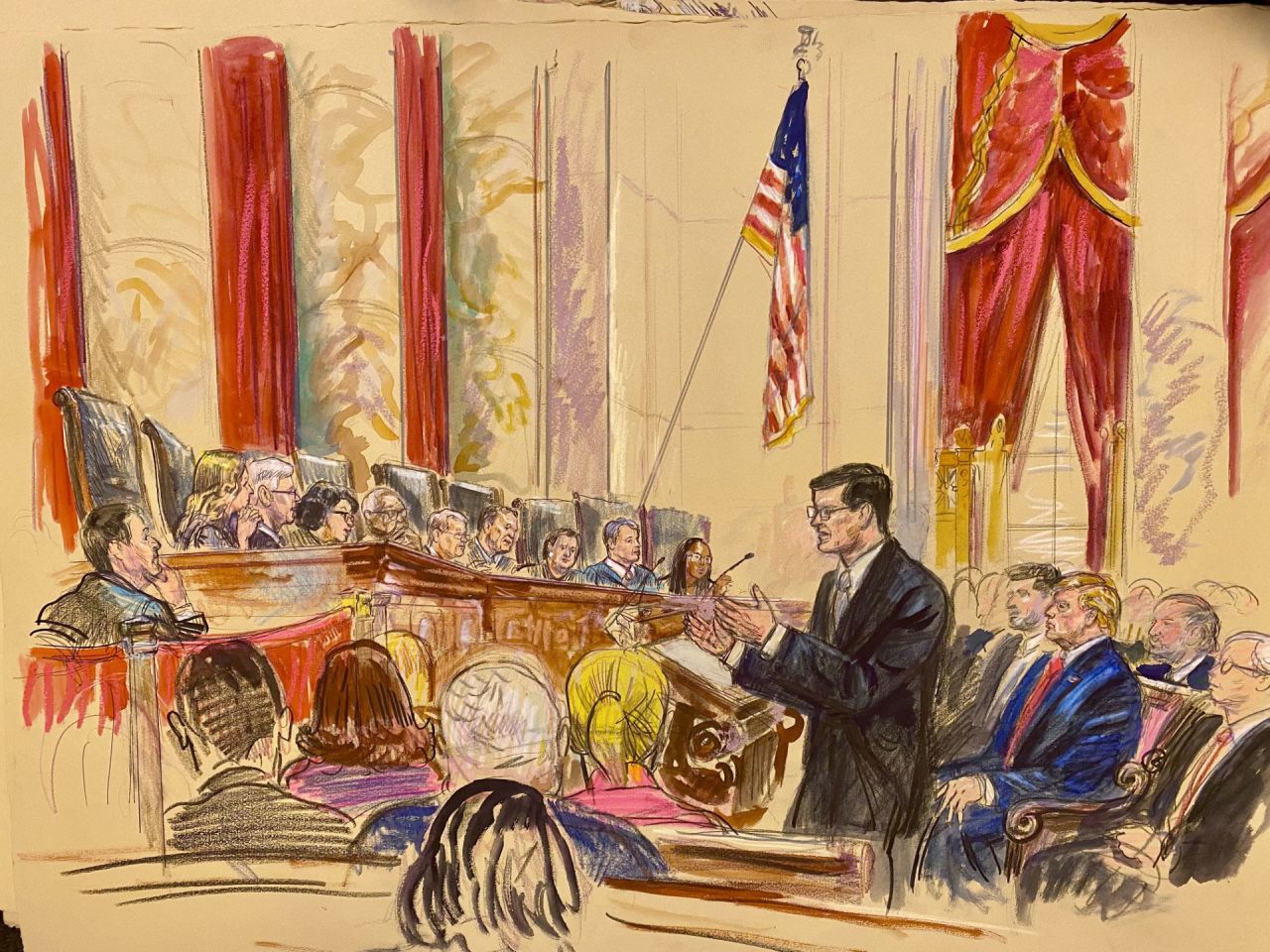
In Supreme Court argument on this issue, Justice Amy Coney Barrett raised a version of that concern by pressing on the post-slavery context that gave the Citizenship Clause its purpose in the first place. The core point is about consistency: rationales offered for denying birthright citizenship to the children of undocumented immigrants, if applied consistently, also would have had the effect of denying it to large numbers of freed slaves and their children and other Black Americans. That would have undermined the central objective of the Citizenship Clause.
That pressure point matters because it forces the country to confront an uncomfortable possibility: a narrow reading crafted for today’s immigration debate could point straight back at the very people the Amendment was designed to protect from citizenship gamesmanship.
Everyday stakes
Even people who think this is a technical legal quarrel should consider where it could lead.
- A shift from place to parentage. Birthright citizenship is a bright line. Parent-based citizenship rules are inherently more complicated.
- More proof demanded in ordinary transactions. When citizenship becomes harder to determine, institutions may ask for more documents, more often.
- More people living in limbo. A country that produces non-citizen children at birth would have to decide what to do with them for decades afterward. That is not just a theory. It is a permanent social category.

Second-best
There is another layer to this debate that tends to get lost: even some defenders of birthright citizenship describe it as a second-best policy solution, better than the currently available alternatives but not necessarily the optimal way to manage migration and citizenship in a complicated modern world.
That framing matters because it clarifies what is, and is not, on the Court’s plate. The justices are not being asked to design an optimal immigration system. They are being asked whether the Constitution’s guarantee can be narrowed by interpretation to achieve a policy goal that the political branches have not secured through the amendment process.
One civics test
Here is the question I would put on the board for my students: Is citizenship a constitutional fact, or a political favor?
The Fourteenth Amendment was written by people who had watched the country answer that question the wrong way, with catastrophic consequences. The Supreme Court’s job now is not to chase public mood. It is to decide whether the Constitution’s guarantee means what it says, even when the people covered by that guarantee are unpopular.
Because once you teach the government that citizenship can be narrowed by interpretation rather than amended by law, you are not just changing immigration policy. You are changing the meaning of membership itself.