

When most people think about the Supreme Court, they picture headline-grabbing disputes about elections, speech, or criminal law. But this week the justices devoted serious time to something far more common in everyday life: a workplace retirement plan.
The case in front of the Court, Anderson v. Intel Corp. Investment Policy Committee, asks a deceptively simple question: if workers believe their 401(k) options performed poorly, what exactly do they have to allege in order to sue the plan’s fiduciaries for imprudence?
That question matters because it sets the ground rules for ERISA lawsuits, and those rules can influence how comfortable employers feel offering more complex investments, including private equity and hedge funds.
Join the Discussion
What the Court is deciding
It helps to start with what this case is not about. Nobody is asking the Supreme Court to declare that private equity or hedge funds are automatically illegal inside a defined contribution plan like a 401(k). The dispute is narrower and more procedural, but still high stakes.
A former Intel employee alleges company retirement-plan fiduciaries breached their duty by investing in hedge funds and private equity, pointing in part to alleged underperformance. Lower courts rejected the claims, ruling underperformance alone is not enough without showing a “meaningful benchmark” for courts to assess performance.
So the core issue is this: when someone claims a retirement plan investment option performed badly, must the lawsuit plead a meaningful apples-to-apples benchmark at the start of the case?
The apples issue
If you listened to the justices’ questions, you heard the same theme repeated in plain language. They were concerned that courts cannot sensibly evaluate a performance claim without knowing what the investment should be compared to.
Justice Clarence Thomas captured that concern with a metaphor that kept coming up: “you can’t compare apples and oranges…if you have a fund…that is designed to produce high returns but riskier returns…you can’t compare that to a fund that is to protect against losses.”
Justice Elena Kagan used the same idea, saying that what is needed is “another apple.” Justices Samuel Alito, Amy Coney Barrett, and Neil Gorsuch pressed the employees’ lawyer on whether some kind of meaningful benchmark is required when a claim is framed as underperformance, with Gorsuch asking him to accept the principle of “apples, not oranges.”
Why benchmarks matter
In everyday terms, a benchmark is the yardstick. Without it, “this did worse than I expected” can be hard for a court to evaluate as a legal claim.
That is why the Ninth Circuit’s approach, now under review, matters beyond Intel. If the Supreme Court agrees that plaintiffs must plead a meaningful benchmark, fewer underperformance-based cases may make it past the earliest stage. If the Court goes the other way, more cases may move forward, increasing litigation pressure on plan sponsors.
Either way, the dispute reflects a recurring friction point: workers want enforceable protections when retirement savings are invested imprudently, while employers worry about becoming targets whenever an option lags.
What sponsors are waiting on

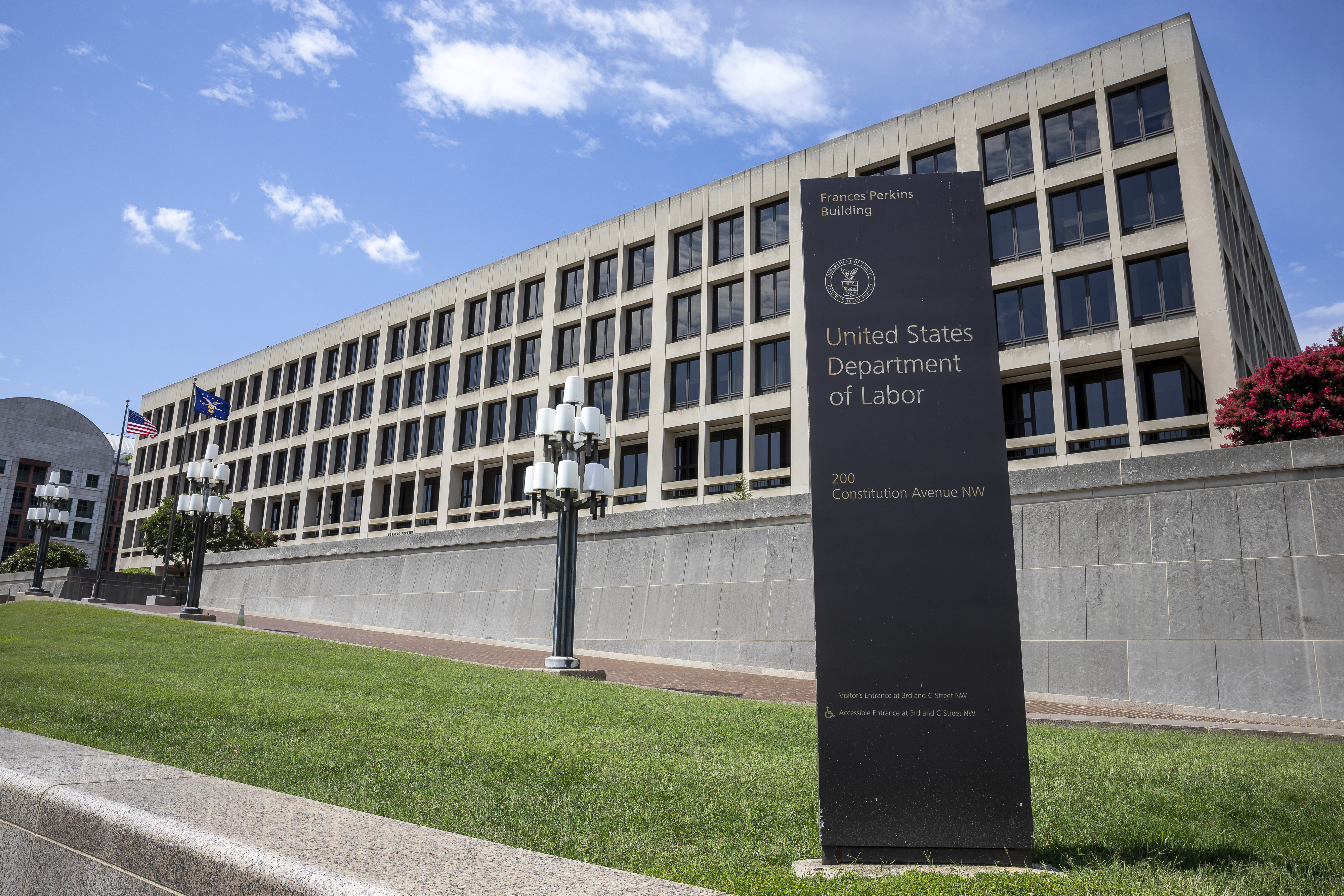
Many plan sponsors are in limbo, waiting for two things before changing their 401(k) menu: a Supreme Court decision and finalized Labor Department rules covering alternative investments.
“I think companies want to know what’s going to happen with the proposal and what’s going to happen with the Supreme Court case before they go rushing in to change their investment strategies,” said Elizabeth Hopkins, a principal at Hopkins ERISA Law and a former senior trial attorney with the Labor Department, who filed an amicus brief in the Supreme Court case on behalf of former high-ranking DOL officials.
What the government argued
During oral argument, justices explicitly asked Aimee Brown, assistant to the Solicitor General, how much guidance the court should provide in this case.
Brown urged the Court to suggest “some parameters” for what a “meaningful benchmark” needs to be. She also offered a reminder that shows up again and again in fiduciary law:
“Prudence is about process and not about performance,” Brown told the justices.
How the argument sounded
Several justices appeared receptive to Intel’s position during oral arguments, and attorneys who tracked the argument took the justices’ questions as a sign the Court was leaning toward affirming the Ninth Circuit.
On rebuttal, the employees’ attorney, Matthew Wessler, argued that allegations must be considered together and holistically. “I think that matters in a case like this, where you have an allegation about an imprudent either strategy or implementation of that strategy that then turns out badly,” he told the court.
The policy pendulum
Even though this case is framed around pleading standards and benchmarks, it is unfolding alongside a broader fight about whether and how alternative investments belong in 401(k) lineups.
ERISA does not specifically discuss alternative investments in 401(k)s. In June 2020, the Labor Department issued an Information Letter designed to “help Americans saving for retirement gain access to alternative investments that often provide strong returns,” then-Secretary of Labor Eugene Scalia said in a statement. In December 2021, the Labor Department issued a supplemental statement contending that most plan fiduciaries were not suited to evaluate alternative investments, given their complexity and high risk, which had a chilling effect on the market.
The tide shifted again in President Trump’s second term. In August 2025, he issued an executive order to democratize access to alternative assets for 401(k) investors. In October 2025, Rep. Troy Downing introduced the Retirement Investment Choice Act to codify the executive order into law. And in March, the Labor Department issued a proposed rule designed to ease legal and regulatory barriers; comments were due by June 1.
What sponsors want

Employers are awaiting the Court’s ruling, in some cases hoping for guidance that helps temper future litigation.
“Private funds can be an effective and entirely appropriate component of 401(k) plan investment options,” Eugene Scalia, a partner at Gibson Dunn & Crutcher and former U.S. Secretary of Labor, said. He added that a ruling for Intel would “lend further support” to ongoing Labor Department rulemaking.
Joshua Lichtenstein of Ropes & Gray, who heads the firm’s ERISA fiduciary practice, emphasized how much a clearer litigation standard could change employer behavior. “A positive outcome in this case will go a long way toward getting plan sponsors that have wanted to do this for years, but held off, for fear of being sued, feel more confident that they can do this with less fear of being sued,” he said.
Why big employers may wait

Even if Intel wins and the Labor Department finalizes more accommodating guidance, the rollout of private investments in 401(k)s may remain uneven.
Kent Mason of Davis & Harman, who represents major employers and retirement plan service vendors, said most large companies still do not offer private investments inside their 401(k)s. He expects “the largest companies are going to be the slowest to do this,” with smaller and mid-size companies moving first, in part because the biggest plans face more litigation risk.
Mason also flagged a lingering problem: even a helpful regulatory framework can leave room for argument. He pointed to the proposed six-factor analysis for selecting investment options, calling it “still subjective,” and he expects plaintiffs’ attorneys to keep testing whether large companies met their safe-harbor fiduciary obligations.
Market momentum
While plan sponsors wait for clearer legal and regulatory signals, the asset management industry is already moving. During Trump’s second term, asset managers and plan providers have continued to forge partnerships to offer alternative investments within 401(k)s, including announcements from Empower in May 2025 and Voya Financial in July. OneDigital and Principal Financial Group announced similar partnerships in January and August of this year.
In September, Constitution Capital Partners announced the Constitution Capital Horizon CIT, a collective investment trust, that launched with more than $50 million in initial assets across 18 retirement plans, and near-term commitments bringing total plan assets to more than $1 billion.
“We’re seeing plan sponsors, together with their advisors and consultants, take a closer look at private market investments and begin incorporating them in thoughtful ways,” Amy Vaillancourt, president of retirement at Voya Financial, said. She noted that Voya’s research found nearly two-thirds of participants want access to private market investments.
“Sponsors want to understand where private markets may benefit their participants’ long-term retirement outcomes,” Brett Fisher, head of investment product strategy at Principal Financial Group, said. At the same time, they “want to make those decisions in a way that aligns with their fiduciary obligations.”
Harvey Bines of Sullivan & Worcester put it this way: “There’s a clear business case for making sure plans provide employees with a broad base of investment options.” But he added that caution rises with novelty: “The more novel and riskier the options you offer, the more care and oversight you need to incorporate to make and continue the offering.”
What to watch next
This is not a constitutional law case in the classic sense. It is an ERISA case about fiduciary obligations and the rules for getting in the courthouse door.
Still, it touches a familiar theme: how courts balance access to justice with rules designed to keep lawsuits tethered to concrete, comparable facts. The justices’ repeated insistence on “apples to apples” comparisons is a reminder that legal standards can turn on practical questions of proof, not just big principles.
The Court’s decision, when it comes, is likely to shape not only how workers bring underperformance claims, but also how comfortable employers feel offering more complex investments in the retirement plans millions of Americans rely on.
Quick FAQ
Can private equity be in a 401(k)?
ERISA does not specifically discuss alternative investments in 401(k)s. The debate is about whether plan fiduciaries can evaluate and monitor them prudently, and what legal standards apply when workers sue.
What is a “meaningful benchmark”?
It is a comparison point that is close enough to the challenged investment that a court can evaluate whether underperformance really suggests imprudence. In oral argument, the justices repeatedly described this as needing “another apple,” not an “orange.”
Does underperformance alone prove a fiduciary breach?
The lower courts in the Intel case said no, without a meaningful benchmark. The Supreme Court is considering whether that pleading requirement should stand and how much guidance to provide.