
The National Mall feels like common ground. People march there, pray there, celebrate there, and sometimes rage there. It is the country’s symbolic front yard.
But it is not a legally blank space. It is federally managed land, with a permit system, enforceable regulations, and criminal statutes that can apply the moment a demonstration crosses from message to material damage.
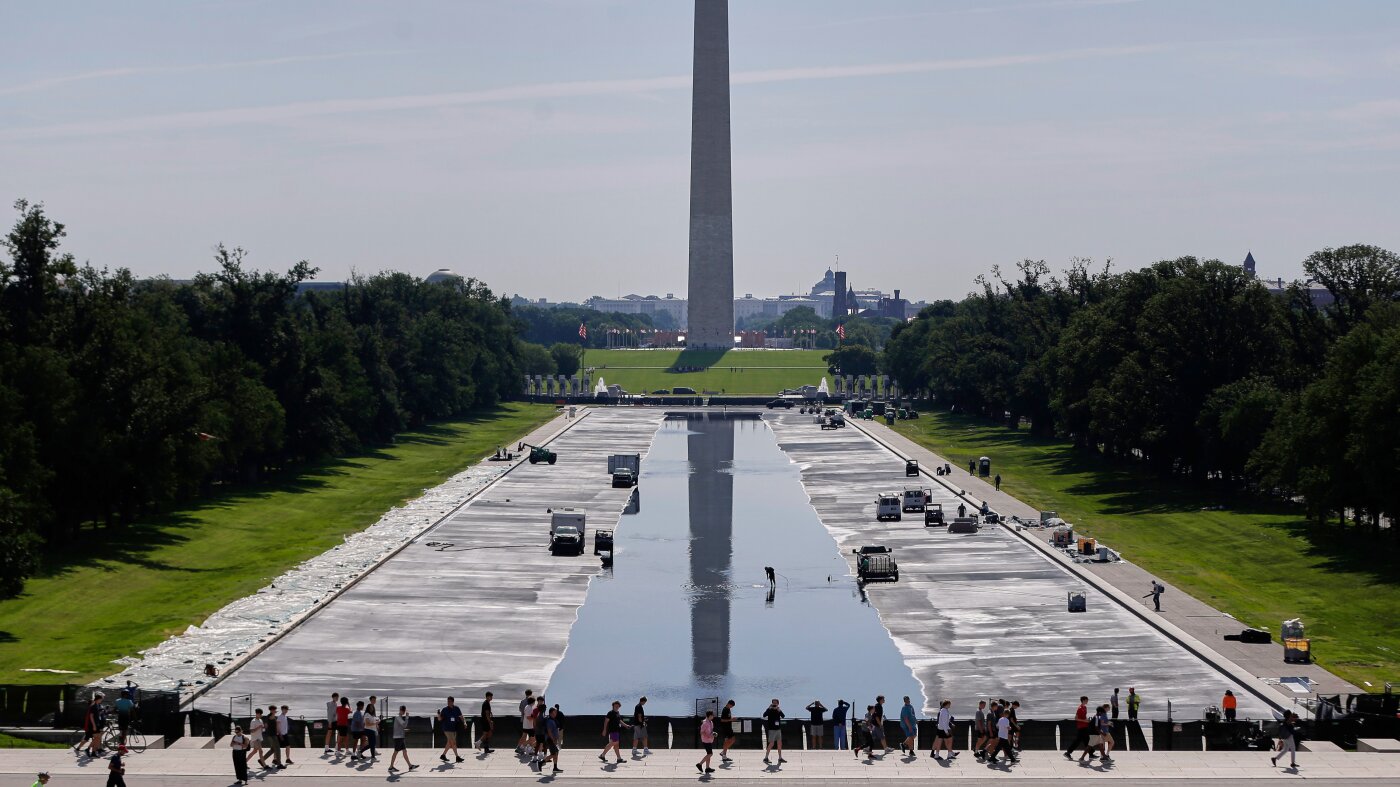
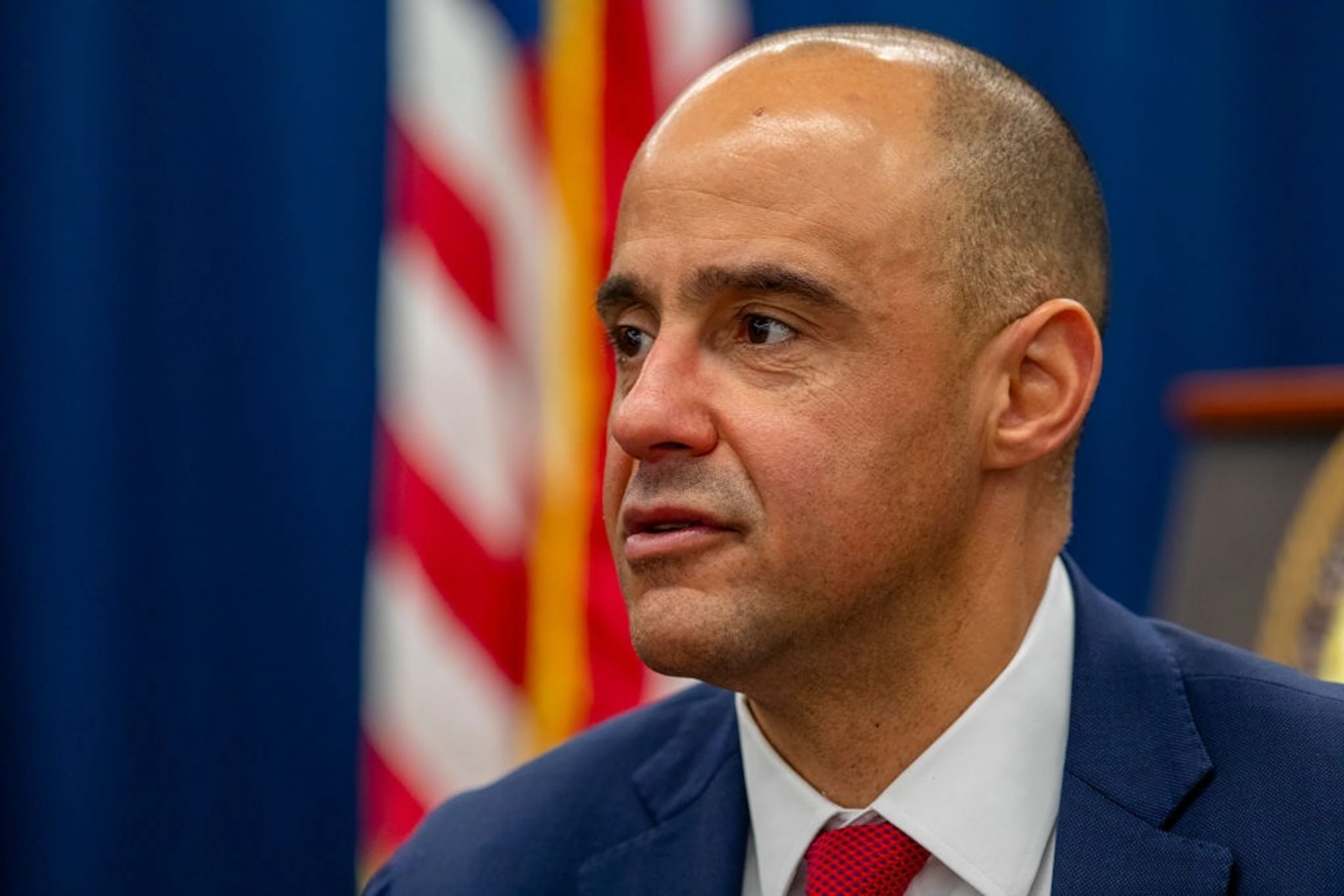
That line is what the current Reflecting Pool dispute is really about. President Donald Trump has publicly criticized Matthew Graves, the U.S. Attorney for the District of Columbia, over an incident described as damage near the Lincoln Memorial Reflecting Pool, including grass marked with large lettering. The specifics of any such incident are necessarily fact-dependent, and the legal question underneath is the durable one: when does protest on the Mall become a federal property offense, and who decides whether to prosecute?
Join the Discussion
The First Amendment is not a damage permit
The Constitution protects speech. It protects assembly. It protects the right to petition government for redress of grievances.
It does not protect the right to use someone else’s property as your canvas.
This is one of the most misunderstood aspects of the First Amendment. The amendment is powerful against content discrimination, but it is not a shield against generally applicable laws like trespass, property destruction, or defacing public land.
In other words, the First Amendment can protect the viewpoint of a protester. It does not automatically protect the method if the method involves damaging government property.
Why the Mall has tighter rules
Much of the National Mall and its memorial areas are administered by the National Park Service (NPS). That matters because the NPS is allowed to regulate the time, place, and manner of demonstrations on federal parkland.
Just as important, the Mall is often treated as a public forum for First Amendment purposes, but it is not all the same forum. Many open outdoor areas function like a traditional public forum. Some memorial interiors, restricted zones, and security-buffer areas can be treated as limited or nonpublic forums where tighter rules are more likely to be upheld.
Courts generally uphold NPS demonstration rules when they are:
- Content-neutral (the rule applies regardless of what you believe)
- Narrowly tailored to serve an important government interest (public safety, crowd control, resource protection)
- Leaving open alternative channels for expression (you can still demonstrate, just under rules)
On the Mall, those government interests are unusually concrete. The government is not only managing crowd flow. It is protecting historic landscapes, irreplaceable memorials, and sensitive infrastructure. The Reflecting Pool itself is not just decorative. It is a maintained federal feature that can be damaged in ways that are expensive and slow to repair.
Permits are part of the system
A permit requirement for large demonstrations can sound un-American until you realize what it is trying to prevent: one group effectively monopolizing a limited public space or creating safety hazards that make others’ speech impossible.
For the National Mall, permits are typically required for certain sizes of gatherings, stages, sound amplification, temporary structures, and activities that could affect park resources. In the National Capital Region, demonstration and special-event rules are governed largely through NPS regulations such as 36 C.F.R. § 7.96 (National Capital Region demonstrations and special events), along with general NPS rules in 36 C.F.R. Part 2 covering things like closures and resource protection.
A key constitutional point is that a permitting system cannot be a disguised censorship system. It needs clear standards. It needs deadlines. It cannot hand an official unlimited discretion to say yes to friendly speech and no to unfriendly speech.
What counts as vandalism on federal land?
“Vandalism” is a moral label. Criminal law cares about elements: what was damaged, who owned it, what the person intended, and what it cost.
On federal property, prosecutors have multiple tools. Depending on the facts, charges can involve:
- Willful damage to federal property, commonly charged under 18 U.S.C. § 1361 (willfully injuring or committing depredation against property of the United States)
- Regulatory offenses under National Park Service rules in 36 C.F.R., including provisions that prohibit damaging or destroying park property or natural features, violating permit conditions, or entering closed or restricted areas
Two details tend to drive the seriousness:
- Intent: Was the damage accidental, reckless, or willful?
- Amount of damage: Many property crimes become more severe at higher dollar thresholds.
A protester can claim they were “only expressing themselves.” The government will ask a different question: Did you knowingly cause physical damage to property the United States is obligated to protect?
Is writing on grass a federal crime?
It can be, depending on what “writing on grass” actually means in physical terms.
If the act involves:
- killing turf by chemicals, paint, salt, or other substances
- digging, cutting, or removing sod
- placing materials that cause lasting damage
- entering cordoned or restricted areas to do it
then the government can treat it as resource damage on federal land, not as harmless expression.
If, on the other hand, the markings were temporary and did not involve willful injury, the incident may be handled as a lower-level regulatory matter or not charged at all. The facts control the charge, not the outrage level.
Who prosecutes what in D.C.?
The District of Columbia is unusual. It has its own local government, but it is also the seat of the federal government. As a result, the charging landscape can look different than in a state.
For conduct on federal property, federal prosecutors are often involved. In Washington, that typically means the U.S. Attorney for the District of Columbia, working with investigative agencies like the U.S. Park Police and, depending on the incident, other federal law enforcement partners. By contrast, many D.C. Code offenses are typically handled by the D.C. Attorney General.
A useful way to keep it straight is this: if the charge is a federal statute or federal regulation (including NPS petty offenses), it is typically brought in federal court, often before a U.S. magistrate judge. If the charge is a D.C. Code offense, it is typically brought under the District’s local prosecution structure.
This is where prosecutorial discretion enters. Even if a statute could fit the facts, prosecutors still decide:
- whether the evidence is strong enough to prove guilt beyond a reasonable doubt
- whether the defendant can be identified and linked to the specific damage
- whether the harm is best addressed through criminal charges, civil cost recovery, restitution, or administrative enforcement
- whether the public interest is served by a particular charge
That discretion is real, and it is broad. It is also one reason disputes like the current one can become political: the public often wants the law to feel automatic, but prosecution is rarely automatic.
Can a president order charges?
Not the way many people assume.
The executive branch enforces federal law, and the Department of Justice is part of that branch. But in modern practice, DOJ maintains policies designed to keep specific charging decisions insulated from direct political command.
A president can set enforcement priorities at a high level and appoint leaders. A president can publicly criticize prosecutorial choices. But criminal charges still require prosecutors to sign them, and prosecutors are bound by ethical duties, evidentiary standards, and court oversight.
Even more importantly, a prosecution is not just a press release. It is a case that has to survive a judge, a defense attorney, and a jury.
The balance: forum and property
The National Mall is often treated as a “traditional public forum” for First Amendment purposes. Many open, outdoor Mall areas fit that description, while some memorial interiors, restricted zones, and security-buffer areas may be treated as limited or nonpublic forums with tighter rules.
But public forum doctrine never promised that public spaces would be consequence-free spaces.
The government may not punish speech because it is unpopular. It may punish destruction because it is destruction.
If the underlying Reflecting Pool incident involved willful damage, federal law has room to treat it as a serious offense. If the evidence is uncertain, or the damage is less clear, prosecutors may reasonably choose a different path. The constitutionally relevant point is that neither choice is supposed to turn on whether officials like the message.
What to watch if charges are filed
If a case moves forward, the details that matter legally will be less dramatic than the slogans and more concrete than the politics. Look for:
- Ownership and jurisdiction: Was the damaged area federally owned or administered?
- Documentation of harm: Repair estimates, photographs, maintenance reports
- Identification: Video, witnesses, admissions, or forensic links tying a person to the act
- Charging theory: A regulatory violation versus an 18 U.S.C. § 1361 theory signals how the government is framing intent and severity
- Remedies short of prosecution: Restitution for reseeding and repair costs, civil cost recovery, permit revocation or denial for future events, or bans from certain park areas can follow even without a major criminal case
The shortest version is this: Protests are protected. Places are regulated. Property is protected, too. On the National Mall, those three truths collide more often than anywhere else in America.
FAQ
Is the Reflecting Pool area federal property?
Much of the area around the Lincoln Memorial and Reflecting Pool is part of the National Mall park system administered by the National Park Service, which means federal rules and federal jurisdiction commonly apply. The precise boundaries matter in any specific case.
Can you be arrested for protesting on the National Mall without a permit?
Depending on what you are doing, you can be cited or arrested. Some expressive activity, especially small-group activity like leafleting or holding signs, may be allowed without a permit. Larger events, structures, amplified sound, and activities that implicate safety or resource protection often require permits, and violations can trigger enforcement.
Does the First Amendment protect symbolic speech like painting or marking?
Symbolic expression can be protected, but that protection is not a right to deface property. Courts typically allow government to prohibit damage or defacement even when the actor claims expressive intent.
Why would prosecutors decline to file vandalism charges?
Common reasons include insufficient proof of who caused the damage, uncertainty about intent, damages that do not support a more serious charging theory, or a judgment that a regulatory citation plus restitution is more appropriate.