
When people hear about arrests connected to the Lincoln Memorial Reflecting Pool, the instinct is to treat it like any other local vandalism case. It is not. The Reflecting Pool sits on federal land, managed as part of the National Mall, and that changes many of the practical basics: who investigates, which prosecutors file charges, what statutes apply, and how courts analyze defenses built around free speech.
This is the core civics lesson behind the headlines. At a national monument, the question is rarely just what happened. It is also whose property was it, which sovereign has jurisdiction, and what limits the First Amendment has in a place designed for public expression.
Join the Discussion
Who controls the Reflecting Pool?
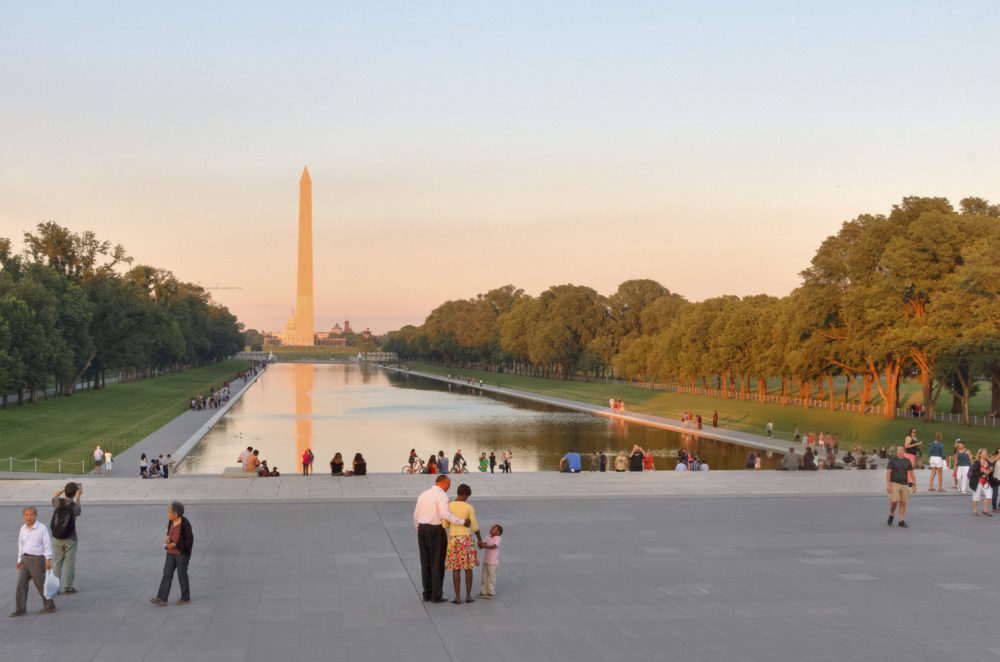
The Reflecting Pool is part of the National Mall and Memorial Parks system in Washington, DC. That typically means it is federal property administered by the National Park Service (NPS), an agency within the Department of the Interior.
That management role matters because NPS is not just a maintenance department. It is a regulatory authority. Congress has authorized the Park Service to issue rules governing conduct on park lands, and violations can be charged as federal offenses.
Who enforces the rules?
- U.S. Park Police often provide primary law enforcement on the National Mall and many NPS sites in the DC area.
- Other federal agencies can assist depending on the facts.
- Federal cases are typically handled by the U.S. Attorney’s Office for the District of Columbia, often in proceedings before U.S. magistrate judges when the charge is a petty offense or misdemeanor.
In short: because the location is federal, the legal framework is federal in most situations, even though jurisdiction can get nuanced at the margins and local-style offenses can sometimes appear in federal court.
Key federal laws in damage cases
Federal prosecutors have several tools for conduct that damages government property. The exact charge depends on what was damaged, how, and the dollar amount of the harm.
1) Injury to government property (18 U.S.C. § 1361)
This is the workhorse statute for many vandalism cases on federal property. It criminalizes willful injury or depredation against property of the United States, including attempts.
- If the damage is $1,000 or less, it is generally charged as a misdemeanor.
- If the damage exceeds $1,000, it can be charged as a felony with substantially higher potential penalties.
The key elements are usually willfulness and federal ownership. “I did not know it was federal property” is not always a magic shield if the conduct was plainly intentional and the property is demonstrably federal.
Concrete example: a small defacement that can be cleaned for a few hundred dollars often stays in misdemeanor territory. Damage requiring draining, specialized restoration, or repairs that push costs past $1,000 is where felony exposure can come into play.
2) Park Service regulations (36 C.F.R. Part 2)
Many incidents inside an NPS unit are charged under Park Service regulations, which typically function as federal misdemeanors when violated. Provisions often implicated in National Mall cases include:
- 36 C.F.R. § 2.31: vandalism and damage to property.
- 36 C.F.R. § 2.32: interfering with agency functions, including refusing to obey certain lawful orders.
- 36 C.F.R. § 2.34: disorderly conduct.
- 36 C.F.R. § 1.5: closures and public use limits, which can matter when areas are restricted for safety, repairs, or resource protection.
Other provisions can apply in the right factual setting, including rules aimed at protecting cultural or natural resources. For the Reflecting Pool itself, the most common legal theories tend to be straightforward: damage, disorderly conduct, failure to comply, and entering or remaining in areas that were lawfully closed.
3) The Assimilative Crimes Act, when there is a gap (18 U.S.C. § 13)
Federal law does not cover every conceivable form of misconduct in a bespoke way. When no federal statute or regulation squarely fits a particular act, prosecutors can sometimes charge a comparable local offense in federal court through the Assimilative Crimes Act. That is one reason “federal land” can still produce charges that look a lot like ordinary DC offenses, even though the case is prosecuted federally.
Important caution: not every high-profile arrest results in the highest possible charge. Prosecutors often choose the statute that best matches provable facts, available evidence, and the intent requirement they can actually meet.
Are there special “monument” penalties?
People often assume there is one special “national monument vandalism” law. In practice, the federal system is more modular. Prosecutors typically rely on general federal property statutes and NPS regulations, then add related charges when the facts support them.
There are also laws and rules that protect certain memorials, structures, and government property in ways that can increase exposure when damage is significant or when conduct involves broader criminal behavior. But the baseline is simple: if it is federal property, federal property damage law applies.
Can you protest at the Reflecting Pool?
Yes, broadly speaking. The National Mall is one of the most protest-oriented public spaces in the country. The First Amendment is at its strongest in traditional public forums like parks and sidewalks, and the Supreme Court has long treated public parks as quintessential venues for speech and assembly.
Public forum does not mean anything goes
Even in a traditional public forum, the government can impose content-neutral time, place, and manner restrictions if they are narrowly tailored to serve significant governmental interests and leave open ample alternative channels for communication.
- Permits for large demonstrations can be constitutional.
- Rules limiting where stages, signs-on-stakes, or temporary structures can be placed can be constitutional.
- Restrictions aimed at safety, crowd control, and preservation of historic resources are often upheld.
Property destruction is not protected speech
This is the crucial distinction behind many “but it was political” arguments. The First Amendment can protect harsh criticism, offensive or unpopular ideas, and symbolic expression. It does not provide a general license to damage government property to make a point.
Courts routinely separate:
- Expressive conduct (which can receive some First Amendment protection), from
- Vandalism and depredation (which are punishable even when politically motivated).
If a person speaks, chants, holds signs, or gathers peacefully within lawful bounds, that is the First Amendment operating as designed. If a person defaces, breaks, drains, contaminates, or otherwise damages a federal landmark, courts generally treat that as unprotected conduct the government may punish.
Why federal jurisdiction matters
Jurisdiction is not trivia. It affects procedure and consequence.
1) The United States is the prosecuting authority and the property owner
When the damaged property belongs to the United States, the federal government is both the prosecuting authority and the owner of the asset at issue. Congress has written statutes specifically to deter that harm, and courts often treat restitution and repair as central remedies.
2) The court process can look different
Federal charges are heard in federal court. In DC, many NPS-related cases begin quickly, sometimes with a citation and sometimes with an arrest depending on the facts. A defendant may be booked and then brought before a U.S. magistrate judge for an initial appearance where conditions of release are set.
3) Restitution and conditions are often the real headline
In many federal property cases, courts order restitution, meaning repayment for repair and cleanup. Even when jail time is not the end result, the financial consequences can be severe, especially when specialized restoration is required. Probation, community service, and conditions limiting access to certain park areas can also be on the table.
How access can be restricted fast
If a high-traffic federal site needs immediate repairs or protective measures, the authority typically runs through NPS and the federal government’s property management powers.
- NPS can close areas temporarily for safety, maintenance, or resource protection.
- Law enforcement can establish perimeters during investigations or cleanup.
- Longer-term changes, like new barriers or rule adjustments, usually require more formal decision-making and must still respect First Amendment forum principles.
In other words, a site can be protected and repaired without turning the Mall into a speech-free zone. The Constitution requires balance, not paralysis.
What to watch for in a Reflecting Pool case
If you are trying to understand what an arrest report might turn into legally, there are a few durable questions that usually determine the charging path:
- What was the alleged damage? Defacement, contamination, broken fixtures, or structural harm can trigger different statutes.
- How much did it cost to repair? Dollar amounts can move a case from misdemeanor territory to felony exposure, including the $1,000 line in 18 U.S.C. § 1361.
- Was there evidence of intent? “Willful” damage is different from an accident or negligence.
- Were there additional rule violations? Entering closed areas, refusing lawful orders, or disruptive conduct can add counts even when the central allegation is damage.
- Was the conduct tied to a demonstration? That can raise First Amendment arguments about restrictions, but it rarely erases liability for the damage itself.
Those factors are what separate a viral clip from a durable legal outcome.
The constitutional takeaway
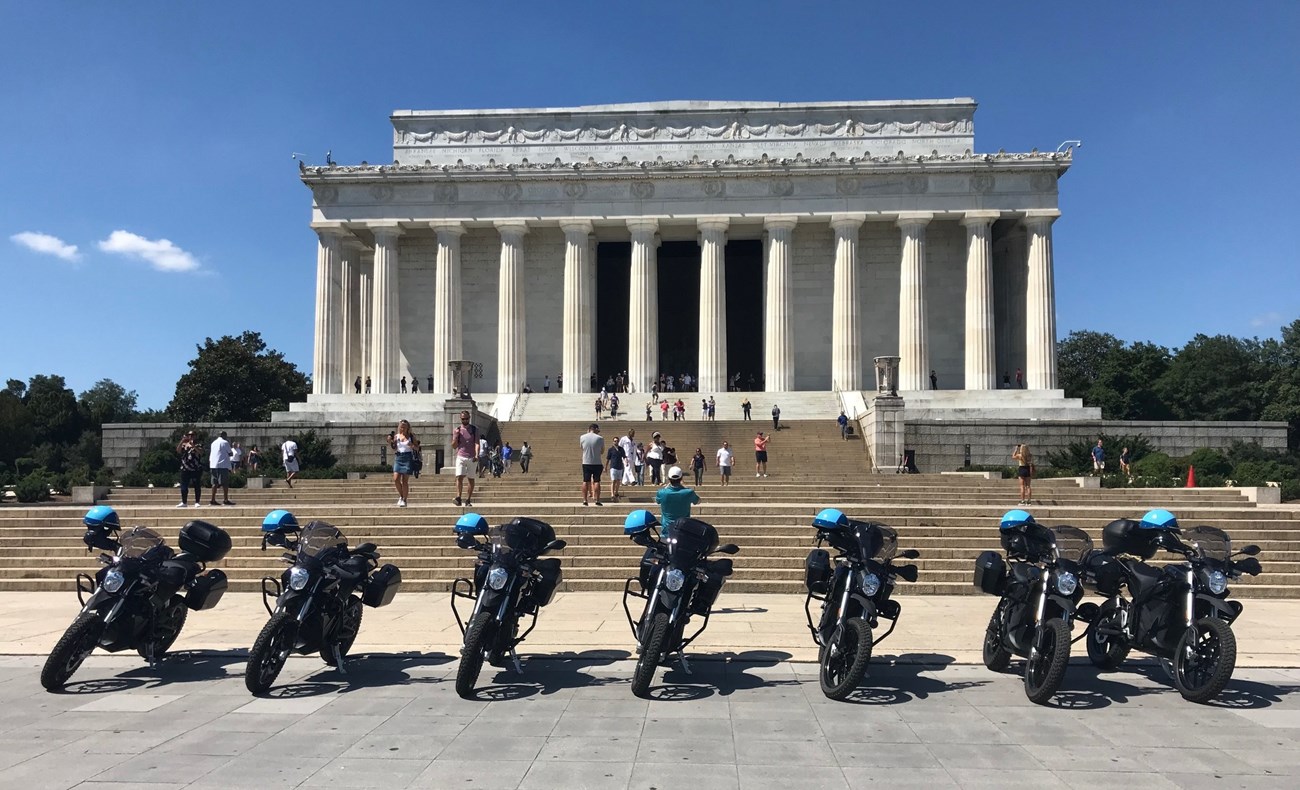
The National Mall represents a uniquely American compromise. It is a stage for speech, dissent, mourning, celebration, and political pressure. It is also federal property, maintained for everyone, including people who never asked to be part of a protest.
The Constitution protects the right to speak in that space. It does not require the government to tolerate the destruction of that space.
So when the news cycle turns to arrests at the Reflecting Pool, the legal question is not whether the government can be criticized at the Lincoln Memorial. It can. The question is whether the law treats damage to an iconic public landmark as speech. Under federal law, courts generally treat it as punishable conduct, not protected expression.