
You have heard the phrase “the U.S. Attorney announced charges” so often it can sound like a single person somewhere in Washington decided to prosecute your local case.
But a U.S. Attorney is not a roaming national prosecutor. A U.S. Attorney is the Justice Department’s chief federal prosecutor for a particular region of the country, operating out of a U.S. Attorney’s Office that is both local in geography and federal in authority.
That tension is the whole point. Federal law is national. Federal cases are personal, local, and messy. U.S. Attorneys are the officials who translate the priorities of the Department of Justice into real investigations, real charging decisions, and real courtroom consequences.
Join the Discussion
The job in one sentence
A U.S. Attorney leads federal prosecutions and many federal civil cases for one federal judicial district, representing the United States in court and overseeing the office that investigates and litigates on the government’s behalf.
That sounds broad because it is. In practice, most people encounter a U.S. Attorney’s Office through criminal cases: indictments, plea agreements, trials, sentencing, and public announcements that make the evening news.
Where U.S. Attorneys sit in the federal system
The Department of Justice is a national executive branch department led by the Attorney General. Within DOJ, U.S. Attorneys are the chief federal law enforcement officers for their districts. They are not judges, and they are not legislators. They are executive branch prosecutors.
Each U.S. Attorney runs one U.S. Attorney’s Office, typically abbreviated as “USAO,” for a federal judicial district. The district lines usually track state boundaries, but many states have multiple districts. For example, New York has four federal districts. Texas has four. California has four.
Nationwide, there are 93 U.S. Attorneys covering 94 districts, because one U.S. Attorney simultaneously serves both the District of Guam and the District of the Northern Mariana Islands.
What a U.S. Attorney’s Office actually looks like
A U.S. Attorney’s Office is staffed by Assistant U.S. Attorneys (AUSAs), plus support personnel and specialists. AUSAs do the day-to-day work of prosecuting cases in federal court. The U.S. Attorney sets priorities, approves major steps in important cases, and serves as the public face of the office.
U.S. Attorneys vs. “Main Justice”
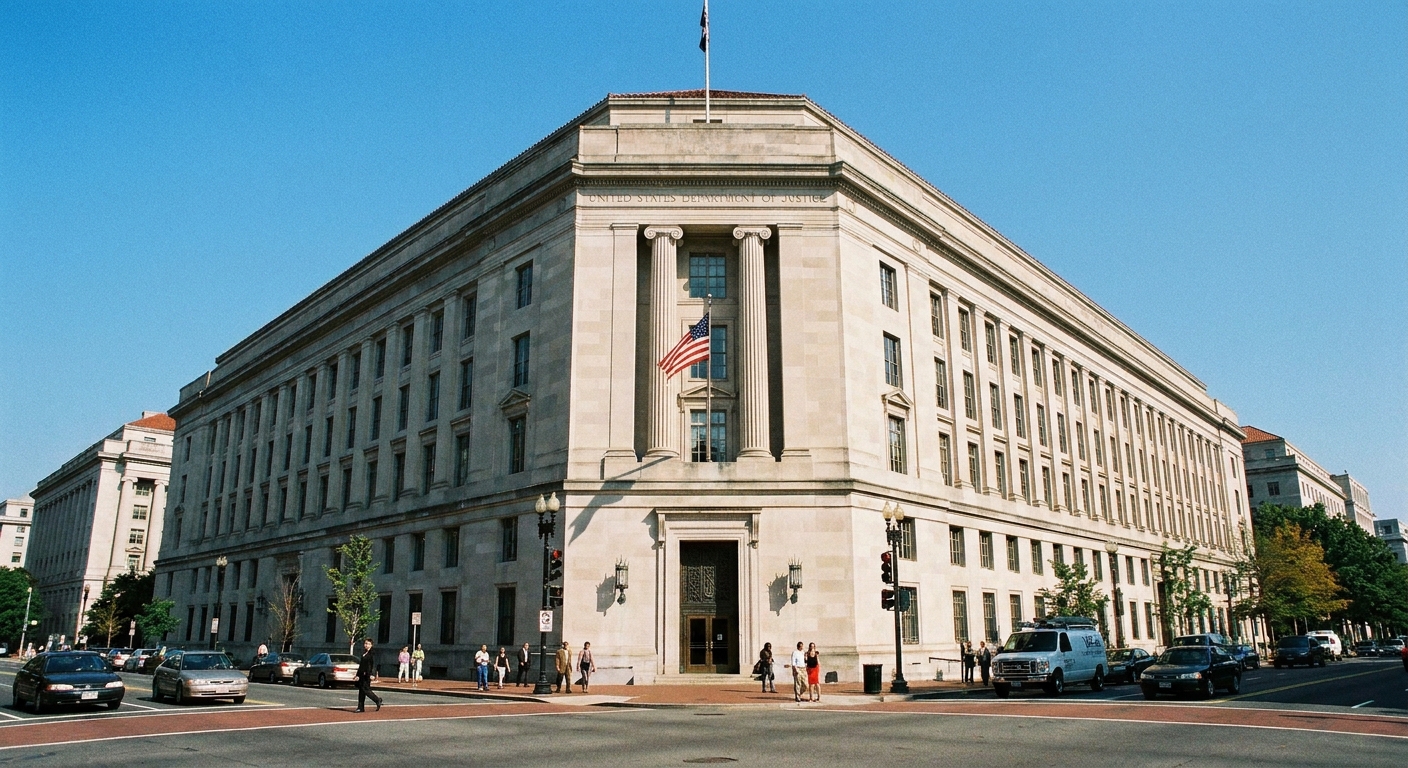
When reporters say “Main Justice,” they mean DOJ headquarters in Washington, DC. That includes the Attorney General, the Deputy Attorney General, the Associate Attorney General, and major litigating divisions like the Criminal Division, Civil Division, National Security Division, and Antitrust Division.
So how is that different from a U.S. Attorney’s Office?
- USAOs are geographically anchored. They prosecute cases in their district and work closely with local federal agents and local communities.
- Main Justice is policy-driven and nationwide. It sets department-wide priorities, issues guidance, and sometimes takes the lead on matters that have national significance or require centralized coordination.
- Authority overlaps. A case might be worked by a USAO with consultation from Main Justice, or it might be run by a DOJ division with assistance from the local USAO.
Who decides what cases get brought?
Most federal criminal prosecutions are initiated and handled by USAOs. But Main Justice can influence outcomes in several ways:
- Approval requirements. Certain charges, investigative tools, or plea terms may require approvals under DOJ policy, especially in sensitive categories.
- National coordination. Multi-district conspiracies, major corporate enforcement, terrorism, public corruption, or civil rights patterns can trigger deeper involvement from Washington.
- Resource allocation and task forces. DOJ can surge resources or create initiatives that shape local case selection.
The key takeaway is not that Washington “runs” every case. It is that a U.S. Attorney’s Office is part of a national department, and that national department can set the lanes a local prosecutor drives in.
How U.S. Attorneys are appointed
U.S. Attorneys are appointed under Article II of the Constitution, which gives the President the power to nominate “Officers of the United States” with the advice and consent of the Senate.
In plain English: the President picks a nominee. The Senate confirms or rejects. Once confirmed, the U.S. Attorney serves as the chief federal prosecutor for that district.
How long do they serve?
U.S. Attorneys do not have a fixed term in the way members of Congress do. They serve at the pleasure of the President, meaning they can be removed by the President. In reality, transitions between administrations often bring widespread turnover, because prosecutorial priorities are policy, and policy is something elections can legitimately change.
What about “acting” or “interim” U.S. Attorneys?
Vacancies happen. When they do, DOJ can install an acting leader for continuity, and in some circumstances an interim U.S. Attorney can serve while a nominee moves through the confirmation process. The details can be technical and statute-driven, but the practical point is simple: the office keeps functioning even when the Senate-confirmed position is empty.
What U.S. Attorneys prosecute
Federal criminal law is not “everything bad.” Most crimes are state matters. Federal prosecution usually enters the picture when Congress has made something a federal offense, and when federal jurisdiction makes sense.
Common categories of federal criminal cases
- Drug trafficking and organized crime
- Firearms offenses (often tied to interstate activity or prohibited possession)
- Immigration crimes
- Fraud (wire fraud, mail fraud, healthcare fraud, securities fraud)
- Public corruption
- Civil rights crimes
- Cybercrime and identity theft
- National security related cases (often coordinated with specialized DOJ components)
They are not only criminal prosecutors
U.S. Attorneys also represent the United States in civil litigation. That can include defending federal agencies, suing to enforce federal laws, collecting debts owed to the government, and litigating certain civil rights matters.
Investigations: who does what
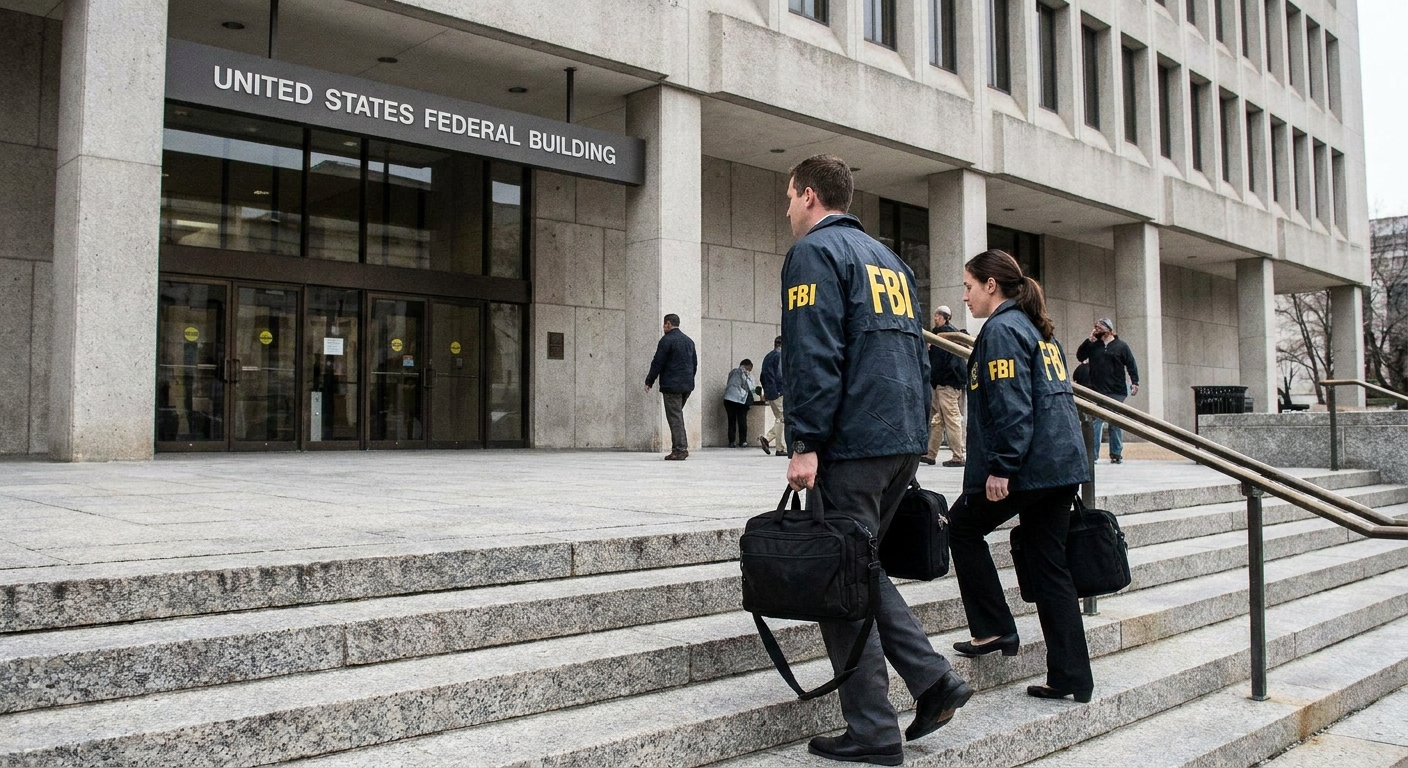
A U.S. Attorney’s Office does not “police” in the day-to-day sense. Federal agents investigate. Prosecutors direct the legal strategy and make charging decisions.
Most investigations are conducted by agencies like:
- FBI
- DEA
- ATF
- Homeland Security Investigations (HSI)
- IRS Criminal Investigation
- U.S. Postal Inspection Service
- Inspectors General (for fraud involving specific agencies)
Prosecutors and agents work as a team. Agents gather facts. Prosecutors ensure the steps taken are lawful and admissible, and they decide whether the evidence supports charges that can be proven beyond a reasonable doubt.
The grand jury: the quiet engine of federal charging
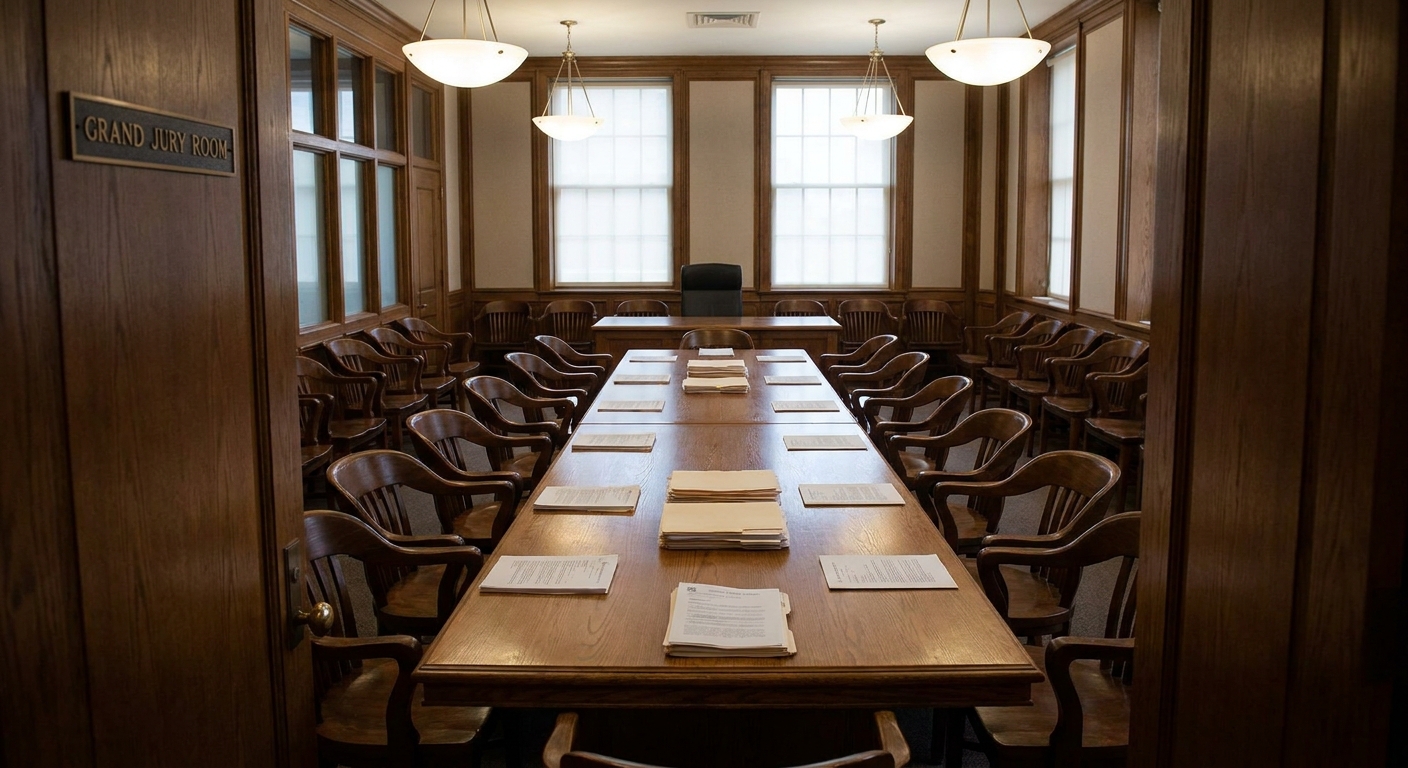
If you want to understand federal prosecution, you need to understand the grand jury. It is one of the least visible parts of American criminal procedure, and one of the most powerful.
What it is
A federal grand jury is a group of citizens convened to determine whether there is probable cause to believe a federal crime has been committed and that a particular person committed it. If the grand jury agrees, it returns an indictment, which is the formal charging document in most serious federal cases.
How it differs from a trial jury
- Purpose: grand jury decides whether to charge; trial jury decides guilt.
- Standard: probable cause for indictment; beyond a reasonable doubt for conviction.
- Secrecy: grand jury proceedings are typically secret by rule; trials are public.
- Participation: defendants and defense counsel generally do not present their full case to the grand jury.
What prosecutors do with a grand jury
Assistant U.S. Attorneys present witnesses, documents, and summaries. They also use grand jury subpoenas to gather evidence. This is a major reason federal investigations can be extensive: the grand jury provides a structured legal mechanism for compelling testimony and producing records, subject to constitutional and statutory limits.
Constitutional tie-in: where does the grand jury come from?
The Fifth Amendment requires a grand jury indictment for “capital, or otherwise infamous” federal crimes, with exceptions such as military cases. That requirement does not bind the states in the same way, which is why state charging procedures often look different.
Prosecutorial discretion: the power you rarely see
Most of the power of a U.S. Attorney’s Office is not in the cases it announces. It is in the cases it does not bring, the charges it declines, and the plea offers it makes.
Federal prosecutors exercise discretion in decisions like:
- Whether to open an investigation
- Whether to seek an indictment or proceed by complaint
- Which charges to bring, and which to leave on the table
- Whether to offer a plea agreement and on what terms
- Whether to recommend cooperation credit
- What sentencing position to take under federal guidelines and statutes
This discretion is shaped by DOJ policy, office leadership, resource limits, ethical obligations, and the evidence itself. But it is still discretion, and it helps explain why two cases that look similar on the surface can end up with very different outcomes.
How a federal case typically moves
Not every case follows the same script, but a common federal path looks like this:
- Investigation: agents gather evidence, often with prosecutors advising.
- Charging decision: prosecutors decide whether the evidence and law support federal charges.
- Complaint or indictment: for many felonies, prosecutors seek a grand jury indictment.
- Initial appearance and detention decisions: the court decides release conditions or detention.
- Discovery and motions: evidence is exchanged; legal issues are litigated.
- Plea or trial: many cases resolve by plea; some go to trial.
- Sentencing: federal judges impose sentence under statutes and guidelines frameworks.
U.S. Attorneys do not control the entire process. Judges rule on motions and sentencing. Defendants have constitutional rights at each stage. But prosecutors set the case in motion and decide what the government is asking the court to do.
Independence, politics, and accountability
U.S. Attorneys occupy an uncomfortable space in a constitutional democracy. They are political appointees, but they are also expected to make decisions grounded in evidence and law, not partisan demand.
Are U.S. Attorneys “independent”?
They are independent in the sense that they are bound by professional responsibility rules and DOJ standards, and they are expected to pursue justice rather than simply rack up convictions. They are not independent in the sense that they are not a separate branch of government. They are executive branch officials, and elections do change leadership and priorities.
What checks exist?
- Courts: judges can dismiss cases, suppress evidence, reject improper arguments, and impose sanctions.
- Juries: grand juries can refuse to indict; trial juries can acquit.
- Internal DOJ oversight: policies, approvals, and internal review mechanisms constrain discretion.
- Congress: budgets, oversight hearings, and legislation shape DOJ’s tools and reach.
- Public transparency: limited during investigations, but substantial once cases are filed in court.
None of these checks are perfect, and they do not operate on the same timeline. But the system is designed so that prosecutors are powerful, not unchecked.
Why this office matters to ordinary citizens
For most Americans, “the Constitution” feels abstract until the government shows up with a subpoena, a search warrant, an indictment, or a press conference that reshapes a community’s trust in institutions.
That is where U.S. Attorneys live: at the point where federal power becomes local reality.
When a U.S. Attorney’s Office focuses on public corruption, it changes how citizens think about their leaders. When it focuses on opioids, it changes how communities think about accountability for distribution networks and corporate actors. When it brings a civil rights prosecution, it changes the relationship between law enforcement and the governed. Those are legal decisions, but they are also civic events.
Quick answers
Is a U.S. Attorney the same as the Attorney General?
No. The Attorney General leads the entire Department of Justice. A U.S. Attorney leads DOJ’s work in one federal district.
Are U.S. Attorneys elected?
No. They are presidentially appointed and Senate-confirmed.
Do U.S. Attorneys run investigations?
They do not conduct field investigations like agents do, but they guide investigative legal strategy, use grand juries, approve key steps, and decide whether to file charges.
Can a U.S. Attorney prosecute state crimes?
Not as state crimes. Federal prosecutors enforce federal law. Conduct can violate both federal and state law, and separate sovereigns can bring separate cases, but the federal case must be grounded in federal statutes and federal jurisdiction.
A constitutional office, even if the Constitution does not name it
The Constitution does not spell out “U.S. Attorney” the way it spells out Congress or the presidency. But it does establish the framework that makes the role possible: executive power vested in a President, appointments requiring Senate consent, and a federal judiciary that hears “Cases” and “Controversies.”
U.S. Attorneys are one of the ways those constitutional abstractions become concrete: a person, in a place, making decisions that can take away liberty, recover money, dismantle schemes, and sometimes change the political weather.
And if you want to read federal prosecutions like a citizen instead of a spectator, that is the correct starting point.