The First Amendment powerfully protects public speech. Everyone knows that.
Except that in practice, the “in public” part does most of the work. A sidewalk is not a school hallway. A city park is not a courthouse lobby. A government-run comment page is not always a free-for-all bulletin board. And the Constitution’s protections change depending on which kind of government-controlled space you are standing in, or posting on.
That’s the public forum doctrine. It is how courts answer a deceptively simple question: when the government owns (or controls) the property, who gets to use it for speech, and on what terms?
One quick clarification up front: this doctrine is about government property and government-run channels. Private property is different. A privately owned shopping mall, a private university, or a corporate social media platform like X is usually not bound by the First Amendment in the same way, unless some separate “state action” rule applies.
Join the Discussion
The basic idea: manage space, not viewpoints
The First Amendment does not force the government to make every square foot of public property available for every kind of speech. Governments run airports, libraries, public schools, city halls, courthouses, and transit systems. If the rule were “anything goes,” those places would stop functioning.
So courts balance two realities at once:
- Speech needs breathing room. Peaceful advocacy is not a nuisance. It is the point of constitutional democracy.
- Public property has purposes. A courtroom exists to decide cases. A school exists to educate. A sidewalk exists to move people safely.
The forum category tells you how much “breathing room” the First Amendment requires in that space and how strict a court will be when reviewing speech restrictions there.
It also helps to separate two ideas people often blend together:
- Content discrimination is regulating speech because of the subject matter (politics, religion, labor, and so on).
- Viewpoint discrimination is regulating speech because of the side you take on that subject (pro-union allowed, anti-union banned). Viewpoint discrimination is almost always fatal, even where the government has more control.
Traditional public forums
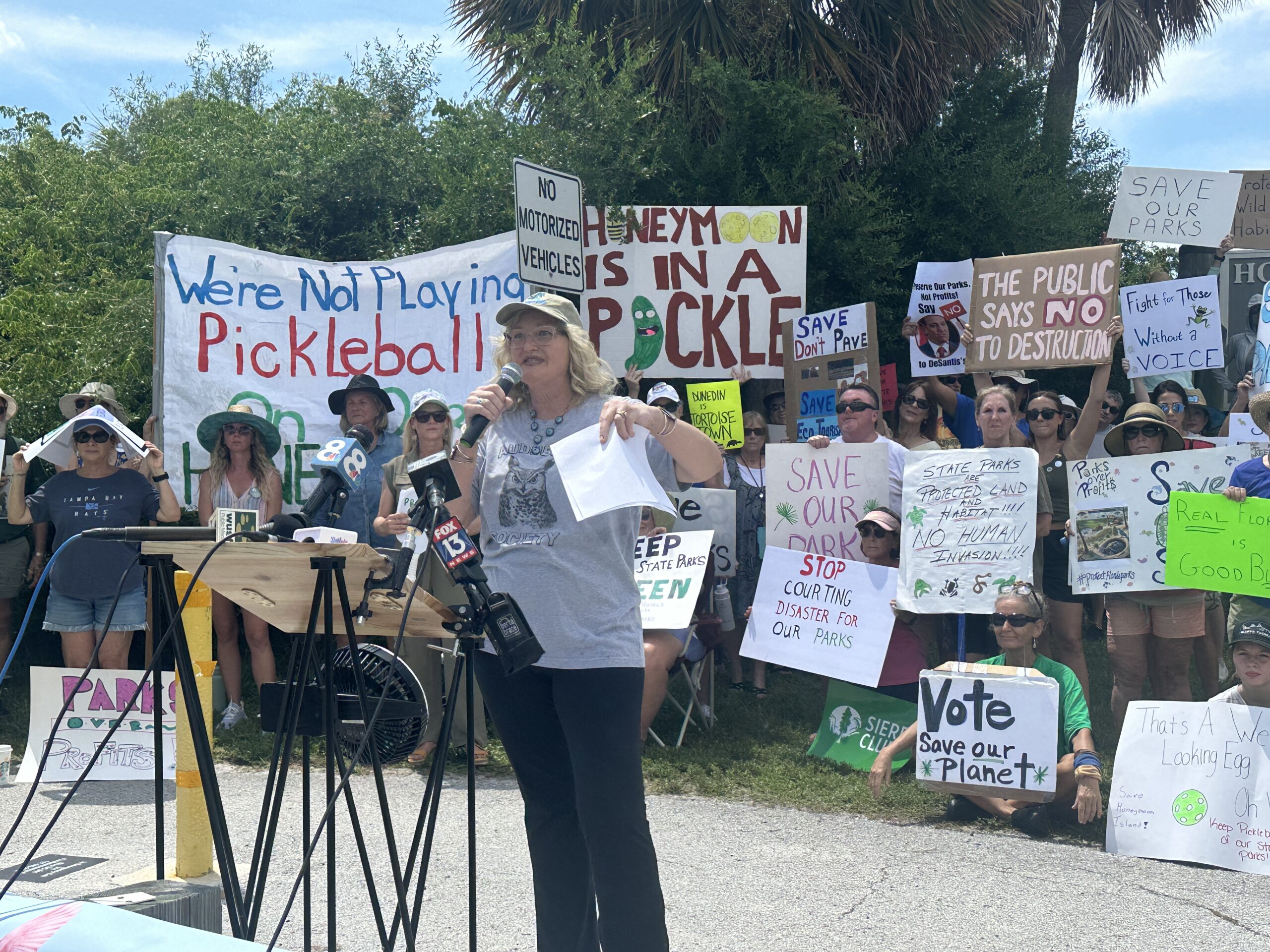
Traditional public forums are places that, by long history and custom, have been used for public assembly and debate. Think:
- Public sidewalks
- Public streets
- Public parks
In these locations, the government’s power to restrict speech is at its lowest. If a rule discriminates based on the content of speech or targets a viewpoint, courts generally apply the most demanding review. The government must show an exceptionally strong justification and tight tailoring.
Two important qualifiers keep this from turning into “anything goes”:
- Even in traditional public forums, some categories of speech are not protected (for example, true threats, incitement, and certain harassment or intimidation), and even content-based rules can sometimes survive in rare cases.
- You can still be required to follow time, place, and manner rules that keep the space safe and usable.
Designated public forums
A designated public forum is government property that is not traditionally a speech zone, but the government chooses to open it up for expressive activity by the public, at least for a period of time.
Examples can include:
- A city opening a municipal auditorium for public debates
- A public university opening a plaza for community demonstrations
- A government agency creating a public comment page that it treats as open for general discussion
Once the government designates a space as open for public expression, it cannot treat speakers like trespassers just because it dislikes what they say. Restrictions in a designated public forum are generally judged much like restrictions in a traditional public forum.
The key is that designation is an affirmative choice. The government is not forced to create designated public forums. But if it does, it has to live with the First Amendment consequences while the forum stays open.
It can, however, close or narrow a designated forum going forward, so long as it does so on a viewpoint-neutral basis and does not use “closing the forum” as a one-time maneuver to silence a disfavored speaker.
Limited public forums (and nonpublic forums)
This is where a lot of everyday conflicts happen.
A limited public forum is government property opened for speech only for certain groups or only for certain topics. The government is not saying “everyone can use this space for anything.” It is saying “this space is available, but only for these defined purposes.”
Common examples include:
- City council meetings during public comment: the forum is typically limited to topics within the council’s jurisdiction and time limits for each speaker
- Public school facilities after hours when opened for community groups under defined criteria
- Library meeting rooms when reserved for specific kinds of civic or educational events
A close cousin is the nonpublic forum, where the government has not opened the space for public expression at all, like certain areas of airports, internal government workplaces, or secure parts of public buildings.
In limited and nonpublic forums, the government has more room to regulate. It can usually set topic or eligibility limits in a limited forum. But two requirements still matter:
- The rule must be reasonable in light of the forum’s purpose.
- The rule must be viewpoint-neutral. The government cannot allow “pro” speech but ban “anti” speech on the same subject.
That last line is where many policies break. Officials often believe they are banning “disruption” when they are really banning disagreement.
Government speech and government channels
Sometimes the right question is not “what kind of forum is this?” but “is the government speaking?”
When the government is communicating its own message, it has far more control. Think official signage, a mayor’s press release, or a city’s curated announcement page that is clearly used to broadcast information, not to host public discussion. In those situations, forum analysis may not apply the same way, because the government is not obligated to provide an open mic for replies.
Online, this line can get messy. A government official’s social media activity may or may not be treated as government action depending on how the account is used and presented. Likewise, a city’s Facebook page might be treated as a limited forum, a designated forum, or more like a one-way channel depending on how it is structured and moderated. The details matter.
Time, place, and manner rules
Time, place, and manner restrictions are the government’s main tool for keeping public spaces functional without turning “order” into censorship.
In traditional and designated public forums, time, place, and manner rules are generally constitutional when they are:
- Content-neutral, meaning they apply regardless of what you are saying
- Narrowly tailored to serve a significant government interest like traffic safety, noise control, or access to buildings
- Leave open ample alternative channels for communication, meaning you still have realistic ways to reach your audience
Notice what is missing: the government does not need to prove the rule is the absolute least restrictive option imaginable. But it cannot use “administration” as a disguise for shutting down speech it finds inconvenient or embarrassing.
Common examples that can be legal
Permits for parades and large events
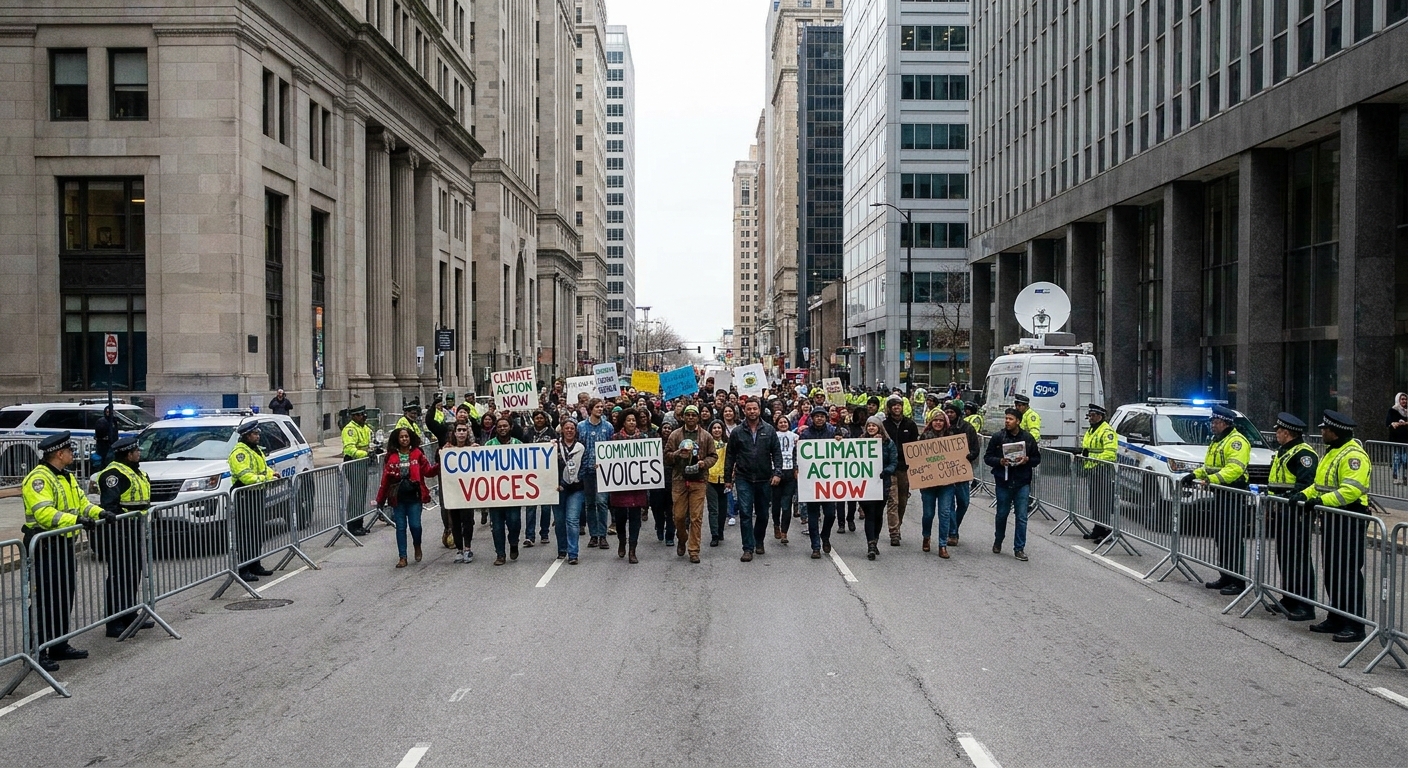
A city can usually require a permit for a march that blocks traffic or uses amplified sound. That is not censorship by default. It is planning: staffing intersections, rerouting buses, setting emergency access lanes, and preventing two groups from being scheduled into the same street at the same time.
The constitutional problem is not the idea of permits. The constitutional problem is discretion. If the permit system gives an official open-ended power to say yes to friendly speakers and no to critical ones, it becomes a First Amendment trapdoor.
Noise and amplification rules
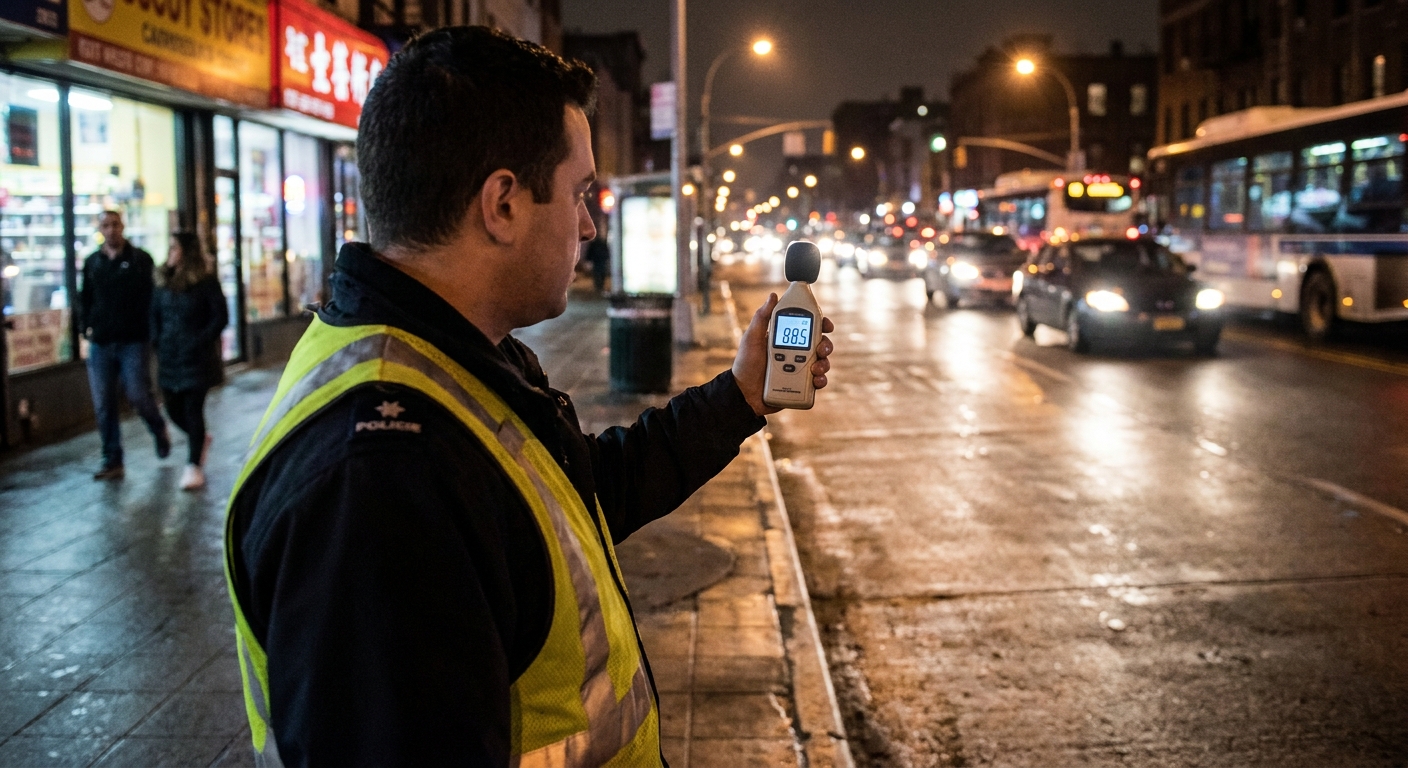
Limits on decibel levels, bans on amplification late at night, and restrictions near hospitals or schools can be valid time, place, and manner rules when they are genuinely content-neutral and tied to real interests like sleep, safety, and medical care.
Buffer zones and access rules
Rules that keep entrances clear, prevent obstruction of sidewalks, or maintain a safe distance from secure perimeters can be constitutional, especially when narrowly drawn and evenly enforced.
Buffer zones are also frequently litigated and highly fact-specific. The closer a rule gets to pushing speakers out of sight and out of earshot, the harder the government’s job becomes.
The moment the rule becomes “you can stand here if you support the mayor, but not if you oppose her,” it stops being management and starts being viewpoint discrimination.
When “content-neutral” is not neutral
Governments often insist a policy is content-neutral because it does not name a topic. But courts look at how a rule operates, not just how it is described.
Examples of restrictions that can raise red flags:
- Selective enforcement. If one group’s chant is “too loud” but another group’s chant is “community spirit,” neutrality is slipping.
- “Security” that follows the message. If the only events treated as high-risk are events criticizing officials, the label looks like a pretext.
- Vague terms. “Annoying,” “offensive,” or “inappropriate” are not neutral standards. They are invitations to viewpoint filtering.
The First Amendment is not just a ban on explicit censorship. It is also a ban on giving government officials a veto power that predictably tracks controversy.
Permit systems need guardrails
Permit requirements are common and often constitutional, but they must be built like guardrails, not like a trap.
A lawful permit scheme generally needs:
- Objective criteria for approval, such as route capacity, staffing limits, and conflicts with previously scheduled events
- Neutral fees tied to administrative costs, not to the anticipated hostility toward the message
- Time limits so an application cannot be buried until it becomes pointless
- Prompt review, including access to timely judicial review when required, so denials are not effectively final
Here is a simple way to test your city’s policy: if the application form feels like it is asking officials to judge the speaker’s worthiness, not the event’s logistics, it is probably too discretionary.
Speech in meetings: the limited forum trap
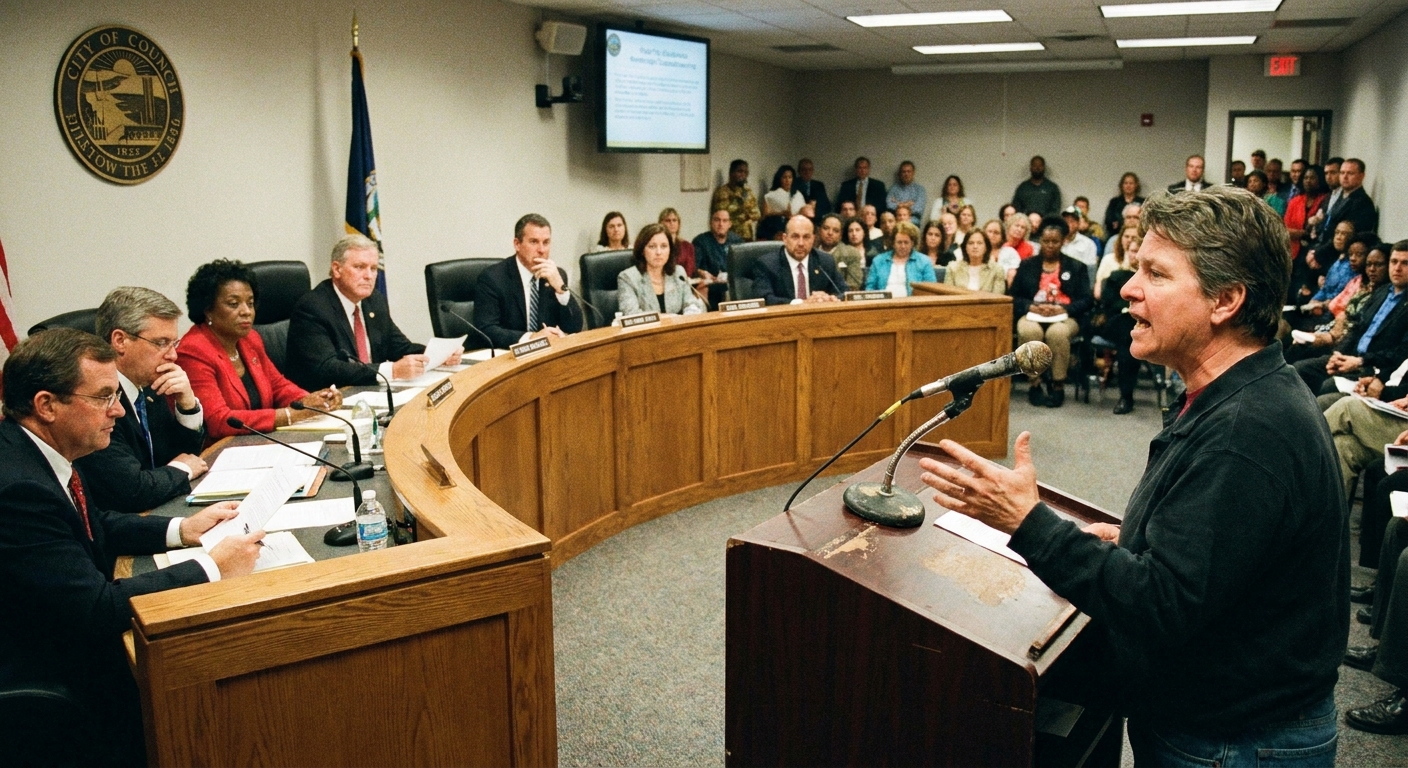
Public comment at a school board or city council meeting feels like the purest form of democratic speech. And it is. But it is also usually a limited public forum.
That means officials can enforce rules like:
- Time limits per speaker
- Relevance limits, such as requiring comments to relate to items on the agenda or within the body’s authority
- No shouting, no refusing to yield the microphone, no disrupting the meeting
What they generally cannot do is enforce those rules in a way that turns “order” into “agreement.” A speaker who criticizes the board is not automatically disruptive. A speaker who uses sharp language is not automatically out of order. The First Amendment does not require politeness licenses.
A quick scenario check
If you want to pressure-test the doctrine, try it on a real-life moment:
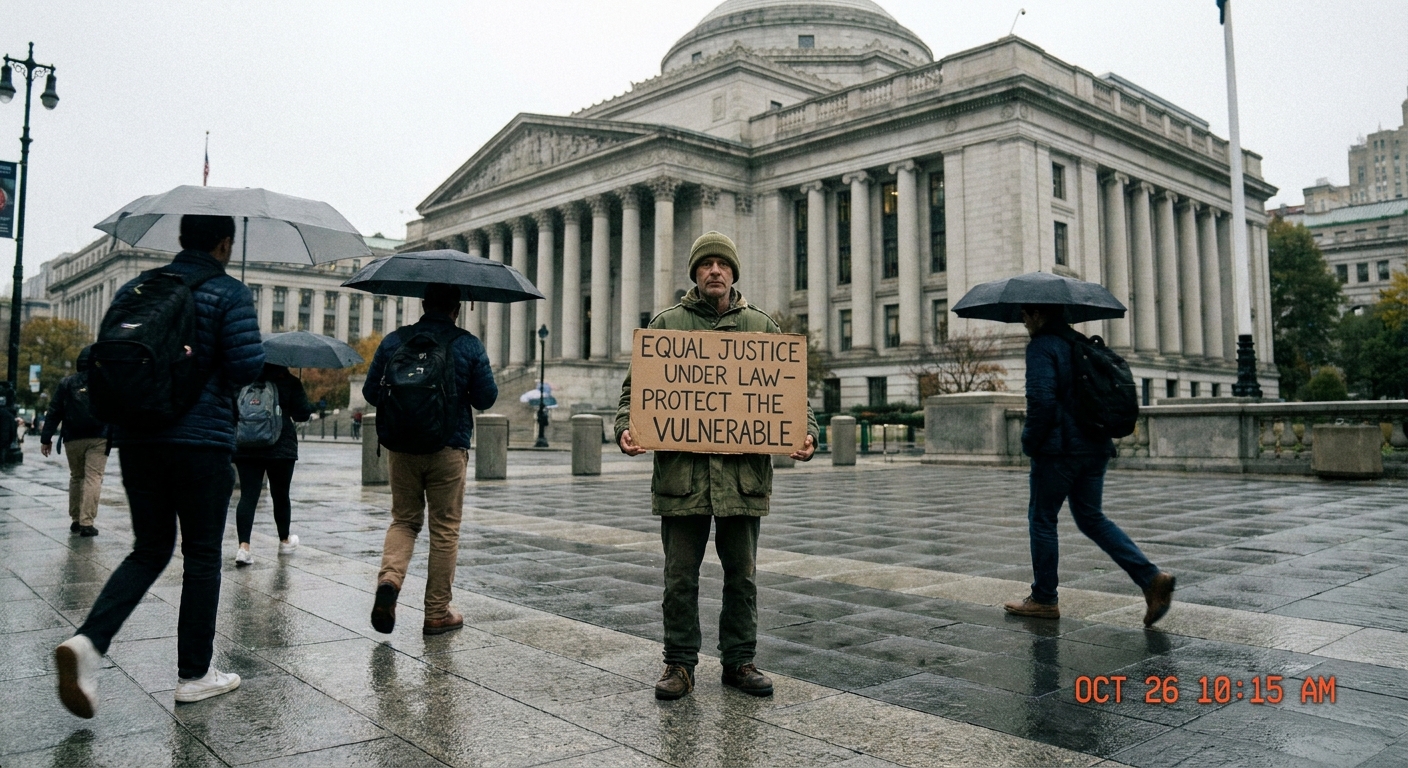
- Courthouse plaza: You are holding a sign outside on a public walkway. Is it a traditional public forum sidewalk, or part of a secured courthouse perimeter with different rules? The answer can change what restrictions are allowed.
- City Facebook page: You comment on an official post about a new ordinance. If the page is run as an open comment space, it may function like a limited or designated forum. If comments are closed or tightly limited by clear, neutral rules, it may function more like a one-way government channel. How the page is set up and used matters.
A quick forum cheat sheet
- Traditional public forum: sidewalks, streets, parks. Highest protection. Content-based restrictions face the hardest scrutiny. Content-neutral time, place, and manner rules can still apply.
- Designated public forum: property the government intentionally opens for public expression. While open, it generally gets similar protection to traditional public forums. The government can close it prospectively in a viewpoint-neutral way.
- Limited public forum: property opened only for certain subjects or speakers. Topic limits are allowed if reasonable and viewpoint-neutral. Restrictions must be reasonable and viewpoint-neutral.
- Nonpublic forum: not opened for public speech. Restrictions still must be reasonable and viewpoint-neutral.
What to do if you are restricted
If an official tells you to move, stop speaking, delete a post, or leave a meeting, do not guess at the legal theory in the moment. Gather the basics:
- Ask for the written policy (or the posted rule) and the specific reason you are being restricted.
- Document what happened, including who made the decision and what others were allowed to do in the same space.
- Use the available appeal or complaint process. Timing matters, especially for permits and events.
Many First Amendment disputes are won or lost on facts: the rule’s wording, the forum’s purpose, and whether the government applied the rule even-handedly.
Why this matters right now
Modern speech fights are not only about what people say. They are about where speech is allowed to land.
When cities redesign public spaces, when schools set rules for campus walkways, when agencies host comment portals, and when local boards run public meetings, the government is constantly drawing boundaries that determine whether a protest is visible or invisible, whether dissent is tolerable or “disruptive,” whether a permit is a planning tool or a political filter.
The public forum doctrine is not glamorous, but it is where the First Amendment becomes real. It is the difference between “you are free to speak” in theory and “you are allowed to speak here, at this moment, in this way” in practice.
If you are planning a demonstration or responding to restrictions, the first question is not “is my message protected?” It is often: what forum is this, and what rules can the government justify without judging my viewpoint?