
When people hear “vandalism,” they often picture a local crime: a city statue tagged with spray paint, a smashed window, a quick arrest and a fine. But a monument on federal land is different. The law treats it differently, the investigators are different, and the consequences can get bigger fast.
That is why a recent post about damage to the Reflecting Pool and warnings of “up to 10 years in jail” catches attention. The exact facts of any incident matter, but the legal framework is stable. If you damage a federal monument or other federal property, you are stepping into federal jurisdiction, and the federal criminal code has multiple ways to charge it.
Join the Discussion
Who controls the National Mall
The National Mall is not “Washington’s front yard” in the way most people assume. Much of it is federal land administered by the National Park Service (NPS), an agency within the Department of the Interior. That matters because federal property brings federal rules and federal enforcement authority.
On or around major D.C. monuments and memorials, you will commonly see overlapping authority, including:
- National Park Service management and regulations for park areas and memorial sites.
- U.S. Park Police law enforcement for many NPS areas in D.C., including parts of the Mall.
- Federal Protective Service for certain federal facilities (more building-focused than open parkland).
- Metropolitan Police Department (D.C.) in nearby areas and sometimes in coordination.
It is also worth being precise about geography. Not every high-profile lawn or plaza in “monument Washington” is NPS. Some nearby areas are managed by other federal entities, such as the Architect of the Capitol on Capitol grounds. But for many of the most visited memorial spaces on the Mall, NPS is the key manager.
The constitutional hook is straightforward: Congress has power over federal property (the Property Clause) and broad authority to legislate for the District of Columbia. Congress then delegates day-to-day management to agencies such as NPS and authorizes federal law enforcement and prosecutors to enforce federal rules.
Is monument vandalism federal?
It can be, and often is, when the property is federal, the act happens on federal land, or the protected resource is federally managed. Federal prosecutors do not need the act to be politically motivated. They need the elements of a statute: the who, what, where, and how of the damage.
Two legal ideas drive most monument cases:
- Federal property protection: damaging federal property is not just “mischief,” it is damage to the United States.
- Public-resource protection: many memorials, statues, and fountains are treated as protected cultural resources, and federal rules can specifically criminalize damage, defacement, or excavation.
The “up to 10 years” law
When you hear “up to 10 years in federal prison” for damaging federal property, it is commonly a reference to 18 U.S.C. § 1361, the federal statute that prohibits willfully injuring or committing depredation against property of the United States. In plain English, it covers intentionally damaging government-owned property.
Under 18 U.S.C. § 1361, the penalty structure turns largely on the amount of damage. If the damage exceeds $1,000, the offense can be treated as a felony with a maximum of 10 years in prison. If the damage is $1,000 or less, the statute provides a lower maximum.
One important nuance: the legal trigger is the statutory damage amount, not simply an invoice the government sends. In real cases, prosecutors often prove that amount through evidence that can include repair and restoration costs, labor, specialized materials, and remediation. Those real-world costs often track the legal valuation, but they are not just a number pulled from a bill.
This is one reason monuments are legally risky targets. A slash in an expensive waterproof barrier, damage to stone that requires a conservation team, or contamination in a water feature can quickly create a damage figure that crosses statutory thresholds.
Other laws that may apply
Federal monument cases are rarely one-statute stories. Depending on what happened, prosecutors may also consider:
- National Park Service regulations that prohibit destroying, injuring, defacing, removing, or disturbing park resources and property. A commonly used provision is 36 C.F.R. § 2.1 (resource protection). These charges are often misdemeanors, but they still carry serious consequences.
- Archaeological and historic resource protections in the right fact pattern. For example, the Archaeological Resources Protection Act (ARPA) can apply when protected archaeological resources are excavated, damaged, or removed. Other federal protections can also come into play when a site qualifies as historic or culturally protected.
- Disorderly conduct or unlawful entry rules if the vandalism occurred after hours, in a restricted zone, or during a closed period.
- Conspiracy and aiding-and-abetting charges if multiple people planned the act, acted as lookouts, supplied tools, or coordinated online.
What matters is not just the object you damaged. It is the whole context: where you were standing, what rules were posted, what barriers were crossed, what tools were used, and what the damage required to fix.
Why costs matter
In federal property cases, the government is not only trying to punish misconduct. It is trying to make itself whole. That is where restitution enters the picture.
If you are convicted, a court can order you to pay restitution for repair and restoration costs. That can include:
- Materials and specialized replacement parts
- Conservation experts and technical labor
- Cleanup and hazard mitigation
- Site closures, temporary protections, and emergency response
This is the underappreciated reality of symbolic sites. They are often engineered, historic, and delicate in ways the public does not see. A fountain is not “just water.” A memorial plaza is not “just stone.” A reflecting pool is not “just a big puddle.” Repairs can be costly because the site has to be restored safely, correctly, and sometimes to historic-preservation standards.
First Amendment limits
The First Amendment protects speech, protest, and the right to petition the government. It does not create a right to destroy government property to make a point.
Courts draw a hard line between:
- Expressive activity like holding signs, chanting, marching, or peaceful assembly (often allowed, sometimes permitted and regulated).
- Property damage like defacing, carving, cutting, smashing, or otherwise physically altering a monument or facility (criminal conduct, even if “symbolic”).
In practice, this means a defendant may argue the act had a message, but the government can still prosecute the damage itself. The message does not immunize the method.
How cases are handled
If someone vandalizes a monument on federally administered land, a case often moves through a predictable sequence:
- Investigation by U.S. Park Police or other federal law enforcement, using cameras, witness statements, and sometimes social media evidence.
- Charging decision by federal prosecutors. In Washington, D.C., that is often the U.S. Attorney’s Office for the District of Columbia. Depending on the charge, a case may proceed in federal court, including before a U.S. Magistrate Judge for certain misdemeanor offenses.
- Damage assessment where agencies document repair needs and costs. That evidence can affect charging, negotiations, and sentencing.
- Restitution and supervised release as part of sentencing, even after any jail term ends.
A word that does real work in these statutes is willfully. Accidental damage and intentional defacement are not the same fact pattern, and intent often becomes a major issue. But “I did not mean it” is not a magic phrase either, especially where the conduct looks deliberate or reckless.
And yes, “up to” is doing real work in the phrase “up to 10 years.” The maximum is not the same thing as what a particular defendant will receive. But the presence of a high maximum tells you something important: Congress has decided that harming federal property can be treated as a serious offense.

Quick answers
Reflecting Pool vandalism penalty
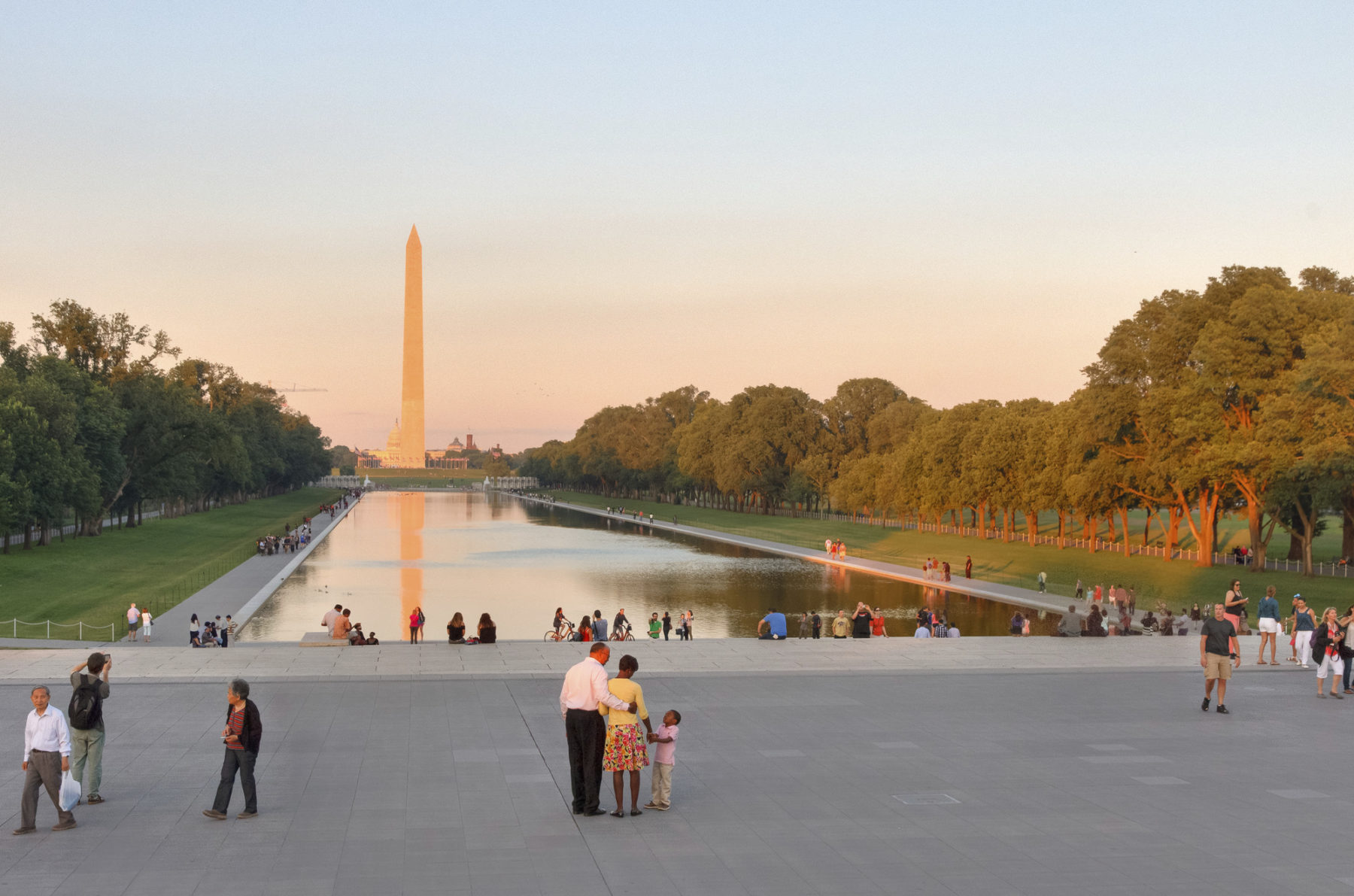
The Lincoln Memorial Reflecting Pool is part of the National Mall and is generally administered by the National Park Service. Damage can be charged under federal law, including 18 U.S.C. § 1361, and the potential penalty often depends on whether the damage amount exceeds $1,000.
Who protects National Mall monuments?
Many sites are administered by the National Park Service and policed by the U.S. Park Police, sometimes with overlapping support from other federal and D.C. agencies.
Federal property vandalism 10 years
People usually mean 18 U.S.C. § 1361. The statute provides a felony pathway and a higher maximum when the damage amount exceeds $1,000.
Does the government make vandals pay?
Courts can order restitution after conviction. In some situations, the government may also pursue civil recovery, but the most common path is restitution in the criminal case.
The civic point
Federal monuments feel like symbols, but legally they are also infrastructure. They are owned, administered, and protected by government entities that answer to statutes passed by Congress. When you vandalize them, you are not only “making a statement.” You are triggering a system designed to protect public property and recover public costs.
If you are reading this because today’s news made the issue feel immediate, hold onto the durable lesson: on federal land, the rules change. The jurisdiction changes. And the consequences often scale with the price and proof required to put the national commons back the way the public is entitled to find it.
Note: This article is general information, not legal advice.