
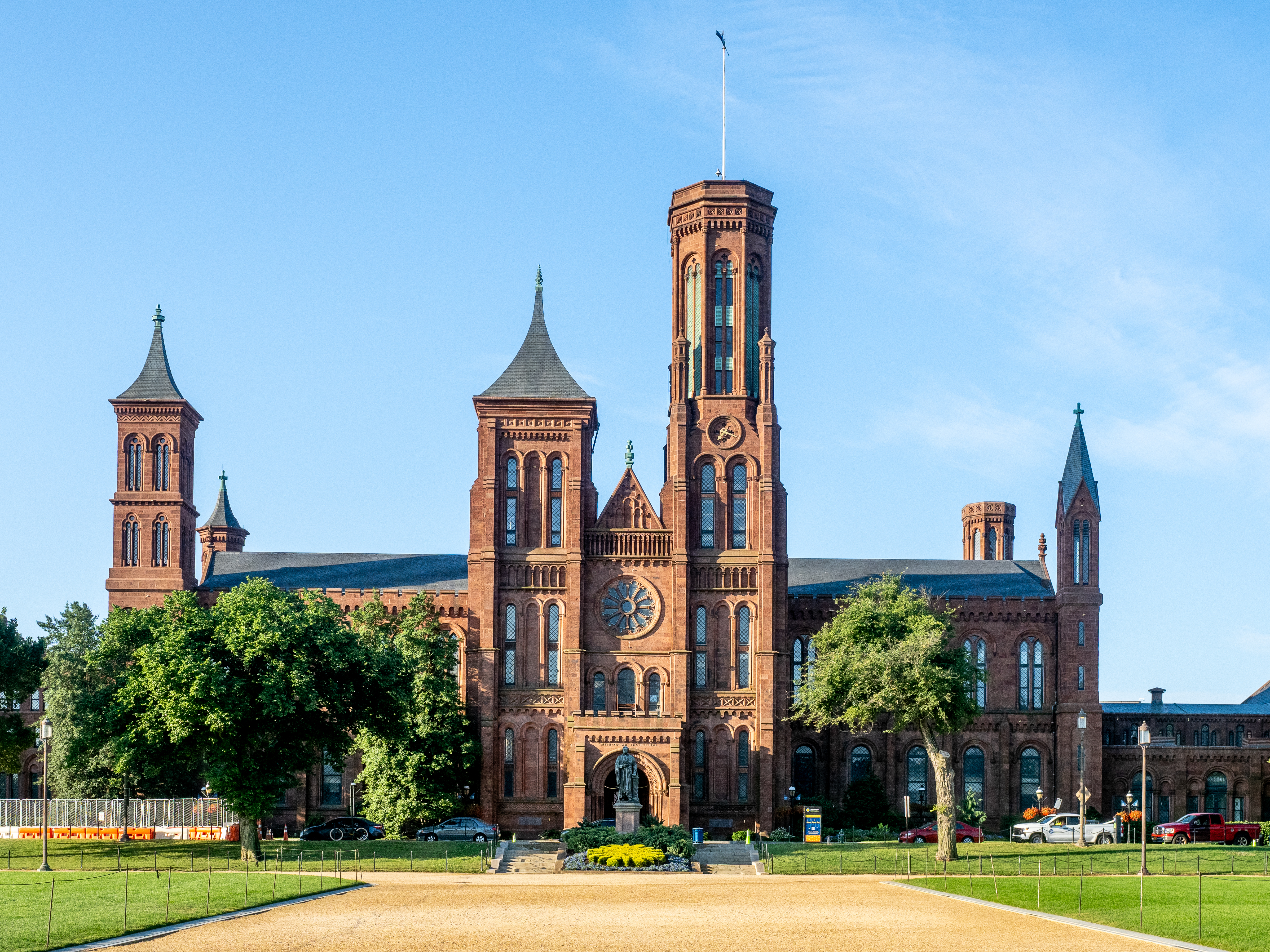
The Smithsonian feels like a national attic. It holds the stuff we cannot quite throw away: artifacts, documents, aircraft, dresses, protest signs, dinosaur bones, and the stories we attach to all of it.
That is why fights over its exhibits keep turning into fights over the country itself. When a White House pressures the Smithsonian to change how it tells American history, the instinctive question is simple: Can the President do that?
The constitutional answer is less satisfying but more useful. The President can influence the Smithsonian in some ways, but he cannot simply command curators the way he can command executive branch employees. The Smithsonian is a congressionally chartered trust instrumentality with a unique governance model, funded partly by Congress, overseen by a distinctive board, and positioned at some distance from day-to-day presidential control.
Join the Discussion
What the Smithsonian is, legally
The Smithsonian Institution is not a Cabinet department. It is not a typical executive agency. It was established by Congress in 1846 to administer James Smithson’s bequest for the “increase and diffusion of knowledge.” Over time it became something bigger: a cluster of museums, research centers, and the National Zoo that is woven into federal life.
That mixed origin explains its mixed structure today:
- It receives federal appropriations for major operations, facilities, and staffing, alongside private donations and trust income.
- It is governed by a Board of Regents, not by a single presidentially appointed director who answers up a normal executive chain of command.
- It operates as a public-facing national institution, which makes its programming political even when it tries not to be.
So when people ask, “Is the Smithsonian federal?” the honest civics answer is: federal enough to be funded and fought over, independent enough to resist direct presidential supervision.
One more precision point matters. The Smithsonian is often treated as sui generis. Courts, the GAO, and executive-branch legal opinions have described it as neither fully private nor a standard executive agency, and its exact legal status can vary depending on the statute or context at issue.
Executive orders: powerful, but not magic
Executive orders are often described as presidential commands. That is true only within a particular lane: they are instructions about how the executive branch will carry out the law.
The Constitution’s core text for this is Article II’s Take Care Clause, which requires the President to “take Care that the Laws be faithfully executed.” An executive order can set priorities for agencies, coordinate enforcement, and direct executive officials who serve at the President’s pleasure.
But an executive order does not, by itself:
- create new legal powers Congress never granted,
- spend money Congress did not appropriate, or
- turn an independent, congressionally structured institution into a subordinate office of the White House.
That is the key Smithsonian constraint. If an institution is not meaningfully within the President’s supervision, an order aimed at it can become more of a political signal than an operational command.
Can a President order exhibit changes?
Not in the clean, boss-to-employee way people imagine.
To directly force exhibit changes, a President would need a legal lever that actually reaches Smithsonian decision-making, such as:
- statutory authority that gives the executive branch control over Smithsonian policy,
- appointment influence over officials who can implement the desired changes, or
- conditions tied to federal funds that are lawfully attached to money reaching the Institution.
That last point is where the details matter. The Smithsonian’s core operating support often arrives through direct appropriations, not as an executive-administered grant program where an agency can freely add policy conditions. Executive-branch conditions would generally be limited to situations where the Smithsonian is participating in a specific grant or contract administered by an executive agency under statutory authority. For big, baseline Smithsonian funding, the cleanest lever is typically Congress, not an executive order.
Even when political pressure is intense, much of what curators do is professional judgment rather than “execution” of a federal program in the usual sense. So what does presidential pressure look like in practice? Typically it is indirect: public criticism, behind-the-scenes persuasion, proposed budget changes, and encouraging Congress to attach conditions.
Who holds the levers
Congress: the power of the purse
When the Constitution hands out leverage, it often does so quietly. Article I gives Congress control of spending: “No Money shall be drawn from the Treasury, but in Consequence of Appropriations made by Law.” That is not a slogan. It is a governing fact.
If a large share of Smithsonian operations depend on annual appropriations, Congress can influence the institution by:
- increasing or reducing funding for specific programs or facilities,
- attaching conditions to appropriations (within constitutional limits), and
- conducting oversight hearings that pressure leadership.
The President participates in this process through proposals, negotiation, and the veto. Once Congress has appropriated money, however, the President generally cannot cancel it unilaterally. The modern presidency does have tools around timing and proposed changes, but those tools are constrained by impoundment law, including the Impoundment Control Act’s rules for deferrals and rescissions.
The Regents: a structural buffer
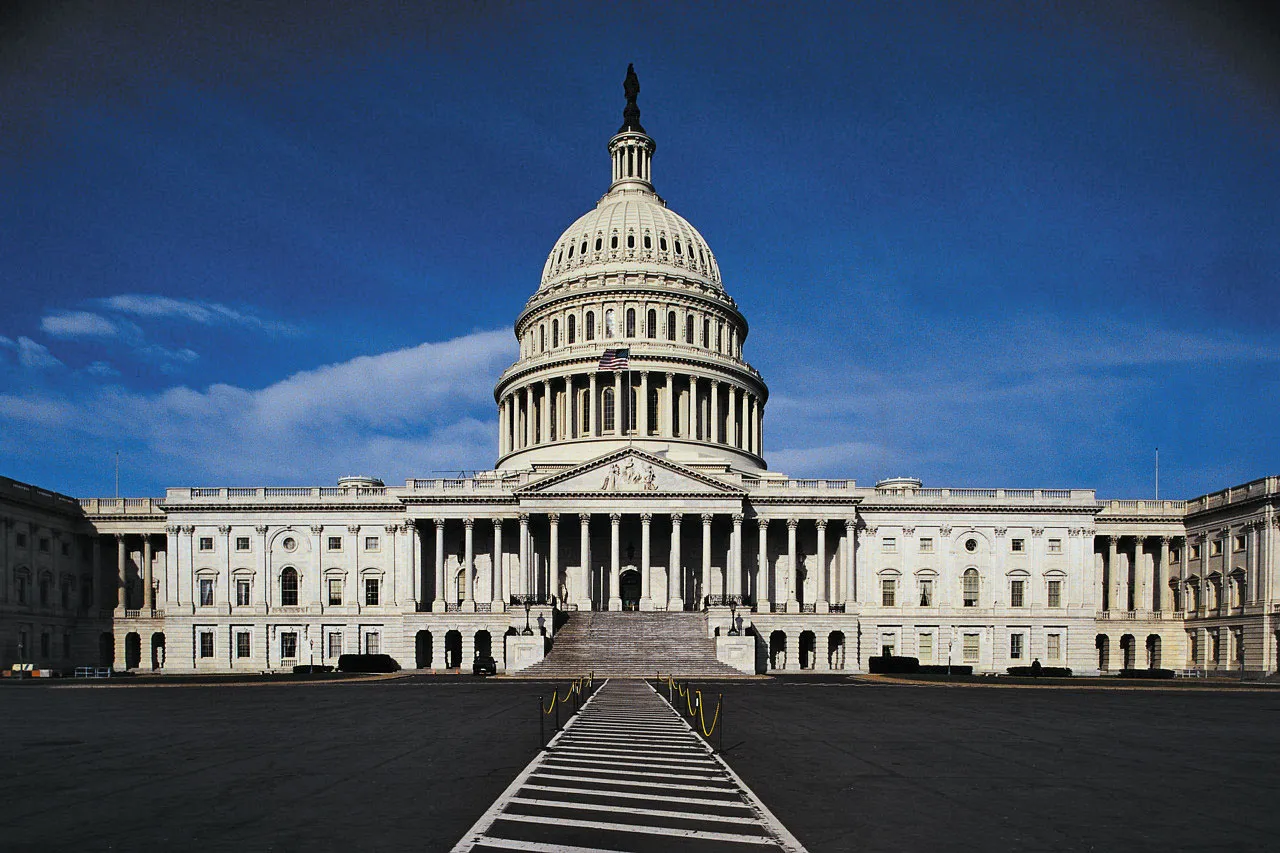
The Smithsonian’s Board of Regents is a concrete illustration of why the Institution does not sit in a simple vertical chain to the President. By statute, the Regents include the Vice President and the Chief Justice, members of both the House and Senate, and a set of citizen Regents (private individuals) chosen through the process Congress established.
Whatever your view of any particular exhibit, this structure matters because it means the Smithsonian’s legal accountability is shared and layered, not simply upward to the President.
This does not make it apolitical. It makes it institutionally complicated, which is sometimes the same thing as independence.
Leadership and removal
Usually, when the President controls an agency, control shows up most clearly in removal power: the ability to fire leadership.
With the Smithsonian, that is not straightforward. The Institution’s top executive is the Secretary of the Smithsonian, and the Secretary is selected and overseen through Smithsonian governance, not appointed by the President with Senate confirmation the way many executive-branch leaders are. That difference is one reason executive orders have limited bite here: the President cannot simply “fire the person in charge” and replace them with someone who will rewrite exhibits on command.
This is also why constitutional fights over independent bodies can feel relevant. The Supreme Court has spent decades deciding how much independence Congress can give to institutions that do government work. The Smithsonian is different from a regulator or an enforcer, but the underlying separation-of-powers question often echoes in the background: how much supervision must the President have, and how much insulation may Congress create?
The First Amendment angle
People hear “First Amendment” and think: censorship. But a museum on the National Mall raises a subtler question: whose speech is an exhibit?
There is a doctrine called government speech. When the government itself is speaking, it can choose its message. The First Amendment generally restrains government from punishing private speakers for their views. It does not require the government to present every viewpoint equally in its own communications.
Smithsonian exhibits often look like government speech to the public because they are housed in federal buildings, supported by federal dollars, and presented as national memory. That can make political actors feel entitled to steer the message.
At the same time, the Smithsonian has long operated with professional norms closer to academia and the library world: curatorial independence, evidence-based interpretation, and insulation from partisan rewriting. Those norms are not always constitutional rules. They are often governance choices, institutional culture, and reputational commitments.
One practical distinction helps. The Smithsonian is sometimes acting as a curator speaking in its own institutional voice. Other times it is acting more like a venue hosting outside speakers, programs, or traveling exhibitions. When outside groups are involved, forum rules and viewpoint-neutral access questions can matter more than when the Smithsonian is presenting its own core curatorial work.
Funding pressure
A President can propose a budget that reduces Smithsonian funding. A President can also use the bully pulpit to frame the institution as unworthy of appropriations. And a President can sign or veto spending bills Congress sends.
But the most durable point is this: the Smithsonian’s financial dependence is real, but it is dependence on Congress more than on the President. Conditions that reshape content are most likely to come through legislation or appropriations riders, not through a unilateral executive order.
What happens if the White House pushes
When a President issues an executive order aimed at Smithsonian content, the practical outcomes tend to fall into a few buckets:
- Compliance by persuasion: Smithsonian leadership changes tone or programming to avoid political escalation.
- Resistance through structure: Regents and leadership treat the order as nonbinding and continue curatorial plans.
- Escalation to Congress: hearings, riders in appropriations bills, or statutory changes redefining governance.
- Litigation: less common, because exhibit disputes often lack a clean plaintiff, a clear cause of action, or a concrete legal hook. But funding conditions, employment actions, contracts, or statutory authority can create court fights.
If you want one concrete anchor for how this tends to look: political blowback over controversial museum interpretation has often manifested through hearings, public letters from elected officials, and funding threats aimed at Smithsonian leadership rather than through direct, enforceable White House orders to curators.
Bottom line
If you strip away the headlines, the core civics lesson is familiar: the Constitution does not build a single steering wheel for everything federal. It builds competing centers of authority.
- The President has real influence, especially through public messaging, participation in the budget process, and politics that can shape appointments and priorities around the Institution.
- Congress holds the strongest formal lever through appropriations and oversight.
- The Smithsonian’s governance model has the practical effect of insulating curatorial decisions from direct White House control.
So can the President control the Smithsonian? Not directly, not completely, and not by executive order alone. But in Washington, indirect power is still power. The constitutional story is not about whether pressure exists. It is about who has the lawful tools to turn pressure into policy.
Quick answers
Is the Smithsonian part of the executive branch?
It is federally chartered and heavily federally funded, but it is not structured like a normal executive agency under presidential supervision. It is often treated as sui generis, and its Board of Regents creates a buffer that makes direct presidential control harder.
Can a President order a specific exhibit to be removed or rewritten?
Not as a simple command. A President can pressure, propose, and persuade. To compel changes, there must be lawful authority that actually reaches Smithsonian governance, usually through statutes or congressionally imposed funding conditions.
Who funds the Smithsonian?
Congress appropriates substantial funding, and the Smithsonian also relies on private donations, endowment income, and other revenue.
Can the President cut Smithsonian funding?
The President can propose cuts and can veto or sign spending bills. But only Congress can change appropriations in law, and impoundment rules constrain unilateral attempts to withhold enacted funding.
Does the First Amendment stop the government from shaping museum content?
Not neatly. Museums like the Smithsonian often operate in the space of government speech, where the government may choose its message. Legal problems are more likely to arise when political steering is tied to funding conditions, employment actions, contracts, or statutory limits.