
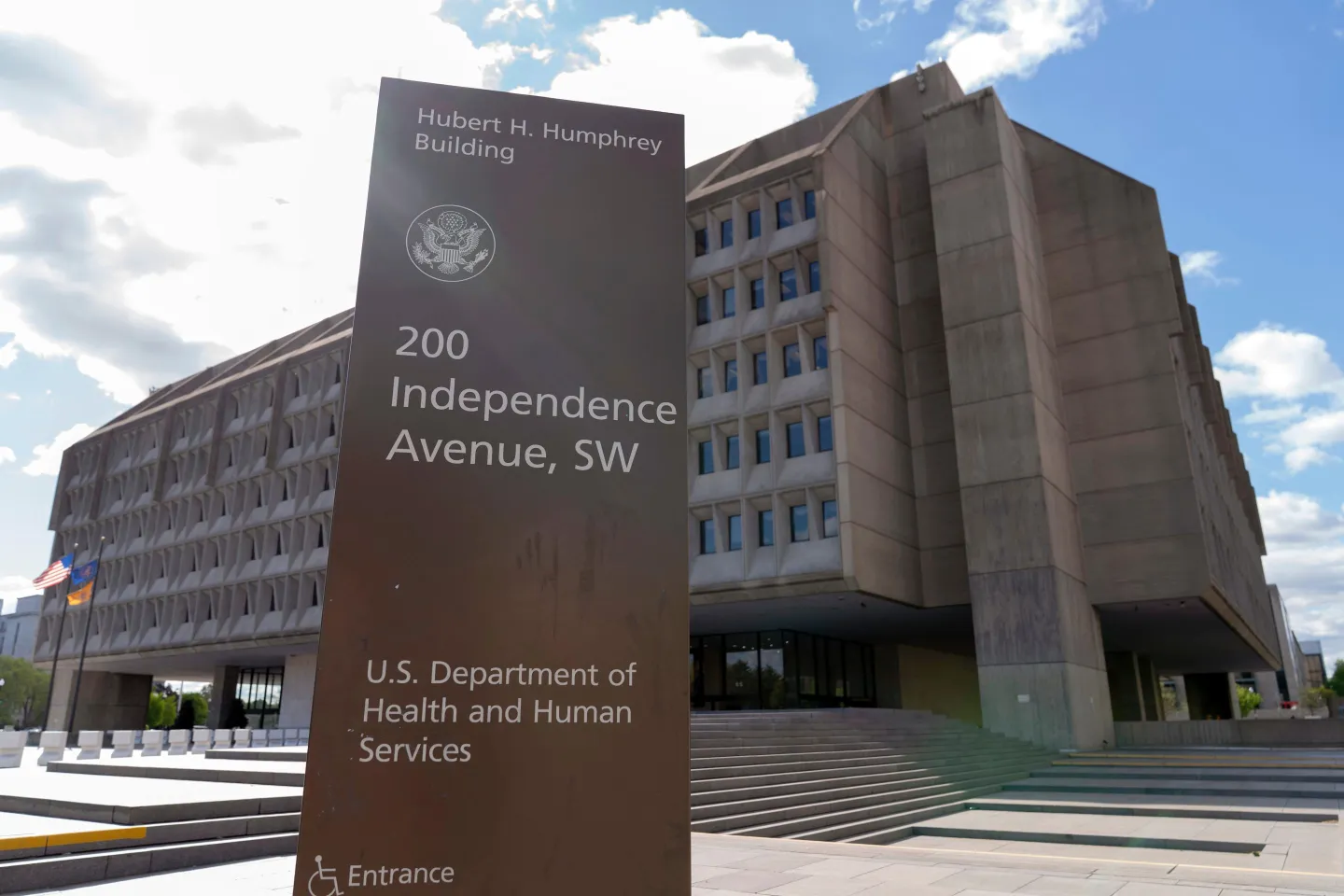
When a headline says the Department of Health and Human Services (HHS) “froze” funding for a state Medicaid fraud unit, it triggers a basic civic question: How can the federal government pause money for a unit that operates inside a state government?
The short answer is that a Medicaid Fraud Control Unit (MFCU) is not a blank check. It is a conditional federal grant built on a familiar constitutional bargain: Congress can spend for the general welfare, and it can attach conditions to that spending. States are free to decline the offer. But if they accept the money, they accept the rules that come with it.
Join the Discussion
What is a Medicaid Fraud Control Unit?
An MFCU is a specialized state office that investigates and prosecutes certain kinds of Medicaid-related wrongdoing, typically including:
- Provider fraud (billing for services not provided, upcoding, kickbacks, double billing).
- Patient abuse or neglect in facilities that receive Medicaid funds (often nursing homes or other long-term care settings).
- Fraud involving Medicaid-funded services where the unit’s jurisdiction is defined by federal law and the unit’s state authority (for example, schemes tied to Medicaid billing and payments).
Most MFCUs are housed in a state attorney general’s office, though structures vary. Even when the unit is “state-run,” it operates within a national enforcement framework that includes federal standards, federal oversight, and federal dollars.
Why HHS can suspend MFCU funding
The power here is not a general federal authority to command state prosecutors. It is something more common and more durable: Congress’s spending power, implemented through statutes and grant conditions.
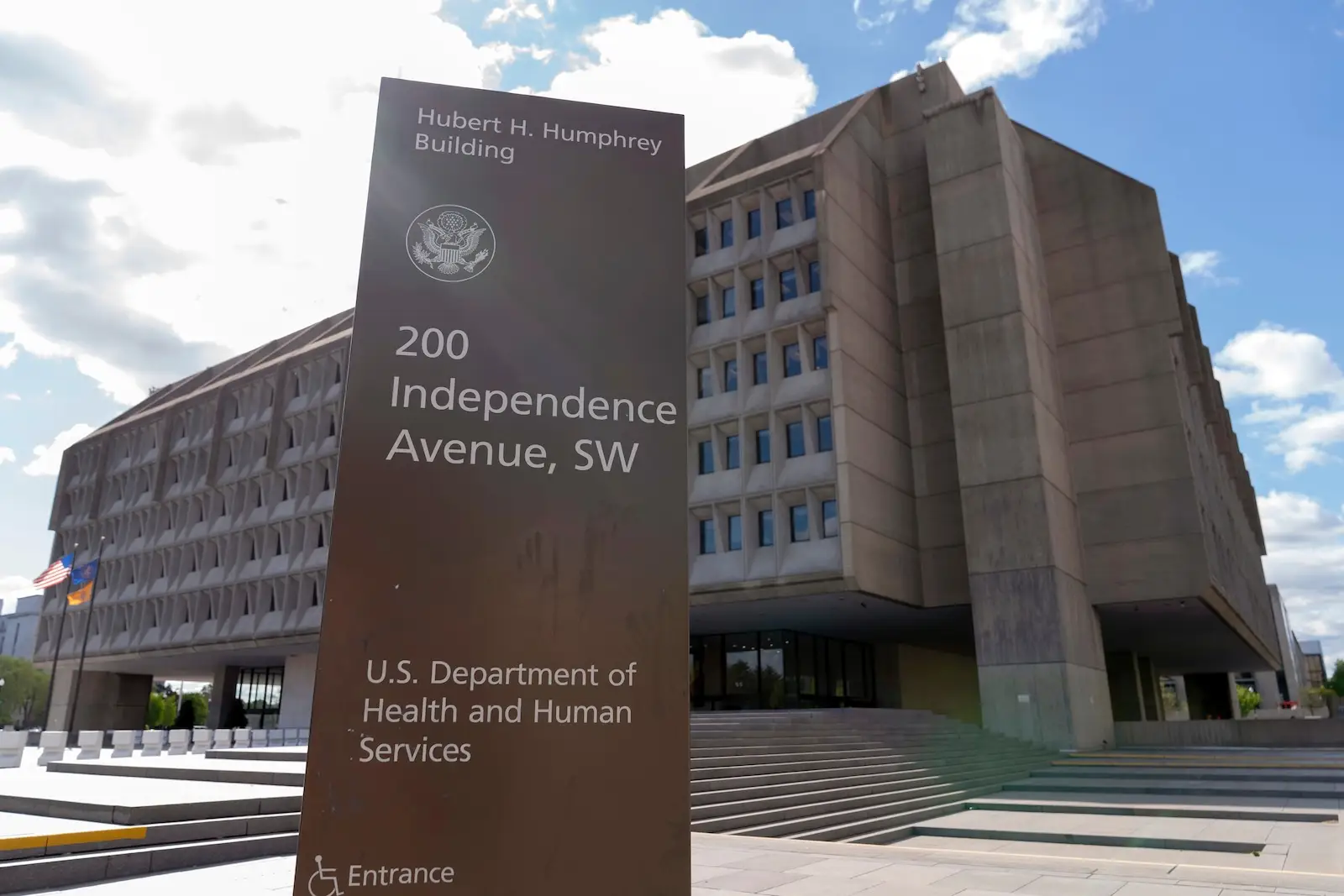
MFCUs are authorized under the Social Security Act and are overseen through HHS’s Office of Inspector General (HHS-OIG), which certifies MFCUs for federal matching funds and reviews their compliance. In practice, the federal government can leverage its funding because Medicaid is a cooperative program: states administer it, and the federal government pays a large share.
One concrete detail helps explain the leverage: MFCUs are commonly funded through a federal match that is often described as 75 percent federal financial participation for approved unit costs. If that match is paused or disallowed, the budget impact can be immediate.
Spending Clause basics
Article I gives Congress the power to tax and spend for the “general Welfare.” Over time, the Supreme Court has recognized that Congress may attach conditions to federal funds so long as the conditions are stated clearly and are not so coercive that they effectively eliminate the state’s ability to choose.
So the federal government often cannot directly order a state to implement a program in a particular way. But it can say: if you take this money, you must meet these standards.
That “choice” can be more formal than practical when a program is deeply integrated into a state’s budget. Courts sometimes describe that coercion concern in cases like NFIB v. Sebelius. Still, for an MFCU grant, the core legal mechanism remains conditional spending and the grant conditions the state agreed to.
How oversight works in practice
MFCUs operate under certification and ongoing oversight, including required reporting and periodic reviews. Oversight can focus on whether the unit is meeting structural and performance expectations such as:
- Being organized and staffed to carry out fraud and abuse investigations.
- Using federal matching funds for allowable purposes.
- Maintaining required policies, case documentation, reporting, and coordination with Medicaid agencies and federal partners.
- Producing required outputs and documentation that support continued certification (for example, case activity and recoveries reported through annual reporting).
If HHS-OIG concludes that a unit is out of compliance or no longer meets certification standards, federal responses can include special conditions, withholding of payments, disallowances of claimed costs, or ultimately decertification, depending on the issue and the governing rules.
Why this is not commandeering
It feels intuitive to say: “The federal government cannot control state law enforcement.” That instinct is rooted in a real constitutional principle. Under the anti-commandeering doctrine, the federal government generally cannot require states to use their officers to enforce federal law.
Conditional spending is different. When a state accepts Medicaid-related enforcement funds, it is not being conscripted. It is opting into a deal and agreeing to federally defined terms in exchange for federal dollars.
That distinction matters because it explains why a funding pause is typically framed as an administrative grant compliance action, not a federal takeover of a state office.
What “frozen funding” usually means
“Freeze” is not usually a formal term in grant administration. In this context, it is often shorthand for a few concrete tools that can look like a freeze from the outside:
- Withholding or suspending payments: pausing reimbursement while issues are reviewed or corrective steps are taken.
- Disallowance: refusing to reimburse specific claimed costs because they are not allowable or not adequately supported.
- Special conditions: continuing funding but only if the unit meets specified corrective requirements.
- Decertification: ending eligibility for the federal match if the unit no longer meets federal certification standards.
A simple way to keep the terms straight is this: withholding is about pausing money going out, while a disallowance is about rejecting money already claimed for reimbursement. Both can sharply reduce the federal share.
The key point is that the federal government is exercising control over its own funds. It is not directly shutting down the state unit. But if federal funding is a major share of the budget, the practical effect can be intense.
How performance is evaluated
Public debate about MFCUs often gravitates toward simple outcome counts, like convictions. That raises a fair question: Does HHS judge an MFCU primarily by convictions?
Typically, federal oversight looks more broadly at whether the unit is meeting certification standards and program goals using multiple indicators. MFCUs routinely report a mix of activity and outcomes that can include cases opened and closed, indictments, convictions, civil recoveries, restitution, and other enforcement actions.
Convictions can be one relevant data point, but it is rarely the only one and can be misleading in isolation. Some matters resolve through civil settlements, provider exclusions, or plea agreements that do not fit a single headline metric. The more durable civic principle is this: public money comes with public accountability, and federal grant programs evaluate whether the funded work is being carried out as required.
What we know and what we do not
This explainer focuses on the legal mechanics behind a federal funding pause, not on adjudicating any particular state-federal dispute. In any specific case, readers should distinguish between:
- Confirmed actions, such as an agency notice, a certification decision, an audit finding, or a formal demand for corrective action.
- Competing characterizations by state officials and federal officials about what the data shows and what standards apply.
Where possible, the most reliable documents are the agency’s written findings, certification or recertification materials, audit reports, and any formal correspondence outlining the basis for the action and the steps to cure it.
What happens next if a state disputes it?
A funding pause is rarely the last word. The typical pathway is administrative and document-heavy: findings or review results, a corrective action plan, follow-up monitoring, and then escalation if problems persist.
States can usually respond through processes that may include:
- Corrective action to address identified deficiencies (staffing, policies, reporting, case selection).
- Documentation and negotiation with HHS-OIG to demonstrate compliance and restore funding eligibility.
- Administrative appeal options, depending on the governing regulations and the type of adverse action (for example, a disallowance versus a certification-related decision).
- Litigation in federal court in some circumstances, often focused on statutory authority and administrative law standards.
When disputes reach court, they often turn on practical legal questions like:
- Did Congress authorize the condition or enforcement mechanism being applied?
- Were the standards clear enough to provide fair notice?
- Did the agency follow required procedures and provide a reasoned explanation?
- Was the decision arbitrary, inconsistent, or insufficiently supported?
These cases are less about dramatic constitutional showdowns and more about the day-to-day machinery of federalism: grants, conditions, oversight, and the friction that comes with shared governance.
The big picture
Medicaid is one of the largest examples of cooperative federalism in American life. The constitutional design is not that Washington runs everything or that the states run everything. It is that they run it together, using money as the connective tissue.
That collaboration creates two truths at once:
- States retain control over how to structure enforcement offices and prosecute cases.
- The federal government retains control over the funds it offers and the conditions attached.
So when HHS pauses or restricts MFCU funding, it is not rewriting the Constitution in real time. It is using one of the Constitution’s most ordinary, most powerful tools: the power to spend, and the power to say “not unless.”
Quick answers
What is a Medicaid Fraud Control Unit?
A state-based unit, often in the attorney general’s office, certified for federal matching funds to investigate and prosecute Medicaid provider fraud and certain patient abuse or neglect cases.
Can HHS suspend Medicaid fraud unit funding?
Yes. Because MFCU funding is a conditional federal match, HHS can withhold, disallow, impose special conditions, or decertify a unit that does not meet federal standards, subject to statutory authority and required procedures.
Does this let the federal government control state prosecutors?
No, not directly. It is leverage through funding conditions, not a command to prosecute specific cases. A state can choose not to participate or can continue operating without the federal match, but the cost of that choice can be substantial.