
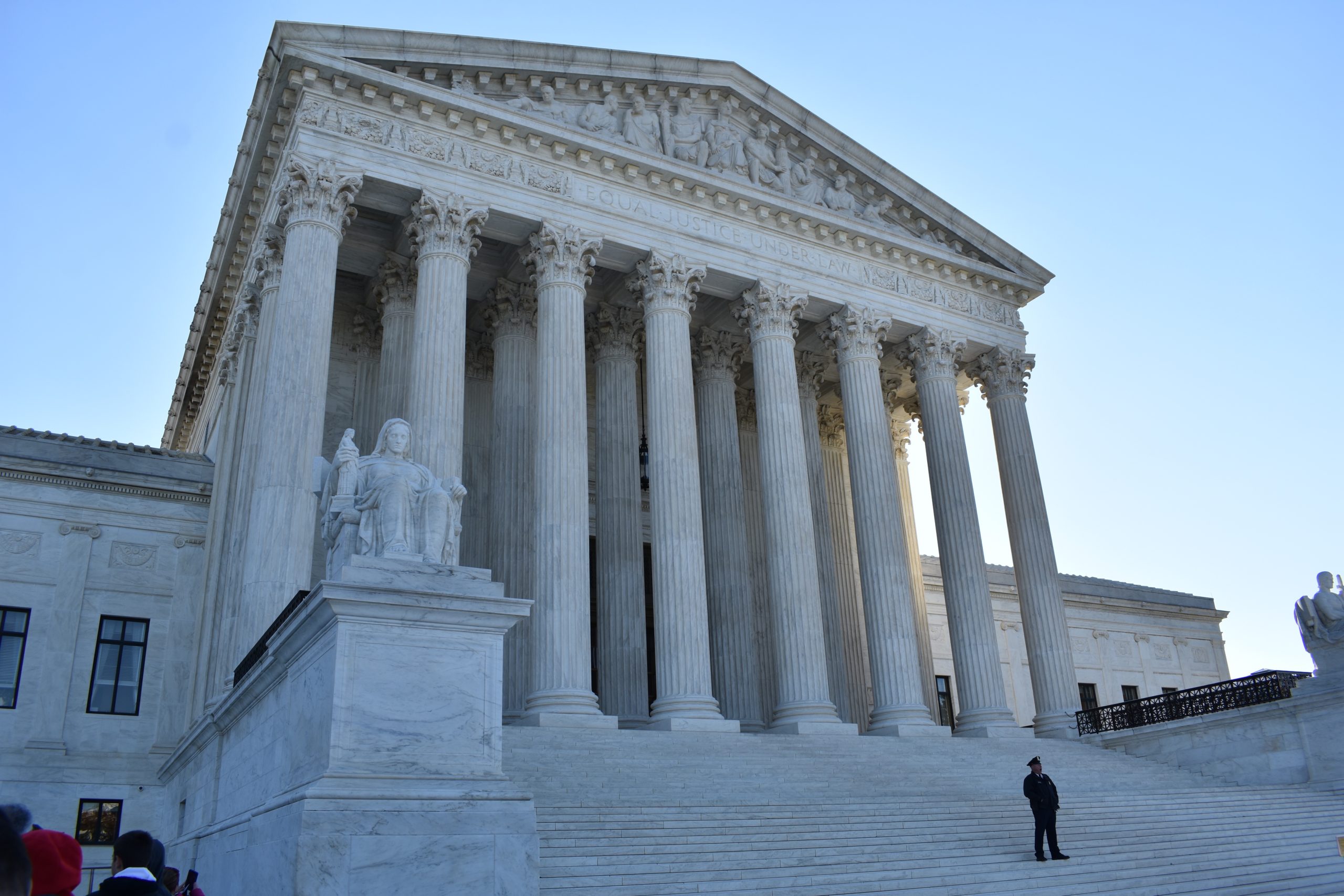
For years, the fight over girls’ sports has been sold as a cultural argument about fairness, safety, and identity. The Supreme Court’s latest move forces a more uncomfortable civics question: who gets to define what “equal” means inside a public school, and under which constitutional rulebook?
In a 6-3 decision resolving Little v. Hecox (Idaho) and West Virginia v. B.P.J., the Court allowed states to enforce laws that bar transgender girls and women from competing on girls’ teams. Two students at the center of the cases, Lindsay Hecox and Becky Pepper-Jackson, challenged statewide bans that did not turn on individualized assessments. They were blanket rules.
That detail matters. Blanket rules are not just policies. They are state power in its most efficient form: one line, one category, one exclusion.
Join the Discussion
What the Court did
The Court’s bottom line is simple: it accepted that these state laws do not violate the Equal Protection Clause, and it rejected arguments that the bans are unconstitutional discrimination based on sex or gender identity.
In practice, the decision lets states keep eligibility lines tied to sex in a system that already separates teams by sex, even when a transgender student is receiving medical treatment such as puberty blockers, and even when a student’s testosterone levels might resemble those of girls assigned female at birth.
This is not just a ruling about sports. It is a ruling about categories: which categories the Constitution protects most aggressively, and when courts will demand narrow tailoring versus tolerate broad legislative sorting.
Title IX and the definition problem
Title IX was built to stop schools that take federal money from treating girls as second-class participants in education, including athletics. For decades, the common civic story has been: girls deserve the same doors to walk through.
But the controversy today is not about whether girls should get a team. It is about who counts as “girls” for purposes of that team.
Fatima Goss Graves, president and CEO of the National Women’s Law Center, called the decision “a devastating setback for the promise of Title IX and for the fundamental principle that all students deserve equal opportunity.” She said the Court, “by allowing these states to exclude transgender women and girls like Becky Pepper-Jackson and Lindsay Hecox from school sports, ... has endorsed discrimination and reinforced the same stereotypes that Title IX was designed to dismantle.”
The deeper tension is structural. Title IX is a federal civil-rights statute, but schools live inside state education systems. When the Supreme Court signals that these bans are constitutionally permissible under equal protection, it can narrow the practical room schools and federal regulators have to insist on inclusion through Title IX alone.
Equal protection and classification
Equal protection doctrine asks a basic question: when government sorts people into categories, how hard must it work to justify the sorting?
- Low scrutiny (easy for the state): government usually wins.
- Intermediate scrutiny (common for sex classifications): the state must show an important objective and a tight fit.
- Strict scrutiny (rare, hardest): the state must show a compelling objective and the narrowest means.
These cases turn on whether the bans are treated as sex-based discrimination, discrimination based on gender identity, or a different category altogether. Read one way, the decision reflects comfort with the states’ framing: that they are setting eligibility rules inside a sex-separated sports system rather than targeting a protected class in the constitutional sense.
That may sound technical, but it is the whole ballgame. Once a court accepts the state’s category, the state typically controls the outcome.
Oral arguments and the tell
The arguments were heard about six months before the ruling. During oral argument, several conservative justices floated fears about what inclusion might invite: a world where boys who could not make their own teams try out for women’s teams; a claim that participation by transgender students would “reverse [their] amazing success and will create unfairness”; and a moment when Justice Samuel Alito appeared to lose his temper after one of the girls’ lawyers pointed out what they argued was hypocrisy in Idaho’s law.
Oral argument is not the decision, but it is often a preview of the questions the Court is most interested in answering. Here, those questions orbit power: who draws the line, and how blunt can the line be before the Constitution pushes back?
Who sets the rules
There is a civics myth we teach students early: the federal government makes civil-rights law, states run schools, and everyone stays in their lane. Real life is messier.
After this decision, states have a clearer legal runway to legislate sports eligibility statewide. That does three things at once:
- It narrows local discretion. A school district cannot “work it out” with families if a state ban forbids it.
- It pressures federal enforcement choices. Federal agencies can interpret Title IX, but they cannot erase a Supreme Court holding about constitutional permissibility.
- It relocates the battleground. If courts will not strike these bans as unconstitutional, then the next fights move to state legislatures, school boards, and Congress.
Supreme Court rulings do not always end debates. Often, they simply tell you where the debate must go next.
The hard question
Girls’ sports exist because America decided that equal opportunity sometimes requires separate spaces. That was the compromise that made Title IX real on the ground: separate teams, comparable investment, equal dignity.
But separation always carries a constitutional risk: once the state can separate, the state can also exclude. The argument is never just about biology or identity. It is about the government’s power to define categories, police boundaries, and decide who belongs.
If you want the clean civics version, here it is:
- The states’ theory: Sex-separated teams are justified to protect competitive fairness and opportunities for females, and states may define eligibility accordingly.
- The students’ theory: Blanket exclusions punish a small group of students for who they are, and equal protection and Title IX should prevent that.
- The Court’s effect: It empowered the first theory, making the second harder to win in court.
In the classroom, I used to tell my students that the Constitution is not just a shield. It is also a map of power. This ruling redraws that map, giving states a thicker marker in the margins of Title IX athletics.
Broader term context
The decision landed in a Supreme Court term that has been bruising for LGBTQ+ rights. A few months earlier, the Court also ruled against Colorado’s ban on conversion therapy, saying it violated free speech.
And in a smaller, stranger footnote to the week, an erroneous report about Justice Samuel Alito’s retirement briefly circulated before it was retracted. The whiplash of that moment, quickly corrected, underscored a bigger reality: while the news cycle lurches, the legal effects of Supreme Court rulings tend to stick.
What to watch
Three downstream questions are now unavoidable:
- Will Congress try to clarify Title IX’s scope? If lawmakers want a national rule, they will have to write one plainly and live with the politics.
- Will states expand these laws beyond sports? Once a category becomes legally durable, it tends to travel.
- Will courts treat future cases differently if a ban is more punitive or less connected to athletics? The “fit” between government goal and government means is where constitutional lawsuits usually find oxygen.
The Supreme Court did not just decide who plays on which team. It decided, again, who gets first say in defining the terms of civic equality: the individual, the institution, or the state.