
When a state is accused of mishandling public benefits money, the first instinct is to ask a simple question: isn’t that a state problem?
It can be. But it can become a federal one quickly when the program at issue is powered by federal dollars. That is the constitutional hinge behind renewed attention on Minnesota’s recent benefit-fraud headlines, including the Feeding Our Future prosecution and other reported integrity failures in federally funded programs.
It also helps to separate the programs. Feeding Our Future centered on federal child nutrition funds administered through the state. Medicaid (called Medical Assistance in Minnesota) is a separate, jointly funded federal-state healthcare program with its own oversight rules and compliance systems.
This article explains the oversight tools and legal boundaries, not the merits of any particular allegation.
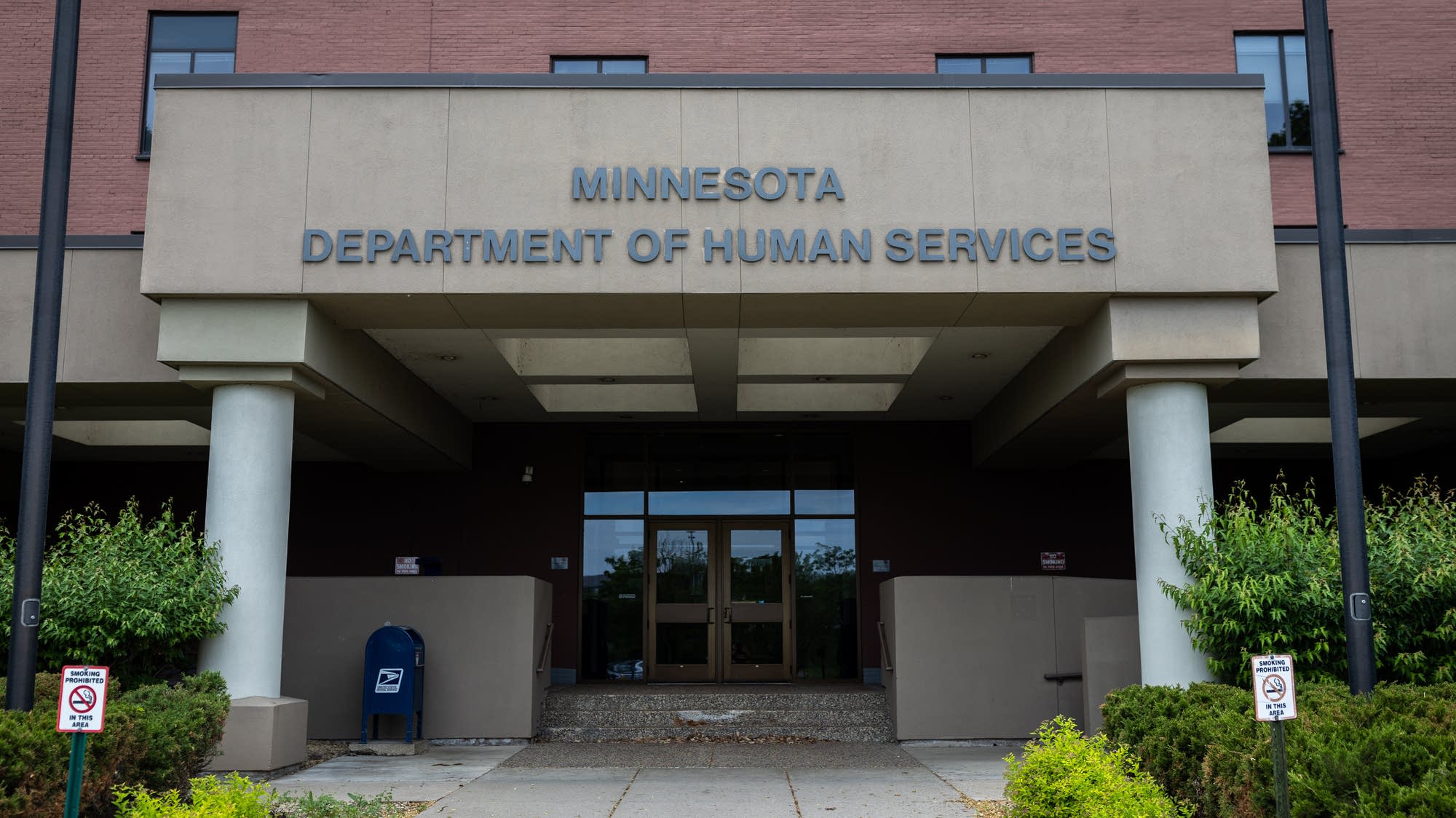
One specific Medicaid-related event that has drawn public attention is the Minnesota Office of the Legislative Auditor’s March 2023 report, Oversight of Medical Assistance Provider Enrollment. The report described weaknesses in provider screening and enrollment controls, including missing or incomplete documentation, inconsistent follow-through on identified issues, and weaknesses in tracking whether required corrective steps were completed. When that kind of finding lands amid broader fraud headlines, it triggers a basic set of questions about Medicaid mechanics: how providers are screened and enrolled, how managed care is overseen, how improper payments are identified and reported, and how overpayments are recovered under federal rules.
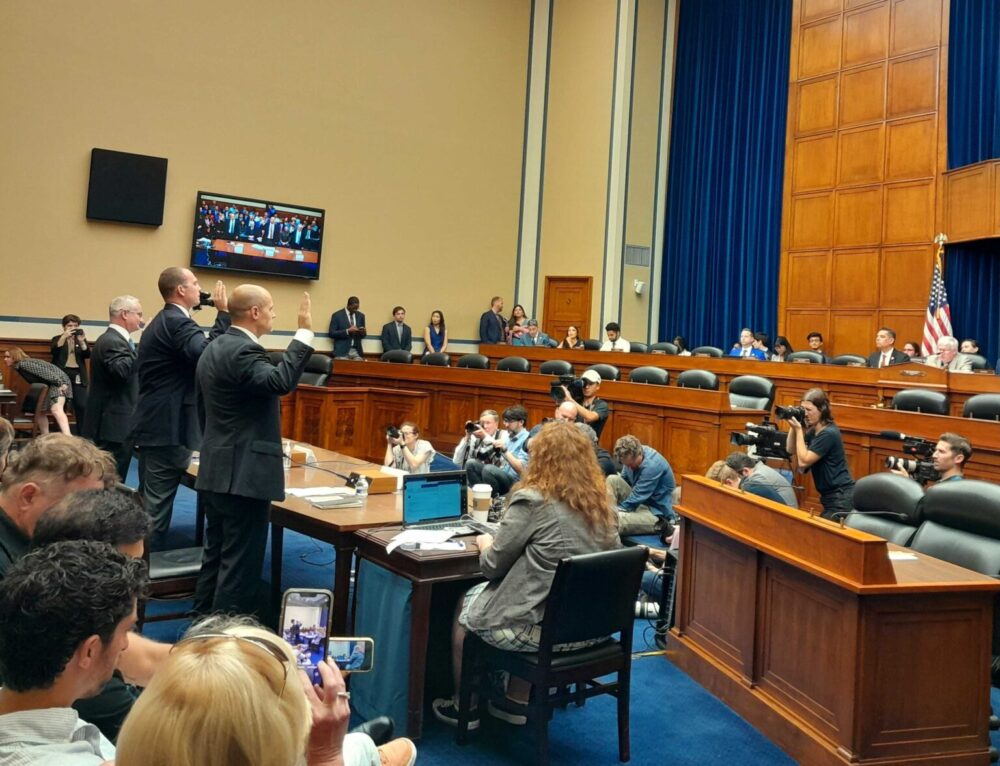
That federal interest is no longer abstract. In June 2024, House Oversight and Accountability Committee Chairman James Comer sent letters to Minnesota Governor Tim Walz and Minnesota Department of Human Services Commissioner Jodi Harpstead seeking documents and information about Minnesota’s administration of federally funded programs, including Medicaid-related integrity controls. Requests of this kind commonly ask for a defined set of materials such as internal audits and corrective action plans, provider enrollment and screening records, managed care oversight documentation, improper payment-related materials, and communications with federal partners about compliance and remediation.
The politics can intensify because the public messaging does, too. But it is important to keep the categories straight: public messaging about a community is not evidence of wrongdoing. The civics question underneath the headlines is bigger and more durable: how does Congress investigate alleged fraud tied to state-administered programs like Medicaid, and what authority does it actually have?
Join the Discussion
Why federal money draws scrutiny
Medicaid is the clearest example of how “state-run” does not mean “state-only.” Medicaid is administered by states, but funded jointly by states and the federal government. That shared financing creates shared accountability.
As a practical matter, federal money comes with federal rules. States that accept Medicaid funds agree to operate their programs within a federal framework set by Congress and implemented by federal agencies, especially the Department of Health and Human Services (HHS) through the Centers for Medicare and Medicaid Services (CMS).
Medicaid also runs through a formal paperwork mechanism many readers have heard of but rarely defined: a state’s Medicaid state plan, which is the state’s written agreement with CMS describing eligibility, covered services, payment methods, and administrative safeguards.
To make the machinery more concrete, typical Medicaid integrity touchpoints include:
- Provider screening and enrollment: verifying identity and ownership, checking exclusion lists, and collecting documentation before a provider can bill Medicaid.
- Revalidation: periodic re-screening so providers do not remain enrolled indefinitely without updated checks.
- Payment and claims controls: edits that stop obviously improper claims before payment, plus post-payment audits and reviews.
- Managed care oversight: contract compliance, encounter-data checks, and audits of plans and their subcontractors.
- Program integrity units: state-level teams that analyze billing patterns, pursue administrative actions, and refer cases for investigation.
So when investigators allege that a network of providers, nonprofits, contractors, or intermediaries misused public funds, multiple layers may get involved:
- State investigators (state auditors, state attorneys general, state Medicaid fraud control units)
- Federal investigators (HHS Office of Inspector General, FBI, Department of Justice prosecutors)
- Congress (committees examining whether federal funds were safeguarded and whether federal agencies did their jobs)
The key is not the identity of the community being discussed in public statements. The key is the flow of money and the legal obligations attached to it.
The constitutional hook
People sometimes look for a clause that says “Congress may investigate.” It is not written that way.
Instead, congressional investigations are treated as an implied power that flows from Article I’s legislative powers. The logic is straightforward: Congress cannot legislate responsibly without information. If Congress appropriates money, creates programs, or funds agencies, it must be able to ask how those funds are used.
The Supreme Court has repeatedly recognized Congress’s broad authority to conduct investigations in aid of legislation. The classic cases often cited for these principles include McGrain v. Daugherty (recognizing investigative power as implied), Watkins v. United States (limits, pertinency, and clarity about the subject and purpose of questioning), and Barenblatt v. United States (balancing investigative purpose and constitutional rights). More recently, Trump v. Mazars addresses separation-of-powers concerns and the need for careful tailoring when Congress seeks a sitting president’s personal records. It is not a one-size-fits-all test for every subpoena, but it is a reminder that purpose and burden matter.
Oversight is not a free-floating police power, but it is a real tool tied to legitimate legislative purposes such as:
- Evaluating whether existing laws are working
- Determining whether agencies are enforcing the law effectively
- Considering whether to change funding formulas, compliance rules, or penalties
- Identifying waste, fraud, and abuse in federally connected spending
This is why a House committee can focus on a state-level problem when federal money and federal program design are part of the story.
What House Oversight can do
Tools it has
Congressional committees can seek information through letters, interviews, and, when necessary, subpoenas. That can include documents and testimony from:
- Federal agency officials (HHS, CMS, DOJ)
- State officials, when their actions relate to federal funding and federal compliance questions
- Contractors and organizations that receive or handle federal funds
- Individuals with relevant knowledge, subject to constitutional protections
Committees also hold hearings, take transcribed interviews or depositions, publish reports, and refer matters to executive agencies for enforcement.
A useful distinction for readers: Congress investigates to inform legislation and oversight. Inspectors general investigate for agency oversight and referrals. Law enforcement investigates to build prosecutable cases. Those lanes overlap, but they are not the same job.
What it cannot do
House Oversight is not a prosecutor and not a court. It cannot convict anyone. It cannot sentence anyone. It cannot, by itself, bring criminal charges.
Congress is also constrained by constitutional rights and structural limits. Investigations must stay tethered to a valid legislative purpose, and subpoenas can be challenged if they lack that purpose, are overbroad, or unduly burden protected interests, including First Amendment activity in some contexts. Oversight is supposed to gather facts for governance, not to impose penalties through the investigative process itself.
Subpoenas and defenses
In practice, big oversight fights are often subpoena fights. Common legal boundaries and defenses include:
- Fifth Amendment: a witness can refuse to provide testimonial answers that would be self-incriminating.
- Attorney-client privilege: often asserted to protect confidential legal advice communications. Congress generally does not treat it as an absolute privilege that automatically bars disclosure to Congress, so disputes often turn on accommodation, negotiated access, privilege logs, and narrowing requests.
- Work product doctrine: often asserted for materials prepared in anticipation of litigation. As with attorney-client assertions, outcomes in congressional settings frequently turn on negotiation, committee rules, and practical leverage.
- Executive privilege: may be asserted by the executive branch for certain federal communications, with limits and negotiation norms.
- State sovereignty considerations: states are not federal agencies, and Congress cannot simply order states to administer federal programs in new ways. But Congress can ask questions tied to federal spending and can set conditions on funds within constitutional limits.
Most disputes resolve through negotiation, partial compliance, narrowing requests, or timed releases. Litigation is possible, but often slow, and politics and practical leverage matter.
If a recipient flatly refuses to comply with a subpoena, the committee’s escalation options can include a contempt vote and referral for enforcement. In practice, enforcement can take different forms, including criminal contempt referrals, civil litigation to enforce the subpoena, and institutional pressure through hearings and appropriations. The exact path depends on the target, the chamber’s choices, and separation-of-powers dynamics.
Medicaid integrity in practice
Medicaid has its own integrity architecture, and it looks a little different depending on whether care is delivered through fee-for-service billing or through managed care plans.
Fee-for-service pressure points
In fee-for-service, individual providers bill the state Medicaid agency directly. Common vulnerabilities include billing for services not provided, upcoding, kickbacks, and ineligible providers staying enrolled. Oversight often centers on enrollment screening, claims edits, audits, and payment suspensions when credible allegations arise.
Managed care pressure points
In managed care, states pay plans (or plan-like entities) to cover services for enrollees, and the plans pay providers. That adds layers: network oversight, subcontractor oversight, encounter data integrity, and contract compliance. A committee looking at “Medicaid fraud” in a managed care-heavy state may be asking not only who billed, but also whether the state’s contract monitoring and data validation were strong enough to detect problems early.
What “improper payments” means
“Improper payment” is a term of art in federal program integrity. It can include payments that should not have been made or were made in the wrong amount under program rules. Importantly, improper payments are not always fraud. They can also reflect documentation failures, eligibility mistakes, or billing errors. But large or persistent improper payment findings can still drive oversight because they signal weak controls.
State vs federal enforcement
If the core allegation is fraud, the enforcement lane depends on the facts and the statutes in play.
State enforcement
States can prosecute fraud under state law, pursue civil recovery, and administratively cut off providers. Many states also operate Medicaid Fraud Control Units (MFCUs), often supported by federal matching funds, that investigate Medicaid provider fraud and patient abuse or neglect.
Federal enforcement
The federal government can prosecute conduct that implicates federal funds and federal criminal statutes. Common tools include:
- False Claims Act (civil liability for false or fraudulent claims for government payment, often with whistleblowers)
- Federal program fraud statutes (criminal statutes tied to federal money)
- Wire fraud and mail fraud (when schemes use interstate communications)
Federal agencies can also pursue administrative remedies such as exclusions from federal healthcare programs and recoupment of funds. HHS’s Office of Inspector General and CMS also conduct Medicaid oversight nationally through audits and program integrity reviews that can lead to repayments, corrective action plans, and referrals.
The overlap is not accidental. When a program is jointly funded, it is jointly vulnerable. And when money crosses federal lines, federal jurisdiction frequently follows.
What outcomes look like
Oversight is not just about hearings and headlines. In Medicaid, the practical consequences of confirmed weaknesses often show up as:
- Corrective action plans with deadlines for policy and systems fixes
- Disallowances where CMS refuses to match certain state expenditures
- Provider terminations or suspensions and tighter enrollment controls
- Payment holds while allegations are reviewed, where permitted
- Referrals to inspectors general or DOJ for investigation and potential prosecution
- Repayments and recoveries through audits, settlements, and administrative processes
Those outcomes are where the federal-state relationship becomes tangible: federal dollars can be conditioned, delayed, recouped, or denied if the program is not administered in compliance with federal requirements.
Why Congress cares
At first glance, it can feel strange for Congress to examine a problem located in one state, in one metro area, involving local actors. But Congress has at least three durable institutional reasons to step in.
1) Congress funds and designs the program
Medicaid exists because Congress created it. Congress sets broad eligibility categories, requires certain covered services, and authorizes massive spending. Oversight is, in a sense, Congress checking its own work.
2) Congress can adjust funding conditions
The Constitution’s Spending Clause allows Congress to spend for the general welfare and to attach conditions to federal funds, within limits. In practice, that means Congress can adjust how Medicaid money is distributed and what states must do to receive it.
Those limits matter. Funding conditions generally must be stated clearly, related to the federal interest in the program, and not so coercive that they effectively force state participation.
When allegations surface that oversight failed, Congress often asks: were the guardrails too weak, too outdated, or too easy to evade?
3) Congress oversees federal agencies
Even when a state administers Medicaid, federal agencies still have responsibilities: approving state plans, monitoring compliance, issuing guidance, and coordinating with inspectors general and law enforcement.
One nuance worth making explicit: while House Oversight has broad, government-wide jurisdiction, Medicaid policy is also frequently handled in depth by other committees with programmatic lanes, such as Energy and Commerce, Ways and Means, and Appropriations. Oversight investigations often focus on administration, breakdowns in controls, and federal agency performance.
Federalism basics
The Tenth Amendment reserves to the states powers not delegated to the federal government. That principle matters, but it does not create a blanket shield when federal funds are at issue.
Congress generally cannot commandeer state governments to administer federal programs in a way that turns state officials into federal agents. But Medicaid is typically structured as a cooperative program: states choose to participate, and if they do, they accept federal conditions.
That voluntary bargain is why federal scrutiny does not automatically violate federalism. The constitutional tension is real, but the legal architecture is familiar: states can run the program, and Congress can ask hard questions about how federally financed programs are operating.
How oversight unfolds
House investigations often follow a pattern, even when the headlines make them look sudden.
- Information gathering: letters, interviews, and document requests to agencies and recipients of federal funds
- Subpoenas: if voluntary cooperation is insufficient
- Hearings: public testimony to build a record and spotlight policy failures
- Findings and outcomes: committee reports, proposed legislation, funding conditions, agency policy changes, and referrals to inspectors general or DOJ
Not every investigation ends with legislation. But the constitutional justification is the same: oversight must connect to Congress’s capacity to legislate, appropriate, and supervise federal administration.
Keeping it straight
When investigations are in the news, the rhetoric can become the story. But constitutionally, congressional oversight is not supposed to be a referendum on a community. It is supposed to be a check on government systems that handle public money.
The enduring civic takeaway is this: once a program becomes a conduit for federal funds, it becomes subject to federal scrutiny. That does not guarantee wrongdoing. It does not determine guilt. It does not replace state investigations or federal prosecutions. It explains why Congress can get involved and what, in constitutional terms, that involvement is for.
Quick answers
How can the House Oversight Committee investigate Minnesota Medicaid fraud?
By using Congress’s implied Article I power to investigate in aid of legislation. Because Medicaid uses federal funds and federal rules, Congress can examine whether program safeguards and federal agency oversight are working as intended.
Can Congress prosecute fraud itself?
No. Congress can investigate, hold hearings, and refer evidence. Criminal prosecution is handled by the executive branch, usually the Department of Justice, and adjudication is handled by courts.
Is Medicaid state money or federal money?
It is both. States administer Medicaid, but funding is shared. That structure is why alleged fraud can become both a state and federal matter.
Does the Tenth Amendment prevent federal oversight?
Not automatically. When states voluntarily participate in cooperative spending programs like Medicaid, they accept federal conditions. Oversight focuses on federal spending and federal program administration.