
Federal money always comes with a catch. The question is: who gets to write the catch?
On Thursday, a federal judge in California drew a bright line between what Congress funds and what a President can demand in exchange for releasing those funds. U.S. District Judge William Orrick issued a preliminary injunction blocking the Departments of Homeland Security, Justice, and the Interior from enforcing a set of new anti-DEI grant conditions against 11 West Coast cities and counties.
It is tempting to treat this as another skirmish in the culture wars. That would miss the constitutional point. This case is about power. Specifically, whether the executive branch can take grant programs Congress already created and then tack on new ideological certification requirements that Congress never voted for.

Join the Discussion
What the judge blocked
The plaintiffs were a coalition of local governments: the cities of Fresno, Santa Clara, Redwood City, Santa Cruz, Stockton, Beaverton, Corvallis and Hillsboro, plus the counties of Los Angeles, San Diego, and Santa Barbara.
They challenged conditions added onto federal grants supporting bread-and-butter services: public safety, disaster preparedness, policing, fire protection, water conservation, and crime victim services. Their complaint was not that Congress cut a deal they dislike. Their complaint was that Congress did not cut this deal at all.
Judge Orrick agreed enough to freeze enforcement while the case proceeds. In a 68-page order, he concluded the conditions were likely unlawful under both constitutional structure and administrative law.
He put it bluntly: What defendants seek to do likely violates the Constitution (separation of powers and Spending Clause) and the Administrative Procedures Act,
Orrick wrote.
The certifications at issue
The challenged requirements were framed as certifications that grant recipients had to make before receiving funds. One major demand was that recipients certify they were not operating programs that promote diversity, equity, and inclusion in ways that violate federal anti-discrimination law. The certifications also included provisions pushing cooperation with federal immigration enforcement and compliance with related executive orders.
The administration’s theory is familiar: if the federal government is cutting the check, the federal government can insist the money not be used to support discrimination, and can require recipients to align with federal policy priorities.
That theory is not frivolous. It is also not unlimited.
Spending power is not vibes-based
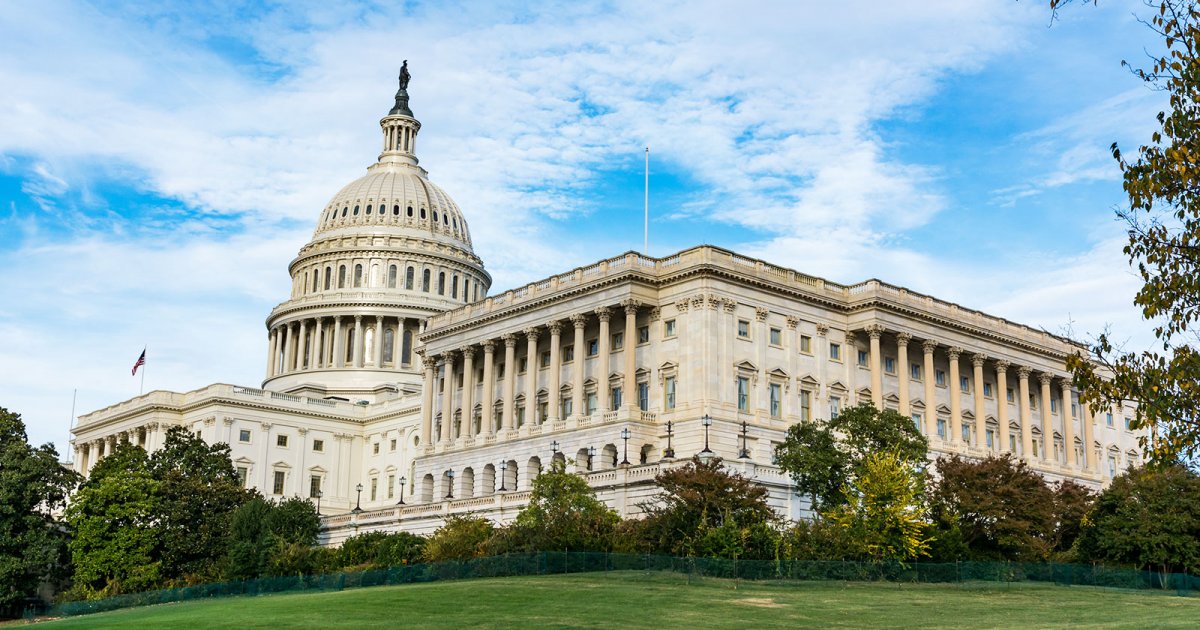
Here is the civics-class version we forget the moment federal money shows up: the power of the purse belongs to Congress. Not because judges like Congress more, but because the Constitution is written that way.
Congress appropriates money. Agencies administer programs. Presidents supervise executive officials. But a President is not supposed to be able to say: Congress funded Program A for Purpose A, but I will only release the money if you also adopt Purpose B.
That is why the Spending Clause shows up in this case. The clause is the constitutional doorway through which Congress taxes and spends. Over time, courts have allowed Congress to attach conditions to grants, but those conditions have to follow rules. The conditions generally must be stated clearly and must be tied to the program Congress is funding. And at some point, conditions become coercion, not choice.
Notice what is missing from that list: the President.
Why “related to the program” matters
Judge Orrick’s order repeatedly focuses on the mismatch between the grant programs’ purposes and the new certifications. He found the challenged conditions have nothing to do with or contradict the Congressional purpose
behind the underlying grant programs.
That phrase is not just rhetorical. It is the constitutional pressure point.
If Congress appropriates money for wildfire preparedness, the executive branch can administer the program, police fraud, and enforce the statutory eligibility rules Congress enacted. But turning wildfire funds into a lever for unrelated ideological compliance is where “administration” starts to look like lawmaking.
This is where separation of powers stops being an abstract principle and becomes a practical safeguard. When the branch that executes the laws can also rewrite the terms of major spending programs, Congress becomes a suggestion box.
The APA angle
Many readers hear “Administrative Procedure Act” and tune out. Do not. The APA is often where modern separation-of-powers fights actually get decided.
Why? Because agencies cannot just wake up and impose major new requirements without legal authority and proper procedure. When an administration tries to transform grant eligibility through new certifications, plaintiffs will often argue that the agencies exceeded their statutory authority, failed to justify the change, or bypassed required administrative steps.
Judge Orrick signaled the plaintiffs are likely to succeed on this front too, which is another way of saying: even if you like the policy, you still have to follow the rules that keep agencies from becoming free-floating legislatures.
How broad the order is
The preliminary injunction bars enforcement of the contested conditions against the 11 local governments that sued. That scope matters, because it clarifies what the court actually did and did not do at this stage.
Even so, the ruling is not small. It is a court telling the executive branch that, at least on the record so far, it cannot rework Congress’s grant terms by layering on new certifications as the price of payment.
What happens next
The Justice Department is expected to appeal. In the meantime, Judge Orrick’s order keeps the challenged conditions from being used as a funding tripwire for these local governments.
And the order emphasizes why timing matters: the judge found that allowing the conditions to stand could disrupt anti-terrorism programs, disaster mitigation, flood protection, wildfire preparedness, law enforcement training, forensic science, and human trafficking and crime-victim services. He wrote that disruption would irreparably injure plaintiffs and their ability to provide critical services, as well as would threaten public safety.
In other words, the court treated this as more than paperwork. If the conditions function as a switch that turns off critical services, the injury is not theoretical.
The question to sit with
Strip away the DEI label for a moment and ask the tougher question:
- If a President can add new conditions to grants after Congress has appropriated the money, what is left of Congress’s control over spending?
- If executive agencies can turn routine grant administration into a tool for ideological certification, how long before every grant program becomes a political loyalty test?
- If the answer is “that is fine when my team is in office,” what happens when the other team inherits the same tool?
The Constitution is not designed for trust. It is designed for distrust, formalized into a system where ambition checks ambition. This injunction is a reminder that the power of the purse is one of the few checks that still has real teeth. But only if Congress holds it. And only if courts are willing to say, from time to time, that the executive branch cannot rewrite the deal after the vote.