
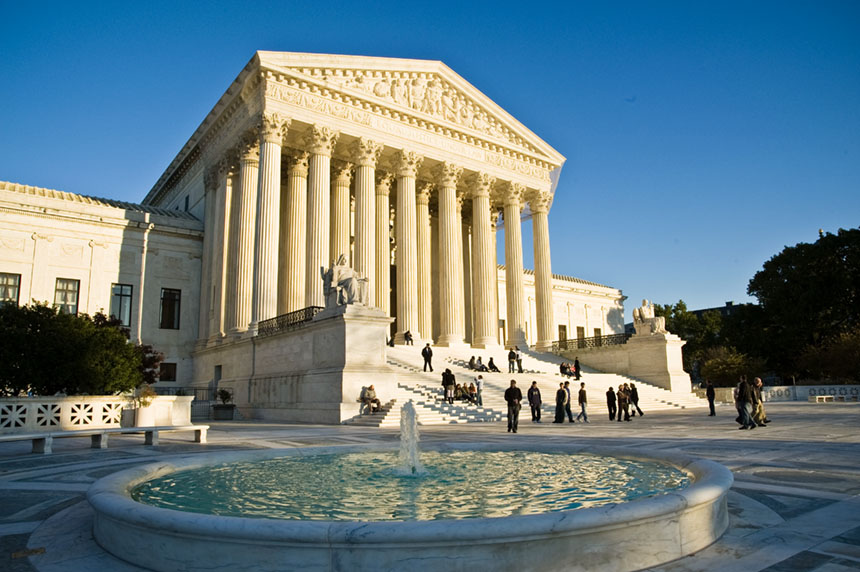
The Supreme Court closed out June with a decision that will reverberate through school athletics. In a 6–3 ruling covering two cases, the Court allowed Idaho and West Virginia to enforce laws that bar transgender girls from competing on girls’ school sports teams.
The cases were Little v. Hecox and West Virginia v. B.P.J. Both involved transgender students who wanted to participate on girls’ teams at their schools, and both were blocked by state laws that draw a categorical line: transgender girls may not play on girls’ teams, even if they are receiving medical care such as puberty blockers or have testosterone levels comparable to individuals assigned female at birth.
Join the Discussion
What the Court decided
At the center of the dispute was the Equal Protection Clause. The students argued that these bans single them out for unequal treatment and, in practical effect, treat them differently based on sex and gender identity.
The Court sided with the states. In doing so, it permitted the bans to stand and rejected the claim that these laws violate equal protection, including the arguments that they discriminate on the basis of sex or gender identity.
This is not the same thing as a single nationwide rule for every sports league, every age group, and every policy variation. But it is a major signal to legislatures and school systems that blanket exclusions of this kind can survive this kind of constitutional challenge.
Why it matters
School athletics policies tend to spread. Districts watch what neighboring states do. State athletic associations look for legal cover. And families understandably want to know whether a child’s eligibility could change from year to year.
By letting these laws remain in force, the Court has shifted the practical baseline. States that want categorical restrictions will read this as permission to try. Challengers, meanwhile, now face a steeper uphill climb under the constitutional theories tested in these cases.
That matters because the dispute is not only about sports. It is also about how the law understands equality when a student’s identity does not fit neatly into a category a state has decided to police.
Title IX in the background
Even though these cases were framed around constitutional equality, most Americans hear “girls’ sports” and think of Title IX, the federal law best known for expanding athletic opportunities for girls and women in education.
Supporters of these state bans often argue they are protecting girls’ sports. Opponents argue the laws use stereotypes about bodies and gender to exclude a small group of students who are already navigating school life under intense scrutiny.
Fatima Goss Graves, president and CEO of the National Women’s Law Center, described the decision as a major blow to the idea of equal access in school athletics. “Today’s decision is a devastating setback for the promise of Title IX and for the fundamental principle that all students deserve equal opportunity,” she said. “By allowing these states to exclude transgender women and girls like Becky Pepper-Jackson and Lindsay Hecox from school sports, the court has endorsed discrimination and reinforced the same stereotypes that Title IX was designed to dismantle.”
What came up at argument
When the Court heard arguments roughly six months ago, the questioning previewed the tension that runs through these cases: can a state write an across-the-board rule based on sex classifications and call it fairness, even when that rule forces a transgender student into an impossible choice: do not play at all, or play on a team that does not match who they are?
During the arguments, Justices Clarence Thomas and Amy Coney Barrett raised a hypothetical about whether a decision for the trans students would allow boys who could not make their own teams to try out for girls’ teams instead. Justice Brett Kavanaugh said allowing trans students to participate in girls’ sports would “reverse [their] amazing success and will create unfairness.”
These scenarios are powerful in a courtroom because they simplify a messy real world into a yes-or-no legal test. But school sports rarely work like a law school hypothetical. They involve age differences, sport-by-sport variation, eligibility rules, coaching decisions, and the ordinary reality that most students are not chasing scholarships. They are trying to belong.

What it means now
In Idaho and West Virginia, the immediate effect is straightforward: the bans can be enforced as written, and transgender girls will be barred from girls’ teams in the covered school settings.
For schools, the decision can bring a new wave of administrative pressure: interpreting eligibility rules, responding to complaints, and handling deeply personal student conflicts under heightened public attention.
For families, it can feel like the rules of belonging have shifted quickly. Whatever one’s views on sports policy, it is worth pausing on a basic civic reality: children and teenagers are the ones who live inside the policies adults debate.
What comes next
Expect more litigation, not less. States with similar laws will read this decision as encouragement. Advocates for transgender students will look for different legal pathways, different factual records, and possibly different statutory claims.
Also expect continued conflict between state-level rules and federal interpretations of education equality, including the evolving legal debates over how Title IX applies to gender identity.
If you are watching this issue from the outside, a helpful way to stay grounded is to separate three questions that often get tangled together:
- What does the Constitution require? That is the Court’s lane in cases like these.
- What does federal education law require? That is often a Title IX question.
- What is the best policy for schools? That is ultimately a democratic question, even when courts are involved.
Those questions will keep colliding in legislatures, school boards, and courtrooms. This ruling does not end the national debate. It sets the legal terrain on which the next round will be fought.