
Supreme Court oral argument is the part of a case most people can picture: nine justices on a bench, a single lectern, and lawyers trying to answer questions without saying the one sentence that sinks their side.
But what the public sees as the event is, for the Court, a very specific tool. Oral argument is not a trial. There are no witnesses. No cross-examination. No surprise evidence pulled from a folder with a dramatic flourish.
It is closer to a live stress test. The justices have read the case. They know the record. They have the briefs. Oral argument is where they probe the weak joints in each theory and figure out what rule they can announce without creating problems for the rest of the law.
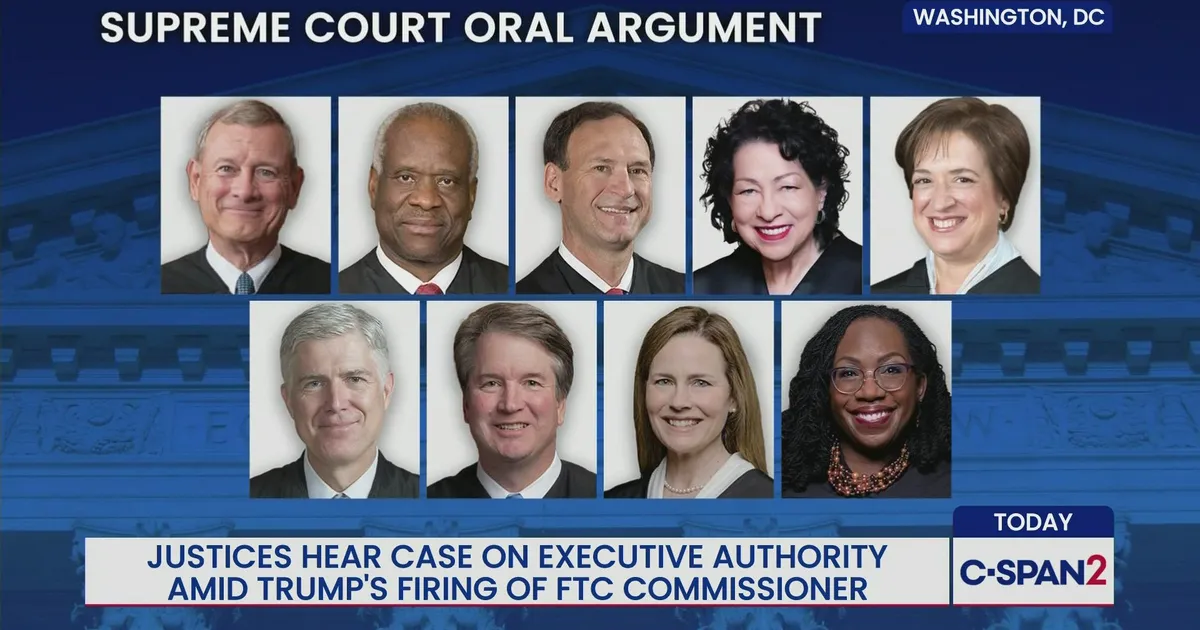
Join the Discussion
What it is for
Oral argument has three big jobs, and none of them is “persuade the Court with a moving speech.”
- Clarify what each side is actually asking the Court to do. Not just who should win, but what legal rule should govern future cases.
- Expose the consequences. The Court is constantly asking, “If we adopt your rule, what happens next time?”
- Help the justices write an opinion that holds. Many questions are less about the parties and more about how to craft a workable, defensible decision.
This is why oral argument often feels like interruption. It is. Lawyers come with a planned presentation, and the Court treats that plan as optional.
Before anyone speaks
The briefs did the heavy lifting
By the time a case is argued, the justices and their clerks have been living with it for weeks or months. The written briefs are where most persuasion happens. They lay out the facts, the lower-court rulings, the constitutional provisions or statutes at issue, and the exact doctrinal tests the Court should apply.
Briefs also include the case’s ecosystem: amicus briefs from states, advocacy groups, scholars, industries, and former officials. These “friend of the court” filings can shape how the justices frame the stakes, even if they never quote them explicitly.
Merits stage, not the entry ticket
Oral argument usually happens on the merits, after the Court has already agreed to hear the case. That means the Court has already decided the case is important enough to resolve, often because lower courts disagree or the question affects national law.
Sometimes the Court also hears oral argument about procedural gatekeeping issues like standing, mootness, or jurisdiction. When that happens, it can feel like the justices are asking, “Should we even be deciding this at all?” because they are.
Inside the courtroom
Arrival and opening
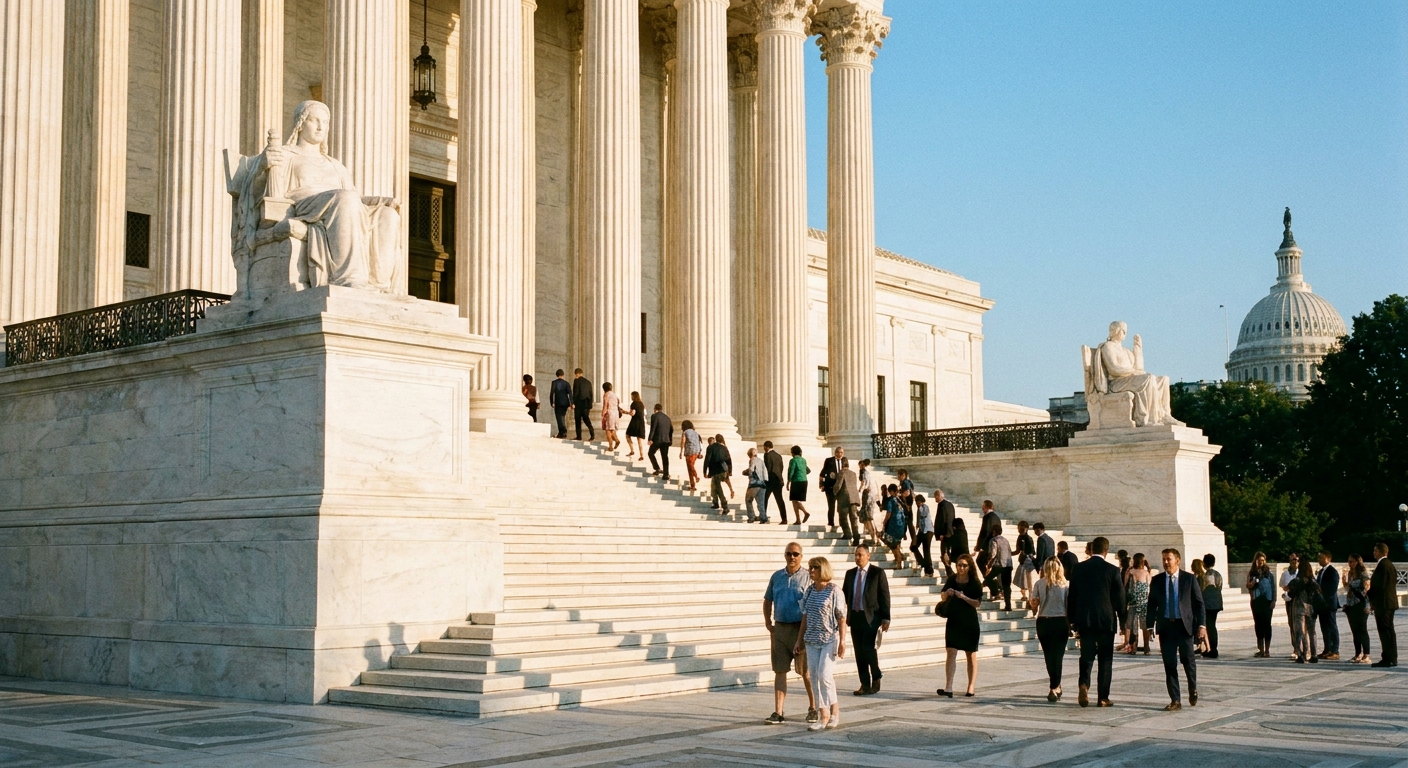
Argument days typically begin in the morning, with the Marshal of the Court opening the session. The setting is formal on purpose. The Court’s legitimacy depends in part on ritual: the same room, the same protocol, the same basic structure case after case.
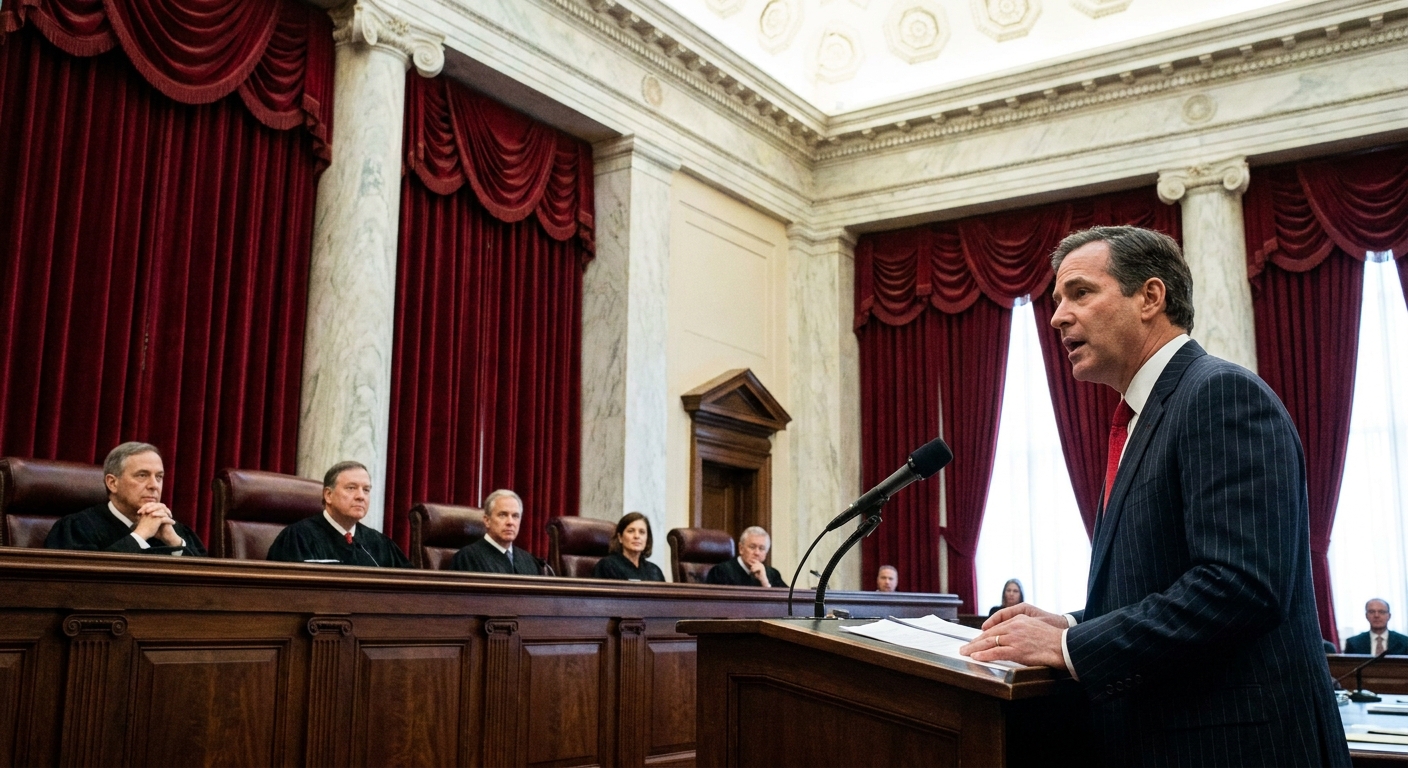
Once the justices take the bench, the case is called by name. The lawyers step to the lectern, and the questioning begins.
One concrete detail lawyers track is the lectern timing system. A white light signals you are running short on time. A red light means your time has expired, even if you are mid-sentence.
Who argues and when
Petitioner and respondent
The side asking the Supreme Court to reverse the lower court is the petitioner, and the other side is the respondent. Typically, that means the petitioner lost below, but case posture can get more complicated in consolidated cases and cross-petitions.
The usual order looks like this:
- Petitioner argues first.
- Respondent argues second.
- Petitioner may get rebuttal. A shorter closing turn to respond to what the respondent said and to sharpen the requested rule.
That final rebuttal time can be small, but it is strategically important because it is the last thing the justices hear.
When the United States is involved
If the federal government is a party, a lawyer from the Solicitor General’s office often argues. If the United States is not a party but has a strong interest, the Court may allow the Solicitor General to participate as an amicus in support of one side or in support of neither side.
In rare cases, an amicus may receive argument time, usually by agreement with a party to share that party’s time or by the Court’s leave. When the Solicitor General is in the room, the justices often treat the government’s position as a kind of institutional benchmark. Not always persuasive, but rarely ignored.
Time limits
In most cases, each side gets a fixed amount of time, commonly 30 minutes per side. That sounds generous until you remember what is happening during those minutes: the lawyer is being questioned by nine justices who do not coordinate their interruptions like a polite panel.
Two important realities:
- The clock keeps running during questions. A lawyer does not “get time back” because a justice talked for two minutes.
- Rebuttal time comes out of the petitioner’s total. If the petitioner saves five minutes for rebuttal, the opening argument is only twenty-five.
The Court can expand argument time for unusually complex cases, and it sometimes does. But the core discipline remains: the Court wants crisp answers under pressure.
The questions
What the Court is doing
Justices ask questions for different reasons, and reading them like tea leaves can be tricky.
- To test a theory’s limits. “If we rule for you, do we also have to rule for someone doing X?”
- To force a concession. “You agree the government can do Y, correct?”
- To offer a lifeline. Sometimes a justice is quietly inviting counsel to adopt a narrower rule that could attract a majority.
- To signal to colleagues. Oral argument is a public conversation, but it is also internal messaging across the bench.
A tough question does not always mean hostility. It can mean, “Help me write the opinion I want to join.”
A short opening, usually
The modern Supreme Court is known for a “hot bench,” meaning frequent, aggressive questioning.
One detail matters for how arguments feel in real time: beginning in the 2019 Term, the Chief Justice announced a general practice of giving advocates about two minutes at the start for an uninterrupted opening. In practice, it is best understood as a guideline, not a hard guarantee. The Court can still jump in when it wants to.
The hybrid approach
In recent terms, the Court has also used a hybrid questioning structure that combines two styles. The exact rhythm has varied by Term and sitting, but the basic pattern has looked like this:
- First, the free-for-all. After the opening, justices can jump in as they wish, with rapid back-and-forth.
- Then, an ordered round. In the 2020 to 2022 Terms in particular, and in some subsequent sittings, the Court added a more structured round of questions where justices took turns in seniority order, giving each justice a predictable chance to press their concerns.
The mix changes the rhythm. You still have to survive the spontaneous interruptions, but you also have to be ready for a structured second phase where the questions can get more surgical.
How lawyers prepare
Supreme Court advocates practice for weeks in moot courts, rehearsals where other lawyers play the justices and fire questions at full speed. Preparation focuses less on rhetoric and more on discipline.
The answers that work tend to share a few traits:
- They start with a direct “yes” or “no” when possible. Evasion reads like weakness.
- They identify a limiting principle. The Court is always hunting for a rule that stops somewhere.
- They tie back to text, precedent, and administrability. A rule that cannot be applied consistently is a rule the Court will hesitate to announce.
What looks like “winning” in oral argument is often just surviving without giving away the case’s core premise.
Argument vs. briefs
If you only remember one thing, make it this: briefs usually matter more than oral argument.
Briefs define the case in a way oral argument cannot. They provide the full legal framework, the citations, the record references, and the carefully constructed doctrinal tests. Oral argument is the high-pressure follow-up.
So why bother with oral argument at all? Because it can do things paper cannot:
- Expose a hidden problem. A single question can reveal that a proposed rule collapses in an edge case.
- Reveal what the justices are worried about. The bench’s focus can tell both sides what will matter in the eventual opinion.
- Narrow the dispute. Sometimes a lawyer concedes a point at argument that simplifies the Court’s path to a decision.
Oral argument rarely flips a case by itself. But it can shape the opinion’s scope, and scope is where history is made.
After argument
The conference vote
After argument, the justices meet in private conference to discuss the case and take an initial vote. No clerks. No cameras. No public transcript of who said what.
This vote is not necessarily final, but it matters. It helps determine who is in the majority and who will assign or write the Court’s opinion. The public eventually sees vote alignments through the opinions and join counts, even though the conference discussion itself stays private.
Drafts and negotiations
If the Chief Justice is in the majority, the Chief assigns the opinion. If not, the most senior justice in the majority does. Drafts circulate. Language is negotiated. Sometimes the controlling rule gets narrower to keep five votes.
This is also where separate writings emerge:
- Concurring opinions, agreeing with the result but using different reasoning.
- Dissents, explaining why the Court got it wrong.
Those separate opinions can become the blueprint for future arguments, especially when the Court’s membership changes.
What happens next
After argument, the Court can:
- Affirm the lower court’s judgment.
- Reverse it.
- Vacate and remand, sending it back for more proceedings under a new legal standard.
- Dismiss the case as improvidently granted in rare situations, essentially admitting the Court should not have taken it.
In some cases, the Court orders reargument or asks for additional briefing on a question that became central during oral argument.
One modern change that helps the public follow along: the Court now releases audio of arguments the same day. The decision, by contrast, often comes weeks or months later.
What it can tell you
It is tempting to treat oral argument like a scoreboard. Count the questions. Measure the skepticism. Declare a winner.
Sometimes that works. Often it does not.
Here is what oral argument can reliably reveal:
- The pressure points. Which facts or doctrinal tests the Court is struggling with.
- The likely battleground. Whether the fight is over constitutional text, precedent, history and tradition, or practical consequences.
- Whether a narrow ruling is on the table. If multiple justices are hunting for a limiting principle, that is a signal.
What it cannot reliably reveal is the final vote count. Justices ask hard questions even when they agree, and they sometimes go quiet when they are already convinced.
Why it matters
Oral argument is one of the few moments when constitutional interpretation becomes audible. You can hear the competing instincts: deference versus skepticism, bright-line rules versus flexible standards, history versus modern consequences.
And you can hear something else, too: the Court’s awareness that a decision is not just an answer for one dispute. It is a rule that will govern the next dispute, and the one after that, in courthouses that do not have marble columns.
The Constitution does not change during oral argument. But the Court’s understanding of how to apply it can, one question at a time.