
The House of Representatives is supposed to represent people, not paperwork. That sounds like a slogan, but it is also the Constitution’s basic design for apportionment: count the population, then divide the seats.
So when a new proposal floats the idea of counting only citizens for House seats, it lands on a deceptively narrow question: can Congress change the apportionment base from “total persons” to “citizens only” just by passing a statute?
The short constitutional answer is that the text we have, especially after the Civil War, points in one direction: apportionment is tied to counting persons, not counting citizens. The longer answer explains why that distinction exists, what power Congress actually has over the census, and what modern litigation suggests is still unsettled in practice.

Join the Discussion
What the Constitution says
Article I: representation starts with an “actual Enumeration”
Article I, Section 2 sets the original rule: Representatives are apportioned among the states according to their “respective Numbers,” determined by an “actual Enumeration” every ten years.
From the beginning, the Constitution linked House seats to a headcount. It did not say “voters.” It did not say “citizens.” It said “numbers” and required an enumeration as the basis for representation.
Article I also gives Congress authority to run the census process. The enumeration happens “in such Manner as they shall by Law direct.” That is real power over census methodology and what data are collected. But it does not necessarily let Congress change the constitutional category used for apportionment if the Constitution itself fixes that category.
The 14th Amendment: the post–Civil War rewrite that matters here
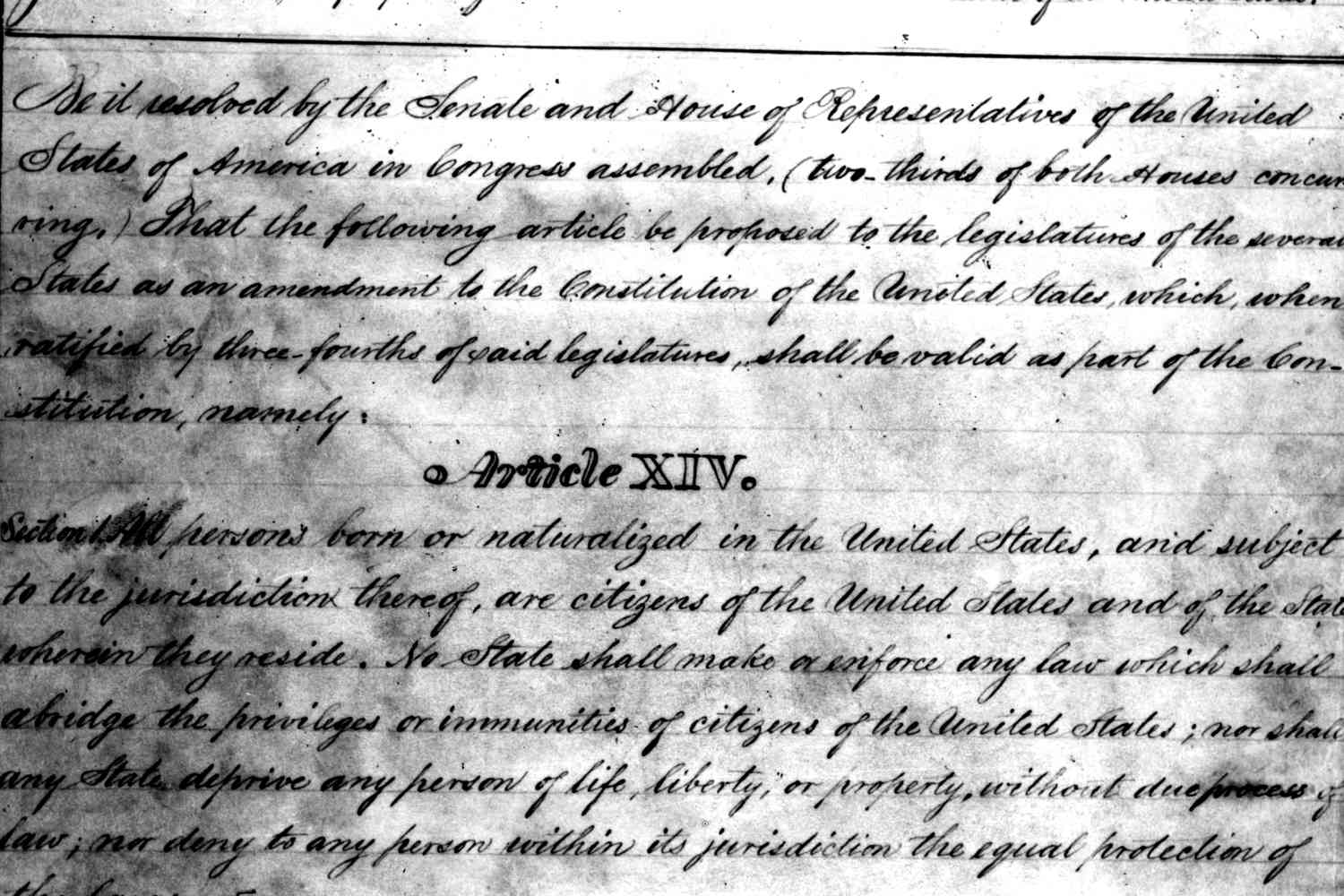
After the Civil War, the 14th Amendment rewrote the apportionment clause. Section 2 replaced the original compromise-based language and established a new baseline:
Representatives “shall be apportioned among the several States according to their respective numbers, counting the whole number of persons in each State.”
That phrase is doing the heavy lifting. “Whole number of persons” is not an accident. It is the constitutional answer to a country that had treated human beings as fractional for representation while denying them political rights. The Amendment’s text hard-codes a population-based measure for apportionment, and it uses persons, not citizens, as the unit.
Do noncitizens count for House seats?
Textually, noncitizens are “persons,” so the 14th Amendment’s apportionment rule points toward including them in the count.
Historically, that is also how the United States has done it. For generations, the Census Bureau’s apportionment population has been based on total usual residents, which includes citizens and noncitizens alike.
It is worth a precision point, though. While the constitutional text and longstanding practice strongly support counting all residents for apportionment, the Supreme Court has not squarely issued a merits holding that specifically answers the question: noncitizens must be included in the federal apportionment base. That gap helps explain why proposals to narrow the apportionment base keep returning.
This also does not mean noncitizens can vote in federal elections. Voting eligibility is a different question controlled by state rules, federal constitutional limits, and federal statutes. Apportionment is about how many representatives a state gets, not about who can cast a ballot.
Can Congress switch to citizen-only by statute?
This is where the constitutional hook tightens.
Congress has broad authority to direct the manner of the census, including methods, questions, and what data products are produced. It can also pursue citizenship data through different tools, such as survey questions or administrative records, subject to ordinary legal limits.
But that discretion sits under the 14th Amendment’s command for apportionment: “counting the whole number of persons.” If that is the constitutional rule, then a statute that says “for apportionment, count only citizens” would not just be a policy tweak. It would attempt to swap the Constitution’s counting category for a different one.
This is also not a purely theoretical dispute. In recent years, federal officials have argued about whether certain groups, including undocumented immigrants, could be excluded from the apportionment count. That debate has been litigated, and it is part of why the practical boundaries are still contested even if the constitutional text looks straightforward.

What the Supreme Court has said
Evenwel: total population is a familiar baseline
In Evenwel v. Abbott (2016), the Supreme Court unanimously upheld the use of total population when drawing state legislative districts under the “one person, one vote” principle. That case was not about federal House apportionment, and it did not decide whether states may use citizen-only data for districting if they want to.
But the Court’s reasoning matters because it treated total population as historically grounded and constitutionally familiar. It also emphasized that elected officials represent all residents, not only those eligible to vote.
Trump v. New York: the modern apportionment fight that did not reach the merits
In Trump v. New York (2020), the Supreme Court addressed a challenge to an attempted change in who would be included in the apportionment count. The Court ultimately dismissed the case on procedural grounds, concluding the dispute was not ripe at that moment, rather than resolving whether the underlying exclusion was constitutional.
That is a key reason the “who counts for apportionment” debate can feel both textually clear and legally unresolved in the headlines. Some of the biggest recent fights have ended without a definitive merits ruling.

Apportionment vs. districting
People often blur two separate processes:
- Apportionment: how many House seats each state gets. This is driven by the federal census and the constitutional command to count persons.
- Redistricting: how a state draws the lines for its House districts after it learns how many seats it has. This is mostly state-controlled, within federal constitutional limits like equal population and protections against racial discrimination.
A “citizens only” idea can show up in either arena. But the constitutional constraints are not identical.
For apportionment, the Constitution speaks directly: “whole number of persons.” For districting within a state, the Constitution is less explicit. The Supreme Court has upheld total-population districting, and it has not definitively resolved all variants of citizen-only districting proposals.
What it would take in practice
If the goal is to change the apportionment base nationwide from “persons” to “citizens,” the clean constitutional route would be an amendment. That is not a small thing. It is a structural rewrite of representation.
Without an amendment, a citizen-only apportionment statute would almost certainly trigger immediate litigation. The central argument would be straightforward: Congress cannot override the 14th Amendment’s command by redefining “persons” as “citizens,” or by refusing to count a subset of persons for apportionment purposes.
There is also a practical implementation problem that sits beneath the legal one: how, exactly, would “citizens only” be measured with census-level accuracy? A citizenship question is one approach, but it raises data quality and undercount concerns. Administrative records are another, but matching and coverage problems can create their own distortions. Those operational questions would quickly become part of any court fight, because apportionment depends on reliable, nationwide numbers.
Why the argument keeps coming back
Apportionment is power. House seats shape committee chairs, legislative leverage, and the Electoral College, since each state’s electoral votes equal its House seats plus two Senators.
That is why apportionment fights tend to look like math and sound like civics, but feel like raw political gravity. Changing who counts changes who wins.
The constitutional design tries to keep that gravity tethered to a simple principle: the House represents people as they exist in the states, not only those who hold citizenship papers or show up at the polls.
Quick answers
Does the Constitution say noncitizens count for apportionment?
The Constitution requires an “actual Enumeration” and, under the 14th Amendment, apportionment is based on counting the “whole number of persons in each State.” That text strongly points toward including noncitizens, and historical practice has long counted all usual residents. The Supreme Court has not squarely issued a merits holding that answers the question in those exact words.
Can Congress run the census however it wants?
Congress has broad authority to direct the manner of the census, including methodology and data collection. But it cannot contradict constitutional requirements like the 14th Amendment’s apportionment rule.
Is counting only citizens for House seats clearly constitutional?
No. The text of the 14th Amendment points strongly the other way, and any citizen-only apportionment law would face immediate constitutional challenge.
Would a citizen-only rule affect the Electoral College?
Yes, indirectly. Electoral votes are tied to House seats, so shifting apportionment changes presidential-election math as well.