
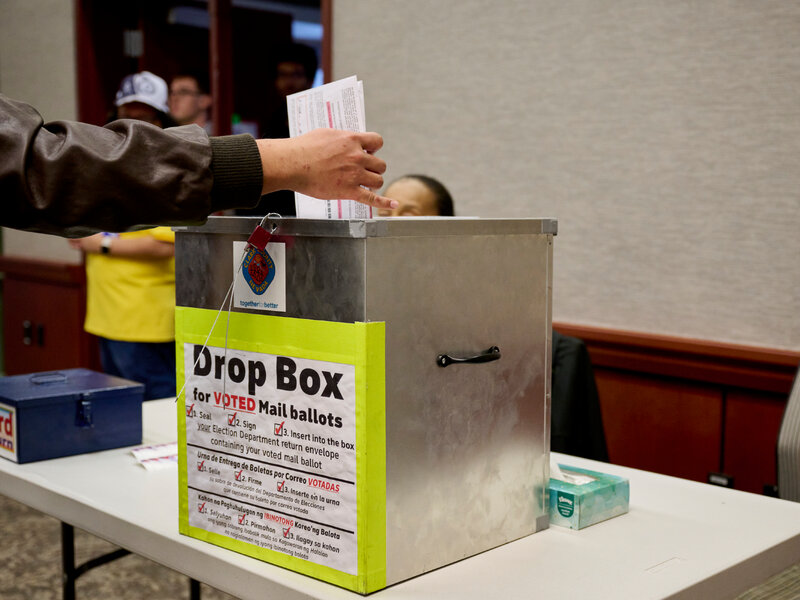
The fight over noncitizens on voter rolls often sounds like a single yes or no question: can noncitizens vote?
For federal elections, the legal answer is straightforward: noncitizens cannot vote. The Constitution leaves most election administration to the states, but Congress has layered federal rules on top of that state machinery. That is where voter roll checks, list maintenance requirements, and congressional investigations collide, often centered in Washington at the United States Capitol.
Recent headlines about a congressional inquiry aimed at state election administration, and a sharp back-and-forth over responses and possible subpoenas, are a useful entry point. They highlight three separate issues that are easy to blur together: eligibility (who may vote), registration systems (how states build and maintain rolls), and oversight power (what Congress can demand when it investigates).
Join the Discussion
Can noncitizens vote in U.S. elections?
In federal elections, no. Federal law makes it illegal for noncitizens to vote for President, Vice President, U.S. Senator, or U.S. Representative. The core federal criminal prohibition is 18 U.S.C. § 611, which generally applies when a person knowingly votes in a federal election, with limited exceptions.
In state and local elections, it depends on state law. States have broad authority to set the franchise for their own elections, but that authority is constrained by state constitutions, state statutes, and federal constitutional protections. Many state constitutions and election codes explicitly require citizenship even for local elections.
A small number of jurisdictions have experimented with allowing some noncitizens to vote in certain local contests (for example, municipal elections). Where such policies exist, they are typically local-only and often limited to specific categories such as lawful permanent residents, but practices vary by state and locality. Whether that is wise policy is a separate debate. Constitutionally, the point is that federal contests remain off-limits to noncitizens.
The practical confusion comes from the fact that many places run elections on the same day, using the same polling places and the same election workers, even when the ballot contains a mix of federal, state, and local races. If a jurisdiction ever allows noncitizen voting locally, election design must keep federal contests restricted. That is an administration question, not just a principle.
What the Constitution says
If you go hunting for a sentence that says “only citizens may vote,” you will not find it. The Constitution does not contain one master “right to vote” clause, and it also does not contain one master “citizens only” clause.
States set voter qualifications first
Article I, Section 2 ties the House electorate to the electorate for the most numerous branch of the state legislature. In plain English: if you can vote for the state’s lower house, you can vote for the U.S. House, too. That structure makes state voter qualifications the baseline for House elections, subject to limits imposed by the U.S. Constitution and valid federal statutes.
A related, important nuance: states cannot add qualifications for federal officeholders beyond what the Constitution sets. But states do play a large role in defining the voter pool for House elections, and then federal law and federal constitutional rules place constraints on how those qualifications are administered.
What the amendments do and do not do
Several amendments restrict how governments may draw lines around the franchise:
- 15th Amendment: no denial of the vote based on race.
- 19th Amendment: no denial based on sex.
- 24th Amendment: no poll tax in federal elections.
- 26th Amendment: no denial based on age for citizens 18 and over.
- 14th Amendment: equal protection and due process principles shape voting-rights doctrine, and Section 2 references “male inhabitants” and “citizens,” reflecting the document’s evolving history more than a modern eligibility code.
Notice what is missing: none of these is a comprehensive eligibility code. They are mostly constraints, not a full list of qualifications.
Federal law on noncitizen voting
For federal elections, Congress has spoken clearly. Under federal law, noncitizen voting in federal contests is prohibited, and knowingly doing so can trigger criminal penalties, including under 18 U.S.C. § 611.
This is constitutionally significant for two reasons:
- The rule is enforceable nationwide even though states run the mechanics of elections.
- Congress’s power to regulate federal elections supports federal standards for registration, list maintenance, and enforcement tools, including frameworks later spelled out in statutes such as the National Voter Registration Act of 1993.
That does not mean Congress runs elections day-to-day. It means Congress can set guardrails that states must implement when they administer federal elections.
Voter rolls and what they show
A voter roll is an administrative list of eligible registered voters. Being mistakenly listed is not the same thing as successfully casting a counted ballot in a federal race.
Most systems have multiple checkpoints:
- Registration gatekeeping: applicants attest eligibility and provide identifying information; states verify through their processes.
- Pollbook checks: a voter’s name must match the record at the polling location (or via mail ballot verification procedures).
- Ballot eligibility: the ballot style is tied to the voter’s precinct and contests.
- Provisional ballots: if eligibility is questioned, the voter can be given a provisional ballot that is counted only if eligibility is later confirmed.
That layered structure is why investigations often focus on two different questions that should not be conflated: are ineligible people getting onto the rolls, and are ineligible ballots being counted?
It also helps to remember that citizenship is not the only eligibility issue list maintenance touches. Depending on the state, rolls can also be affected by changes in residency, felony status, mental incapacity rulings, or other state-law eligibility rules.
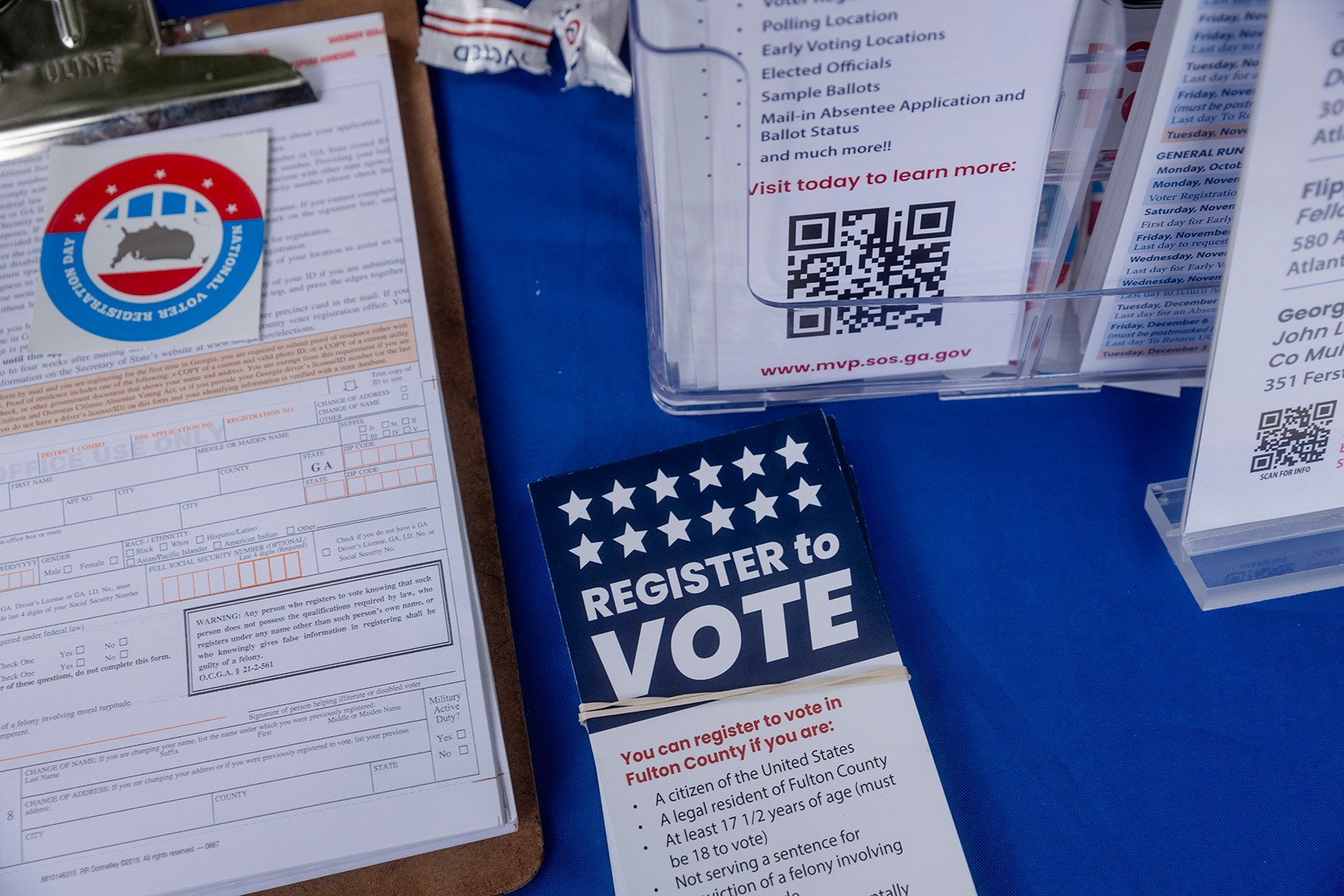
List maintenance under NVRA and HAVA
Voter roll “maintenance” means keeping registration lists accurate as people move, die, lose eligibility under state law, or otherwise need record updates. The constitutional tension here is constant: elections must be secure and accurate, but list cleanup cannot become a backdoor method of disenfranchisement.
The core federal framework is the National Voter Registration Act of 1993 (NVRA). Among other things, it requires states to run a general program that makes a reasonable effort to remove ineligible registrants due to death or change of residence, while also imposing important limits.
Two NVRA guardrails matter in practice:
- No removal for not voting: states cannot remove registrants by reason of the person’s failure to vote, even though a failure to respond to a notice plus continued nonvoting can be part of a longer change-of-residence process.
- The 90-day “quiet period”: states are restricted from conducting certain large-scale, systematic list maintenance programs within 90 days of a federal election, with key exceptions (including removals based on death, criminal conviction where applicable, mental incapacity where applicable, and voter-initiated changes).
Separate federal rules also shape the registration front end, including the Help America Vote Act of 2002 (HAVA), which requires a single, uniform, official, centralized, interactive computerized statewide voter registration list (with limited state-specific exceptions) and sets identification rules for certain first-time voters who registered by mail and did not provide required ID information. The U.S. Election Assistance Commission plays a central role in administering parts of HAVA, including guidance and support for election administration.
None of this requires perfection. It requires process. And process is exactly what gets audited, litigated, and, sometimes, investigated.
Citizenship checks and their limits
States have strong interests in ensuring that only eligible voters participate in federal elections. But they do not have unlimited tools to prove citizenship on demand, for every voter, in every circumstance.
Three practical constraints show up again and again:
- Federal forms and federal rules: for federal elections, states must accept certain federal registration processes. When states have tried to add extra documentary proof requirements for applicants using the federal form, that has produced major litigation (for example, Arizona v. Inter Tribal Council of Arizona).
- Data reality: citizenship information is often not stored in one clean, universally accessible database, and practices vary by state. States may rely on a mix of DMV records, jury questionnaires, vital records, and federal verification tools where available and lawful.
- False positives: aggressive matching rules (name, date of birth, partial Social Security numbers) can misidentify eligible citizens as noncitizens, especially for naturalized citizens and people with common names.
So when officials talk about “checking the rolls for noncitizens,” the constitutional question is only half the story. The other half is administrative law: what data can the state legally use, and what standard of certainty is required before taking someone off the list?
Federal and state roles
America runs elections through a deliberately split system. States administer elections, but the federal government sets rules for federal contests and enforces constitutional protections. When the two clash, the dispute can end up in the courts, including the U.S. Supreme Court.
The Elections Clause
Article I, Section 4, the Elections Clause, gives state legislatures the power to prescribe the “Times, Places and Manner” of holding elections for Senators and Representatives, but it also gives Congress power to “make or alter” such regulations. That is the constitutional spine for many federal election statutes.
Presidential elections
Presidential elections are routed through a different constitutional pathway, but Congress still has authority to set certain rules affecting federal elections broadly and to protect constitutional rights in the process.
The bottom line: states run the polling places. Congress can write rules for federal elections. And when the two clash, courts are often asked to referee.
Congress investigations and subpoenas
Congress is not a national elections board, but it does have the power to conduct investigations tied to legislation and oversight of federal interests. That includes federal elections administration and compliance with federal election laws.
Where oversight power comes from
The Constitution does not spell out “subpoena power” in a single clause. The Supreme Court has long treated congressional investigations as an implied power connected to Congress’s legislative functions. Committees can issue subpoenas under chamber rules, and recipients who refuse can face consequences ranging from negotiated accommodation to contempt proceedings.
Limits that matter
Even when Congress has a legitimate oversight purpose, disputes often turn on boundaries:
- Legislative purpose: the inquiry must relate to potential legislation or oversight of existing law.
- Federalism friction: states control election administration, so demands for state-held records can trigger state sovereignty arguments and political resistance.
- Privacy and security: voter-roll data can include sensitive information. States may resist broad disclosure, offer redactions, or propose controlled access.
In other words, subpoenas are one of the few hard tools Congress has. They also routinely produce negotiation and litigation before anyone reaches a courtroom showdown.

If a noncitizen is on the rolls
States generally have procedures for challenges, investigations, and removals, but the details vary. Using New Jersey as a concrete example, these questions often point people to the work of county election officials and the state’s broader election apparatus, based in Trenton near the New Jersey State House.
A typical pathway looks like this:
- Trigger: a data match, a returned mail notice, a jury-service response, a referral, or a formal challenge under state law.
- Notice: the registrant may receive a notice and a chance to confirm eligibility.
- Evidence review: the election office evaluates whether the information is reliable enough to act on.
- Action: cancellation, inactive status, or no change, depending on the state’s rules and the strength of the evidence.
Two constitutional values run through these procedures: accuracy (keeping ineligible registrations off the books) and due process (not stripping eligible citizens of the vote based on unreliable information or mistaken matches). A system that is too lax invites error. A system that is too aggressive creates a different kind of error.
Common misconceptions
- “If a noncitizen is registered, they voted.” Not necessarily. Registration and ballot counting are separate steps, and many safeguards exist between them.
- “The Constitution bans noncitizen voting explicitly.” The ban for federal elections is chiefly statutory. The Constitution sets the structure that lets Congress regulate federal elections and lets states set many qualifications.
- “States can demand any citizenship document they want.” States have authority, but it is constrained by federal election rules, constitutional protections, and practical limits on data reliability.
- “Congress can simply take over state election offices.” Congress can legislate for federal elections and investigate, but it does not run local election administration day-to-day.
FAQ
Can a noncitizen vote for President?
No. Federal law prohibits noncitizens from voting in federal elections, including the presidential contest. States set many election mechanics, but they cannot authorize noncitizens to vote in federal races.
Can a noncitizen vote in a city election?
Sometimes, depending on state law and local rules. Where it is allowed, it is typically local-only and may be limited to specific categories such as lawful permanent residents. Federal races on the same election date must remain restricted to eligible voters for federal elections.
How do states find noncitizens on voter rolls?
Typically through data matches and administrative records that suggest noncitizenship, followed by notice and an eligibility review. The hardest part is avoiding false positives.
Can Congress subpoena a governor or state officials over voter roll questions?
Congress can issue subpoenas in investigations tied to a legitimate legislative purpose. Whether a particular demand is enforceable and how disputes resolve depends on negotiations, legal objections, and sometimes the courts.
The constitutional takeaway
Noncitizen voting in federal elections is not a gray area. It is prohibited by federal law. The harder question, and the one that keeps returning in political conflicts, is how to reconcile three truths at once: states administer elections, Congress can regulate federal elections, and every mechanism designed to exclude ineligible voters also carries a risk of excluding eligible ones.
That is why voter-roll fights so often end up sounding like accusations and rebuttals, while the real constitutional story is structural. The Constitution built a system where power is shared, friction is normal, and election legitimacy depends as much on process as on outcomes.