
Every ten years, the United States does something deceptively simple: it counts people. Then the hard part begins.
The census is not just a headcount for trivia night. It is the starting gun for a chain reaction that moves seats in the House of Representatives, forces states to redraw districts, and often ends in court.
This guide walks through that post-census machinery from start to finish, with plain-language checkpoints you can recognize when the next cycle rolls around.

Join the Discussion
Two steps people mix up
"Redistricting" is the umbrella term, but the cycle has two distinct steps that happen in a specific order.
Step 1: Reapportionment (national math)
Reapportionment decides how many of the House's 435 seats each state gets for the next decade. This step is based on each state's total resident population from the decennial census. That means all residents count, not just citizens, not just voters, not just "eligible" adults.
If you want the most precise constitutional shorthand, the Fourteenth Amendment requires counting the "whole number of persons in each State." Debates about alternative bases come up regularly, but total population is the rule in modern practice.
Step 2: Redistricting (mapmaking)
Once a state knows how many seats it has, it draws that many congressional districts. If a state gains a seat, it must create a new district. If it loses a seat, it must eliminate one and re-balance the rest.
Reapportionment answers: How many seats? Redistricting answers: Where are the lines?
Reapportionment
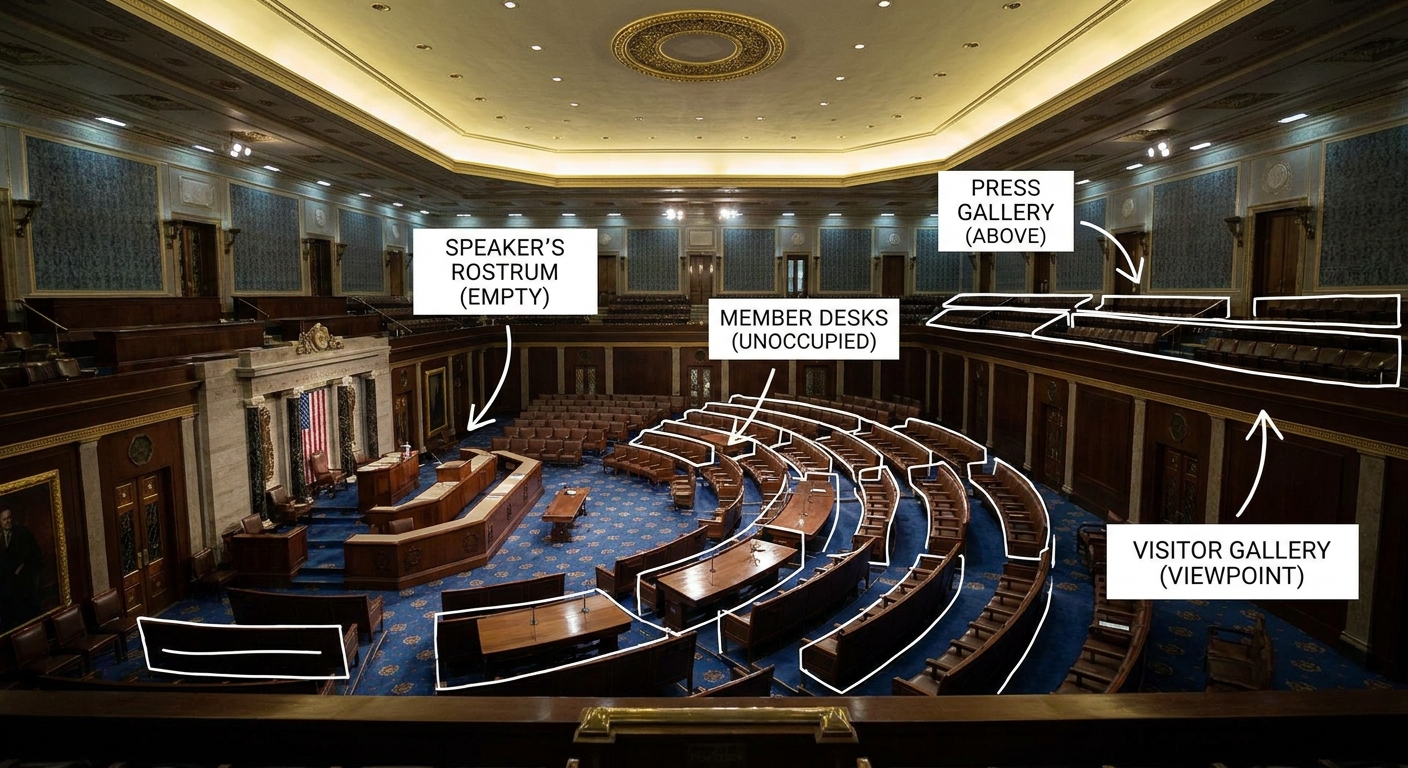
The Constitution requires an "actual Enumeration" every ten years. Congress set the House at 435 seats in 1911. It briefly expanded to 437 when Alaska and Hawaii were admitted (1959) and returned to 435 after the 1960 census reapportionment. Since then, reapportionment has been a zero-sum game: if one state gains, another must lose.
What numbers are used
For reapportionment, the key number is each state's total resident population as measured by the decennial census. That includes children, non-citizens, and people who cannot vote.
The formula, in plain English
The United States uses the method of equal proportions. You do not need to do the math to understand the idea:
- Every state gets at least one House seat.
- The remaining seats are assigned one at a time based on a priority value that balances population against the number of seats a state already has.
- Small differences in population can decide the last few seats, which is why reapportionment can hinge on thin margins.
How it becomes official
The Census Bureau delivers apportionment totals to the President, and the President transmits them to Congress. Those totals become the official seat counts for the next decade's congressional elections.
From census data to maps
Reapportionment tells states how many districts they need. The next question is what data mapmakers actually use to draw them.
The data pipeline
Think of the flow like this:
- Census count happens → populations are tallied nationwide.
- Apportionment totals released → each state learns its House seat number.
- Redistricting data released to states → detailed counts down to small geographic units used to build districts.
- States draft maps → through legislatures, commissions, or hybrid systems.
- Maps get challenged or approved → via state processes and, often, courts.
- New districts used in elections → usually beginning with the next midterm cycle after maps finalize.
The dataset name to know
The core redistricting release is often called the Public Law 94-171 redistricting data. It is designed specifically for line-drawing and includes the granular population counts states use to build districts of roughly equal size and evaluate compliance with the Voting Rights Act and state law.
The important point is that census data is not just one number. It is a set of datasets built to plug into mapmaking.
The timeline
Redistricting always feels late because the calendar is unforgiving. Elections do not pause while states argue about maps.
The basic cadence
- Census year: enumeration occurs.
- Following year: apportionment counts are delivered and the Public Law 94-171 redistricting data reaches states.
- Mapmaking window: states draw and pass maps, often while advocacy groups prepare challenges.
- Election deadlines arrive: candidate filing, primaries, ballot printing, and election administration force courts to weigh speed against perfection.
Why courts care about timing
Even when plaintiffs have strong arguments, courts often weigh the risk of election disruption. You will sometimes hear about the "Purcell principle," shorthand for judicial caution about changing election rules too close to an election. It is often invoked, and not applied as a hard, automatic rule.
That does not mean illegal maps are immune. It means the remedy and the timing become part of the fight.
Rules map-drawers follow
States do not get a blank canvas. They are constrained by federal constitutional rules, federal statutes, and their own state constitutions and redistricting laws.
Federal baseline rules
- Equal population: Congressional districts must be equal in population "as nearly as practicable." This standard comes from Supreme Court case law such as Wesberry v. Sanders. In practice, even very small deviations can draw scrutiny unless tied to consistently applied, legitimate objectives.
- Voting Rights Act compliance: Section 2 of the Voting Rights Act can require districts that provide minority voters an equal opportunity to elect candidates of their choice, depending on local conditions and voting patterns.
- Fourteenth and Fifteenth Amendment limits: Race cannot be used in certain ways. A map can be challenged for diluting minority voting strength, but it can also be challenged if race predominates without sufficient legal justification.
One historical note that helps explain today’s litigation-heavy landscape: Section 5 "preclearance" was effectively curtailed in Shelby County v. Holder (2013), which shifted more disputes into after-the-fact lawsuits rather than federal pre-approval.
Common state-level rules
Many states add requirements like:
- contiguity (all parts of a district touch),
- compactness (avoid sprawling shapes),
- respect for county and city boundaries,
- protections for "communities of interest,"
- bans or limits on favoring a political party or incumbents.
Those state rules matter because a map that survives federal court might still die in state court under a state constitution.
Congressional vs state maps
This guide focuses on congressional districts, but states typically redraw state House and state Senate districts at the same time using the same census redistricting data. The equal-population rule still applies, but courts generally allow more flexibility for state legislative maps than for congressional maps (a difference associated with cases like Reynolds v. Sims).
Where lawsuits start
Redistricting litigation tends to cluster around a few predictable hooks. If you understand these, you can read a headline about a map challenge and immediately know what kind of case it is.
1) Equal population claims
These focus on whether districts deviate too far from equality. For congressional districts, the standard is especially strict, and even small deviations can require a strong, consistently applied justification.
2) Voting Rights Act claims
Section 2 cases are fact-heavy. Plaintiffs typically argue that minority voters are either:
- cracked across multiple districts so they cannot form an effective voting bloc, or
- packed into one district to reduce their influence elsewhere.
3) Racial gerrymandering claims
These cases argue that race was the predominant factor in line-drawing without adequate legal justification. They can overlap with Voting Rights Act compliance arguments, which is why states often insist they were trying to comply with federal law while challengers claim they used race too aggressively.
4) State constitutional challenges
Some of the most consequential redistricting decisions in the last decade have come from state courts interpreting state constitutions, including provisions about free elections, equal protection, or explicit anti-gerrymandering rules.
The cycle, at a glance
Cycle A: seat allocation
Census count → state populations computed → 435 seats reapportioned → states learn seats gained or lost
Cycle B: line drawing
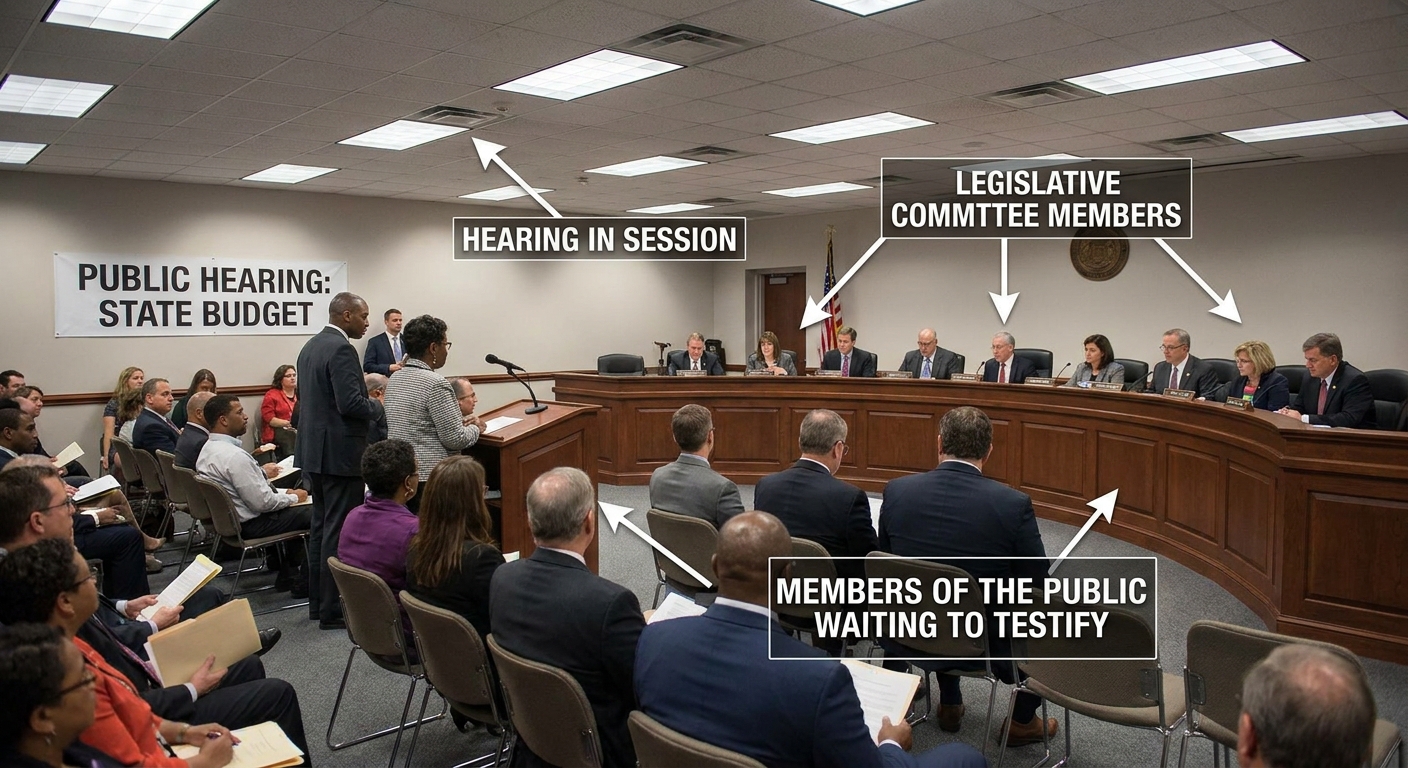
Public Law 94-171 data delivered → map proposals drafted → public hearings and revisions → map enacted → administration prep for elections
Cycle C: litigation and fixes
map enacted → lawsuit filed → trial court ruling → appeal → map revised or court-ordered map used
Notice what is missing: a single national "redistricting day." Redistricting is 50 different systems trying to meet one national election calendar.
Redistricting vs gerrymandering
It is easy to treat the census itself like the villain. But census-driven redistricting and partisan gerrymandering are not the same thing.
Redistricting is required
Population shifts make old maps unfair over time. If a district grows by hundreds of thousands of people while another shrinks, representation becomes lopsided. Redistricting is the reset button.
Gerrymandering is a choice
Gerrymandering is what happens when line-drawers use the required redraw to lock in partisan advantage, often by manipulating where voters are placed.
Two important realities can be true at once:
- States must redraw after the census.
- The incentives to draw self-serving lines are strongest precisely when the redraw is mandatory.
The federal court wrinkle
In Rucho v. Common Cause (2019), the Supreme Court held that claims of partisan gerrymandering present political questions that federal courts cannot adjudicate. That did not make gerrymandering "legal" in every sense. It shifted much of the fight into state courts, state constitutions, and political reforms like commissions.
Where commissions fit
Independent or bipartisan commissions do not replace the census. They replace, or constrain, the people who draw the lines after the census.
What commissions typically do
- Run public hearings and accept map submissions.
- Apply criteria in a specific order, often prioritizing equal population and Voting Rights Act compliance before considering political data.
- Create transparency rules that make it harder to hide partisan intent.
What commissions cannot do
- They cannot stop reapportionment from shifting seats between states.
- They cannot ignore federal law, including the Voting Rights Act.
- They cannot guarantee that litigation will not happen. A commission-drawn map can still be challenged.
Think of commissions as a governance choice about who draws, not a magic eraser for the underlying legal constraints and political stakes.
Why the count matters early
Because reapportionment is a national zero-sum allocation, census accuracy has political consequences. Undercounts and overcounts are not just statistical errors. They can affect:
- which states gain or lose House seats,
- the size of districts within a state,
- how communities are represented over an entire decade.
That is why census controversies are often proxy battles about representation itself.
What to watch next time
If you want to follow redistricting like a civics insider, you do not need GIS software. You need a checklist.
- Did your state gain or lose a House seat? That predicts how disruptive the redraw will be.
- Who draws the map in your state? Legislature, commission, or hybrid.
- What criteria are they required to follow? Especially any state constitutional rules that go beyond federal law.
- What data release are you waiting for? Watch for headlines about Public Law 94-171 redistricting data.
- Where are the lawsuit pressure points? Voting Rights Act claims, racial gerrymandering claims, or state constitutional anti-gerrymandering provisions.
- What are the election deadlines? The closer the calendar gets, the more remedies narrow.

The big picture
The census does not just measure the country. It reshapes its political geometry.
Reapportionment is the national allocation of power. Redistricting is the state-level translation of that allocation into lines you can live inside. And litigation is the predictable third act, because representation is not just administrative. It is contested.
If you take one thing from this cycle, let it be this: when someone says "the map is rigged," they are usually talking about the lines. But the story starts earlier, with the count, the seat math, and the legal constraints that decide what kinds of maps are even possible.