
The Constitution does not contain a “military fairness” clause. It does not mention the armed forces at all, except to give Congress and the President overlapping powers to create them, fund them, and command them.
And yet, some of the most consequential questions about equal protection, due process, and the limits of executive power end up landing in the most structured institution in American life: the military.
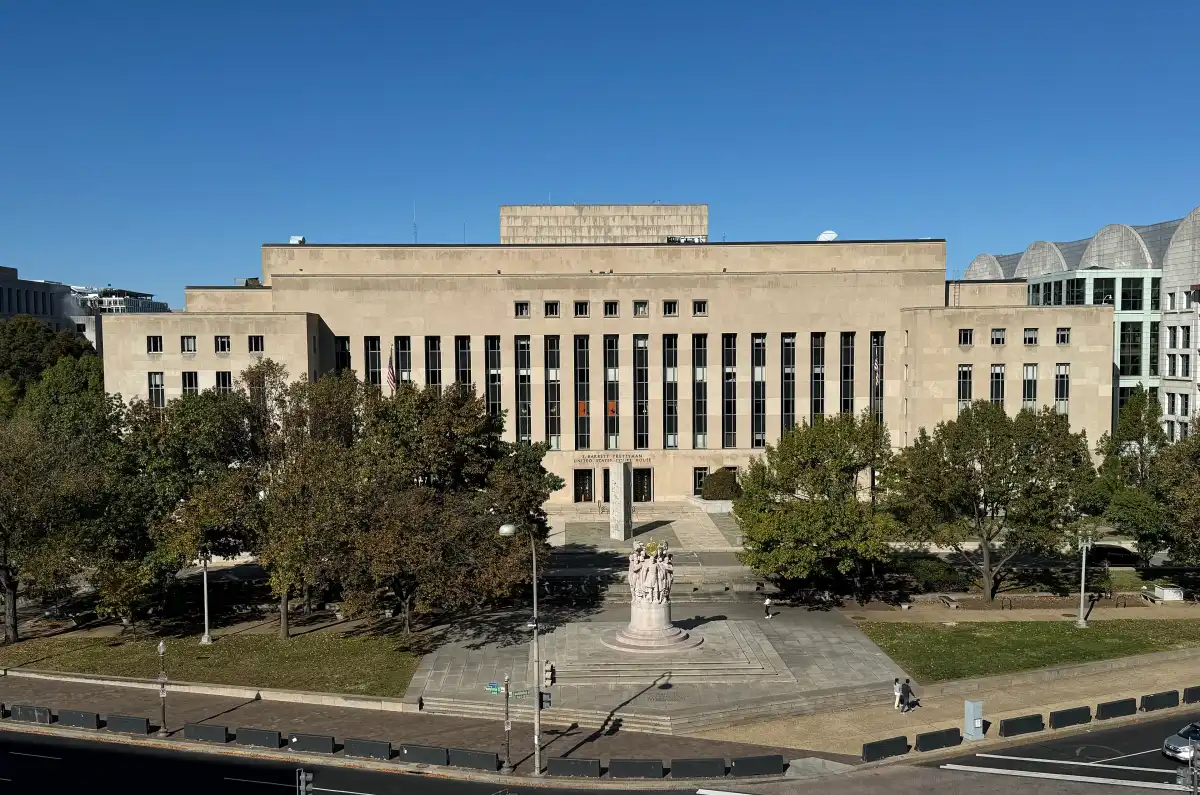
This week, a federal appeals court delivered a ruling that captures that tension. The Pentagon may continue blocking new transgender enlistments for now, but it cannot force current transgender service members out of uniform while a constitutional challenge moves forward.
Join the Discussion
What the court did and did not allow
A divided panel of the U.S. Court of Appeals for the District of Columbia Circuit ruled 2–1 that the administration’s 2025 policy can, for the moment, be used to keep transgender people from enlisting.
But the same ruling blocked the expulsion of transgender people who are already serving, at least until the underlying lawsuit is resolved.
That split matters. It means two categories of people are being treated differently by the same policy: those seeking to begin a military career and those who already built one.
The legal theory: military discretion meets equal protection
The D.C. Circuit recognized a familiar principle of constitutional law: courts typically give the political branches extra breathing room in military affairs. The Pentagon sets enlistment standards, and the judiciary is usually reluctant to second-guess those judgments in real time.
But deference has limits. The panel concluded that the policy was unlawfully motivated “by the bare desire to harm a politically unpopular group.” That phrase is not casual language. It signals that the court sees the policy as something more than a neutral readiness decision.
At the same time, the court allowed the temporary enlistment bar to continue, reasoning that delaying the start of service is not the same as cutting short an existing career.
As Circuit Judge Robert Wilkins put it: “It appears to us to be a much greater hardship to end a military career than to delay the start of one.”
The dissent: courts are not the Joint Chiefs
The panel was not unanimous. Circuit Judge Justin Walker dissented, arguing that courts “have neither the expertise nor the authority to decide whether the military can exclude the plaintiffs from its ranks.”
This is the core institutional question hiding underneath the headlines: even if a policy feels discriminatory, when does constitutional equality override the military’s claim that it must control its own membership standards?
What the administration says comes next
Defense Secretary Pete Hegseth signaled that the government intends to seek Supreme Court review. Responding online to news of the decision, he wrote: “See you at SCOTUS.”
If the Supreme Court takes the case, it could address questions that lower courts are currently treating as unsettled: how much constitutional scrutiny applies when the government categorically excludes or removes transgender people from military service, and whether the asserted interests are supported by evidence or by ideology.
Where the policy came from
The dispute traces back to an executive order President Donald Trump signed in January 2025. In that order, he said adopting a transgender identity “conflicts with a soldier's commitment to an honourable, truthful, and disciplined lifestyle.”
Secretary Hegseth implemented that direction soon after, triggering legal challenges from transgender current and prospective service members.
The trial judge saw sex discrimination
The D.C. Circuit ruling partially leaves in place an earlier decision from a federal judge in Washington, D.C., who had blocked the entire policy from going into effect while litigation continued.
That judge concluded the policy amounted to sex discrimination and likely violated the Constitution’s guarantee of equal protection.
That point is important for civic readers: the Constitution’s text does not explicitly say “equal protection applies to the federal government” in the same way it binds the states through the Fourteenth Amendment. But modern doctrine typically reaches similar results through the Fifth Amendment’s Due Process Clause, which the Supreme Court has interpreted to contain an equal-protection component when the federal government discriminates.
Why this is not just about who can enlist
The United States has about 1.3 million active-duty personnel, based on Department of Defense data. Transgender rights advocates have estimated as many as 15,000 transgender service members, while officials have said the number is in the low thousands.
Those numbers matter, but the constitutional stakes are larger than the headcount. The case tests three recurring themes in American government:
- Executive power: how far a President can go, via order and agency policy, in reshaping who may serve.
- Military deference: when courts will accept “readiness” as a trump card, and when they will demand a tighter constitutional fit.
- Equality principles: whether categorical exclusions targeting a defined group can survive when courts suspect the motive is punitive rather than operational.
The Supreme Court is already in the background
This is not the first time the Supreme Court has been adjacent to the controversy. In May 2025, the Court allowed the 2025 policy to be implemented by lifting a temporary block entered by a judge in a separate case in Washington state.
The Court did not explain its reasoning, and the D.C. Circuit noted that the decision may have turned on procedural posture rather than the underlying constitutional merits.
That silence is part of what makes the current moment unstable. When the Supreme Court acts without an opinion, lower courts and the public are left to guess what was decided, and what was merely deferred.
The constitutional question readers should keep in mind
America’s system was built for friction. Congress funds and regulates the armed forces. The President commands them. The courts police constitutional boundaries, but often hesitate at the gates of military judgment.
This case forces a simple civic question with a complicated legal answer: when the government changes the rules of belonging, who gets to say the change is constitutional?
For now, the D.C. Circuit’s answer is a compromise. The Pentagon can slow the pipeline of new recruits, but it cannot treat currently serving transgender troops as disposable while the courts are still deciding whether the policy is lawful.