
Americans tend to talk about “the military” like it is a separate country with separate rules. In one sense, that instinct is right. The Constitution gives the political branches extraordinary control over national defense, and courts traditionally hesitate before telling commanders how to run their ranks.
But the armed forces are not a constitutional free zone. Service members do not lose equal protection because they put on a uniform. And when a policy is built on a classification the Constitution treats with suspicion, federal judges can and do step in.
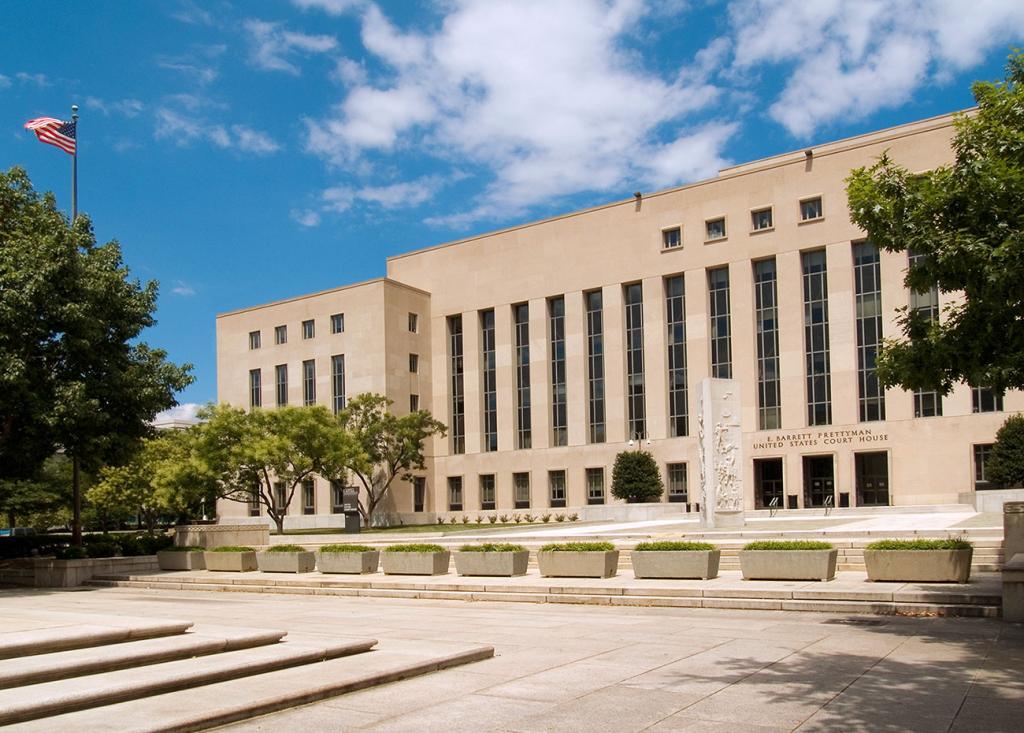
That tension surfaced this week in a fractured decision from the U.S. Court of Appeals for the District of Columbia Circuit, issued at the preliminary-injunction stage. The panel agreed that the plaintiffs were likely to succeed on an equal-protection challenge to the Trump administration’s policy targeting transgender service members, while also trimming the scope of a lower court’s injunction in a way that matters a lot for future recruits.
Join the Discussion
The policy in dispute
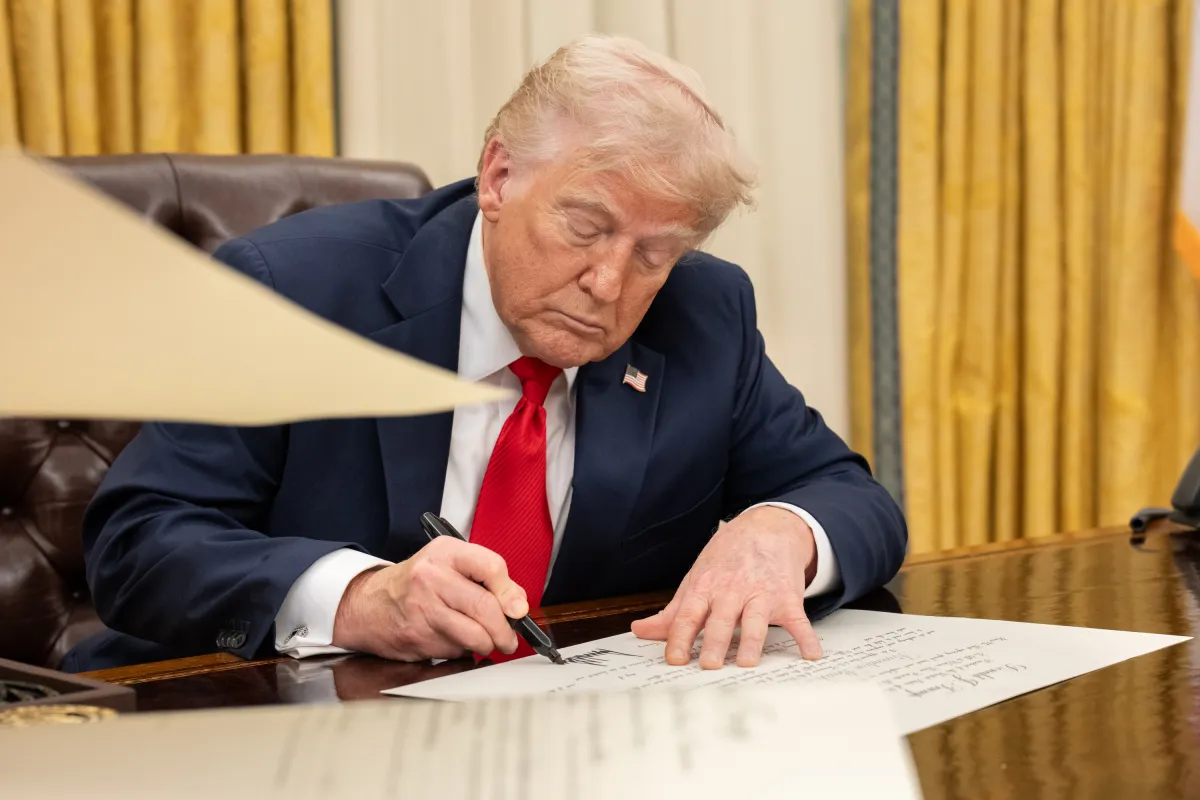
On January 27, 2025, one week after his second inauguration, President Donald Trump signed an executive order titled “Prioritizing Military Excellence and Readiness.” The order condemned what it called “radical gender ideology” in the armed forces and rejected the legitimacy of transgender identity in blunt terms.
In the executive order, Trump wrote: “A man’s assertion that he is a woman, and his requirement that others honor this falsehood, is not consistent with the humility and selflessness required of a service member.”
The executive order was then operationalized through a 13-page Pentagon memorandum issued in February 2025 under Defense Secretary Pete Hegseth. That memo stated that a service member who has “symptoms” of gender dysphoria, or who has pursued hormone therapy or surgery to affirm their gender, would be “disqualified from military service.”
What the appeals court did
The D.C. Circuit panel did not speak with one voice.
- Judge Robert Wilkins (appointed by President Barack Obama) wrote the principal opinion for the fractured majority.
- Judge Judith Rogers (appointed by President Bill Clinton) agreed in part, but would have gone further.
- Judge Justin Walker (appointed by President Trump) dissented.
Writing for the fractured majority, Wilkins wrote that Trump’s policy violates “the constitutional right to equal protection of the law.” He wrote that the policy “appears to be driven by the bare desire to harm a politically unpopular group: persons who identify as transgender.” He also noted that, in the executive order, the President labeled transgender people as “dishonorable, undisciplined, arrogant, selfish liars.”
In other words, the court did not treat this as a close call about technical military standards. It treated it as discrimination with a constitutional problem, at least for purposes of deciding whether interim relief was warranted while the case continues.
At the same time, Wilkins drew a line between people already serving and people trying to enlist. He agreed with the trial court that the government could not purge currently enlisted transgender service members under this policy. But he viewed the harm as meaningfully different for prospective recruits, and for that reason he declined to keep the injunction as broad as the district judge had written it.
Judge Rogers rejected that enlistment distinction. She pointed to testimony indicating that excluding transgender recruits would deprive “our force of qualified personnel who have proven their ability to serve.”
Judge Walker’s dissent challenged the court’s institutional role. “We have neither the expertise nor the authority to decide whether the military can exclude the plaintiffs from its ranks,” he wrote. “The Constitution assigns that authority to Congress and the Commander in Chief.”
The injunction narrowed
Here is the part that gets lost in the political shouting: an injunction is not a declaration that the court is now “running the military.” It is a judicial pause button, used to prevent alleged constitutional harm while a case moves forward.
The district judge, Ana Reyes, had issued a temporary injunction blocking enforcement of the executive order. The appeals court largely sided with her reasoning as it relates to those already serving. But it struck the portion of the injunction that would have prevented the administration from barring transgender people from the enlistment process.
The practical effect is mixed. The constitutional logic leaned against the administration, but the remedial tool was tightened.
No immediate change
The split decision is unlikely to have an immediate effect on U.S. military policy. The appeals court stayed Reyes’s preliminary injunction as the legal fight continues.
What courts can and cannot do
It is easy to hear a case like this and assume the judiciary is either supposed to defer to “readiness” claims or else take over personnel policy. Neither is true. As a general matter, separation of powers means courts have a specific job, and they must stay inside it.
Courts can stop unconstitutional enforcement
If a policy likely violates equal protection, due process, or another constitutional guarantee, a court can enjoin its enforcement. That is not micromanagement. It is what judicial review is for.
Courts can require lawful procedures
When a policy change triggers legal constraints such as constitutional limits, statutory requirements, or binding regulations, judges can force the government to follow the law it claims to be following. That can include reinstatement, reconsideration, or a ban on certain categories of discharge while the merits are litigated.
Courts do not run force structure
Judges are not commanders. Even when a policy is enjoined, courts generally avoid dictating operational details. A court can say “you cannot implement this discriminatory rule.” It typically cannot say “your unit must have X number of people with Y specialties,” or rewrite personnel standards as if it were the Joint Chiefs.
Courts do not substitute for Congress and Article II
Congress has explicit authority to “raise and support Armies” and “provide and maintain a Navy,” and the President is Commander in Chief. That structural reality is why dissents like Judge Walker’s resonate with many Americans, even when the majority sees discrimination. The military sits at the intersection of two branches that are politically accountable, and courts try to avoid becoming the third.
Equal protection at the core
The Constitution does not contain the words “equal protection” in the Bill of Rights. It is the Fourteenth Amendment that says no state shall “deny to any person within its jurisdiction the equal protection of the laws.” Federal policies are still constrained by an equal-protection principle through the Fifth Amendment’s Due Process Clause, a doctrinal path the Supreme Court has recognized for decades.
That matters here because the policy is not a neutral medical standard applied across the board. It is a rule aimed at a defined group, backed by language that reads less like military criteria and more like moral condemnation. When a policy looks like targeting, courts become less deferential and more constitutional.
Wilkins also pointed to the plaintiffs’ service records, noting they collectively had 130 years of military service and had earned more than 80 commendations. Against that backdrop, he wrote that the administration had “forfeited any argument” that “retaining these service members will harm national security.”
Next steps
The decision is not the last word. The Supreme Court previously halted an injunction in a related case, United States v. Shilling.
After the ruling, Defense Secretary Pete Hegseth signaled the administration’s intention to keep fighting. In a brief social media post, he wrote: “See you at SCOTUS.”
Meanwhile, members of Congress framed the dispute as a civil-rights issue. Representative John Larson of Connecticut said in a statement: “No one who is qualified and answers the call to serve should be denied that opportunity because of who they are,” adding, “Trump’s trans military ban is discrimination — plain and simple.”
The civics lesson
This case is not just about one policy. It is about the recurring American argument over who decides what “the Constitution permits” when the subject is national security.
When courts block a military policy, critics call it judicial overreach. When courts refuse to block it, critics call it abdication. Both complaints share a hidden premise: that the Constitution ought to provide a clean, mechanical answer.
It rarely does.
Instead, the system forces a negotiation between principles that are always in tension: civilian control of the military, political accountability for defense, and the promise that constitutional equality follows you even into institutions built on hierarchy and discipline.
The question now is not whether the judiciary can order the armed forces to adopt a particular ideology. It cannot. The real question is whether the political branches can enforce a personnel policy that a federal court has found likely to violate equal protection in uniform. That is exactly the kind of question the separation of powers was designed to keep alive and unresolved until it is resolved through law.