
Here is the uncomfortable truth we keep rediscovering in American life: political speech is often ugly, ambiguous, and deliberately provocative. A protest flag is not designed to be soothing. It is designed to be seen.
So the constitutional question is not whether a protest flag is in good taste. The question is whether the government can treat it as unprotected speech and punish the speaker.
Most of the time, the answer is no. A protest flag is classic First Amendment territory: symbolic expression aimed at the public and, usually, aimed at the government.
Join the Discussion
The baseline: political symbols are protected
A flag is not just cloth. In constitutional terms, it is a message. And the First Amendment does not only protect speeches, op-eds, or petitions. It protects symbols that communicate ideas, including ideas that make officials furious.
That is why the government generally cannot ban a protest flag simply because it finds the message offensive, disrespectful, or politically dangerous. Viewpoint discrimination is the First Amendment’s red line: government cannot pick winners and losers in political debate.
But “generally” does a lot of work there. There are narrow categories of speech that fall outside First Amendment protection. Two of them matter most in the protest-flag context: true threats and incitement.
Two limits people mix up
1) True threats
Courts have long treated “true threats” as unprotected. The legal idea is not complicated: a real threat of unlawful violence is not political debate. It is coercion.
In Accountability Now USA v. Griess, Judge Randolph Moss summarized the doctrine this way: “‘True threats of violence, everyone agrees, lie outside the bounds of the First Amendment’s protection.’
He continued: “‘True threats’ encompass those statements where the speaker means to communicate a serious expression of an intent to commit an act of unlawful violence to a particular individual or group of individuals.”
Notice what is doing the heavy lifting there: seriousness and context. Not heat. Not hyperbole. Not sarcasm. Not edgy slang. A “true threat” is about conveying a real possibility that unlawful violence will follow, evaluated in context.
2) Incitement to imminent lawless action
Incitement is a different animal. The government does not get to ban speech because it is “inflammatory” or because it might inspire someone, somewhere, someday.
Under the Supreme Court’s Brandenburg standard, the bar is high. The speech must be aimed at producing imminent lawbreaking and be likely to produce it. Not “can incite.” Likely to incite, and soon.
A test case: the “8647” flag on NPS land
These doctrines can feel abstract until you see a real dispute up close.
In Accountability Now USA v. Griess, an unincorporated association maintained a 24/7 demonstration calling for the impeachment and removal of President Donald Trump on National Park Service (NPS) land. The group displayed a flag bearing the legend “8647.”
The government argued that the display should be treated as a threat to the President or as incitement. The demonstrators said it was political speech, shorthand for removing the President from office, not harming him.
Judge Moss issued a temporary restraining order that temporarily blocked enforcement action against the group based on the flag, pending further proceedings.
Context is the analysis
The government often wants a shortcut in cases like this. It wants to treat a phrase as a threat in the abstract, separated from the setting in which it was used.
Courts are reluctant to play that game, and for good reason. If context does not matter, then the government can ban almost any harsh political slogan by asserting it “might” be read violently. That would turn the First Amendment into a permission slip that disappears whenever officials feel nervous.
In the “8647” dispute, context did most of the constitutional work. The court pointed to concrete facts in the record:
- The flag contained no symbols of violence. It was red, white, and blue, adorned with white stars. It had no knives, skulls, nooses, or similar imagery.
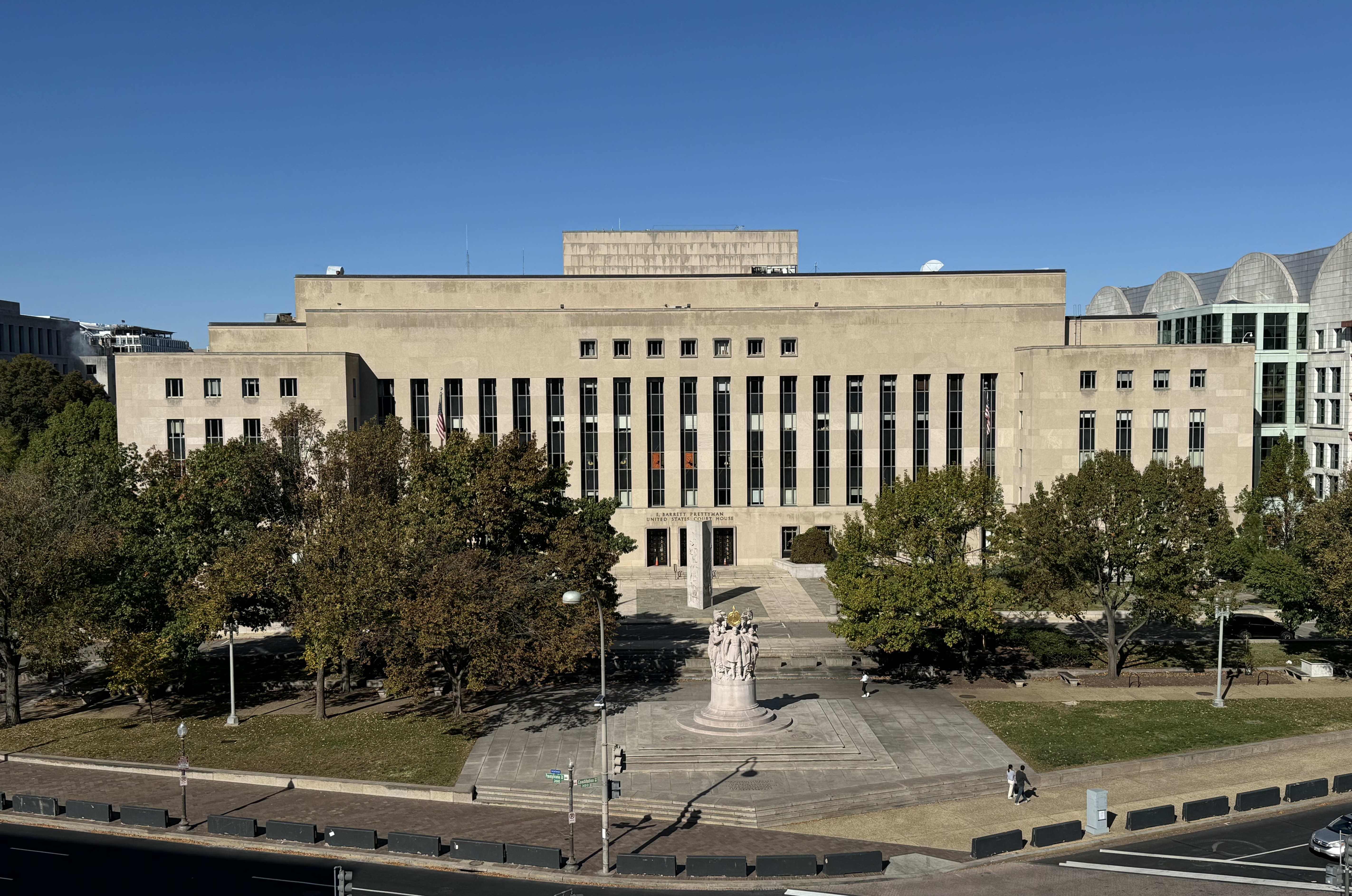
- It was displayed outside the courthouse as part of an ongoing demonstration seeking impeachment and removal from office.
- In a video submitted by the plaintiff, the flag appeared on the side of the tent next to multiple signs reading “IMPEACH. CONVICT. REMOVE.” and another sign reading “IMPEACH.”
- There was no evidence that the plaintiff or volunteers engaged in threatening speech or conduct.
Put those facts together and the slogan looks less like a death threat and more like political shorthand. Judge Moss’s bottom line was blunt: the First Amendment does not permit the government to censor political speech that “no reasonable observer would view, in context, as actually conveying a threat of violence” merely because the speaker uses a phrase that has, in some settings, been used violently.
Slang, ambiguity, and official overreach
The dispute highlights a modern problem: language now travels fast, mutates quickly, and arrives loaded with online subtext. That makes officials more jumpy, and sometimes for understandable reasons.
In the case, a Secret Service official, Deputy Director Matthew Quinn, attested that he generally regarded “86-47” as a potential call for acts of violence directed at the President and said he understood “86” as a euphemism for physical violence. The government also asserted that the Secret Service has investigated or is investigating “over 1,300 instances of individuals using ‘86-47’” as a threat, with most investigations involving online threats. It also noted that a shooting occurred in the vicinity of the White House on May 24, 2026, and characterized it as a potential assassination attempt.
Those are serious claims. But seriousness does not erase the First Amendment’s demand for a tailored, case-specific analysis. Judge Moss emphasized that the government did not offer evidence or material explaining NPS’s thinking about the plaintiff’s specific display, and the court rejected the idea that speech becomes a true threat just because officials point to a tense national climate without tying that fear to the actual facts on the ground.
If the rule becomes “we have seen this phrase used violently somewhere else,” political speakers will learn the lesson quickly: stay vague, stay quiet, stay safe. That is not a free society. That is a society that has trained itself to whisper.
So can a protest flag be banned?
Sometimes. But the “sometimes” is narrower than many officials would like.
- A protest flag generally cannot be banned just because it is offensive, insulting, or politically destabilizing. That is protected speech.
- A protest flag can be restricted if it is a true threat. That means a serious expression of intent to commit unlawful violence, evaluated in context, using the kind of analysis Judge Moss applied in the “8647” dispute.
- A protest flag can be restricted if it is incitement under Brandenburg. That means advocacy directed to producing imminent lawless action and likely to produce it. “Can incite” is not enough.
- Even on government property, rules must be applied neutrally. Governments can set time, place, and manner limits in many public settings, but they cannot use those rules as a cover for viewpoint censorship.
The real question
Here is the question I wish every official had to answer out loud before trying to ban a protest flag:
Are we stopping violence, or are we stopping embarrassment?
Because the First Amendment does not exist to protect comfortable speech. It exists to protect political speech when the people in power would rather not hear it.
And once we decide that ambiguous political slogans can be treated as threats without careful attention to context, we do not just expand police power. We shrink the space where democratic disagreement can safely live.