
People are searching for a “Supreme Court Slaughter Case” because a recent social media post claims the Court just issued a historic ruling “confirming Presidential Power” under Article II. The post also implies that decades of precedent dating to the 1930s have fallen.
Here is the key civic-education caveat: there is no widely recognized, long-settled Supreme Court decision commonly known in U.S. constitutional law as the “Slaughter Case” about presidential removal power. (The closest well known “Slaughter” name in constitutional history is The Slaughter-House Cases from 1873, which is about the Fourteenth Amendment, not the president firing federal officials.) It is also possible that “Slaughter” is a party name in a lower-court case, or a misremembered label that caught on online. So if you are trying to match the phrase to a docket, an order, or a headline, your confusion is rational.
But the constitutional issue being invoked is very real, very litigated, and very consequential: how much control Article II gives a president over the people who run the federal executive branch, including “independent” agencies that Congress tried to insulate from politics.
Join the Discussion
What question are people really asking?
When people type queries like “can the president fire agency heads” or “Article II remove executive branch officers,” they are usually asking some version of this:
- Can the president remove a federal officer at will, simply because the president wants someone else in the job?
- Or can Congress require “for cause” protection, meaning the officer can only be fired for specified reasons. (The classic formulation in this area is “inefficiency, neglect of duty, or malfeasance in office,” though people often describe it more generally as misconduct or failure to do the job.)
- And if the officer is in an independent agency (often a multi-member commission), does that change the answer?
This is not a technical HR dispute. It is a separation-of-powers fight about who actually controls execution of federal law.
What does Article II say about removal?
Article II vests the “executive Power” in the president and requires the president to “take Care that the Laws be faithfully executed.” It also gives the president appointment power (with Senate confirmation for principal officers).
What Article II does not do is spell out a neat sentence like: “The President may remove all executive officers at will.”
That silence is why removal power has been built largely through:
- early practice and debates (especially the 1789 “Decision of 1789”),
- statutes creating offices, and
- Supreme Court doctrine that tries to reconcile presidential accountability with congressional design.
The 1930s precedent: Humphrey’s Executor
The post you saw references “precedent dating all the way back to the 1930s.” That points straight at the Supreme Court’s 1935 decision in Humphrey’s Executor v. United States.
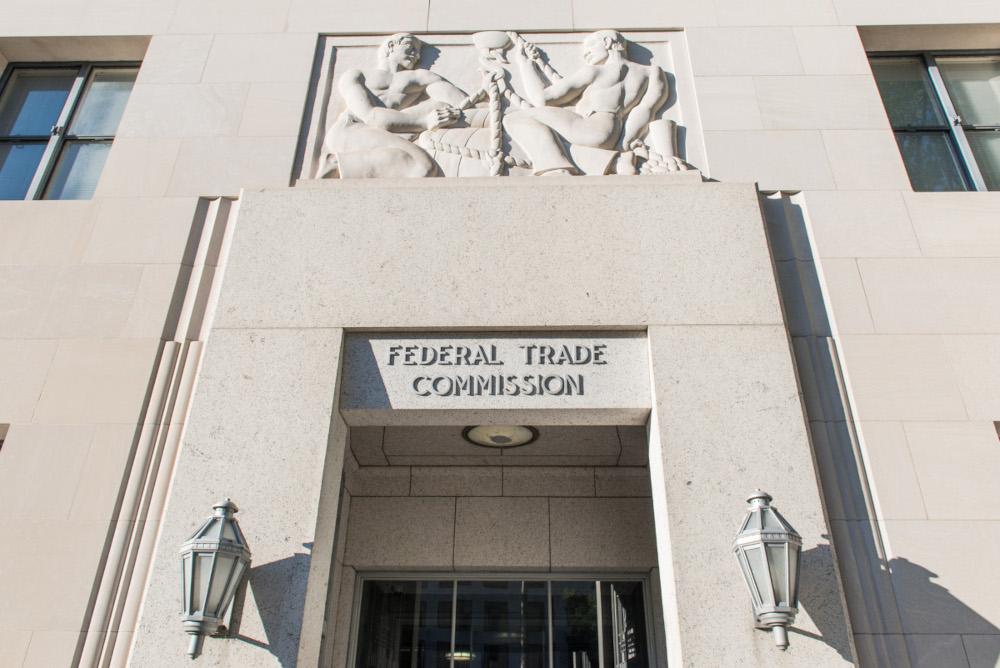
In that case, the Court upheld Congress’s ability to place for-cause limits on the president’s ability to remove members of the Federal Trade Commission. The Court described the FTC’s functions as “quasi-legislative” and “quasi-judicial,” and treated the Commission as not purely executive in the same way a cabinet department is.
Independent commissions predate 1935. But Humphrey’s Executor became a major constitutional validation for the modern “independent agency” model: commissioners with fixed terms who cannot be fired just because the president dislikes their policy choices.
If someone claims a new decision is “long sought” and “historic” with respect to Article II removal power, what they are usually implying is that the Court has either:
- narrowed Humphrey’s Executor sharply,
- treated it as a limited exception, or
- overruled it outright.
How removal doctrine evolved
The Supreme Court has not kept removal law frozen in 1935. Over time, it has drawn and redrawn the line between permissible independence and unconstitutional insulation from presidential control.
Myers: the pro-presidential baseline
In Myers v. United States (1926), the Court emphasized broad presidential removal power over certain executive officers. It is often read as a high-water mark for the “unitary executive” idea: if the president is responsible for execution of the laws, the president needs meaningful control over executive personnel.
Morrison: some limits can be allowed
In Morrison v. Olson (1988), the Court upheld restrictions on removing an independent counsel, reasoning that the limits did not impermissibly interfere with the president’s constitutional duties. That case is often cited for the proposition that some removal limits can be constitutional depending on the office and the degree of interference with presidential supervision.
More recent cases: skepticism of insulation
In the last decade, the Court has shown increasing suspicion toward structures that weaken presidential supervision, especially when multi-layer protections make it difficult to hold anyone politically accountable.
Three decisions are especially relevant to modern headlines:
- Free Enterprise Fund v. PCAOB (2010), rejecting “double for-cause” removal protections that insulated officials behind two layers of tenure protection.
- Seila Law LLC v. CFPB (2020), striking down for-cause protection for a single-director agency (the Consumer Financial Protection Bureau).
- Collins v. Yellen (2021), applying similar reasoning to the Federal Housing Finance Agency and addressing remedies.
These cases did not erase Humphrey’s Executor entirely, but they signaled that the Court is willing to treat independent-agency protection as an exception, not the rule.
What a new “Slaughter Case” could involve
Without a docket number or a formal Supreme Court caption, it is not possible to responsibly identify which case a public post is referencing solely from the phrase “Slaughter Case.” Case nicknames are often informal, and sometimes they attach to:
- a party’s name (a person or company),
- a criminal defendant,
- a lower-court proceeding that later reaches the Supreme Court, or
- a dispute involving an official whose name becomes shorthand online.
Still, the substance being claimed fits a familiar constitutional scenario: the Court allegedly held that Article II requires stronger presidential removal authority over certain categories of federal officials, potentially including commissioners or agency heads who previously had for-cause protection.
If that is what happened, the real legal questions would be:
- Did the Court treat the officer as exercising core executive power such that independence is unconstitutional?
- Did it say Humphrey’s Executor is limited to a narrow set of multi-member commissions?
- Or did it say Congress cannot create removal protection in that form at all?
One common point of confusion
Many readers lump together “officers,” “employees,” and civil service rules. They are not the same thing.
- Principal officers (like cabinet secretaries and many agency heads) are typically appointed by the president with Senate confirmation, and removal questions often go to the heart of Article II supervision.
- Inferior officers can be appointed in different ways (depending on how Congress structures the office) and are often designed to be supervised by someone above them, which can affect the removal analysis.
- Federal employees in the civil service are usually protected by statutory and regulatory personnel systems. Those rules are not “independent agency” doctrine, and they raise different legal issues.
Why this matters
Removal power is where constitutional design meets daily governance. If presidents can remove more officials at will, then:
- Policy changes can happen faster, because agency leadership can be replaced more easily.
- Presidential accountability increases in one sense, because voters can more directly credit or blame the president for what the executive branch does.
- Agency independence decreases, which can change how regulations are written, enforced, and revised across administrations.
If, on the other hand, the Court preserves substantial for-cause protection, then independent agencies remain a major counterweight inside the executive branch itself, designed to be less responsive to immediate presidential direction.
What the Court often does not decide
Even when the Supreme Court strengthens presidential removal authority, it rarely says “the president can fire anyone for any reason.” The disputes tend to be category-specific.
Typical carve-outs and complications include:
- Inferior officers vs. principal officers (and whether an office is structured to be supervised).
- Multi-member commissions vs. single directors.
- Adjudicative officers (including many administrative adjudicators) where due process and impartiality concerns complicate direct political control.
- Remedy questions: even if a removal restriction is unconstitutional, what happens next? Courts often ask whether the removal clause can be severed while leaving the rest of the statute intact, and whether past actions remain valid unless a challenger can show concrete harm.
How to verify what ruling is being referenced
If you want to identify the actual Supreme Court decision behind the “Slaughter Case” label, look for:
- the case caption (names of the parties),
- the Supreme Court docket number,
- the date of the opinion or order, and
- the specific office or agency at issue.
Helpful primary sources include the Supreme Court’s opinions page, the orders list, and the official docket search. Once you have even one identifier, the removal-power framework becomes much easier to map: does it fall under the Humphrey’s Executor line, the Seila Law line, the Free Enterprise Fund line, or something new?
The bottom line
There may or may not be a Supreme Court decision circulating under the nickname “Slaughter Case” at the moment, but the constitutional claim being made is a recognizable one: Article II removal power is the arena where modern presidents and modern independent agencies come into conflict.
The central tension is simple to state and hard to resolve:
- The president is the only nationally elected chief executive and is charged with faithful execution of the laws.
- Congress creates offices and agencies and often tries to buffer some of them from political pressure, using tools like fixed terms, bipartisan membership requirements, and removal limits.
- The Supreme Court decides when that buffer becomes unconstitutional insulation.
If a new ruling truly reworks the 1930s-era framework associated with Humphrey’s Executor, it would not just be a “win” for one president. It would be a structural change in how the federal government is supervised, and in how quickly the executive branch can be redirected after an election.