
When a high-profile election bill seems to vanish into a Senate recess, it is tempting to treat the outcome like a mystery. Usually it is not. It is procedure.
The SAVE America Act is one of those bills that pulls two different constitutional questions into the same spotlight: who sets the rules for elections, and how far government can go in demanding voter identification or proof of citizenship. Add one more layer, the Senate’s ability to move or stop legislation through unanimous consent, and you get the headline moment that triggered today’s confusion.
Join the Discussion
What the SAVE America Act does
In broad terms, the SAVE America Act is aimed at voter registration, not Election Day administration. Its central idea is simple: if you register to vote in federal elections, you should have to prove U.S. citizenship using specified documentation, and states should have clearer tools and obligations to verify eligibility.
Because bill text and numbering can shift across sessions of Congress, you will see “SAVE Act” referenced as a package of proposals. But the policy target stays consistent: tightening the federal baseline rules that states follow when they register voters for federal elections.
The core concept: proof of citizenship at registration
Federal law generally prohibits non-citizens from voting in federal elections. The SAVE America Act’s argument is that illegality is not the same thing as a gate. A gate is documentation and verification at the point of registration.
Supporters frame this as an election integrity measure. Critics tend to frame it as a registration barrier that could block eligible voters who lack ready access to documents. The constitutional question is not which framing you prefer. It is whether Congress has the power to impose the requirement, and whether the requirement can be administered without colliding with federal constitutional protections.
Where it stands
One important note before the legal debate: the bill’s posture matters. A proposal can be introduced, referred to committee, placed on a calendar, or brought to the floor, and each step requires time and procedural agreement. If you are tracking this measure in real time, check Congress.gov for the specific bill number being used in the current Congress, its sponsor, and its latest action, because “SAVE Act” references can point to different texts across sessions.
What would change in practice
If enacted in the form described by its advocates, the practical changes would be felt most by people registering or updating registrations, and by state election offices that process those registrations.
- Registration would become more document-driven. Instead of relying primarily on an applicant’s attestation of citizenship under penalty of perjury, the process would require presenting or submitting acceptable proof.
- Acceptable proof would matter. Lists vary by proposal, but commonly discussed documents include a U.S. passport, a birth certificate, or naturalization papers. The exact list depends on the final statutory text and any implementing rules.
- States would need compliance systems. That can mean updated forms, staff training, verification workflows, and coordination with state and federal databases where permitted.
- Federal elections are the anchor. Congress can set rules for federal elections, but states also run state and local elections. A major implementation question is how a state builds one system that can handle both, especially if state rules differ.
One of the recurring real-world tensions in this area is that the United States does not have a single national voter registration office. We have fifty states, plus territories and local administrators, operating under a mix of state constitutions, state statutes, and federal overlays.
Federal forms and past clashes
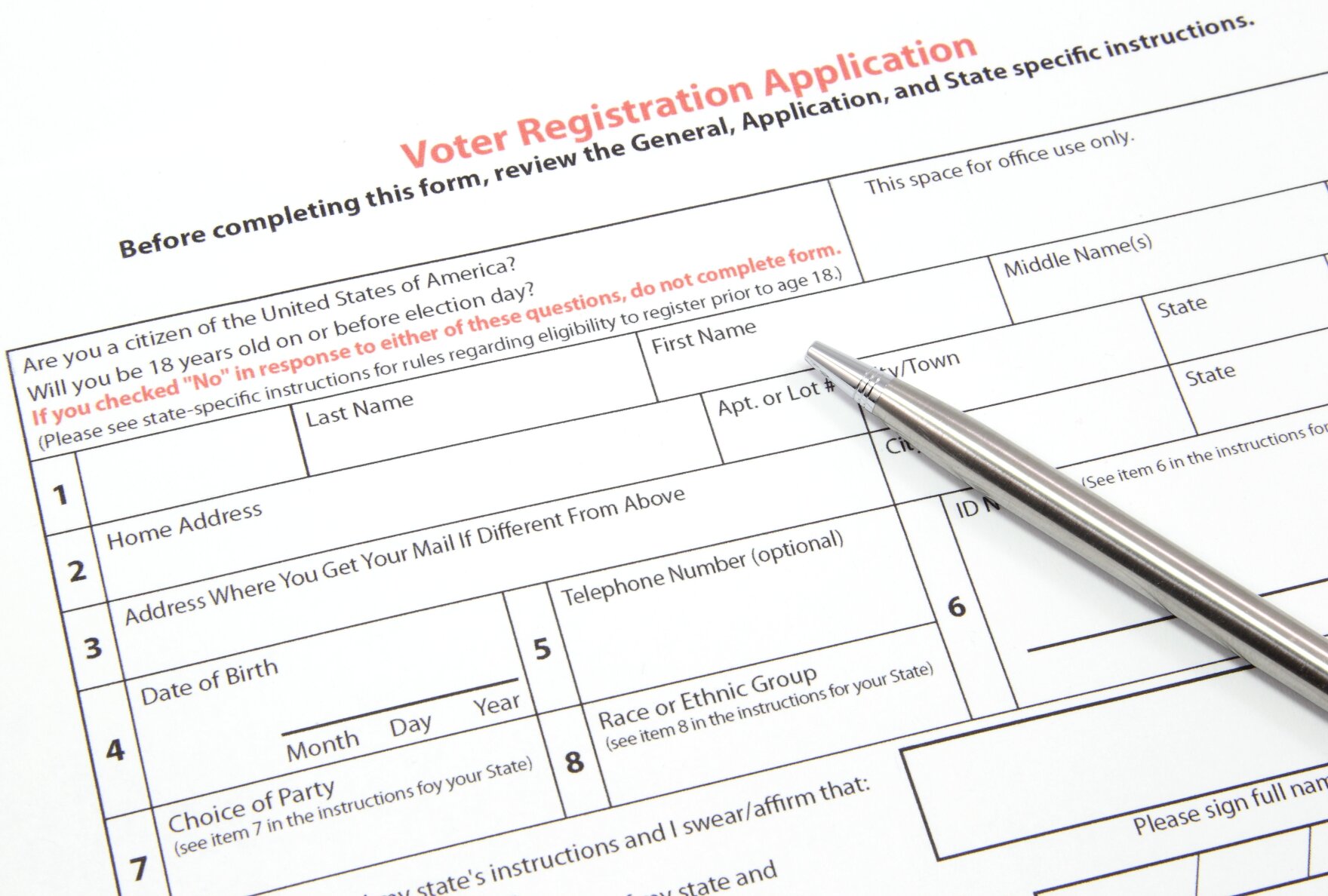
Federal registration policy already runs through standardized tools, including the federal voter registration form created under the National Voter Registration Act. A proof-of-citizenship requirement can collide with that framework depending on how it is written and implemented, especially if a state is told to accept a federal form that relies on sworn attestation while also being told to demand documents.
This is not a brand-new legal battlefield. Proof-of-citizenship at registration has been litigated before, including disputes over whether states may demand documentary proof beyond what federal law requires for federal elections. Any new federal statute in this space would land in that existing legal terrain.
Voter ID vs citizenship proof
These terms are often blended together in public debate, but they regulate different moments in the election process.
- Voter ID laws typically require identification when you vote, often at the polling place, sometimes for mail voting as well.
- Proof-of-citizenship laws typically target registration, requiring documentation that shows you are a U.S. citizen before you are added to the rolls.
Constitutionally, that difference matters because the burdens land differently. A rule that delays or blocks registration is not the same thing as a rule that conditions casting a ballot. Courts often consider the practical effect: how many eligible voters are likely to be blocked, how easy it is to comply, and whether the government built workable alternatives. The exact legal test can depend on the type of challenge and the court hearing it.
Does Congress have the power?
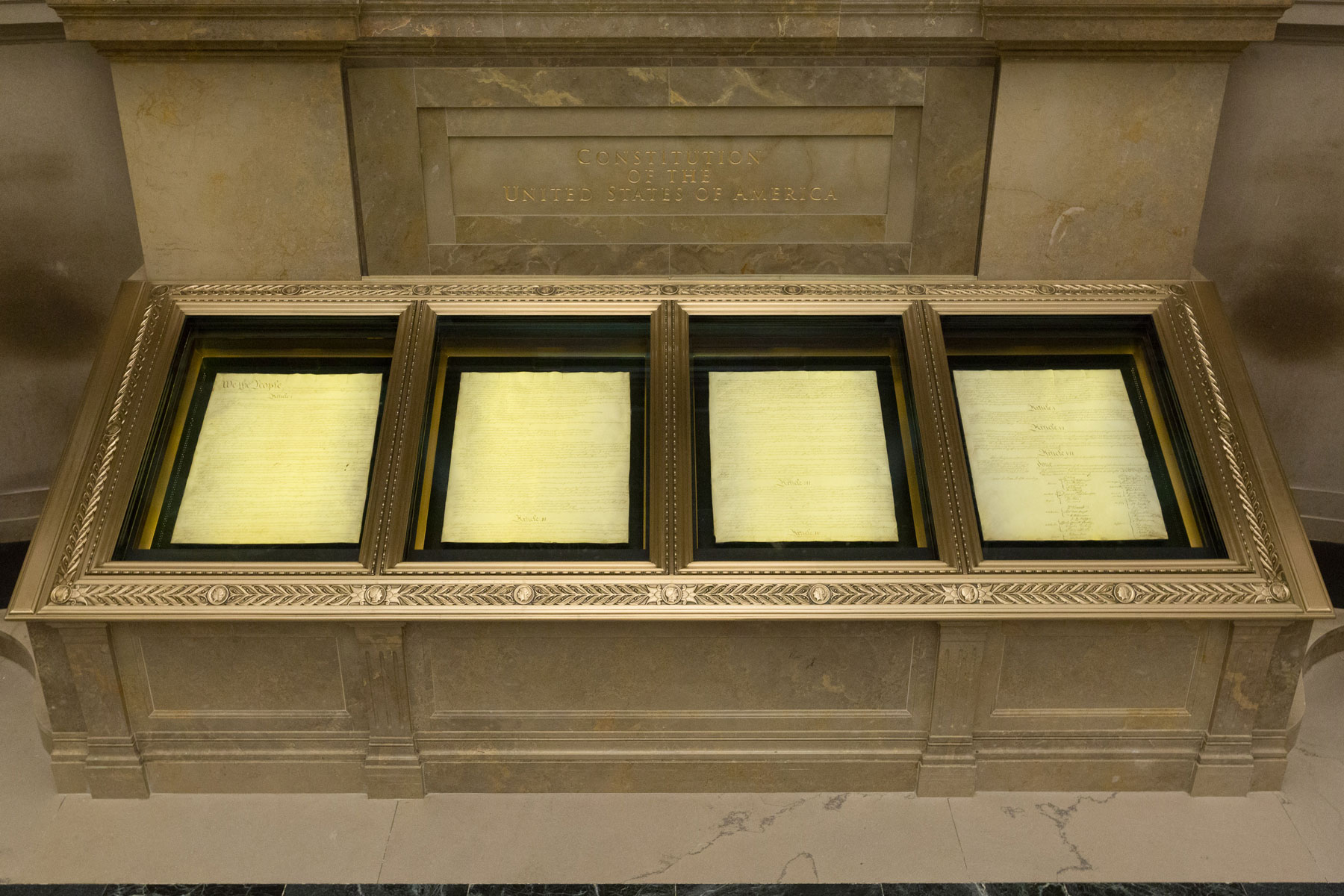
The Constitution splits election power in a way that almost guarantees conflict.
The Elections Clause
Article I, Section 4, Clause 1, often called the Elections Clause, says the “Times, Places and Manner” of holding elections for Senators and Representatives shall be prescribed by state legislatures, but Congress may at any time make or alter such regulations.
That is the legal runway for federal election statutes like the National Voter Registration Act of 1993 (the “Motor Voter” law) and the Help America Vote Act of 2002.
So yes, Congress has real power here. The harder question is how far it extends and whether specific requirements conflict with other federal law or constitutional protections.
Presidential elections add another layer
Presidential elections are not governed by the Elections Clause in quite the same way because the Constitution assigns states the power to appoint presidential electors (Article II), with Congress setting the time of choosing electors and the day they vote. In practice, Congress regulates many parts of presidential election administration through a mix of constitutional provisions and enforcement powers, plus implementing statutes that interact with how states run unified registration and election systems.
This is why “federal election rules” can be both powerful and complicated. You are always threading a needle between state administration and federal uniformity.
Is it constitutional?
A proof-of-citizenship requirement is not automatically unconstitutional. Courts generally accept that states and the federal government have legitimate interests in preventing ineligible voting. The constitutional friction comes from how the requirement works in practice.
Main constraints
- Equal Protection (Fourteenth Amendment). Rules that disproportionately burden certain groups can be challenged, especially if the burdens track race, disability, or other protected classifications, or if the design looks intentionally discriminatory.
- Voting rights protections (Fifteenth, Nineteenth, Twenty-Fourth, Twenty-Sixth Amendments). These amendments prohibit specific types of discrimination in voting, and the Twenty-Fourth bars poll taxes in federal elections. A rule that functions like a pay-to-vote scheme is constitutionally vulnerable.
- Due process concerns. If eligible voters are erroneously rejected and have no meaningful, timely way to fix it, the problem can become procedural due process: the government depriving someone of a fundamental civic participation interest without fair process.
What courts tend to weigh
Election cases often turn on a balancing style analysis: how heavy is the burden on voters, and how strong is the government’s justification for it. Voter ID laws, for example, have been upheld in some circumstances, but litigation regularly focuses on access to IDs, availability of alternatives, and the mechanics of provisional ballots and cure processes.
Proof-of-citizenship requirements create similar stress tests. If compliance is straightforward and accessible, the rule is easier to defend. If compliance is difficult for large numbers of eligible citizens, especially the elderly, low-income, rural, or naturalized citizens with complex paperwork histories, the rule becomes harder to square with constitutional and statutory protections.
There is also a federalism puzzle: when Congress sets a nationwide rule, it must be workable across wildly different state systems, including differences in forms, databases, and verification workflows. Constitutional power is not the same as administrative ease, but courts pay attention when a law predictably produces disenfranchisement through preventable breakdowns.
Why the Senate did not debate it
The key phrase in the news story is not “SAVE America Act.” It is unanimous consent.
Unanimous consent
The Senate runs on rules that assume extended debate, broad amendment rights, and slow motion. To function at all, it also relies on shortcuts. A unanimous consent agreement is one of them.
In plain English: a senator asks to do something procedurally, and if no senator objects, it happens without a recorded vote. This is how the Senate often schedules business, limits debate time, passes noncontroversial measures, and yes, agrees to recess or adjourn.
How it can sideline a bill
If the Senate agrees by unanimous consent to recess for weeks, the chamber is not there to debate the bill. The bill is not “defeated.” It is simply not brought up.
This is the part that confuses people. In most civic imagination, if lawmakers go home, they must have voted something down. In the Senate, going home can be a decision in itself, and it can be made without a roll call vote.
Why all 100 might go along
Unanimous consent does not mean unanimous agreement on the underlying bill. It means agreement on the procedural move at that moment. Senators might accept a recess for reasons that have nothing to do with the SAVE America Act: scheduling, nominations, budget timing, negotiations happening off the floor, or strategic calculations about when debate helps or hurts.
Could it be debated anyway?
Sometimes. Individual senators can push to bring a bill up, but actually getting floor consideration usually depends on recognition, what leadership schedules, and whether objections can be overcome. For a contentious election bill, debate can require a cloture process and floor time that leadership may or may not be willing to spend.
This is a structural point about Congress that the Constitution does not spell out but quietly assumes: each chamber sets its own rules (Article I, Section 5). The result is that procedure can become policy. A bill can be “alive” on paper and functionally dead in the calendar.
What happens next
The SAVE America Act debate sits at the intersection of three durable American arguments:
- Election legitimacy versus access. Both are real interests. The fight is about where to set the burden of preventing fraud versus the burden of proving eligibility.
- Federal power versus state administration. The Constitution gives Congress authority to regulate federal elections, but states do the actual work. Friction is built in.
- Rights in theory versus rights in process. The Constitution protects voting through amendments that prohibit discrimination, and courts treat voting as fundamental. But the practical right to vote often rises or falls on administrative steps like registration, documentation, deadlines, and cure procedures.
Even if the Senate does nothing for five weeks, those tensions are still there when lawmakers return. They are not going away because they are not a single bill’s problem. They are the ongoing challenge of running a national democracy through fifty separate systems.
Quick FAQ
Is it already illegal for non-citizens to vote in federal elections?
Yes, federal law generally prohibits it. The SAVE America Act focuses on requiring stronger proof at the registration stage rather than relying primarily on attestation and enforcement after the fact.
Is voter ID required nationwide?
No. Voter ID rules vary by state. Some states require photo ID, some accept non-photo ID, and some use identity verification methods that do not require presenting ID at the polls.
Can Congress tell states how to run elections?
For federal elections, Congress has significant authority under the Elections Clause to regulate the times, places, and manner of House and Senate elections, and it has enacted major election statutes before. But state and local elections remain primarily governed by state law, and any federal rule must also comply with constitutional protections.
Did the Senate “vote against” the SAVE America Act by leaving?
Not necessarily. A recess agreed to by unanimous consent is a procedural action. It can delay a bill without a direct vote on the bill itself.