
When a bill is “on the shelf” in the Senate, it often sounds like a political judgment. Usually it is something much more procedural: a tangle of unanimous-consent requests, objections that may or may not come, and the Senate’s unique ability to run on consent until a single senator says no.
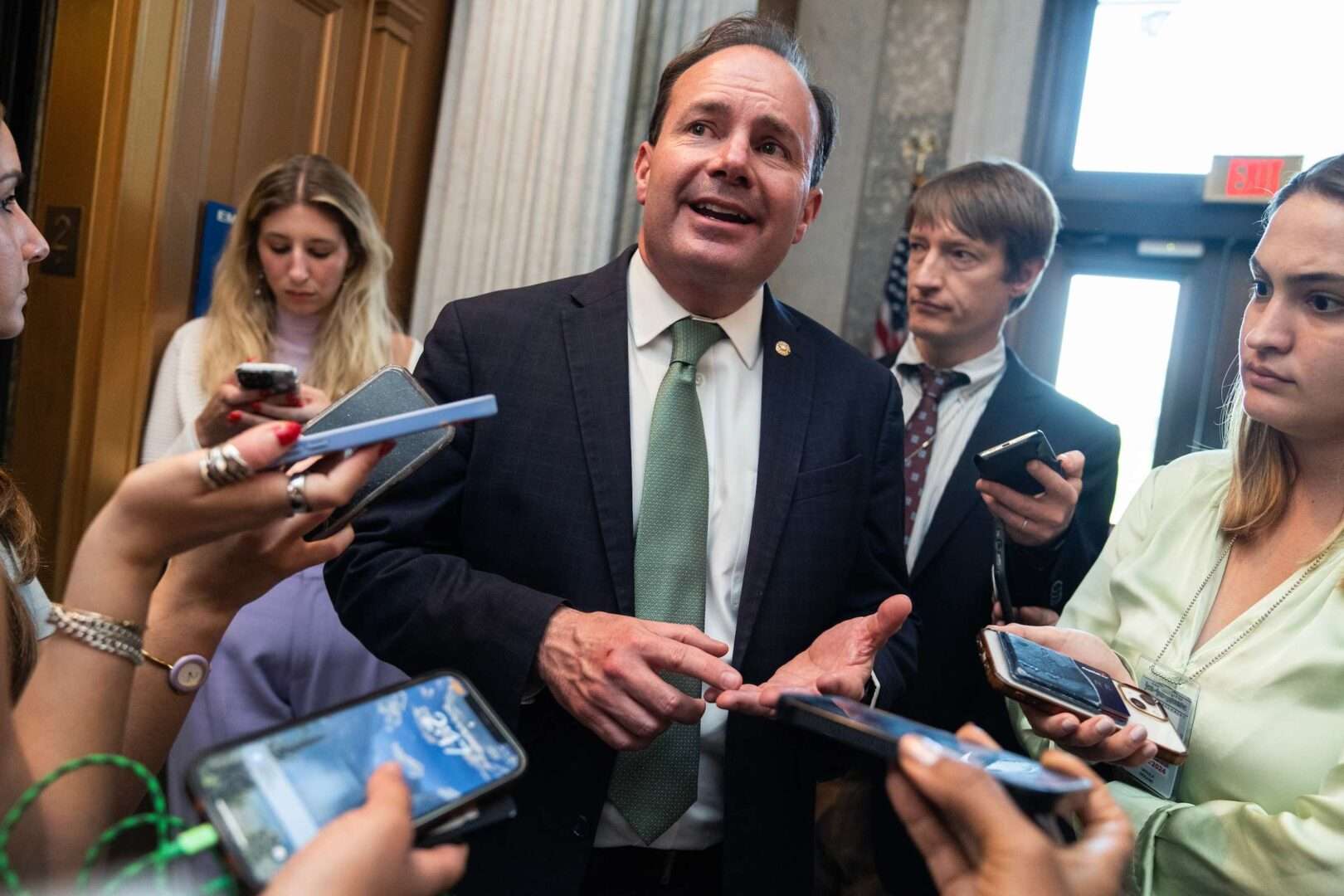
The news hook that drew attention to this dynamic involved the SAVE Act, an overnight Senate session, and talk that a senator might object to a unanimous-consent request tied to recess timing. That objection never came. Sen. Mike Lee was among the names discussed in that context, which is why the absence of a simple “I object” was itself a story. If you watched the headlines and wondered how a missing objection can change the fate of a major bill, you are asking a constitutional question in disguise: how Article I’s lawmaking process interacts with Senate rules that let one member slow things down without ever taking a final vote.
Join the Discussion
What the SAVE Act does
The bill’s full name is the Safeguard American Voter Eligibility Act, universally known as the SAVE Act. The legislative fight described in the Senate centers on a familiar federal elections question: what documentation can the federal government require to prove U.S. citizenship for voter registration in federal elections, and how far Congress can go in standardizing that process across the states.
In general terms, proposals in this lane aim to do some combination of the following:
- Condition federal voter registration on documentary proof of citizenship (for example, a passport, birth certificate, naturalization certificate, or other defined records).
- Direct or limit how states accept federal registration forms, which matters because states administer elections even when Congress legislates rules for federal contests.
- Create enforcement mechanisms, such as requirements for election officials to verify documents, maintain records, or reject registrations that do not meet the federal standard.
The constitutional tension is built in. States run elections day-to-day, but Congress is not powerless.
Congress’s power over elections
If Congress changes the rules around registration or voting for federal elections, it generally relies on two core constitutional anchors. A key precision point: the Elections Clause discussed below applies to congressional elections (House and Senate), not presidential elections.
1) The Elections Clause (Article I, Section 4)
The Elections Clause gives state legislatures the initial responsibility to set the “Times, Places and Manner” of holding elections for Senators and Representatives, but it also gives Congress authority to “make or alter such Regulations.”
That is a strong grant of power. The Supreme Court has repeatedly treated it as an affirmative authority for Congress to standardize aspects of congressional elections, including rules that can preempt conflicting state choices.
2) The Necessary and Proper Clause (Article I, Section 8)
Even when Congress is acting under the Elections Clause, it often leans on the Necessary and Proper Clause to fill in the operational details: recordkeeping, verification systems, deadlines, and enforcement tools.
So the basic “can Congress legislate here at all” answer is usually yes for congressional elections. The harder question is how far Congress can go before it collides with constitutional protections for voters and with statutory structures already in place.
Voting, proof, and the legal pinch points
One reason these bills ignite so quickly is that Americans tend to assume the Constitution contains a single, clean “right to vote” clause. It does not.
The Constitution instead operates like a series of guardrails. Several amendments prohibit particular forms of discrimination in voting, including the Fifteenth Amendment (race), Nineteenth (sex), Twenty-Fourth (poll tax in federal elections), and Twenty-Sixth (age 18+). The Fourteenth Amendment’s Equal Protection Clause also plays a major role in modern election litigation.
But none of those provisions automatically answer the documentation question. Requiring proof of citizenship is not, by itself, explicitly forbidden by the text. The legal disputes usually turn on whether a documentation requirement:
- Creates an unconstitutional burden on eligible voters (often litigated under equal protection and due process theories).
- Conflicts with existing federal election statutes, especially the National Voter Registration Act of 1993 (the “Motor Voter” law), which built a federal form and a federal baseline for registration processes.
- Exceeds Congress’s authority or crosses anti-commandeering limits (a federalism argument that can be fact-specific in election administration).
That NVRA point is not academic. In Arizona v. Inter Tribal Council of Arizona (2013), the Supreme Court held that the NVRA’s federal registration form can preempt a state requirement that applicants submit additional documentary proof of citizenship for federal elections. That case is why modern proof-of-citizenship proposals often turn into a fight about federal forms, federal standards, and who gets to demand what, and when.
Substantively, supporters of bills like the SAVE Act typically argue that citizenship verification is a basic eligibility safeguard for federal elections. Opponents typically argue that documentary requirements can function as a barrier for eligible voters who lack ready access to the required records, with burdens that can fall unevenly depending on cost, paperwork, and life circumstances. Those debates tend to become legally relevant when courts assess burdens and practical effects.
Why the all-nighter mattered
The Constitution tells us how a bill becomes a law: it must pass both houses in identical form and be presented to the president. That is Article I, Section 7, and it is the part most people know.
What the Constitution largely does not tell us is how each chamber decides when to vote, how long to debate, or how to schedule its work. Article I, Section 5 fills in the blank with a deceptively simple sentence: “Each House may determine the Rules of its Proceedings.”
The modern Senate has built an entire operating system around that power, including one practice that explains the drama of a missing objection: unanimous consent.
Unanimous consent, in plain English
Much of the Senate’s day-to-day business happens because no one objects. Leaders ask for consent to:
- Set the time of the next vote.
- Limit debate.
- Skip procedural steps.
- Schedule recesses and adjournments.
- Bring a bill to the floor under expedited terms.
Any single senator can object. An objection does not have to be a filibuster. It can be a simple “I object,” and suddenly the Senate cannot do the thing it was trying to do by consent.
Recess fights
The Constitution uses the word “adjourn” and mentions “recess,” but the tactical fight you are seeing is less about constitutional law and more about Senate mechanics.
There are two different concepts to keep straight:
- Adjournment or recess as a scheduling decision, usually handled by a unanimous-consent agreement or by a motion that can be voted on.
- A “recess appointment” recess, which implicates the president’s appointment power and has generated its own Supreme Court case law. That is a separate issue and not the core of this episode.
When a senator threatens to “block recess,” they are typically threatening to object to a unanimous-consent request that would let the Senate leave town on a set schedule. The result is not magical. It is procedural friction. Leadership must either negotiate, keep the Senate in session, or take the longer route.
The longer route can be very real. If consent is denied, leaders may have to move to proceed, file cloture to cut off debate, wait through the Senate’s built-in timing rules (including an intervening day for cloture), and then spend floor time on the votes themselves. That is exactly why recess timing becomes leverage.
How bills get shelved
In the House, “the floor” often means a structured pathway to a vote. In the Senate, the floor can mean waiting for time and consent.
A bill can effectively be shelved without being defeated in at least four common ways:
- It is never brought up because the Majority Leader does not call it up, or because there is no agreement to structure debate.
- It is brought up but debate is not limited, meaning opponents can prolong the process unless 60 senators vote to invoke cloture.
- It becomes leverage in negotiations about unrelated matters like recess timing, nominations, or other bills.
- It runs out of calendar oxygen, especially near recesses, deadlines, or crowded legislative weeks.
None of this violates Article I. The Constitution requires certain steps for a bill to become law. It does not require either chamber to give any particular bill a vote at any particular time.
Why the missing objection mattered
Procedurally, the threatened recess objection mattered because it could have forced Senate leaders into a choice: keep the Senate in session under uncomfortable conditions, or strike a bargain that gave the bill more floor time or a clearer path.
If that objection never comes, leaders regain flexibility. They can lock in the recess plan by consent, move on to other business, and leave the contested bill pending rather than resolved.
That is one of the Senate’s quiet truths: the power to delay is often the power to decide, even when nobody votes on the underlying question.
Could the SAVE Act become law?
Yes, but only by returning to Article I’s basics.
- The Senate can take it up later, but it needs floor time and, in most cases, either 60 votes for cloture or a negotiated agreement that limits debate.
- The House and Senate must pass the same text. If one chamber amends it, the other must agree, or both must reconcile differences (often through amendments between the houses or a conference process).
- The president must sign it, or Congress must override a veto by two-thirds of each house.
Even if a bill is “on the shelf,” it is not dead until the Congress ends. But in practice, shelving often means the coalition for action is not there right now, or leadership is prioritizing other fights.
What to watch
If you want to understand the next chapter without living inside Senate procedure manuals, watch for three signals:
- Is there a cloture filing? That is the clearest sign leadership is willing to spend time and force votes.
- Is there a unanimous-consent agreement? That means both sides negotiated a path, usually with limits on amendments and debate.
- Is the bill being used as leverage again? Recess timing, nominations, and unrelated legislative deadlines are common pressure points.
The Constitution built the Senate to be a place where speed is hard. The rules built on top of that design make it possible for a single missing objection to turn an overnight spectacle into something quieter and more durable: inaction.
FAQ
Did the Senate vote on the SAVE Act?
Not necessarily. The Senate can end a legislative sprint without a final-passage vote if it never reaches an agreed structure for debate and voting, or if leaders choose to move on.
Can one senator really block a recess?
One senator can block a recess that is being set by unanimous consent by objecting. Leadership can still pursue a recess through other procedural routes, but it takes more time and votes.
Is requiring proof of citizenship for voting unconstitutional?
The Constitution does not answer that in a single sentence. The legality usually turns on the specific requirements, burdens on eligible voters, and how the law interacts with existing federal statutes and constitutional protections, including the NVRA and related Supreme Court precedent.