
The U.S. Constitution does not mention the terms visa or immigration ban explicitly. But it does build a system where major government actions need a lawful source of power: Congress writes statutes, the executive branch administers and enforces them (including through regulations when Congress delegates that authority), and courts decide what the law means and whether officials stayed within their legal limits.
That structure gets tested in visa litigation, including cases that challenge alleged “freezes” created through internal processing directives rather than through a statute or a presidential proclamation. When a lawsuit claims the government is doing a de facto ban by calling it “processing,” the fight is usually not about politics. It is about authority, procedure, and what the law allows an agency to do through guidance that the public may never see.
Join the Discussion
Who controls visas?
Visas sit at the intersection of two kinds of power:
- Congress’s power to set immigration law, mainly through statutes like the Immigration and Nationality Act (INA).
- The executive branch’s power to administer the system and conduct foreign affairs, carried out through agencies like the State Department (consular processing and visa issuance) and the Department of Homeland Security (admissions at the border and many immigration benefits).
In practical terms, Congress creates the visa categories and eligibility rules. The executive branch processes applications, runs background checks, conducts interviews, and decides individual cases within the boundaries Congress wrote. Where Congress has delegated rulemaking power, agencies can also adopt binding regulations, usually through notice-and-comment procedures.
That separation matters because a “freeze” by country is not merely a delay if it operates as a predetermined outcome. Depending on how it is structured, it can function like a new eligibility bar. Creating new categorical bars is typically Congress’s territory, unless Congress has delegated that power in sufficiently clear terms, and immigration delegations can be broad in some settings.
What is a freeze?
Visa cases move through stages that get casually summarized as “eligible,” but that word can mean very different things. For clarity, courts and agencies usually distinguish between milestones like:
- Approved petition (for many family and employment immigrant visas).
- Documentarily complete (paperwork accepted and queued for interview).
- Post-interview status (including administrative processing under INA § 221(g)).
- Visa issuance (a visa printed and placed in a passport).
In many “freeze” lawsuits, plaintiffs describe the problem as a pattern: large numbers of otherwise-ready cases are routed into prolonged “administrative processing” rather than moving to issuance, in a way they argue is categorical rather than genuinely case by case.
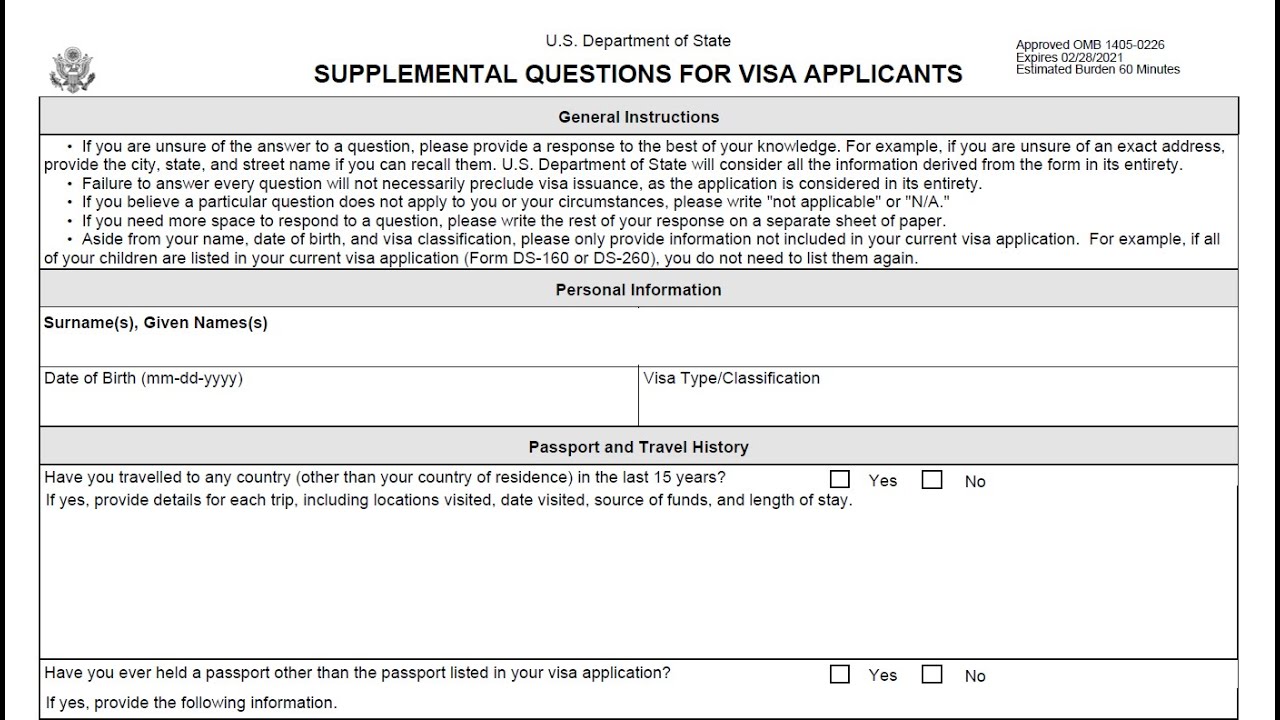
One concrete example, described in general terms, is a directive that tells posts to route a nationality group into Security Advisory Opinion review or DS-5535 supplemental questioning by default, then to hold the cases pending “clearance” with no meaningful timeline. Another is an internal screening rule that triggers repeated re-review cycles for a particular country group even after interviews are complete. Whether those are lawful depends on what the rule is, who issued it, and how it operates in practice.
Entry vs visas
Legal disputes often turn on a basic but important distinction: the INA treats entry (admission at the border) and visa issuance (a document issued by a consular officer abroad) as related but not identical actions.
In practice, an entry restriction can still have major effects on visa issuance. A presidential proclamation or statute may lead to refusals by directing consular officers to apply particular inadmissibility grounds, or by making clear that a person would not be permitted to enter even if a visa were issued. Many lawsuits rise or fall on the specific refusal ground used in individual cases, the text of any proclamation, and the implementing instructions.
Can the Secretary freeze visas?
Sometimes the executive branch can restrict entry or affect visa issuance. But the legal authority has to come from somewhere specific, and the “somewhere” matters because different statutes assign power to different officials.
The most famous modern tool is 8 U.S.C. § 1182(f), which allows the President to suspend the entry of certain noncitizens when the President finds their entry would be “detrimental to the interests of the United States.” The statute speaks in terms of entry, not visa issuance. Even so, proclamations under § 1182(f) are commonly implemented through consular instructions and can affect visa outcomes, depending on the proclamation’s text and how the government ties it to the INA grounds used to refuse or withhold a visa.
The key word in § 1182(f) is still President. A Secretary of State is not the President, and the Secretary does not automatically inherit every power the INA assigns to the Oval Office. At the same time, the Secretary does have substantial independent authority over consular operations and can issue regulations where Congress authorizes them.
So the legal question in a lawsuit alleging a nationality-based “freeze” is pointed and concrete: was this a lawful exercise of delegated discretion over processing, or an effort that functions as a categorical restriction without the authorization and process the law requires?
Why authority is the fight
When a federal court blocks or narrows an executive-branch visa practice, it often turns on administrative law more than broad constitutional theory.
The core questions typically are:
- Statutory authority: Does the INA authorize this kind of restriction on visa issuance or processing?
- Delegation and assignment: If a power is assigned to the President (or another official), did the government use the official Congress specified, or a legally valid delegation that the statute permits?
- Procedure: Was the policy implemented through a legally permitted method (regulation versus internal guidance), especially if it effectively changes eligibility standards?
This is where separation of powers becomes concrete. Agencies cannot expand their power simply because the subject is sensitive. Immigration and diplomacy are sensitive, but statutory limits still apply.
APA and mandamus
Many “freeze” cases are framed under the Administrative Procedure Act (APA), mandamus, or both.
- APA claims may argue that an agency action is unlawful, exceeds statutory authority, or is “arbitrary and capricious.” But plaintiffs often face threshold fights about whether there is a reviewable final agency action, whether the claim is barred by statute, and whether the court can reach the dispute given doctrines that limit review in the visa context.
- Mandamus and unreasonable-delay claims often seek an order requiring the government to act within a reasonable time, rather than to approve or issue a visa. These claims can succeed in some postures, but they are also frequently dismissed depending on jurisdiction, the nature of the duty alleged, and how much discretion the court concludes the agency has.
The details matter because the same underlying facts can look very different when framed as a challenge to a hidden policy versus a challenge to an individual refusal.
Immigrant vs nonimmigrant
“Visa freeze” allegations also vary depending on the visa type:
- Immigrant visas often involve an approved petition and a National Visa Center pipeline before an interview at a consular post. Litigation sometimes focuses on long gaps after documentary completion or after interview, including extended INA § 221(g) processing.
- Nonimmigrant visas often move faster but are more discretionary, and challenges can be harder when they look like direct attacks on individual refusals.
Those differences can affect both the evidence plaintiffs rely on and the remedies a court is willing to consider.
Consular discretion
Many people have heard that courts do not second-guess visa denials. There is a reason: the doctrine often called consular nonreviewability. In many individual cases, especially involving first-time visa applicants abroad, courts are reluctant to review a consular officer’s decision.
But that doctrine is not a universal shield for everything connected to visas.
Two important limits, stated carefully:
- Courts can sometimes review whether officials acted within legal authority. Even when the merits of an individual denial are hard to challenge, a systemwide rule that contradicts the statute can be treated differently, depending on the claim and the circuit.
- Cases involving U.S. citizen interests can trigger a different line of analysis. Where a U.S. citizen asserts an interest affected by a visa denial, courts often apply the “facially legitimate and bona fide reason” framework associated with Kleindienst v. Mandel and later cases. Even then, many suits are dismissed, and the standard can be highly deferential.
The practical takeaway is that a single visa denial can be hard to litigate, and many claims fail early. Still, a categorical policy that exceeds statutory power may be more vulnerable if plaintiffs can clear standing and jurisdiction hurdles and can prove the policy exists with record evidence.
Due process
One of the most misunderstood parts of American constitutional law is that the Constitution’s due process protections do not apply equally to everyone, everywhere, in every immigration setting.
As a general matter:
- Noncitizens outside the United States seeking initial entry generally have limited constitutional protections related to admission or visas, with some litigation arising indirectly through the asserted interests of U.S. citizens (for example, in certain spouse or family contexts). The scope of any such interest is contested and fact specific.
- Noncitizens inside the United States (including many with lawful status) typically have stronger due process protections in removal or detention settings.
That is why visa-freeze cases often hinge less on “the applicant’s constitutional rights” and more on structural and statutory limits: what Congress allowed, what the executive may do, and whether the government used lawful tools to do it.
Why judges use sharp words
A judge’s rhetorical label is not the holding. The holding is the legal conclusion: what authority the government has, what the law requires, and what remedy the court orders.
But in visa-policy disputes, judges sometimes reach for blunt language when they think a policy is being described one way and operating another way. The criticism is often aimed at a familiar tension: a practice described as routine, individualized “processing” that plaintiffs claim produces a predictable, nationality-linked result.
When that rhetoric appears, it often tracks concerns about opacity, shifting standards, or a mismatch between stated criteria and outcomes. The legal hook is still the same: whether the government is using case-by-case discretion or effectively applying a categorical rule without legal authorization or required procedure.
What courts can order
In challenges to alleged visa “freezes,” the remedy depends on what the judge concludes is happening, what the record shows, and what the court has power to fix. Just as important, many cases end with dismissal on jurisdictional grounds before any remedy is reached.
When courts do grant relief, common forms include:
- Temporary relief (a temporary restraining order or preliminary injunction) that pauses an alleged directive or practice while the case continues.
- Targeted processing orders limited to the named plaintiffs, such as an order requiring the government to make a decision under lawful standards, sometimes with reporting requirements or timelines.
- Disclosure or clarification in some cases, where litigation forces the government to identify what rule is being applied and under what authority.
Courts are typically cautious about ordering visa issuance outright. Even when a plaintiff wins, the more common outcome is that the government must make a lawful decision using lawful criteria, not that the court grants the visa.
What happens next
Visa-policy cases rarely end with the first order. Even when a court grants early relief, the government may seek a stay, appeal, or adjust its guidance. Plaintiffs may seek class-wide remedies, and the government may argue that any changes moot the dispute.
That is why the long-run impact usually turns on what survives appeal, what policy changes are formalized, and whether the alleged categorical practice can be proven with evidence rather than inference.
Bottom line
What it means
- Country-based restrictions need a clear legal hook. If a restriction functions like a new bar on eligibility or issuance, courts will ask where Congress authorized it and whether the required findings and procedures were used.
- Official roles matter. When Congress assigns a power to a specific official, courts often take that assignment seriously, even in immigration and foreign affairs.
- Judicial review still exists in immigration when the dispute is about legality and authority, even though many cases are dismissed under deferential doctrines and jurisdictional limits.
What it does not mean
- It does not erase broad executive power over immigration. The political branches still have wide latitude, and many restrictions can be lawful when properly grounded in statute and procedure.
- It does not create a general constitutional right to a visa. Many challenges succeed or fail on statutory authority and administrative-law constraints, not on an applicant’s personal entitlement to admission.
Quick FAQ
Can the President freeze visas by country?
The President has significant statutory authority to restrict entry in certain circumstances. Whether any particular action is lawful depends on the statute invoked, any findings required, and how the policy is implemented, including the refusal grounds and instructions consular officers use.
Can the Secretary do it alone?
Only if Congress has authorized that kind of action by the Secretary, and only through a legally valid instrument. If the practice functions as a categorical restriction, courts often look for clearer authorization and closer procedural compliance.
Why can a judge block a visa policy?
Because judicial review is part of separation of powers. Courts cannot run immigration policy, but they can decide whether an official acted within lawful authority and whether the government used a legally permitted process.