
When a voting bill suddenly shows up in the same sentence as budget reconciliation, it is a clue that today’s fight is not only about election rules. It is about how Congress can pass them.
The SAVE Act (Safeguard American Voter Eligibility Act), H.R. 8281, has circulated as an “election integrity” proposal, and recent attention has focused on attempts to attach it to a reconciliation package. That procedural angle matters because reconciliation is not a normal lawmaking lane. It is a narrow, rule-bound shortcut designed for budgets, not a general-purpose tool for rewriting election administration nationwide.
This explainer focuses on three questions people are searching right now: What does the SAVE Act require? Can proof-of-citizenship rules go through reconciliation? And what does the Constitution allow Congress to do in federal elections?
Join the Discussion
What the SAVE Act does
At its core, the SAVE Act would tighten the rules for registering to vote in federal elections by requiring documentary proof of U.S. citizenship as part of voter registration.
Supporters frame the bill around preventing noncitizen voting and increasing confidence that voter rolls reflect eligible citizens. Opponents focus on the risk that eligible citizens can be blocked by paperwork, mismatched records, or limited access to documents, especially near deadlines.
Federal law generally prohibits noncitizens from voting in elections held in whole or in part for federal office, and makes violations a federal crime, subject to statutory definitions and exceptions (18 U.S.C. § 611).
What proof counts
The House-passed SAVE Act defines “documentary evidence of United States citizenship” in the statutory text and enumerates categories of acceptable documents. Those categories are the legal gate, so the statutory conditions matter, including whether the document must be an original or copy, whether it must be certified, and how names and identifying information must match the application.
Subject to the bill’s statutory conditions and definitions, the House-passed bill lists categories that include:
- A U.S. passport (including a passport book or passport card)
- Specified birth documentation meeting the bill’s criteria (for example, certain official birth records issued by a state or local authority)
- A Consular Report of Birth Abroad
- A certificate of naturalization or certificate of citizenship
- Qualifying tribal documentation, meaning certain official enrollment or identity documents issued by a federally recognized Indian tribe, as the bill defines and conditions that category
The practical shift is simple: federal registration moves away from a sworn-eligibility form and toward a document-backed process. If a voter does not have an acceptable document, registration becomes a logistics problem, not a citizenship problem.
How registration changes
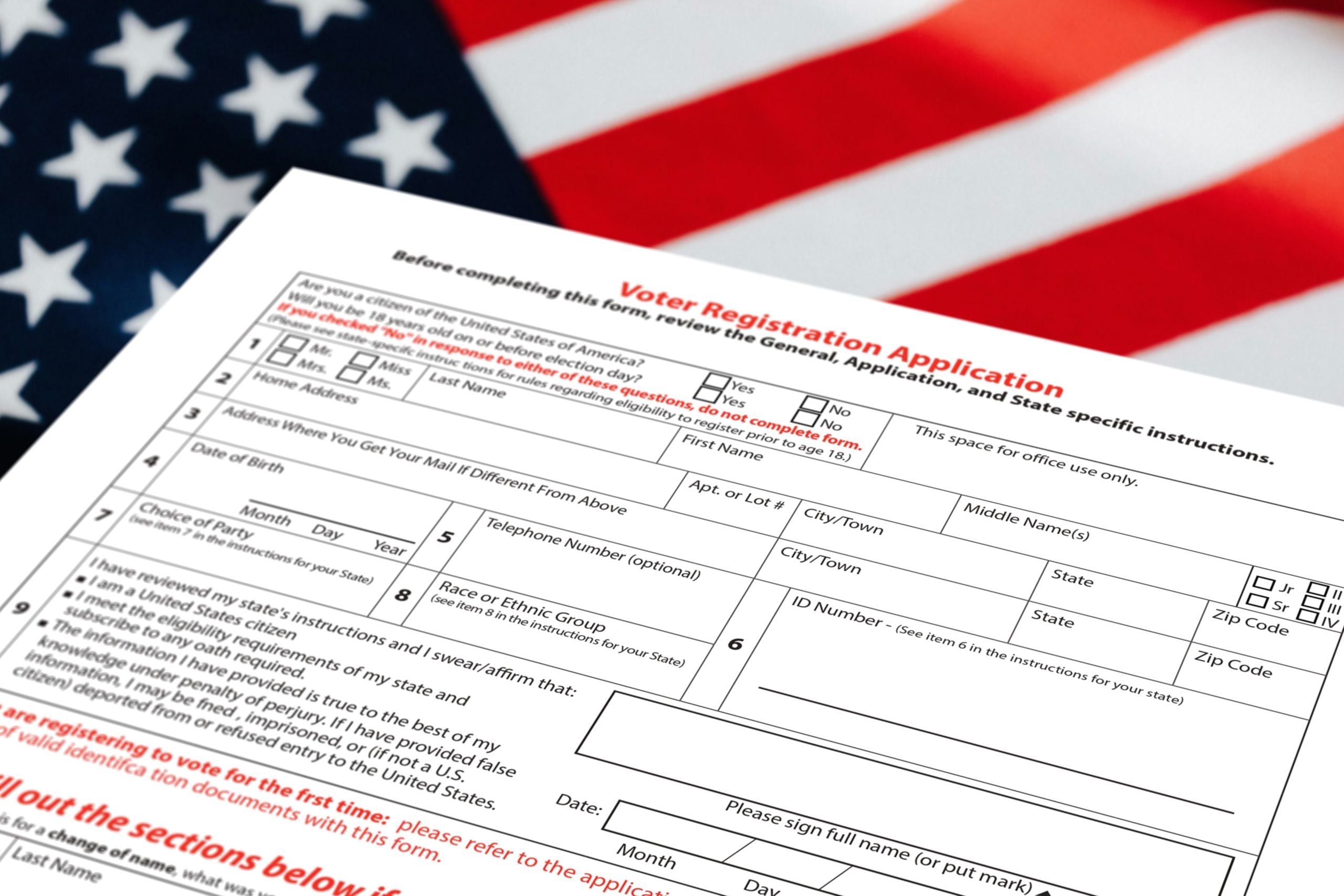
The SAVE Act amends the National Voter Registration Act (NVRA) and the federal voter registration form system. Today, the NVRA requires states to “accept and use” the federal form for federal elections. Under the SAVE Act, federal-form registration would be conditioned on providing documentary proof of citizenship or completing an authorized alternative verification process.
Many voters never encounter the “federal form” as a named thing. Operationally, it is the nationwide registration form created under the NVRA that states must accept for federal elections, alongside state-specific forms and online registration portals that states run for their own systems.
In many states, a voter registers through a state website or a DMV workflow, but the NVRA federal form remains the legal baseline for what states must accept for federal contests.
In practice, the change is implemented by election administrators. The voter-facing details that matter are practical ones: whether proof can be submitted online, by mail, or in person, who reviews it, and what happens when documentation arrives near or after a deadline.
At scale, that typically means:
- Local election offices (county clerks, registrars, boards of elections) handle document intake and verification queues.
- Submission formats become the choke point: in-person presentation, mailed copies, or online uploads if a state builds that capability.
- Bottlenecks often come from record matching (name changes, typos, inconsistent data) and from volume as deadlines approach.
In real life, documentary proof could be demanded at moments voters experience as routine, including:
- New registration
- Re-registration after moving in states that treat the move as a new application
- Updates that states treat as a new application, such as some name changes
One concrete example: a voter who changed her name after marriage may be eligible and in good standing, but if her birth record is in her prior name and her current ID is not, she can land in a mismatch problem that takes time to cure, especially close to a registration deadline.
Another example: a naturalized citizen who cannot quickly locate a naturalization certificate, or who must replace a lost certificate through a longer process, can be eligible to vote but unable to complete registration on the bill’s timeline without an available alternative route.
Even though the rule is framed as applying to federal elections, many states run unified registration systems rather than separate federal and state voter rolls. Practically, a state can respond by building a true split track for federal elections, or by choosing to apply the same documentation rule to state elections for administrative simplicity. That second approach would be a state policy choice, and it can raise separate state-law and state-constitutional questions beyond what the federal bill itself requires.
If proof is missing
Under the SAVE Act’s design, an applicant who does not provide the required proof is not treated as fully registered for federal elections. In plain terms: no acceptable proof, no completed federal registration until the requirement is satisfied, unless the applicant qualifies for and completes an alternative verification process.
This pushes the main point of friction to the front end. The dispute is less about what happens at the polling place and more about whether an eligible citizen can get onto the rolls without immediate access to an acceptable document, or with records that do not match cleanly. Common mismatch examples include a name change, a missing hyphen or accent mark, a transposed digit, or differing spellings across documents.
Administratively, states have a limited set of options when proof is late or missing. They can:
- Hold the application as incomplete until the applicant provides proof.
- Notify the applicant that proof is needed and offer a cure process, if state procedures provide one.
- Reject the application if the deadline passes without proof, requiring the voter to reapply later.
Exactly how notice, cure periods, and rejection operate depends on state law and on any federal constraints created by the amended NVRA. That is also why litigation often clusters here: disputes tend to center on deadlines, notice, cure opportunities, and whether a state’s process treats similarly situated voters differently.
Alternative verification
The bill also contemplates an alternative verification path for some applicants who cannot supply documentary proof at the time they apply. Instead of a blanket waiver, it relies on election officials verifying citizenship through government records checks, when authorized and available under the bill’s terms.
The bill authorizes election officials, under the conditions it sets, to attempt verification through federal records systems, including the Department of Homeland Security’s Systematic Alien Verification for Entitlements (SAVE) program, and other approved records sources specified by the statute and implementing process. The key implementation variables are (1) who is eligible to use the alternative path, (2) whether the checks are discretionary or required, and (3) whether states have timely access to the relevant data at scale.
As with the proof list, the operational reality depends on the bill’s exact authorizations and conditions. In practice, the alternative path is only as fast as records access and the state’s ability to run verifications near deadlines.
When it takes effect
In the House-passed text, the effective-date provision is in Section 8. It states that the amendments apply to elections for Federal office held on or after the date of enactment.
Reader-facing takeaway: if the bill becomes law close to an election, the most likely friction is not political theory. It is the speed at which election offices can update instructions, train staff, update forms, and process proof submissions before registration deadlines.
The Constitution and elections
If you want the Constitution’s main control panel for congressional election regulation, start with the Elections Clause in Article I, Section 4:
“The Times, Places and Manner of holding Elections for Senators and Representatives, shall be prescribed in each State by the Legislature thereof; but the Congress may at any time by Law make or alter such Regulations, except as to the Places of choosing Senators.”
That text creates a two-level system:
- States run the machinery of congressional elections day to day.
- Congress can override or alter those state rules for House and Senate elections by statute.
One key tension: the Elections Clause is about the “times, places, and manner” of holding elections, while states traditionally set voter qualifications, subject to constitutional limits and federal statutory constraints. Litigation often turns on whether a rule is an election-administration “manner” rule or a de facto qualification rule.
This is why federal laws like the NVRA and the Help America Vote Act (HAVA) can set nationwide baselines for federal election administration. The Elections Clause gives Congress real power here.
Presidential elections
The Elections Clause is specifically about House and Senate elections. Presidential elections involve additional constitutional structure, including Article II’s role for state legislatures in choosing the manner of appointing electors, plus Congress’s authority to set the time of choosing electors and the day electors vote.
That does not mean Congress has no authority touching presidential elections. It does. The point is narrower: the Elections Clause is the cleanest constitutional hook for regulating congressional elections, while presidential-election regulation is routed through a different mix of constitutional powers and statutes.
Federal form and EAC
A key implementation question is how the proof requirement would integrate with the federal voter registration form created under the NVRA. That form exists inside a federal process that involves the U.S. Election Assistance Commission (EAC) and state-specific instructions.
This matters because the Supreme Court’s NVRA case law, especially Arizona v. Inter Tribal Council of Arizona (2013), treats the federal form as a binding baseline that states must “accept and use” for federal elections. The SAVE Act approach is to change the baseline itself by amending federal law, not by letting states add extra hurdles on top of the existing form.
If Congress amends the NVRA, the practical sequence is straightforward even if the details are messy: the federal form and its state-specific instructions must be updated to reflect the new statutory requirements, and states must update their intake systems and workflows accordingly. The timing of those updates can become the real-world pressure point for election offices and voters.
Is proof of citizenship constitutional?
The Constitution does not contain a single neat sentence that says “citizens have a right to vote” in general. Instead, voting rights are shaped by a mix of state qualifications (historically) and constitutional amendments that prohibit certain kinds of discrimination (race, sex, age 18+, poll taxes in federal elections), plus modern equal protection doctrine.
How courts weigh burdens
States have long required registration procedures, and many states require some form of ID for in-person voting. Courts often evaluate election-administration burdens using the balancing framework commonly called Anderson-Burdick, weighing government interests in orderly elections and fraud prevention against the burdens imposed on eligible voters.
A strict documentary proof-of-citizenship requirement can be more burdensome than a typical voter ID requirement because it can exclude eligible citizens who lack ready access to passports, birth records, or naturalization documents, or whose records contain mismatches.
The NVRA and Inter Tribal Council
This is why Arizona v. Inter Tribal Council of Arizona (2013) sits in the background. The core holding is specific: under the NVRA’s “accept and use” regime for the federal form, a state cannot require documentary proof of citizenship as an added condition for federal-form registration unless the federal form is modified through the federal process.
Congress, however, can amend the NVRA itself. The SAVE Act is written as that kind of amendment, moving the proof requirement into federal law rather than leaving it to state-by-state add-ons.
What this is and is not
The SAVE Act is principally about registration for federal elections, not proof at the polling place. It also does not change the underlying legal baseline that voting in federal elections is limited to eligible voters under existing law. It changes the evidentiary gate for getting onto the rolls.
It also raises classic preemption questions: for federal elections, a valid federal rule can override contrary state procedures. In litigation, that often means the fight is not only about Anderson-Burdick burdens, but also about NVRA mechanics, federal-form administration, and the remedies a court can order when implementation breaks down.
Why reconciliation matters
Most major legislation in the Senate faces the filibuster, meaning it usually needs 60 votes to end debate under Senate cloture rules. Budget reconciliation is different. It allows certain budget-related bills to pass with a simple majority.
That is why lawmakers are tempted to use it for high-stakes policy. But reconciliation comes with a gatekeeper: Senate rules, especially what is commonly called the Byrd Rule.
What reconciliation is for
Reconciliation is designed to implement budget resolutions and move legislation that primarily changes:
- federal spending,
- federal revenues, or
- the debt limit.
Reconciliation has sometimes carried major policy changes that have significant budget effects. The constraint is not a constitutional prohibition. It is a procedural vulnerability under Senate rules if the budget effects are deemed incidental to a broader policy rewrite.
The Byrd Rule
Under the Byrd Rule, provisions can be struck if they are “extraneous” to the budget. A provision is vulnerable if its budget impact is merely a side effect of a larger policy change, or if it changes policy in ways not closely tied to spending or revenue.
Procedurally, the Byrd Rule is enforced through points of order. Waiving the rule generally requires 60 votes. The Senate Parliamentarian’s advice is influential and, as a matter of Senate practice, the presiding officer almost always follows it.
Can the SAVE Act fit
The reconciliation question is not whether election law is important. It is whether the SAVE Act’s core provisions can be characterized, credibly and under Senate precedents, as primarily budget-related rather than primarily regulatory.
A straight national mandate for registration documentation looks like a policy rewrite, which is exactly what the Byrd Rule targets. If a reconciliation strategy is attempted, the provisions most likely to survive are the fiscal and administrative plumbing around implementation, for example federal grants to states for verification systems, EAC administrative funding, or other direct spending provisions. The basic regulatory command, requiring proof to register, is the harder fit.
What changes for voters
If the SAVE Act’s core mechanism is documentary proof of citizenship, the most visible change for many eligible voters would show up at the registration step, not at the polling place.
For voters who already have an acceptable document, the change may be procedural. For eligible citizens who do not, the change is material: a registration application for federal elections becomes a document-backed transaction rather than a sworn-eligibility form.
Practical checklist: locate an acceptable citizenship document (or confirm you qualify for an alternative verification path), submit it in the format your state accepts (online upload, mail, or in person), and build in time to fix mismatches before the registration deadline.
Key flashpoints
If the SAVE Act advances, the biggest legal and operational fights cluster in a few places:
- NVRA and the federal form: how the amended federal-form system operates in practice, and what role remains for the EAC in implementation disputes.
- Accepted-document list: whether the statute’s proof categories and conditions are workable in practice, especially for voters with mismatched records.
- Administrative capacity: who reviews documents, what standards apply, whether there is federal funding, and how backlogs are handled near deadlines.
- Equal protection burdens: whether the documentation requirement creates undue barriers for eligible voters, including higher costs and travel burdens.
- Disability access: potential compliance pressure under the ADA and Rehabilitation Act if document submission pathways are not accessible.
- Qualifications versus manner: arguments that a citizenship-proof gate functions as an additional qualification rather than a permissible “manner” regulation, versus the counterargument that it is a procedural enforcement mechanism for an existing qualification.
- Preemption and remedies: whether federal rules displace contrary state rules for federal elections, and whether courts sever or partially enjoin specific provisions if they find discrete burdens unlawful.
- Reconciliation eligibility: whether the Senate treats the provision as budgetary or extraneous under the Byrd Rule.
What happens next
The SAVE Act is not just a messaging bill. In the 118th Congress, the bill text discussed here is H.R. 8281.
In the House, H.R. 8281 passed on July 10, 2024, by a vote of 221-198 (Roll Call 345).
After House passage, the next formal step is Senate consideration, including committee referral, calendar placement, and floor scheduling. If it is tied to a reconciliation strategy, the next steps are often less about campaign rhetoric and more about Senate process: the budget resolution that opens the reconciliation pathway, committee drafting to align with reconciliation instructions, and Byrd Rule enforcement on the floor.
The bigger picture
The United States runs elections through a deliberate tension: national citizenship and national representation, administered through state-controlled systems, with Congress holding a constitutional override for federal contests.
The SAVE Act debate is a live demonstration of that structure. It is not only a question of whether stricter documentation rules are wise or fair. It is a question of which institution gets to set the rules, through which procedure, and how durable the result will be once the courts and the Senate’s own rules weigh in.
If you are trying to understand why the bill is described as entering a high-stakes stage, this is the key: reconciliation is a narrow door. Election policy is a large object. Whether the SAVE Act can fit through that door is the fight.