
Debates over so called “wudu stations” in public airports can sound like culture war fodder. But the underlying issue is a straightforward constitutional question: what does the First Amendment require, and what does it forbid, when a government run space tries to accommodate religious practice?
This article is a general constitutional explainer, not a report on a specific, verified airport project. If a governor, attorney general, or airport authority releases a letter, directive, procurement record, or public statement identifying the airports, funding sources, and fixtures at issue, those facts will drive any real legal analysis. Until then, the only responsible approach is to explain the legal framework that applies to airport accommodations for ritual washing in general.
The short version: public airports can usually provide neutral, optional facilities that make it easier for travelers of many faiths to practice their religion. The legal risk rises when the government appears to favor one religion, excludes others, or uses public resources to promote religious observance rather than accommodate it.
Join the Discussion
What wudu is
Wudu is a ritual washing performed by many Muslims before prayer. In an airport, the practical issue is not theology. It is plumbing, access, and crowd flow. Travelers sometimes improvise at sinks or in restrooms not designed for foot washing. Some airports respond by adding washing friendly fixtures or by designating a small area near a prayer or meditation room.
Because the term “wudu station” is used loosely, it helps to be concrete about what it might mean. It can refer to a dedicated ablution room, a modified sink area designed to reduce splashing, a low faucet or foot washing fixture, or simply signage pointing to an existing restroom that is easier to use. Those are materially different choices, and in a constitutional analysis the details of access, placement, and messaging often matter more than the label.
It is also worth noting a neutral design point: many of the same fixes that make wudu easier also make airports work better for everyone, such as sturdier hand wash areas, better drainage, accessible fixtures, and clearer wayfinding to restrooms and quiet rooms.
Two First Amendment levers
The First Amendment’s religion clauses can pull against each other in close cases.
- Free Exercise Clause: government generally cannot target religious practice for punishment or special burdens.
- Establishment Clause: government generally cannot endorse, promote, or fund religion as religion.
Airport accommodations live in the space between those clauses. The Constitution does not require the government to provide every religious convenience. But it often allows the government to make room for religious exercise, especially when it does so neutrally and without coercion.
Is it an establishment?
Not automatically. Establishment Clause doctrine has been shifting, and courts have been emphasizing history, tradition, and coercion focused analysis in many contexts. At the same time, lower courts still navigate older frameworks and fact patterns, so the doctrine is not a single, plug and play checklist that answers every accommodation dispute the same way.
In practical terms, the question tends to be more grounded: is the government sponsoring religious exercise, or is it accommodating it in a way that fits ordinary public facility management and neutral access?
A washing friendly facility located in a public airport is more likely to be viewed as an accommodation when it has these features:
- Optional use: no one is pressured, directed, or rewarded for using it.
- Neutral availability: it is open to the public, not restricted to members of a faith.
- Operational purpose: it reduces unsafe or unsanitary improvised washing in restrooms.
- Comparable treatment: similar accommodations are available for other faiths when requested and feasible, such as a multi faith prayer or meditation room.
The constitutional concern is strongest when the facility is promoted as an official endorsement of a particular faith, funded and advertised as religious programming, or paired with government messaging that encourages religious observance.
What discrimination means
In everyday speech, “discrimination” can mean “I think this is unfair.” In constitutional law, it is more specific. The big questions tend to be:
- Is the government treating religions differently? If the airport is willing to accommodate one religion but denies similar accommodations to others without a sound operational reason, that can raise both Free Exercise and equal treatment problems.
- Is the government targeting a religion for worse treatment? Singling out Islamic practices for restriction, while allowing comparable conduct by others, is where Free Exercise claims are strongest.
- Is the government conveying official preference? The Establishment Clause can be implicated if a publicly funded facility is structured or messaged in a way that communicates the government is taking sides among faiths or steering people toward religious participation.
Notice what is not on that list: “Some people dislike that a religious practice is visible.” The Constitution does not give the public a religion free public square. It gives the public a government that does not take sides.
Who decides in an airport
Most major airports are operated by a public authority, a city or county department, or a local airport board. Airport management typically sets policies through procurement rules, facilities standards, and tenant requirements, subject to local and state law and the board’s oversight.
One complicating detail is that not everything inside an airport is built or controlled the same way. Some spaces are operated directly by the airport, while others are leased to private tenants. A fixture installed and maintained by the airport is more clearly government action. A fixture inside a leased space can raise more fact questions about who designed it, who paid for it, and whether the airport required it as a condition of the lease.
Airports are not open forums
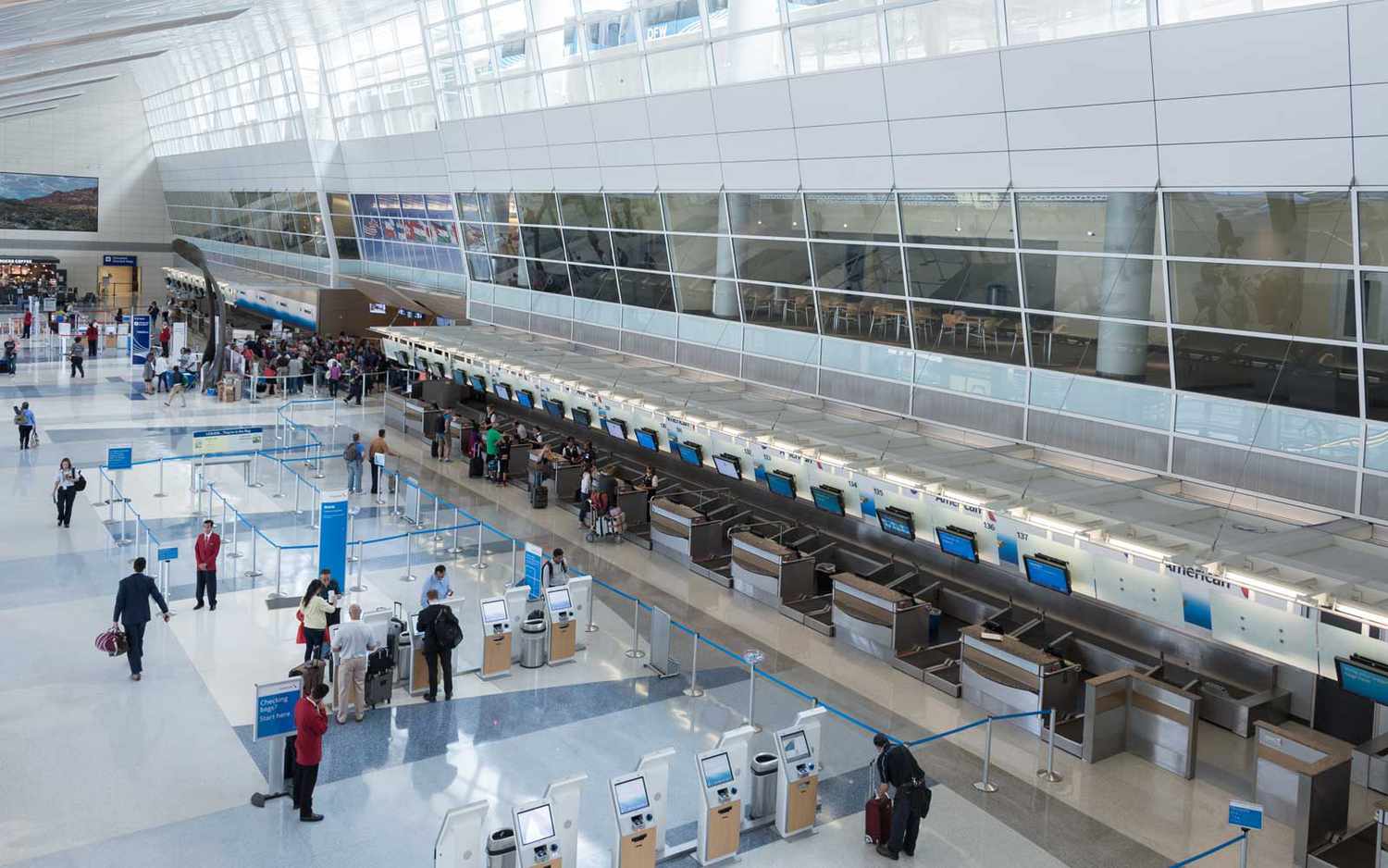
Airports are often publicly operated, but they are not traditional public forums like sidewalks and parks. They are high security, high management environments where the government can enforce reasonable, viewpoint neutral rules to keep operations moving. The Supreme Court has treated airports this way in cases about expressive activity in terminals, including International Society for Krishna Consciousness, Inc. v. Lee.
That matters because it affects the legal baseline. An airport can restrict where activities occur, how spaces are used, and what fixtures go where. The constitutional question is whether those decisions are made for neutral operational reasons or whether they are being used as a proxy to favor or disfavor religion.
Analogies courts recognize
Courts have long distinguished between government sponsorship of religion and government accommodation of religious practice. In many settings, neutral accommodations are routine, such as allowing chaplaincy in certain institutions, permitting religious attire in public workplaces subject to safety rules, or providing multi faith quiet rooms where feasible. Those analogies do not resolve every airport design dispute, but they reinforce the general principle that making space is often permissible, while endorsing or coercing is not.
What DOJ can do
The Justice Department typically does not investigate “violations of the First Amendment” in the abstract. It acts through specific statutory authorities, and constitutional issues often come into view through those hooks, especially in civil rights enforcement, federally funded programs, or litigation where the United States participates.
Civil Rights Division and federal statutes
If a government entity is providing services in a way that violates federal civil rights statutes, DOJ may have authority to investigate or litigate. One commonly cited funding based hook in public services disputes is Title VI of the Civil Rights Act of 1964, which bars race, color, and national origin discrimination by recipients of federal funds. Title VI is not a religion discrimination statute, but it can become relevant depending on what is actually alleged and how the facts are framed.
Federal funds, DOT, and FAA oversight
Airports frequently receive federal funding and operate under federal grant assurances and nondiscrimination obligations administered largely through the U.S. Department of Transportation and the Federal Aviation Administration. Many disputes about airport policies are handled through administrative complaint processes and compliance reviews rather than a broad DOJ inquiry into the Establishment Clause.
Litigation posture
DOJ can also weigh in through statements of interest or participation in litigation when a case raises federal constitutional questions or the interpretation of federal civil rights law. But it generally needs a concrete dispute and a jurisdictional basis, not just a referral and a headline.
What facts matter
Whether a washing friendly facility is lawful accommodation or unconstitutional endorsement depends on details that do not fit neatly in a press release. The legally relevant facts tend to include:
- What the facility actually is: a dedicated room, modified sinks, foot washing fixtures, or standard restrooms with signage.
- Who paid for it: airport funds, private donation, or a combination, and whether the funding mechanism was neutral and regularly available.
- How it is described to the public: neutral language such as “washing area” or “multi faith facility” versus language that reads like government promotion of a specific faith.
- Access rules: open to all travelers, limited to certain users, or integrated into a broader multi faith space.
- Comparable options: whether other faiths can request analogous accommodations, and how the airport responds.
- Safety and sanitation rationale: whether the airport can document operational reasons for the design and location.
This is also where any real world news hook belongs. If an official complaint, letter, or audit is released, it should be evaluated against these specifics, rather than against a generalized label like “wudu station.”
Courts tend to be skeptical of government action that looks like it is picking winners and losers among religions. They tend to be more tolerant of government action that keeps operations safe and orderly while leaving people free to practice.
A rule of thumb
If you want a durable constitutional frame, use this one: the government may make space for religion, but it may not act like a congregant.
A public airport can provide a neutral facility that makes routine travel compatible with religious obligations. That is accommodation. What it cannot do is turn the airport into a platform for promoting a faith, steering people toward observance, or structuring benefits so that one religion is favored as religion. That is sponsorship.
FAQ
Are airports required to provide wudu stations?
Generally no. The Constitution usually protects people from being burdened because of their religion. It does not automatically require the government to build religious facilities. But airports may choose to accommodate, and doing so can reduce conflict and operational issues.
Would a wudu station violate the Establishment Clause by itself?
Not by itself. A constitutional problem is more likely if the facility is exclusive, promoted as an official religious program, or part of a pattern of preferring one religion over others.
Could removing a washing friendly facility create a Free Exercise problem?
Possibly, but it would depend on the reasoning and the broader context. If removal is driven by hostility to a specific religion, or if the airport allows similar accommodations for others but singles out Islam for exclusion, that is where Free Exercise claims become stronger.
Does a referral to DOJ mean an investigation will happen?
No. Referrals can prompt review, but DOJ decides whether there is a viable federal jurisdictional hook and whether the facts warrant action.