
You do not need to care about aerial refueling to understand why this story went viral. You just need to have ever looked at a departure board.
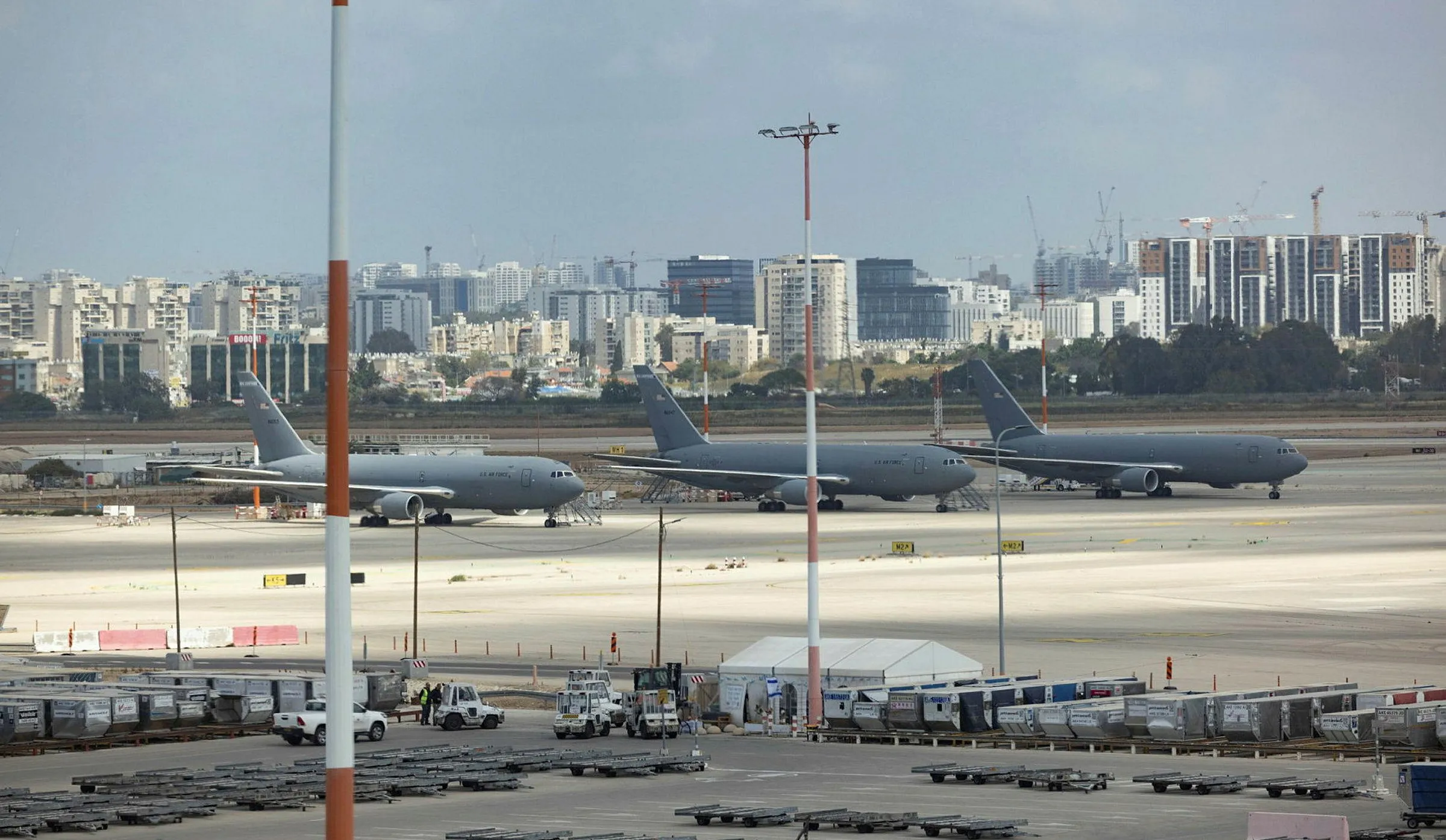
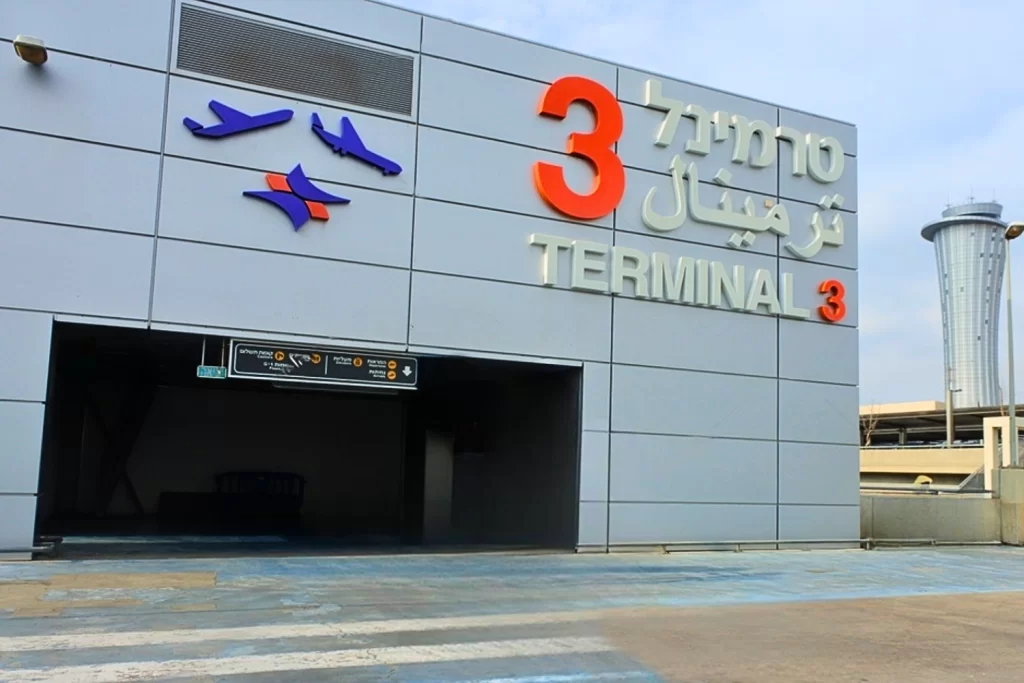
Ben-Gurion International Airport (TLV) is Israel’s primary civilian gateway. When large US aerial refueling aircraft use scarce ramp and stand space at that same airport, and when they may require additional safety buffers, fueling access, and security perimeters, the problem can become surprisingly simple with an outsized consequence: passenger aircraft cannot park, turn, or depart on schedule.
What is being described online as a “standoff” appears to reflect operational friction reported publicly. In mid-July 2024, Israel’s Channel 12 and other outlets reported comments attributed to Israeli Transport Minister Miri Regev describing a practical limit of roughly 20 US refueling aircraft using Ben-Gurion, with additional aircraft urged to relocate to Israeli Air Force bases. One important ambiguity in the public descriptions is what the “20” is measuring: a simultaneous parking cap on the ground at TLV, rather than a total number transiting over days.
As of mid-July 2024, the US side has not published a single, consolidated public explanation for why particular tanker aircraft would need to remain parked at the civilian airport rather than rotate through military bases. If the Pentagon, the US Embassy, or Israeli authorities publish clarifying statements, treat those as the best available updates.
Join the Discussion
The story behind the trend
Headlines make it sound like a political spat. In reality, it is a three-way collision between military logistics, civilian airport design, and alliance management under pressure.
1) TLV is not built to be a long-term tanker ramp
Commercial hubs run on “turns” and “stands.” A plane lands, parks at a gate or remote stand, unloads, reloads, refuels, and leaves. The system only works if aircraft move through it quickly. When aircraft with different security requirements and different ground-handling needs occupy that same finite space, congestion becomes structural, not occasional.
2) The footprint is bigger than the airframe
Aerial refueling aircraft are large, but the practical parking footprint is often larger than the wingspan. They may require buffers for safety, fueling operations, security perimeters, and ground access. Even a “parked” tanker changes how other aircraft can taxi, stage, and service.
3) Posture makes relocation sensitive
In April 2024, Iran and Israel exchanged direct strikes over a short period. Official and analytical terminology varies, and readers will see it described in different ways. Either way, the episode contributed to an elevated regional posture and higher readiness. Tankers are the quiet backbone of that posture. If you want fighters, surveillance aircraft, or airlift to stay in the air longer and reach farther, tankers are how you buy time and distance.
Timeline checkpoints
- April 2024: Iran and Israel exchange direct strikes over a short period, contributing to heightened readiness and attention to regional air posture.
- Mid-July 2024 (Channel 12): Israel’s Channel 12 reports comments attributed to Transport Minister Miri Regev describing a roughly 20-aircraft limit at TLV and urging additional aircraft to use Israeli Air Force bases.
- Mid-July 2024 (Channel 12): Channel 12 also reports a short-lived US operational adjustment described as a temporary pause affecting some tanker departures, amid concerns about civilian flight disruption.
- Disruption window: Online claims about passenger disruption and “50,000” impacts vary by timeframe. Treat them as window-dependent until an authority publishes a specific count.
What the 20-plane cap means
Read in plain operational terms, the reported limit functions less like a geopolitical ultimatum and more like a civilian capacity rule with national security consequences.
- Goal: preserve gate and apron capacity for passenger carriers and reduce cascading delays.
- Method: allow a limited number of US aircraft to remain at TLV, while pushing the remainder to bases designed for military operations.
- Message: if the tanker footprint stays too large at the civilian airport, ordinary travelers pay the price through cancellations, missed connections, and a schedule that cannot recover.
The number “20” matters less than the concept behind it: a bright line that treats Ben-Gurion as a civilian artery first, even during elevated military cooperation. Based on how it has been described publicly, it is best read as a simultaneous on-the-ground limit, not a total count over time.
What aircraft are we talking about
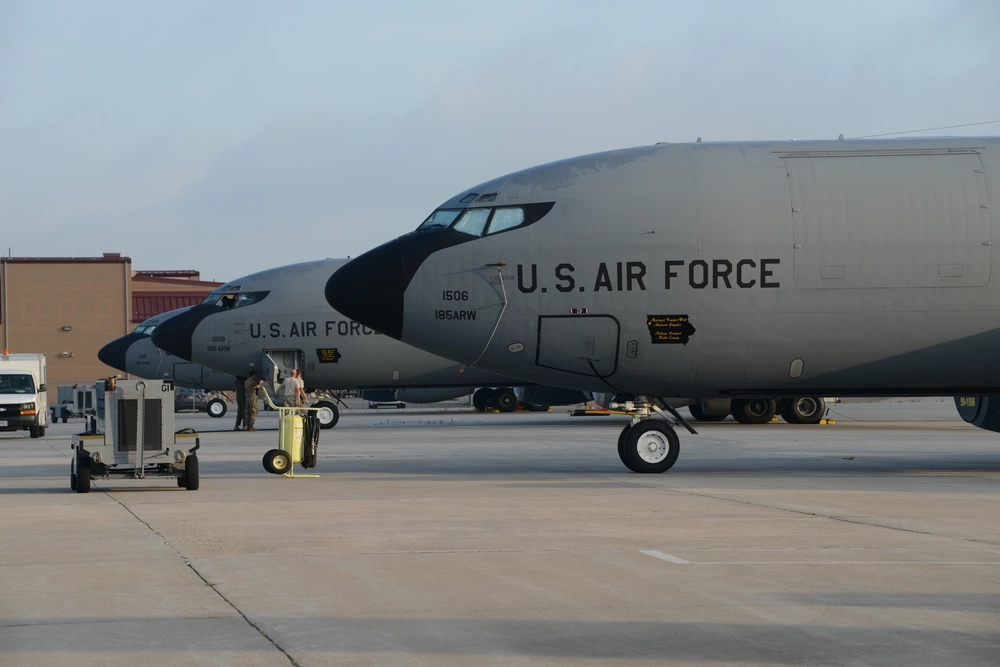
Most public discussion refers broadly to “tankers,” but US aerial refueling generally means aircraft such as the KC-135 and the newer KC-46. They are large, they require specialized support, and they tend to be parked and serviced with added safety and security buffers.
One reason the online conversation gets messy is that people sometimes use “tankers” as a catch-all for other US or coalition support aircraft as well, including transport, command-and-control, or intelligence platforms. That does not change the basic point about ramp constraints, but it can confuse counts and inflate impressions of what is actually parked where.
Why people are saying 50,000
The viral spread of this story is partly a numbers problem. “50,000” is being circulated online in loose ways, sometimes as tickets at risk and sometimes as passengers potentially affected over a short window (often implied as a day or a few days). In many cases, the number is not accompanied by a clear methodology, timeframe, or official source. Treat it as a viral estimate unless and until an airport authority, airline, or ministry publishes a specific count.
Even without a single agreed number, the underlying mechanism is real: when an airport’s ramp capacity is constrained, disruption is not limited to the aircraft that cannot park. It propagates.
Here is how a ramp squeeze turns into mass disruption without any single dramatic incident:
- Gate holds: arriving commercial flights wait longer for gates to open, which delays unloading and re-boarding.
- Missed turns: aircraft that were scheduled to depart cannot be serviced on time, creating delays that follow the plane to its next city.
- Schedule collapse: airlines “bank” arrivals and departures. If one bank breaks, crews time out, aircraft repositioning fails, and later flights cancel because the plane never arrived.
- Passenger ripple: a cancellation at TLV is not only a TLV problem. It can strand inbound passengers in Europe or North America before they ever board.
So whether the claim is framed as “tickets at risk” or “flights threatened,” the logic is the same: at a constrained hub, small percentage capacity losses can create large percentage disruption.
Other causes of disruption
It is also important not to treat the tanker-footprint explanation as the only possible driver of delays. TLV disruptions can also come from security restrictions, temporary airspace measures, staffing and ground-handling constraints, airline schedule reductions, aircraft availability issues, and knock-on delays from other hubs.
The tanker-parking story matters because it offers a clear physical mechanism that ordinary travelers can understand. But in a live operational environment, multiple factors can be true at once.
The reported US pause
In mid-July 2024, Israel’s Channel 12 reported that the US briefly paused certain tanker departures from Israel amid concerns about civilian flight disruption, and then adjusted posture again. Neither side has, in a single definitive public statement, fully confirmed the details of any such pause. Treat it as a reported operational claim unless supported by an on-the-record announcement (for example, from the US Department of Defense, the US Embassy, the Israeli Transport Ministry, or the Israel Airports Authority).
Still, the fact that a pause is being discussed at all is revealing. It suggests the dispute, if it exists in practice, is being negotiated operationally, not only diplomatically.
The US legal angle
For US readers, the instinct is to ask: can Israel really tell the US military where to park? And can the US ignore it?
This is where constitutional civics meets modern alliance logistics. The US Constitution does not contain a “where our tankers may park” clause, but it does structure the authority chain that produces decisions like this.
How basing choices flow in the US system
- The President is Commander in Chief under Article II, which is the constitutional starting point for operational military posture.
- Congress controls appropriations under Article I, which shapes what can be sustained, where, and for how long.
- The Pentagon executes policy within those constraints, but it cannot conjure access out of thin air. Overseas access is typically governed by executive agreements, SOFAs, and related MOUs, plus whatever conditions the host nation attaches to civilian or military facilities.
Airport access is not one thing
It also helps to separate three concepts that get blended online: basing rights (longer-term presence at a military facility), landing or overflight clearances (permission to operate in national airspace and land), and airport operator stand and gate allocation (the day-to-day decision about where an aircraft actually parks). Even close allies can set conditions for all three, and host-nation control is ultimately how sovereignty works.
Why TLV is the pressure point
Israel has military bases. So why does parking spill over into TLV at all?
The answer is usually a mix of capacity, proximity, security posture, and infrastructure. Civilian hubs often have deep fueling systems, robust maintenance-adjacent services, and established air traffic flows. In an elevated posture, those advantages can tempt planners, especially when speed matters.
But that convenience comes with a public cost: when the civilian system starts failing, it is visible to the whole world and measured in canceled vacations, disrupted business travel, and families stuck in transit.
What we know and what we do not
- We know: In mid-July 2024, Israel’s Channel 12 and other outlets reported comments attributed to Israeli Transport Minister Miri Regev describing a cap of about 20 US refueling aircraft at TLV and urging additional aircraft to use Israeli Air Force bases. Public descriptions suggest this is best read as a simultaneous on-the-ground limit, not a cumulative total.
- We know: TLV is a high-throughput civilian hub where ramp and stand constraints can cascade quickly into delays and cancellations.
- We do not know from official public detail: the day-to-day number of US tanker aircraft parked at TLV, the precise apron areas involved, and the full US rationale for why specific aircraft must remain at the civilian airport rather than rotate through military bases.
- We do not know: a verified official basis for the viral “50,000” number without a stated timeframe and methodology.
- Entities to watch for confirmation: Israel Airports Authority, Israel’s Transport Ministry, the Israeli defense establishment for basing details, the US Department of Defense, and the US Embassy in Israel.
What happens next
This is not a story that resolves by press release. It resolves by finding space, time, and language that lets both sides claim a practical win.
1) Partial compliance
The most durable outcome is a compromise where a limited number of tankers remain at TLV for contingency responsiveness, while the bulk rotate through military bases.
2) A civilian-use protocol
Another outcome is a clearer framework: when, and under what conditions, US military aircraft may use Israel’s civilian airport infrastructure.
3) A continued mismatch
If neither side yields, the passenger system becomes the pressure point. That is the worst-case path because it turns alliance friction into immediate civilian pain, and it amplifies public scrutiny in both countries.
If you are traveling
- Airline re-accommodation policies: look for waivers that allow changes without fees for TLV itineraries.
- Flight timing: congestion tends to punish peak banks. Midday off-peak flights can be more resilient.
- Connection buffers: if you must connect through TLV or into TLV via another hub, longer connection times reduce missed-connection risk.
- Official advisories: prioritize airport and airline notices over viral posts, which often recycle the largest numbers without context.
The bigger lesson
This trend is not viral because people suddenly learned what a refueling boom is. It is viral because it exposes a modern truth about power: wars and deterrence rely on logistics, and logistics relies on access. A parking spot at the wrong airport can become a strategic issue, a diplomatic issue, and a consumer travel issue at the same time.
And for Americans watching from afar, it is also a civics reminder. The Constitution sets the architecture of US military authority, but alliances are lived out in the real world, on real runways, under real constraints that no founding document can widen by decree.