
Most election rules you hear about are framed as a simple question: can you vote or can you not? Proof-of-citizenship requirements sit in a more procedural lane. They are not mainly about how you identify yourself at the polls. They are about how election officials decide whether a person is eligible to be registered as a voter in the first place, especially for federal elections.
Because the United States runs elections through a layered system, proof-of-citizenship rules can mean different things depending on where you live, which form you used to register, and whether the election is federal, state, or local. For example, a state might accept your registration for federal elections through a federally standardized form but ask for additional documentation if you want to vote in certain state contests, depending on the rules in force.
This page explains the moving parts without taking sides in the policy debate.
Join the Discussion
What “proof of citizenship” means
In election administration, proof-of-citizenship rules are requirements that a voter provide documentary evidence that they are a U.S. citizen in order to register or remain registered.
This is different from the broader category of election safeguards that sometimes get blended together in headlines:
- Citizenship eligibility: Noncitizens are prohibited by federal law from voting in federal elections, and citizenship is a common eligibility requirement in state law for state and local elections as well. Eligibility and registration rules also sit against a constitutional backdrop (including the qualifications states set for their own elections and federal constraints such as equal protection).
- Proof-of-citizenship: Whether, when, and how a state (or Congress) may demand documents to prove that eligibility, especially for registrations used to vote in federal elections.
- Voter ID: Whether you must show identification at the polling place or when returning a mail ballot. ID rules typically prove identity, not citizenship, although some IDs can also be used as citizenship evidence in some systems.
Who sets the rules
The Constitution gives states the front-line role in running elections, but it also gives Congress power to regulate certain aspects of federal elections.
The state baseline
States set voter qualifications for state elections and administer registration systems. States also run federal elections in practice, using state and local election offices, poll workers, and statewide voter databases.
The federal overlay
For congressional elections, Congress may regulate the “Times, Places and Manner” of elections under the Elections Clause. Presidential elections follow a different constitutional structure in which states appoint electors, although Congress has related powers (for example, setting the day for choosing electors and certain procedures tied to counting electoral votes).
Federal statutes also regulate the mechanics of voter registration for federal contests. The key point for proof-of-citizenship disputes is that a state might want a stricter documentary rule, but the question becomes whether that stricter rule can be applied to federal election registration methods that federal law has standardized.
Key takeaway: States do most of the day-to-day work, but federal law can set the floor for how people register for federal elections, and courts are often asked to decide what happens when those systems conflict.
Where disputes happen
Proof-of-citizenship rules most often attach to voter registration, not the act of casting a ballot at the polling place.
Registration is where eligibility is screened. If a person is properly registered, Election Day procedures typically focus on confirming the voter is the registered person and preventing duplicate voting. That said, eligibility questions can reappear at the polls in some states through same-day registration, voter challenges, and provisional-ballot processes.
Two common registration pathways
- State registration systems: A state may require documents when a person registers through state-specific processes, depending on state law.
- Federal registration for federal elections: The National Voter Registration Act of 1993 (NVRA) provides a standardized registration method for federal elections, including the National Mail Voter Registration Form (often called the federal form). Disputes arise when a state tries to add documentary requirements on top of what the NVRA requires for that federal method.
What documents usually count
States that require documentary proof typically accept a short list of documents that directly demonstrate U.S. citizenship. The details vary by state, and the list can change through legislation or administrative rulemaking.
Examples that are commonly accepted in states with documentary requirements include:
- A U.S. passport or passport card
- A birth certificate issued by a U.S. state or territory, sometimes with additional requirements depending on the state’s rules
- A naturalization certificate or certificate of citizenship
- In some systems, certain tribal documents or other records that indicate citizenship, if state law recognizes them
By contrast, many documents that are frequently used for voter ID purposes, such as a driver’s license, do not necessarily prove citizenship by themselves. Some states issue “REAL ID” compliant licenses, but REAL ID is a federal identity and security standard, not a citizenship label.
When checks happen
Proof-of-citizenship systems can show up at several points in the process.
1) Registration-time documents
This is the classic proof-of-citizenship model. A voter must provide documents with the registration application. If they do not, the application can be rejected or processed into a limited status, depending on the legal framework.
2) Post-registration verification
Some systems focus less on documents from the voter and more on verification steps by election officials, such as matching information against government records. These approaches raise their own questions about accuracy, error correction, notice to the voter, and how quickly a voter can fix a problem.
3) Election Day interactions
Election Day procedures are generally designed to confirm the voter is the registered person. Citizenship is usually treated as a registration eligibility question, but in practice it can become relevant through same-day registration, challenged voter procedures, and provisional ballot rules that require follow-up.
The federal form and the EAC
The “federal form” issue keeps coming up because the NVRA’s model is not “bring documents.” It generally relies on an attestation under penalty of perjury that the applicant is eligible, including that they are a citizen, plus the identifying information the form requires.
The U.S. Election Assistance Commission (EAC) plays a central administrative role here. Among other duties, it maintains the National Mail Voter Registration Form and the state-specific instructions that accompany it. Disputes sometimes focus on whether, and how, states can use that instruction process to push for additional requirements tied to citizenship documentation.
Key takeaway: A lot of the conflict is not about whether citizenship matters. It is about whether federal law allows states to demand documents as part of a federally standardized registration method.
The legal backdrop
Three legal realities frame this debate.
- Noncitizens are barred from voting in federal elections. That is the legal rule. The policy fight is about implementation and enforcement, not the eligibility standard itself.
- States administer elections, but Congress can standardize federal election registration mechanisms. When Congress sets a uniform method for federal registration, states cannot always add extra conditions to that method.
- Courts police the boundary. Litigation often turns on whether a state requirement conflicts with federal statutes governing federal elections, and whether the state can enforce documentary proof requirements through its own forms or separate state-only tracks.
Why lawsuits keep returning
A recurring question is whether a state may require documentary proof of citizenship from someone who registers using a federally standardized method for federal elections.
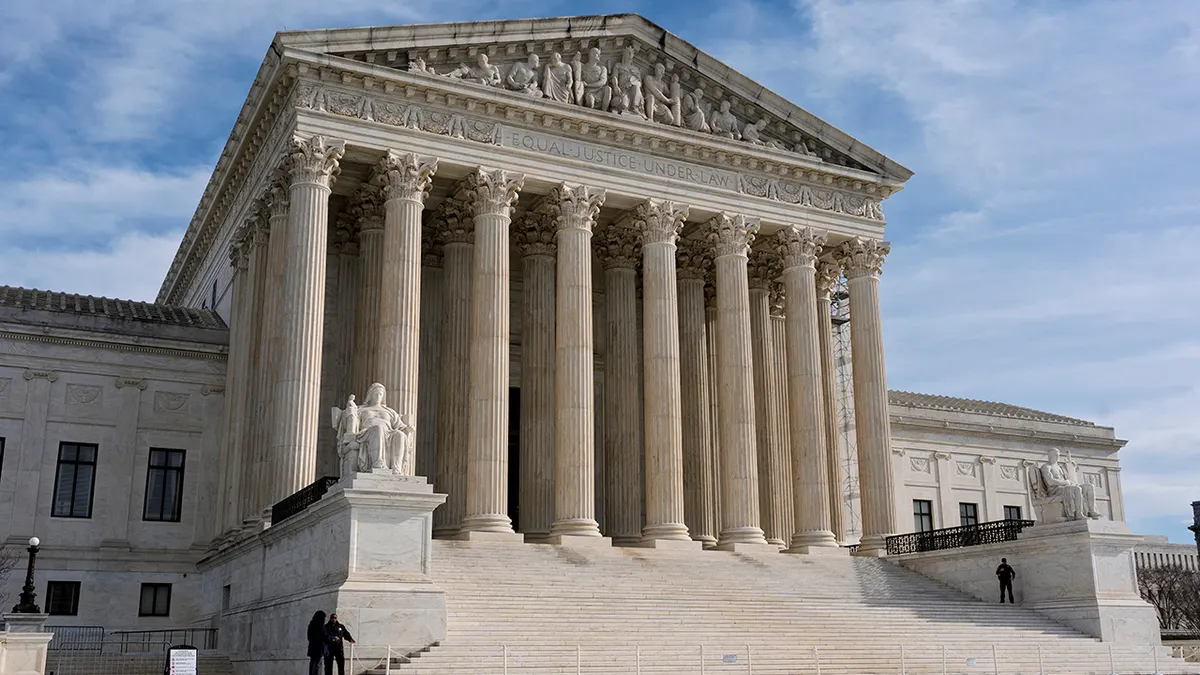
A landmark example is Arizona v. Inter Tribal Council of Ariz., Inc. (2013), where the Supreme Court held, in general terms, that states must accept and use the federal form for federal elections as Congress designed it, and that states cannot unilaterally add extra documentary conditions to that federal method in a way that conflicts with the NVRA.
When disputes reach federal court, they often focus on the relationship between:
- a state’s interest in preventing ineligible registration and maintaining accurate voter rolls, and
- federal laws that tell states what information they must accept for federal election registration through the federal system.
The result in practice has sometimes been a split approach in some places, where a state attempts to require documents for participation in certain state elections through a state-specific method, while still being required to accept federal registration for federal elections under federal rules. The exact design depends on state law, federal law, and court rulings in effect at the time.
Key takeaway: The recurring fight is about which form controls, and whether a state can create separate tracks when federal law sets a standardized path for federal elections.
Current landscape
In the current landscape, only a minority of states have broad documentary proof-of-citizenship requirements for voter registration, and even narrower subsets apply such requirements across all registration pathways. Policies vary, are frequently litigated, and can change through legislation, administrative action, or court orders. For that reason, the practical rule for voters is often: which form you use, and which election you are trying to vote in, can matter as much as the state you live in.
SAVE Act proposals
The SAVE Act is often discussed in the context of proof-of-citizenship requirements for federal elections. Its procedural significance is this: instead of states trying to add documentary requirements on top of existing federal registration methods, Congress could change the federal baseline by statute.
Because bills with “SAVE” in the title can differ across Congresses and can be amended, readers should treat “the SAVE Act” as a label for a category of proposals unless a specific Congress and bill number is identified in the text you are reading. The exact language, effective dates, and administrative details depend on the version at issue and its current status in Congress.
In broad terms, proposals of this type aim to require documentary proof of citizenship for registration in federal elections, and to set rules for how election officials must verify eligibility and what documentation must be accepted.
Two clarifications are worth keeping straight:
- Legislation changes the rules going forward. It does not automatically resolve ongoing litigation about past rules or different state systems.
- Administration is the hard part. Even a simple-sounding documentary requirement raises practical questions about which documents count, how to handle name changes, how to process older birth certificates, and what happens when voters lack easy access to records.
Common questions
Does proof of citizenship mean you have to bring papers to the polls?
Usually, no. Proof-of-citizenship rules are most commonly tied to registration. Polling place requirements are typically about identity and being the registered voter, with some exceptions where eligibility issues are handled through same-day registration, challenges, or provisional ballots.
Is this the same as voter ID?
No. Voter ID rules focus on confirming identity at the point of voting. Proof-of-citizenship rules focus on confirming eligibility to be registered, which is a different legal question.
Can a state require proof of citizenship for state elections?
States have broader authority over their own elections, but they still must follow federal constitutional protections and any applicable federal statutes. The most complex disputes involve federal election registration mechanisms and whether states can add conditions there.
What happens if someone cannot quickly get documents?
That depends on the jurisdiction’s rules. Some systems provide cure periods, alternative verification, or different treatment for federal-only versus state elections. Those details are usually set by statute and election regulations and can change over time.
Is REAL ID proof of citizenship?
Not by itself. REAL ID is a federal standard for identity documents. Some REAL ID compliant documents might also be usable as citizenship evidence depending on what they are (for example, a passport card), but the REAL ID label alone does not mean “citizen.”
Why this keeps resurfacing
Proof-of-citizenship requirements are a constitutional stress test because they sit at the intersection of principles Americans often assume fit neatly together.
- States run elections and aim to prevent ineligible registration while maintaining accurate rolls.
- Federal law can standardize how Americans register for federal elections.
When those principles collide, the conflict is not abstract. It shows up as a form a voter fills out, a checklist an election clerk must follow, and a lawsuit that asks a court to decide which rule controls.
If you are trying to understand the news, that is the key: most of the drama is not about the definition of citizenship. It is about who gets to demand which proof, at what stage, using which registration pathway, under which law.