
The phrase “administrative state” sounds like a political slogan. In constitutional terms, it is something more specific and much more concrete: the modern system in which federal agencies write detailed rules, enforce them, and often adjudicate alleged violations, all under authority Congress granted by statute.
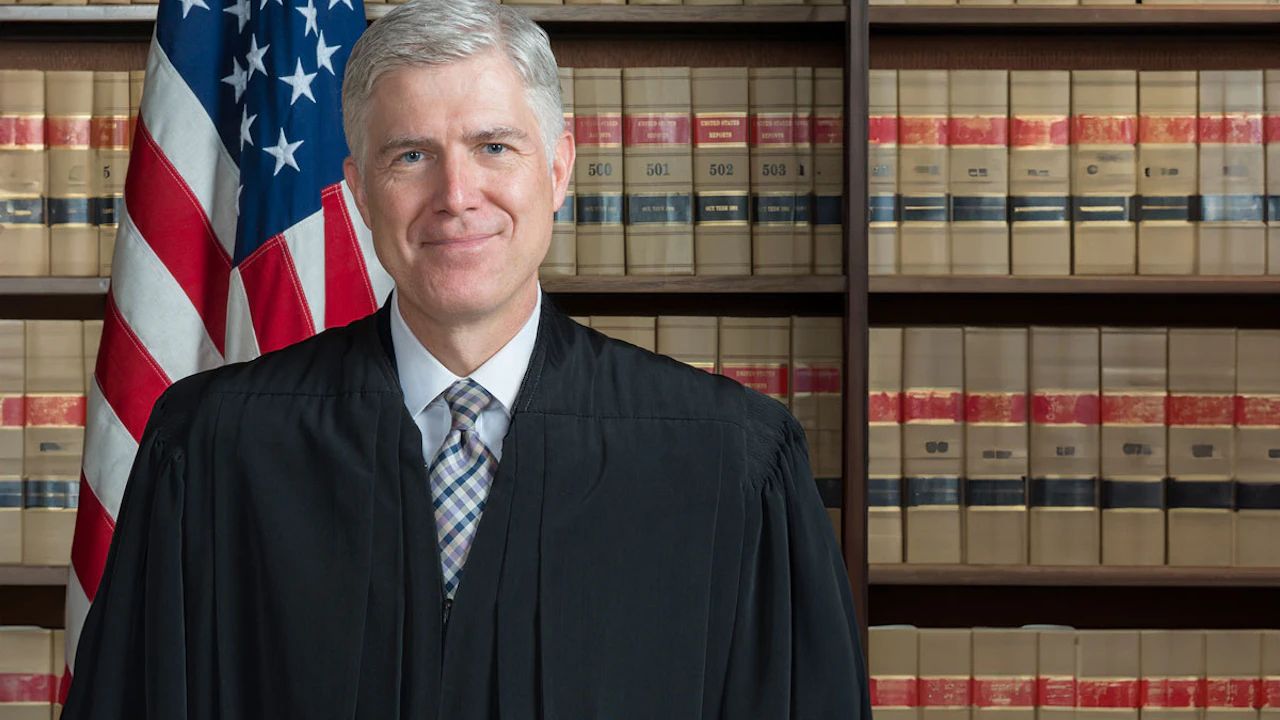
When Justice Neil Gorsuch writes separately in a case involving the Federal Trade Commission (FTC) and suggests that the decision may be an early step toward broader limits on agency power, he is not talking about one agency or one industry. He is signaling a constitutional theory about who is allowed to exercise federal power, and under what kind of democratic accountability.
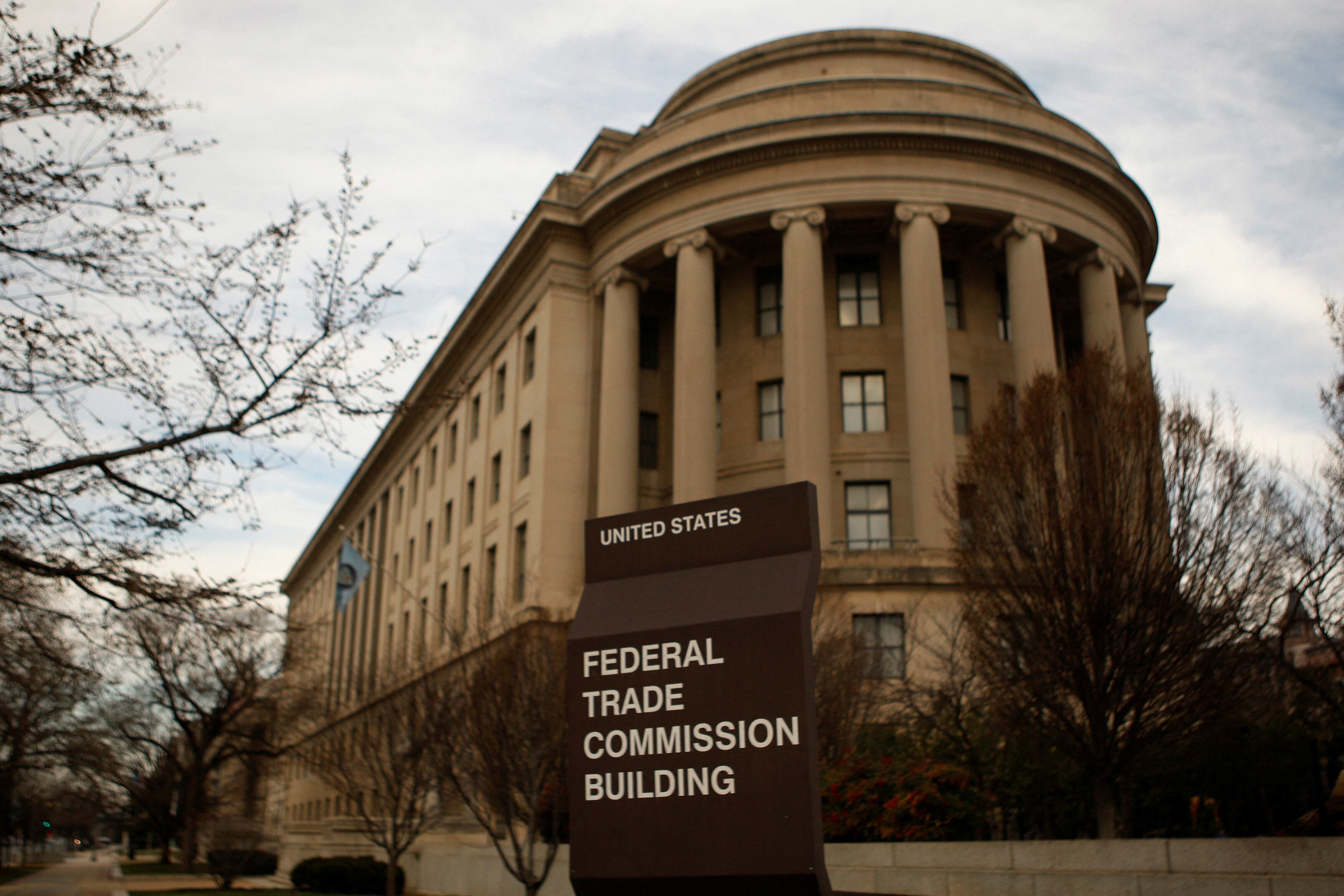
News hook: In Axon Enterprise, Inc. v. FTC (2023), decided alongside SEC v. Cochran, the Court held that federal district courts have jurisdiction to hear certain structural constitutional challenges to the FTC’s and SEC’s administrative enforcement setups, even though the statutes usually channel review to a federal court of appeals only after the agency finishes. In a separate writing, Justice Gorsuch framed that ruling as a potential starting point for bigger separation-of-powers fights. If you see the phrase “opening move” used in coverage, treat it as shorthand for that idea unless you are reading an exact quotation from his opinion.
Join the Discussion
What people mean by “administrative state”
In the United States, Congress passes statutes, the President executes them, and courts interpret and apply them in cases. That is the clean civics version.
The administrative state is the complicated version that grew alongside the New Deal, the postwar economy, and the rise of specialized regulation. Agencies like the FTC, SEC, EPA, OSHA, FCC, and NLRB do three things that look, in miniature, like the powers of the three branches:
- Rulemaking: issuing regulations that bind the public.
- Enforcement: investigating and prosecuting alleged violations.
- Adjudication: conducting in-house hearings before administrative law judges, issuing orders, and imposing remedies.
That arrangement is not automatically unconstitutional. But it creates an ongoing separation-of-powers question: how much lawmaking and judging can Congress place inside the executive branch without erasing the boundaries the Constitution assumes?
One quick clarification helps: “administrative law” is the legal field that governs how agencies operate. “Administrative state” is the broader label people use, sometimes neutrally and sometimes critically, for the overall system of agency governance.
Why an FTC case becomes a flashpoint
The FTC is a useful example because it is powerful and also structured as an “independent” commission. It is led by multiple commissioners who typically serve fixed terms. Under the traditional model, they enjoy some degree of for-cause removal protection, though the exact contours are shaped by precedent and are often contested in modern litigation.
For maximum precision, the canonical precedent here is Humphrey’s Executor (1935), which upheld for-cause protections for members of a multi-member expert commission. Many modern challenges do not deny that precedent exists. They argue it should be narrowed, limited to its facts, or reconsidered as later cases rethink how much insulation from presidential control Article II permits.
That matters because many agencies share similar tools: internal adjudication, rulemaking authority, and enforcement mechanisms that can include monetary consequences. With the FTC specifically, its ability to obtain money depends heavily on the statute and the procedural path. For example, the Court curtailed the FTC’s use of Section 13(b) to obtain broad equitable monetary relief in AMG Capital Management, LLC v. FTC (2021). Separately, some statutes allow civil penalties or other monetary remedies on defined terms, which is a different category than the equitable relief dispute in AMG.
Gorsuch’s style in concurrences is often to write for the future. He uses the case in front of him as a platform to identify a larger constitutional problem that litigants can raise in the next wave of challenges. It is important to keep the roles straight here: the Court’s holding in Axon was about jurisdiction and timing. The broader constitutional critique appears in separate writings, not in the majority’s bottom line.
The Article II argument
Article II begins with a deceptively simple sentence: “The executive Power shall be vested in a President of the United States of America.” From that Vesting Clause comes a long-running debate about presidential control over the executive branch.
One view, often called the unitary executive theory, argues that because the Constitution vests executive power in one President, the President must be able to supervise and ultimately control those who wield executive power in his name. That does not mean the President personally makes every decision. It does mean executive officers must remain accountable to him.
Independent agencies complicate that accountability. If an agency head cannot be removed except for cause, or if decisions are buffered through multi-member commissions designed to be politically balanced, the President’s control can become indirect. That is where Article II concerns enter, and why removal-power cases matter. The Court has wrestled with these questions in decisions such as Humphrey’s Executor (1935), Seila Law (2020), and Collins v. Yellen (2021).
Separation of powers concerns
Gorsuch’s broader project, across multiple cases and opinions, is a return to sharper lines between:
- Legislative power (making the rules that govern private conduct)
- Executive power (enforcing those rules)
- Judicial power (deciding cases with neutral adjudicators)
Administrative law blends these functions, sometimes in a single agency proceeding. Even when an agency’s process is lawful under current doctrine, the institutional design can still look to critics like a constitutional shortcut: law-like rules plus prosecution plus judging, all under one roof.
This is also where the debate touches due process. The critique is usually structural, not personal. It is not that administrative law judges are inherently biased. It is that the combination of functions, plus questions about appointments, supervision, and removal, can create incentives and constraints that look different from Article III courts.
If you want a concrete picture of “in-house adjudication,” imagine this sequence: the agency investigates, the agency files an internal complaint, an administrative law judge issues an initial decision after a trial-like hearing, and the agency leadership can review that decision. Only then does the case typically move to a federal court of appeals for review, often under deferential standards on many issues. One dispute in Axon was whether a party must endure that full track before raising certain constitutional objections about the setup itself.
The nondelegation issue
Another constitutional argument that often travels with “administrative state” critiques is the nondelegation doctrine.
The Constitution vests “All legislative Powers” in Congress. Yet modern statutes often grant agencies broad discretion to set standards, define prohibited conduct, and shape entire industries. Courts have generally allowed this so long as Congress provides an “intelligible principle” to guide agency action.
Two key context points help readers understand why this debate is so charged: the Court has not invalidated a federal statute on nondelegation grounds since 1935, and yet multiple justices, including Gorsuch, have signaled interest in making the standard more demanding. The two 1935 nondelegation cases readers sometimes see cited are Panama Refining Co. v. Ryan and A.L.A. Schechter Poultry Corp. v. United States.
If nondelegation doctrine is revived in a stronger form, the effect would not be that agencies disappear. The effect would be that Congress would have to write more of the hard choices into the statute itself, instead of pushing them into agency rulemaking.
Why the FTC matters beyond antitrust
People often encounter the FTC through consumer protection, privacy enforcement, or competition policy. Constitutionally, the FTC is a frequent reference point because it embodies the independent commission model.
If the Court narrows what independent agencies may do, or if it strengthens requirements for presidential supervision, that logic can be used against other agencies with similar insulation features.
Likely pressure points include:
- Removal protections for commissioners or directors
- In-house adjudication that resembles court proceedings
- Structural combinations of rulemaking, enforcement, and judging
- Broad statutory grants that invite nondelegation challenges
This is why a concurrence can matter even when it does not change the outcome of the case. It plants a map for litigants: here is the constitutional route, here is the doctrine to attack, and here is how to frame the next case.
Where this fits
When people talk about the administrative state right now, they are usually talking about more than removal power and nondelegation. Two adjacent ideas you will often hear in the same conversation are the major questions doctrine and the Court’s shifting approach to judicial deference to agencies (often discussed under the label “Chevron”). Those doctrines are not about whether agencies exist. They are about how much room agencies have to interpret statutes in court, and how clearly Congress must speak when authorizing agencies to regulate on major political and economic questions.
What “opening move” means
Supreme Court doctrine often shifts in steps, not leaps. A high-profile separate writing can be step one: it tells lower courts and future challengers that at least one justice is ready to reconsider a line of cases or a foundational assumption.
In practical terms, Gorsuch’s framing suggests we may see more lawsuits arguing that:
- certain agency enforcement frameworks violate Article II
- certain agency adjudications violate Article III or due process
- certain regulatory programs rest on unconstitutional delegations of legislative power
These challenges do not require Congress to repeal an agency. They ask courts to redefine what agencies are constitutionally permitted to do, and how directly the President must be able to control those who do it.
What could change
It is tempting to translate this debate into a simple “more regulation” versus “less regulation” argument. Constitutionally, the more precise question is: who decides, and under what constraints.
If the Court moves in the direction Gorsuch has urged in various writings, possible outcomes include:
- More responsibility for Congress, because statutes may need to be more detailed to survive nondelegation-style challenges.
- More presidential control, because independent decision-making inside agencies could face tighter Article II limits.
- More judicial involvement, because structural challenges may reach Article III courts earlier and because doctrines governing agency authority and review have been in flux in recent terms.
These are forecasts, not certainties. The results depend on which doctrinal lever the Court pulls and how broadly it writes.
Quick answers
What is the administrative state?
It is the network of federal agencies that implement statutes through rulemaking, enforcement, and in many cases in-house adjudication. It is the practical machinery of modern governance.
Why does Gorsuch focus on it?
Because he sees constitutional risk when agencies combine lawmaking-like discretion, executive enforcement, and court-like adjudication, especially when they are insulated from direct presidential accountability.
What did Axon change?
It allowed certain constitutional challenges to the FTC’s and SEC’s administrative enforcement setups to be brought directly in federal district court, rather than forcing regulated parties to go through the full agency proceeding first.
Does this mean agencies like the FTC will be abolished?
Not automatically. A more realistic effect is that agencies may face narrower authority, more judicial oversight, and greater presidential supervision, depending on the doctrine the Court adopts.
The question underneath the news
The United States did not design a Constitution for a world with thousands of pages of federal regulations administered by expert agencies. But it also did not design a Constitution for a world without complex national markets, modern technologies, and systemic risks that demand specialized governance.
That tension is the story. Gorsuch’s separate writing is newsworthy because it treats an agency dispute as an opportunity to renegotiate the terms of that tension. The next chapter will not be written in headlines. It will be written in doctrine, case by case, as litigants test how much of the administrative state fits within Article II, nondelegation limits, and the separation of powers the Founders put on paper.