
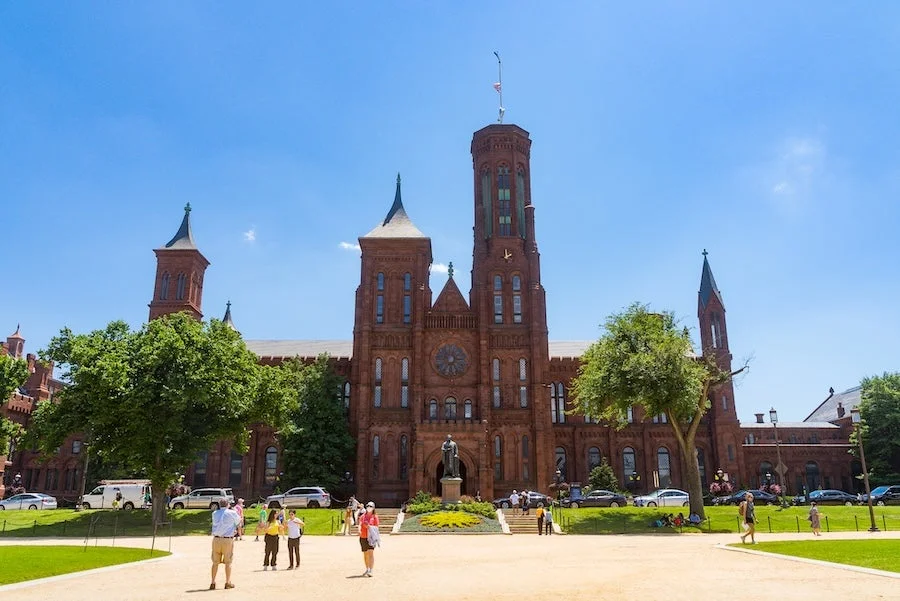
The headline version of this story is simple: for example, imagine a president issues an executive order directing executive-branch officials to place signs on federally managed walkways near Smithsonian museums, pointing visitors to a White House report criticizing how American history is presented.
The constitutional version lasts longer than the news cycle. It turns on a separation most people never have to think about: the difference between (1) managing federal property and (2) controlling a cultural institution’s speech.
This matters because the same doctrines govern monuments, banners, museum placards, and protest permitting on the National Mall. The legal answer depends less on the temperature of the politics and more on who controls the land, who governs the Smithsonian, and what the First Amendment does and does not forbid when the government speaks in public space.
Join the Discussion
Two targets
Start with the question people are actually asking: Can a president control the Smithsonian? Not in the way the public often imagines.
The Smithsonian is not a typical executive-branch agency. It is a congressionally created trust instrumentality with its own statutory governance. The key governing body is the Board of Regents, which includes the Vice President and the Chief Justice as ex officio members, plus members of Congress and citizen regents (see 20 U.S.C. §§ 202–203).
The Smithsonian’s Secretary is selected under the Regents’ authority rather than appointed as a standard Cabinet subordinate (see 20 U.S.C. § 216 and related provisions). That design choice matters when people assume a president can simply issue a chain-of-command instruction to curators.
Now contrast that with the other target in the story: federally managed sidewalks, plazas, and grounds near Smithsonian buildings. Public space around the National Mall can be administered under federal property authorities through agencies such as the National Park Service or the General Services Administration, but the details vary block by block. Some adjacent sidewalks and rights-of-way can be under District of Columbia control, and certain areas near the Capitol complex can implicate the Architect of the Capitol.
Even within the Smithsonian footprint, it is safest to be precise. Some areas immediately adjacent to particular Smithsonian facilities may be Smithsonian-administered, while much of the Mall and surrounding parkland is National Park Service managed. The right answer often depends on the exact curb line.
So the first clarifying move is this: a president ordering official signage on federal land is not the same legal claim as a president rewriting Smithsonian exhibits.
What an executive order is
Executive orders sound like a constitutional superpower. They are not.
An executive order is a written directive to the executive branch about how to carry out duties the government already has. It is legally effective only to the extent it rests on one of two foundations:
- Statutory authority: Congress has passed a law giving the executive branch discretion in an area, and the president is steering how that discretion will be used.
- Constitutional authority: the president is acting within Article II powers, typically involving supervision of executive officers and faithful execution of the laws.
When an executive order moves from paper to pavement, the real legal question becomes: Which agency is implementing it, under what statute, on what parcel of land, and under what site-specific rules? In property disputes, those details often matter more than the headline.
Federal property power
The Constitution gives Congress explicit authority over federal property in the Property Clause (Article IV, Section 3, Clause 2), empowering Congress to “make all needful Rules and Regulations” respecting federal property.
That means Congress is the primary rule-maker for places like the National Mall and other federally controlled public spaces. The executive branch usually manages those places because Congress has delegated administration through statutes to executive agencies. The president’s role is best stated precisely: the president can direct executive agencies within the bounds Congress set. That is real power, but it is not unilateral power to ignore statutes, regulations, or appropriations limits.
In practical terms, directing an agency to install an official sign is often doable, but it can still run into constraints such as:
- Existing statutes governing the property and the agency’s mission.
- Regulations and site rules that limit structures, displays, or safety impacts.
- Appropriations law, because spending money on a program requires lawful funding.
- First Amendment limits, especially if officials regulate private speakers around the same space.
Permits and site constraints
Even when the First Amendment is not the main obstacle, implementation can still get tangled in the kinds of rules most people never see until something is built.
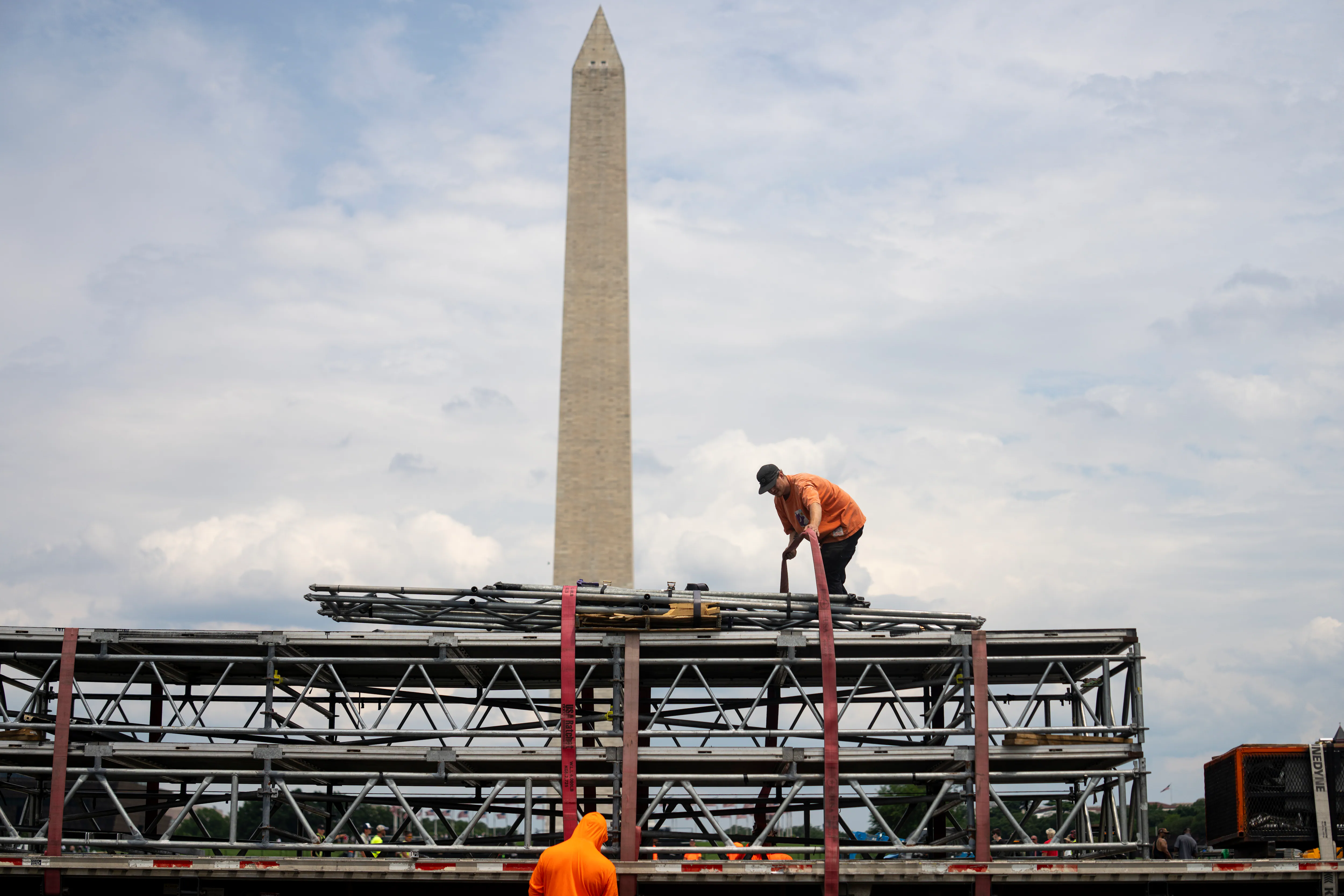
On prominent federal sites, agencies may need to comply with procurement requirements, safety and accessibility standards, and location-specific permitting regimes for any physical installation. Depending on the size and placement of the signs, review can also implicate environmental and historic preservation processes, such as NEPA analysis and consultation under the National Historic Preservation Act. The point is not that every sign triggers a full review. The point is that “just put up a sign” is often not a one-step instruction in practice.
Is the sign government speech?
Usually, yes. If the federal government places a sign on property it controls to convey an official message, that is typically treated as government speech.
Government speech doctrine matters because it flips a common instinct. The First Amendment sharply restricts the government when it censors private speakers. But when the government itself is speaking, the First Amendment generally does not require message neutrality. The government is allowed to choose its message. (This is the basic logic behind cases like Pleasant Grove City v. Summum and Walker v. Texas Division, Sons of Confederate Veterans.)
Two important cautions keep this from becoming a blank check. First, courts may reject a “government speech” label if the overall practice looks more like the government has opened a forum for private speakers, a point the Court emphasized in Shurtleff v. Boston by looking at history, public perception, and the government’s actual control over the message. Second, other constitutional constraints can still matter depending on content and context, including unconstitutional conditions, compelled subsidy concerns, or Establishment Clause issues in the right fact pattern.
Sidewalks and public forums
People hear “sidewalk” and think: pure free-speech zone. Constitutionally, it depends.
First Amendment law divides government property into categories. The big ones are:
- Traditional public forums: streets and sidewalks historically used for public expression. Speech restrictions here face the toughest scrutiny. (See, for example, Perry Education Association v. Perry Local Educators’ Association for the basic framework.)
- Designated and limited public forums: places the government has opened for expressive activity, either broadly (designated) or for certain groups or topics (limited). Once opened, the government cannot discriminate by viewpoint within the forum’s scope.
- Nonpublic forums: government property not opened for public expression, where restrictions need only be reasonable and viewpoint neutral.
Federal land around major institutions is often governed by detailed rules about demonstrations, temporary structures, and signage. A presidential directive does not erase those rules. Installing an official sign is usually easier to defend than policing what everyone else can say near that sign. The moment officials start granting access to some speakers but not others, forum doctrine becomes central.
Who controls the space?
This is the practical question that often decides whether a lawsuit is even aimed at the right defendant.
“Outside the Smithsonian” can mean several different legal jurisdictions: National Park Service managed Mall grounds, Smithsonian-administered grounds immediately adjacent to some facilities, General Services Administration managed federal property, or District of Columbia controlled sidewalks depending on the exact location. For a concrete mental model, some Mall-side walkways and lawn areas are commonly associated with National Park Service administration, while curbside sidewalks and street rights-of-way a block away may be maintained by D.C. agencies. The custodian matters for permits, rules, contracting, and who can be sued.
If an executive order is implemented, a reader should ask: Which custodian agency is acting at the specific site named in the implementing directive?
Can a president control exhibits?
This is the heart of the dispute, and the answer is: not the way a museum director can.
The Smithsonian’s exhibit decisions are shaped by its statutory structure and governance. The institution is not designed as a normal executive department where Article II supervision runs cleanly from the president down to curators. That does not mean it is hermetically sealed from politics. Funding choices and leadership dynamics can have political consequences. It does mean that “the president ordered it” is usually not, by itself, the legal mechanism that changes exhibit text.
The stronger levers are typically indirect:
- Governance and appointments to the extent the law allows presidential influence over relevant decision makers.
- Budget and appropriations through Congress, which is not presidential power alone.
- Public persuasion, including reports and official messaging.
That last point is easy to dismiss, but it is often the real mechanism. A president may not be able to command the exhibit. A president can try to command the conversation around the exhibit.
Independence by design
American government includes many entities that are not cleanly “under” the president in the way the public assumes. Some are independent agencies with for-cause removal protections. Some are government corporations. Some are statutory hybrids, like the Smithsonian.
The Constitution does not provide a neat organizational chart. Instead, it gives principles: Congress writes the rules for federal property, Congress builds institutions by statute, and the president executes the law through the executive branch.
Whenever a controversy involves a president trying to steer an entity that is not straightforwardly executive, the legal question is not “Does the president run the whole federal government?” It is:
- What does the creating statute allow?
- Who has appointment and removal power over key decision makers?
- Is the action implemented through an executive agency the president can direct?
When messaging becomes coercion
These stories feel explosive because people sense a First Amendment issue even when the government is speaking. That instinct is understandable, but in many cases the decisive doctrines are not about the government having an opinion. They are about whether the government is also:
- retaliating against protected speech, such as targeting an institution or employees for disfavored viewpoints, or
- conditioning benefits in a way that coerces speech, such as threatening funding to force adoption of a mandated viewpoint.
Those claims are fact-specific and tend to arise when concrete actions occur: firings, funding restrictions, permit denials, or regulatory penalties.
If you want a plain checklist for what would make the sign plan legally riskier in the real world, look for pairings like these:
- The sign goes up, and then officials deny permits for opposing groups to hold nearby demonstrations under the same rules.
- Agencies reprogram funds or procure signs and installations without lawful appropriations or required procedures.
- The “sign program” is used as a bridge to pressure exhibit content, for example by attaching conditions to grants or contracts that effectively require adopting a favored historical viewpoint.
If someone sued
If litigation followed a sidewalk-sign directive, a court would likely sort the case into practical buckets:
- Authority: Which agency is acting, and what statute authorizes the sign placement?
- Location: Who is the legal custodian of the precise parcel where the sign sits?
- Process: Did the government follow required procedures, procurement rules, contracts, and site regulations?
- Forum classification: Is the location a traditional public forum, and is the government regulating others’ speech there?
- Viewpoint discrimination: If access or permits are granted to some but denied to others, is the line being drawn based on viewpoint?
Two additional issues often show up early. First is standing: who, exactly, is concretely harmed by the policy? Offense alone is usually not enough, but standing can exist when there is unequal access to a forum, a denied permit, targeted enforcement, or a plausible chilling effect tied to credible threats of enforcement. Second is the cause of action: challenges may be framed as ultra vires action, an Administrative Procedure Act claim (if a final agency action is involved), or a First Amendment claim if the dispute is really about access and exclusion rather than the government’s own message.
On remedies and defendants, suits usually target the implementing officials (often the agency head or site administrator) rather than “the Smithsonian” in the abstract. The usual relief is declaratory or injunctive relief. Damages are less common in this type of signage and property-management dispute.
Notice what is not first on the list: whether the president’s historical argument is correct. Courts are usually not referees of historical interpretation. They are referees of legal authority and constitutional limits.
Bottom line
A president is most powerful when doing two things: directing executive agencies and communicating an official message. That combination makes an official sign on federally managed property a comparatively straightforward use of executive power, if carried out under valid property authority.
But the moment the dispute becomes “the White House can dictate what the Smithsonian teaches,” the legal ground shifts. Smithsonian governance, congressional statutes, appropriations control, and institutional independence start to matter more than presidential preference.
In other words, the constitutional divide here is structural: managing federal space is not the same thing as commanding cultural memory.
Quick FAQ
Can a president order a sign on federal property?
Often, yes, by directing the executive agencies that manage the property, so long as the action is authorized by statute, funded lawfully, and consistent with applicable rules for the site.
Does the First Amendment stop the government from putting up its own message?
Usually no. Government speech is generally permitted. First Amendment problems more often arise when the government suppresses private speech, discriminates by viewpoint in a forum, or uses funding and benefits to coerce speech.
Who actually controls the sidewalks near the Smithsonian?
It depends on the exact location. Many National Mall areas can be managed by the National Park Service, some grounds immediately adjacent to particular Smithsonian facilities may be Smithsonian-administered, some nearby federal property is managed by GSA, and some sidewalks or rights-of-way can fall under District of Columbia authority. The custodian matters for permits, rules, and who can be sued.
Can a president order the Smithsonian to change exhibits?
Not as a simple Article II command. The Smithsonian is not structured as a standard executive-branch agency, and its exhibit decisions are governed through its statutory framework, Regents oversight, professional curation, and congressional funding dynamics.
If a sidewalk is a public forum, does that make an official sign unconstitutional?
Not by itself. The government can speak in public spaces. The key issue is whether the government also restricts others’ speech in a viewpoint-discriminatory way or violates applicable permitting and site rules.