
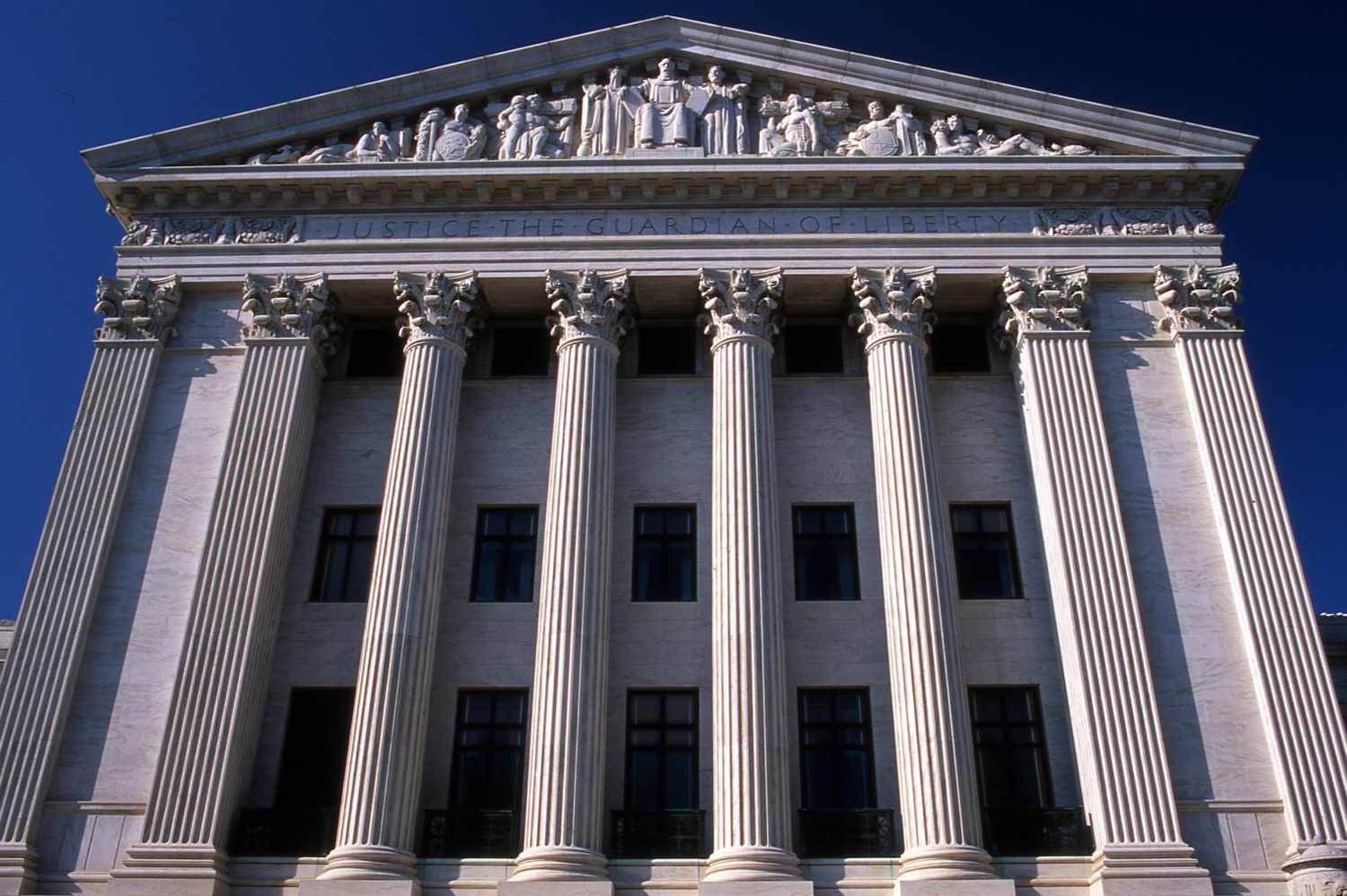
The Supreme Court just answered a question that has hovered over Washington for nearly a century: when Congress creates an “independent” regulatory commission, can it still force the President to keep commissioners he does not want?
In Trump v. Slaughter, the Court said no. By a 6-3 vote, the justices held that President Donald Trump had the authority to fire Federal Trade Commission commissioners Rebecca Kelly Slaughter and Alvaro Bedoya. In doing so, the Court explicitly overruled a pillar of modern administrative government: Humphrey’s Executor (1935), the case that long allowed Congress to shield some agency officials from at-will presidential removal.
If you are looking for the deeper meaning, it is this: the Court is shrinking the space between “the executive branch” and “the President.” The old idea that certain commissions could stand at arm’s length from presidential control is now, at best, a narrow exception. At worst, it is a constitutional misunderstanding the Court says should have ended long ago.
Join the Discussion
The question the Court actually decided
On paper, the FTC is built to be insulated from day-to-day politics. It has multiple commissioners serving staggered terms, and for decades it was understood that a President could not remove an FTC commissioner without a legally acceptable reason, often summarized as “for cause.”
Trump v. Slaughter rejected that structure as a constitutional barrier to presidential accountability. Chief Justice John Roberts, writing for the majority, framed the issue in plain terms: the President is responsible for executing the laws, and that responsibility is meaningless if Congress can require him to keep subordinates who exercise executive power but do not answer to him.
The syllabus of the majority opinion states:
“Although it is up to the Senate to decide whether to confirm those with whom the President would prefer to work, neither Congress nor the courts may saddle him with those with whom he cannot work.”
And it continues with the broader principle now driving much of the Court’s approach to the presidency:
“Subordinates who exercise the President’s power are subject to removal by him. Then, and only then, can they remain accountable to the President, and the President to the people.”
That is the constitutional trade the majority wants: removal power in exchange for democratic accountability. If things go badly, voters know whom to blame. If things go well, voters know whom to credit. Independence, in this view, is not a virtue. It is a crack in the chain of responsibility.
What died with Humphrey’s Executor
For generations, Humphrey’s Executor served as a legal foundation for the modern regulatory state. It treated the FTC as different from a purely executive department. The commission was described as performing “quasi-legislative” and “quasi-judicial” functions, and that labeling helped justify limits on presidential removal.
The Roberts Court has now swept that framework aside, concluding that it “has not withstood the test of time.” The majority’s message is blunt: calling an agency “independent” does not make it independent from the elected chief executive, at least not when the agency exercises executive power in the real world.
This is not just a technical correction. It is a redefinition of what “independent agency” can mean in the American constitutional system. The FTC was long used as the prime example of a commission designed to resist political pressure. If the FTC is not meaningfully independent, then the category itself becomes hard to defend.
The dissent’s warning: a presidency with fewer restraints
Justice Sonia Sotomayor’s dissent reads like an alarm bell for the separation of powers. She argued that the Court’s decision does not merely adjust a doctrine. It rearranges the constitutional architecture by converting what used to be limited removal authority into something much closer to a general presidential power to purge commissions.
She wrote:
“The result is a President who emerges with far greater power than ever before. It is a power, however, that neither the People, nor Congress, nor the Constitution bestowed upon him. In granting the President this unbridled authority, the Court upends its precedent, misconstrues our history, and sheds any pretense of judicial modesty.”
The dissent is not really about the FTC. It is about the fear that a President who can fire the referees can eventually control the game.
What changes on Monday morning at the FTC
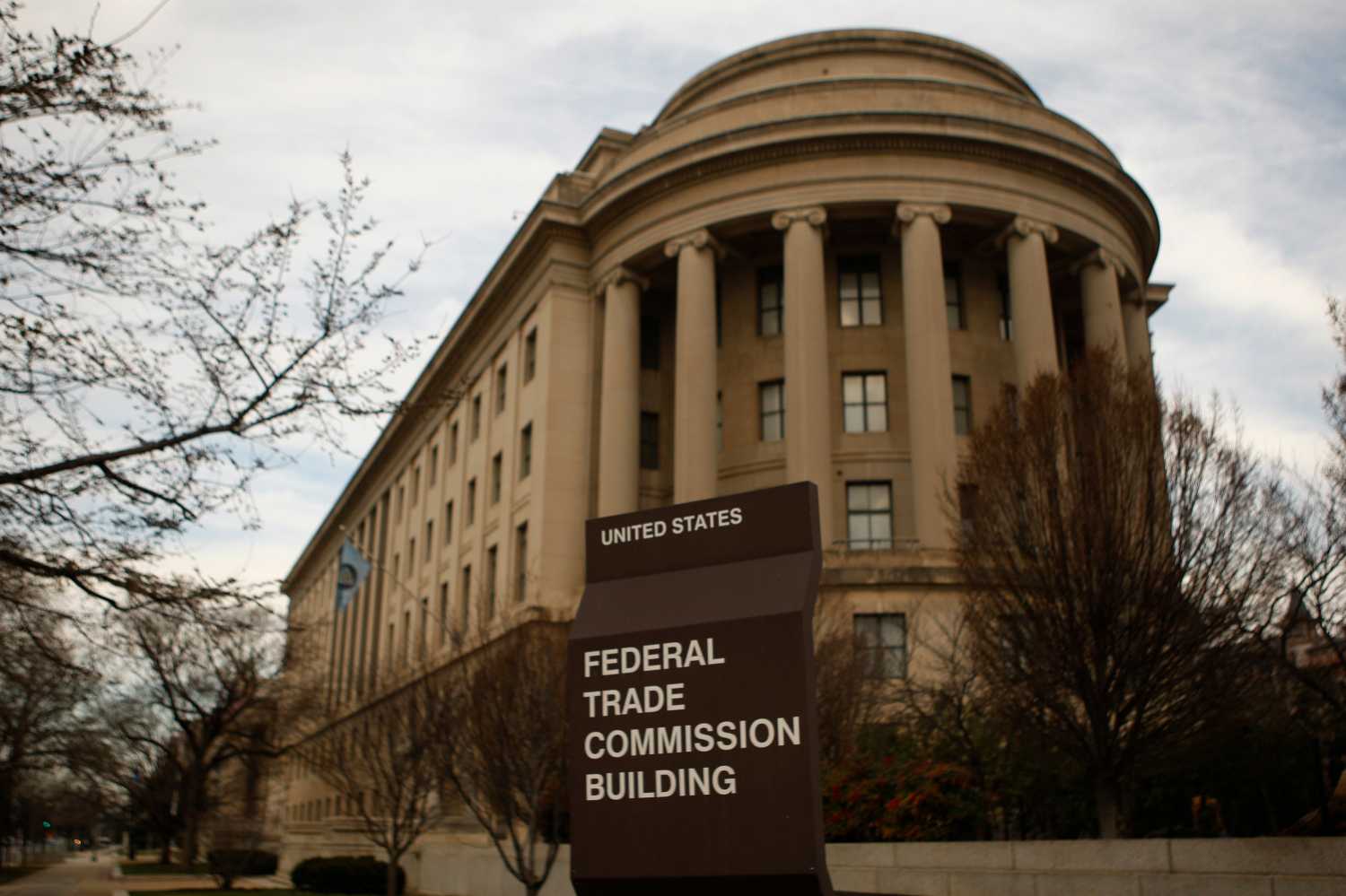
The immediate practical impact is limited for a simple reason: the firings happened earlier, and the case largely determined whether the commissioners could reclaim their seats and whether the old legal protections still existed.
One fired commissioner, Alvaro Bedoya, ultimately resigned while the dispute worked its way through the courts. The other, Rebecca Kelly Slaughter, continued pressing the case. But the bigger “Monday morning” consequence is about culture and chain-of-command. When a commission knows its members can be dismissed at will, internal incentives change fast.
Consider what FTC Chair Andrew Ferguson has already signaled publicly, describing the agency as aligned with the administration and urging staff not to portray it as independent in litigation filings. That is more than branding. It is a shift in the agency’s self-understanding: from semi-autonomous regulator to an arm of presidential policy.
Which agencies are now on notice
If you are trying to read the tea leaves, start with the list of commissions that have historically relied on the same basic design as the FTC: multi-member boards, staggered terms, and some form of removal protection. The reasoning in Trump v. Slaughter points directly at agencies like the Federal Communications Commission, Federal Election Commission, National Labor Relations Board, and National Transportation Safety Board.
The constitutional question will now hover over each of them: if their officers exercise executive power, why should they be any more protected than the FTC commissioners were?
This is where the Court’s embrace of the unitary executive theory matters. The theory is not just academic anymore. It is becoming the Court’s operating manual for untangling who controls administration, enforcement, and regulation.
The Federal Reserve carve-out: independence is not gone, but it is selective
On the same day, the Court signaled that not every institution will be treated identically. In a separate decision, the justices held 5-4 that President Trump cannot fire Federal Reserve member Lisa Cook for now, pointing to Congress’s “for cause” removal language for that role.
That might sound like a contradiction, but it is better understood as triage. The Court is leaving itself room to treat certain entities as unique, especially ones tied closely to monetary policy and financial stability. In the FTC case, the majority even cited the Federal Reserve as a possible outlier.
So the real lesson is not that agency independence has vanished across the board. It is that independence is no longer presumed. It must be justified, and the Court appears inclined to treat the FTC-style commission as the wrong model, not the safe model.
The hard civics question: who do you want to be able to fire the regulators?
This case forces an uncomfortable choice that the country has always tried to avoid.
- If you want democratic control, you probably want the President to be able to remove regulators who are steering policy in ways voters reject. That is the majority’s view: accountability requires control, and control requires removal.
- If you want guardrails against political pressure, you probably want regulators who cannot be threatened with termination for enforcing the law against powerful interests, including the White House’s allies. That is the dissent’s worry: at-will removal invites politicized enforcement and selective regulation.
The Constitution does not use the phrase “independent agency.” It does not map out commissions, staggered terms, or “for cause” protections. What it does do is vest “the executive Power” in a President and then leave the country to argue, for two centuries and counting, about what that sentence really implies.
Trump v. Slaughter is the Court’s latest answer: the President is not merely the head of the executive branch. He is the executive branch, and the people are supposed to judge him as such.
That is a clean theory. The question is whether it produces clean government.