
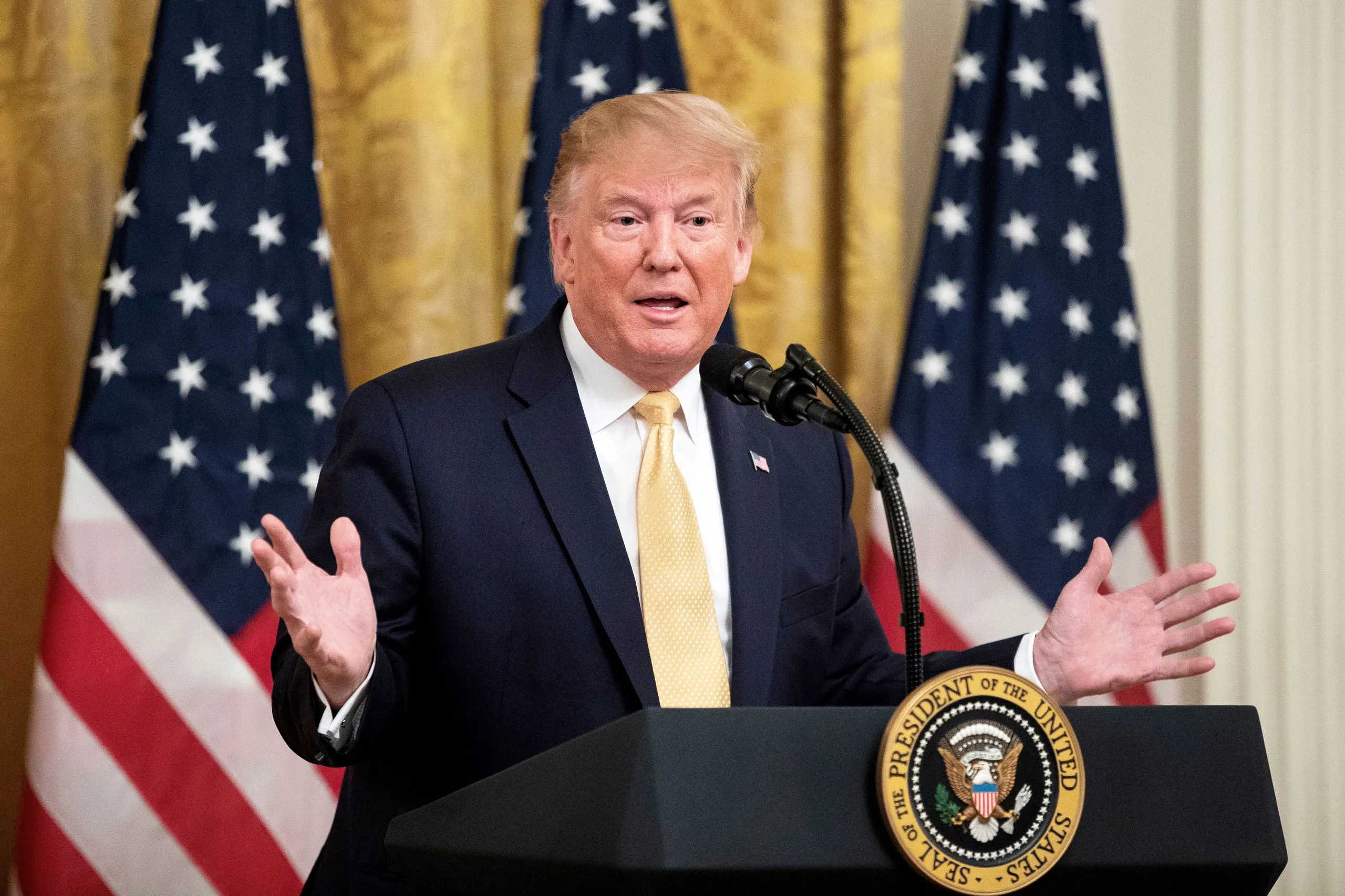
You can almost hear the constitutional gears grinding when a president loses at the Supreme Court and immediately turns to Congress for a do-over.
That is exactly what happened after the Court rejected President Trump’s January 2025 executive order that attempted to condition U.S.-birth citizenship on a parent’s legal status. The Court said the Fourteenth Amendment guarantees automatic citizenship to nearly all children born on U.S. soil, including children whose parents are unlawfully present. Trump’s response was not quiet acceptance. It was a new argument: if the courts will not let him do it by executive order, lawmakers should do it by statute.
On Truth Social, Trump wrote: “The Supreme Court upheld Birthright Citizenship, which is too bad for our Country, but we can easily make it up in Congress through Legislation, with the support of the President, that has now been determined during this process.” He added: “No long and unwieldy Constitutional Amendment is necessary!”
Join the Discussion
What the order targeted
Trump’s January 2025 order required that, for a child born in the United States to receive citizenship automatically, at least one parent would need to be a U.S. citizen or have permanent legal status.
That premise ran into a constitutional text that has been doing the heavy lifting for more than 150 years:
“All persons born or naturalized in the United States, and subject to the jurisdiction thereof, are citizens of the United States and of the State wherein they reside.”
The modern political fight tends to fixate on the phrase “subject to the jurisdiction thereof.” In this case, the Court’s ruling treated birthright citizenship as a core guarantee of the Fourteenth Amendment for “nearly all children born on U.S. soil,” even when a child’s parents are in the country illegally.
What the Court did
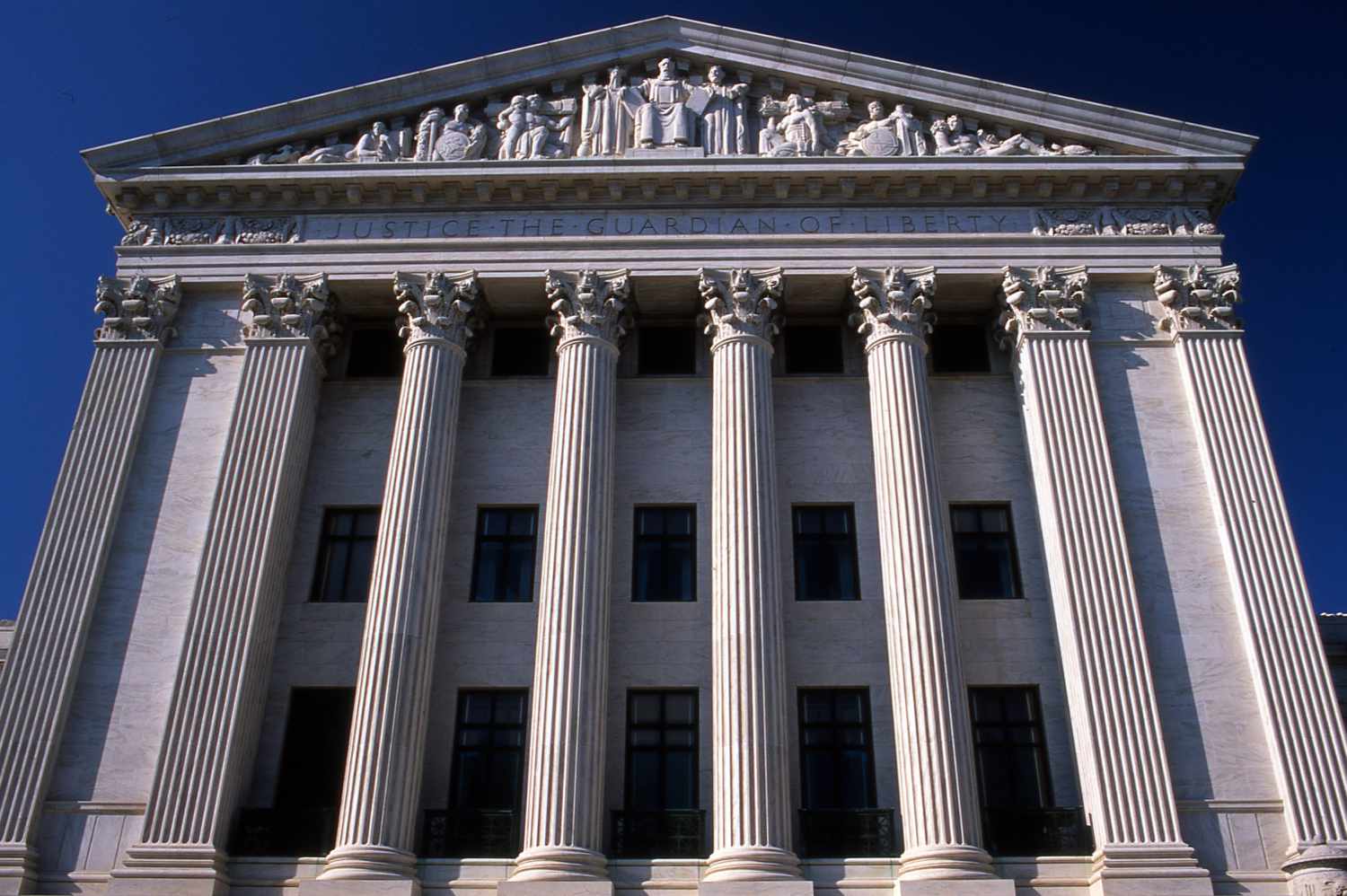
The vote breakdown matters because it shows how the justices lined up on Trump’s January 2025 restrictions, and how broad the coalition was that moved to stop them.
- Chief Justice John Roberts voted to block the order, joined by Justice Amy Coney Barrett and the Court’s three liberal justices.
- Justice Brett Kavanaugh also voted to block the new restrictions, but said he disagreed with the majority opinion.
- Justices Clarence Thomas, Samuel Alito, and Neil Gorsuch sided with the president.
Roberts wrote: “The trouble is that there is scant evidence for this dramatically revisionist view.”
As a matter of civics analysis, that language is often read as a sign the majority viewed the underlying theory as a major departure, not merely a drafting dispute about how the executive order was written.
Trump turns to Congress
After losing at the Court, Trump tried to pivot the battleground from executive power to legislative power. He urged lawmakers to begin immediately, calling for Congress to start the process “today” to end birthright citizenship, describing it as “expensive and unfair to our country.” He promised: “They will have my Complete and Total Support!”
And then came the constitutional shortcut: Trump insisted that “No long and unwieldy Constitutional Amendment is necessary!”
Here is the potential snag. The Supreme Court has already read the Fourteenth Amendment as guaranteeing birthright citizenship in the relevant circumstances. As a practical matter, a law that tried to narrow that rule anyway would be expected to face immediate constitutional challenges, with courts asking whether Congress can legislate around a constitutional holding rather than change the Constitution or persuade a future Court to reinterpret it.
Congress can clarify ambiguous statutes. It can write immigration laws. It can fund enforcement. It can define terms within constitutional bounds. But if the operative rule is treated as a constitutional guarantee, ordinary legislation is not a guaranteed escape hatch. It becomes a new test case.
Why some want an amendment
The reaction on the right split into two camps: those who want to keep fighting by ordinary politics, and those who believe the Court’s ruling leaves only one legitimate route.
Kevin Roberts of the Heritage Foundation called the decision a “tremendous betrayal of the republic,” arguing that “Universal birthright citizenship” is “a distortion that was never the meaning or intention of the 14th Amendment.” He concluded: “It is time for a constitutional amendment to correct this gross injustice.”
Sen. Mike Lee put it even more bluntly: “we’re going to need a constitutional amendment.” Florida Gov. Ron DeSantis similarly argued that either an amendment or a future Supreme Court reversal would be required, calling the ruling a “major defeat.” DeSantis emphasized that this was “not a decision on procedural grounds,” but “a substantive decision that says the 14th amendment requires citizenship” for those born to, among others, “birth tourists or those unlawfully present in the country.”
As analysis, those responses track a basic point about constitutional change: if the Court’s decision is understood as constitutionalizing the rule, the main routes left are to change the constitutional text through amendment or to change the Court’s reading through future cases.
Democrats respond
Democrats celebrated the decision as a straightforward enforcement of constitutional clarity.
Sen. Adam Schiff wrote: “Birthright citizenship has never been up for debate. The Constitution is clear that anyone born in the United States is an American citizen.” He called Trump’s attempt to end it “a bridge too far for even this partisan Supreme Court,” and described the ruling as another defeat for “efforts to rewrite the Constitution to give it even more power over American life.”
Rep. Jasmine Crockett attacked the underlying premise of using presidential power to reshape constitutional meaning: “The President took an oath to uphold the Constitution — not rewrite it whenever it doesn’t serve him.” She added: “Newsflash, Donald: We live in a democracy, not a dictatorship.”
As a civics point, that framing gestures at something textbooks sometimes smooth over: separation of powers is not mainly about good manners between branches. It is about blocking any one branch from unilaterally redefining the people’s charter.
The 14th Amendment backdrop
The birthright citizenship debate is often marketed as an immigration argument. But constitutionally, it is also a fight over how we read the Reconstruction Amendments and what we think they were designed to prevent.
The Fourteenth Amendment’s Citizenship Clause was written in the aftermath of slavery and the Black Codes, in a country that had just witnessed states try to decide, by local preference, who counted as a full member of the national community. Its most famous early purpose was to lock in the citizenship of formerly enslaved people and prevent states from demoting them back into a legal shadowland.
That history does not automatically answer every modern edge case. But it does help explain why courts often treat birthright citizenship as a constitutional baseline rather than a policy dial.
Why change is slow
It can be tempting to read this episode as a simple sequence: the president acted, the Court blocked him, the president told Congress to fix it.
In constitutional terms, the sequence is the lesson.
- The executive can enforce the law, but it cannot amend the Constitution by decree.
- Congress can legislate broadly, but legislation that collides with a constitutional rule recognized by the Court is likely to be struck down unless the Court changes its interpretation.
- The judiciary interprets the Constitution in concrete cases, and when it announces a constitutional rule, the other branches generally have to operate within that rule unless and until the Court reverses itself or the Constitution is amended.
This is not a design flaw. The Framers built a federal government that is supposed to be slow to change its foundational commitments. When a proposed change touches constitutional identity, friction is the feature.
What happens next
Trump has now publicly staked out a position that Congress can end birthright citizenship without an amendment. Several prominent allies and Republican officials are, at minimum, skeptical, insisting that a constitutional amendment or future Supreme Court reversal would be necessary.
That creates three plausible paths:
- Legislation as messaging: Congress passes a bill that tests the Court’s ruling or tries to redraw the lines administratively, knowing litigation is likely.
- An amendment campaign: Politically difficult, procedurally demanding, and therefore revealing of how deep support really is.
- A long game on the Court: A familiar modern strategy in constitutional conflicts, aiming for future cases and future justices.
Whatever route is chosen, the near-term reality is uncomfortable for anyone hoping for a quick fix. After a constitutional ruling, the path to change typically runs through amendment politics or a sustained effort to persuade a future Court to read the same words differently.
A final civic question
In a separate Truth Social post, Trump appeared to sarcastically congratulate Chinese President Xi Jinping “and the Great Country of China, on their massive Birthright Citizenship WIN!” That jab tries to make a constitutional guarantee sound like a concession to foreign rivals.
But birthright citizenship is not primarily a gift to outsiders. It is a rule about the kind of country we are willing to be on our own soil.
The enduring question is not only whether America should keep the Fourteenth Amendment’s citizenship promise as the Court has described it. The deeper question is who gets to decide what that promise means: a president acting alone, a Congress acting by statute, or the people acting through the Constitution itself.