
Texas has been litigating its post-2020 election rules for years, and the latest flashpoint is familiar: who sets the rules for voting, what counts as a permissible anti-fraud safeguard, and when federal courts can step in to stop a state from running its elections the way it chooses.
Takeaway: In La Unión del Pueblo Entero v. Abbott, multiple challenges to Texas Senate Bill 1 (SB 1), the state’s 2021 election law, have produced a long series of rulings in both the district court and the U.S. Court of Appeals for the Fifth Circuit. While the litigation continues, the most immediate, on-the-ground issues for many voters remain practical ones: mail-ballot ID-number matching, the notice-and-cure process for certain defects, and the rules governing voter assistance.
Litigation status (high level): As of August 2024, key claims remained pending in LUPE v. Abbott in federal court, and much of SB 1 remained in effect, subject to any controlling court orders (including election-specific relief and any stays pending appeal). For the most current posture, consult the case docket and the most recent orders, plus current guidance from the Texas Secretary of State and your county elections office.
What this article covers: (1) what SB 1 changed for mail voting and voter assistance, (2) why courts have been asked to block parts of SB 1 while lawsuits proceed, and (3) how Texans can avoid common compliance pitfalls, especially ID-number mismatches on mail-ballot paperwork.
Join the Discussion
Mail voting basics
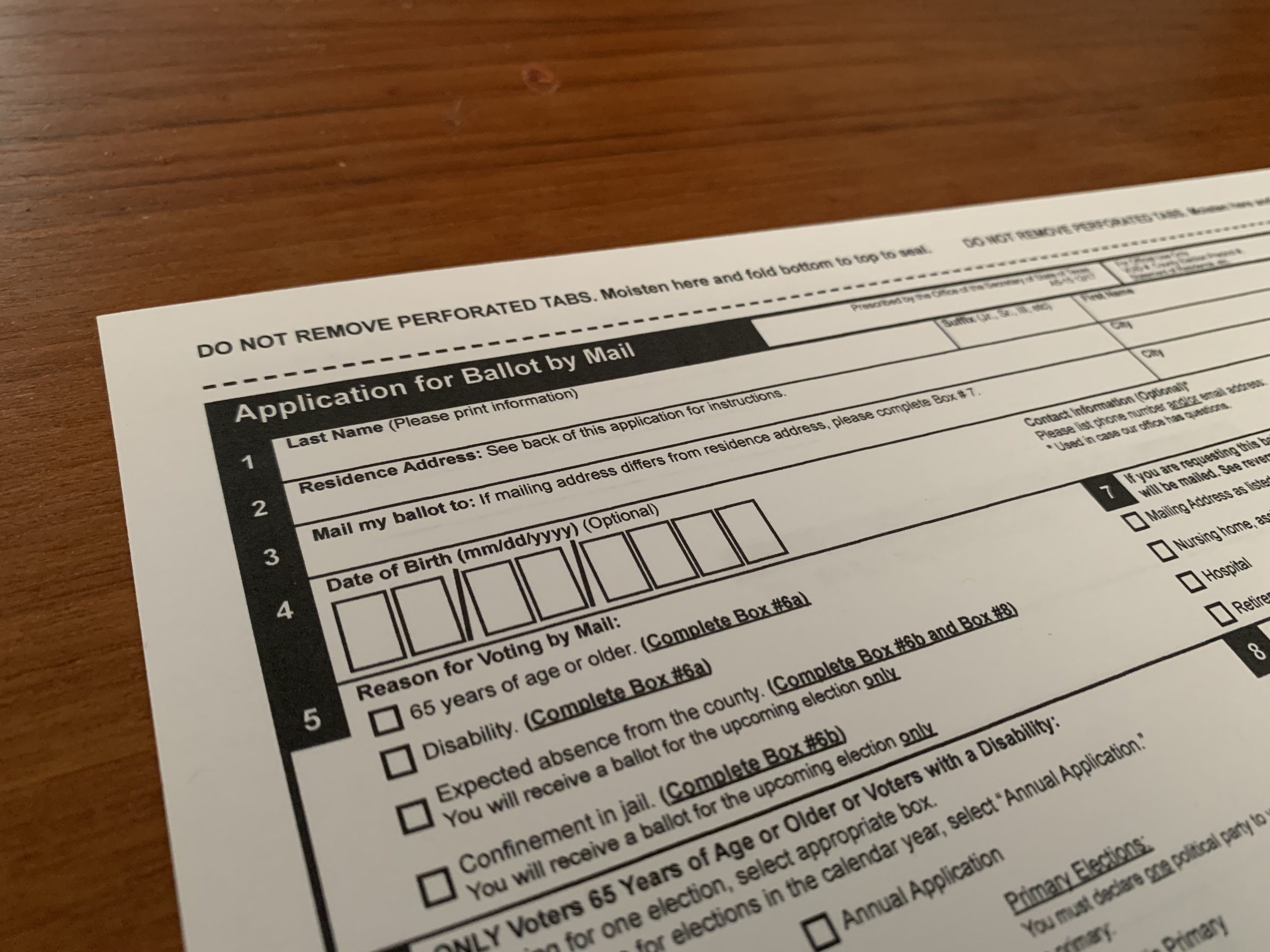
Texas does not offer no-excuse vote by mail. In general, you must qualify to vote by mail under Texas law, including by being:
- Age 65 or older, or
- Disabled, or
- Out of the county during the voting period and on Election Day, or
- In jail but otherwise eligible.
Eligibility details and forms can change, so confirm your status and deadlines with the Texas Secretary of State and your county.
What SB 1 changed
SB 1 is Texas’s 2021 omnibus election law. It covers much more than mail ballots, but the provisions that generate the most confusion are the ones that changed how Texans must identify themselves when they apply to vote by mail and when they return a mail ballot.
Mail ballot ID number
Under SB 1, a vote-by-mail application and the returned carrier envelope must include an identifying number that election officials can compare to the voter’s registration record. In practice, Texas voters are asked to provide one of the following numeric identifiers:
- Texas driver license number, or
- Texas personal ID card number, or
- Last four digits of your Social Security number (SSN4).
Important detail: The Election Code uses an “as applicable” structure. The safest plain-English takeaway for voters is still this: use the same type of number that is already associated with your voter registration record, and use it consistently on both the application and the carrier envelope. If your county has only SSN4 on file for you, writing a driver license number on your mail-ballot materials can trigger a mismatch. If your county has a driver license or personal ID number on file, writing SSN4 can do the same.
Statutes: Texas Election Code § 84.002(a)(1-a) (application to vote by mail must include an ID number, as applicable) and § 86.002(g) (carrier envelope must include an ID number, as applicable, for comparison to the voter’s registration record by the signature verification committee or early voting ballot board).
EVBB and SVC
Two county bodies commonly come up in this process:
- EVBB: the Early Voting Ballot Board, which reviews and counts certain early voting ballots, including many mail ballots.
- SVC: the Signature Verification Committee, which may be used in some counties to evaluate carrier envelope signatures and related requirements.
Depending on your county, either group (working with the early voting clerk) can be involved in reviewing mail-ballot paperwork, including whether an ID number matches what is on file.
EIC and mail voting
Election Identification Certificates (EICs) are issued by Texas for in-person photo ID purposes. For mail voting under SB 1, the key point is simpler: an EIC is not one of the numeric identifiers used for mail-ballot ID-number matching.
Mail-ballot paperwork is keyed to the identifiers listed in the Election Code (Texas driver license or personal ID number or the last four digits of your SSN). So do not assume an EIC will fix a mail-ballot ID-number mismatch. Some voters who rely on an EIC for in-person voting may still have their registration record associated with SSN4, an older identifier, or an ID number that election officials cannot match to what the voter writes on the mail-ballot paperwork.
If you plan to vote by mail, the safest move is to use the same identifier type your county has on your voter file for mail-ballot matching, and use that same type consistently on both the application and the carrier envelope.
Why mismatches matter
SB 1’s practical impact often turns on clerical mismatches. A voter might have registered years ago using SSN4, then later tries to use a driver license number on vote-by-mail paperwork. If that driver license number is not linked to the voter’s registration record, election officials may flag the application or the carrier envelope.
Texas law provides procedures intended to let voters fix certain defects, but the system is built around a premise that is easy to state and easy to trip over: the number you write down has to match what is on your voter record.
How to check what is on file
Because matching is tied to what is on your voter record, checking early helps.
- Use the Texas Secretary of State portal: Start at VoteTexas.gov (the SOS voter lookup). Review your registration status and details.
- If the linked ID type is not clear: Call your county voter registrar or elections administrator and ask: “Which ID type is associated with my voter registration for mail-ballot ID-number matching, Texas DL or Texas ID or SSN4?”
- Update if needed: If your county says the record does not reflect the identifier you plan to use, ask what steps are required to update your voter registration record and what timeline applies before your election.
What courts have been doing
Election litigation often involves trial-court orders that block parts of a law while the case proceeds. Appellate courts sometimes narrow or pause that relief. That does not necessarily mean the law is wise or unwise. It means the challengers did not satisfy the legal standard required to keep provisions blocked at that moment, under the claims and record presented.
The SB 1 litigation has generated multiple orders over time, including injunction-stage decisions, stays, and rulings that turn on jurisdiction and procedural posture. Because enforceability can turn on which order is currently in effect, voters should rely on Texas Secretary of State guidance, their county elections office, and the current court docket for the specific order now controlling their election.
What changes on the ground
Even without a single ruling that settles everything, the litigation has repeatedly focused on a few practical pressure points. These are the areas that tend to drive real-world rules for voters while cases move through the courts:
- Mail voting ID-number requirements: Whether SB 1’s ID-number fields and matching mechanics can be enforced as written, including Texas Election Code § 84.002(a)(1-a) and § 86.002(g).
- Rejection and notice-and-cure framework: How counties must handle missing or non-matching ID information, including the notice-and-cure process in Chapter 87, such as Texas Election Code § 87.0271.
- Voter assistance requirements: How Texas may regulate assistance without crossing federal protections, including Voting Rights Act Section 208 and disability-access statutes.
Operational bottom line: Use current SOS forms, follow your county’s posted procedures, and treat any defect notice as time-sensitive. If a binding court order changes enforceable rules for your election, counties and the SOS generally update forms, instructions, and cure steps accordingly.
What ID you need
For most mail voters, the safest approach is consistency: use the same category of ID number on your vote-by-mail application and on your returned ballot materials, and make sure it is the ID type on your voter registration record.
Checklist
- Confirm what is on file. Use VoteTexas.gov and your county elections site. If it is not obvious which identifier is linked for mail-ballot matching, call and ask which ID type is associated with your record.
- Use one matching number on the application. Pick the ID type you know is linked to your record and enter it exactly.
- Use the same matching number on the carrier envelope. Do not switch ID types between the application and the return envelope unless you have confirmed that both are linked to your registration.
- Track and respond fast. If your county notifies you of a missing or mismatched number, follow the instructions promptly and meet the cure deadline.
Fixing problems
Texas provides cure procedures for certain vote-by-mail issues, but the rules and deadlines depend on what went wrong. Two distinctions matter:
- Application defects (problems with the application to vote by mail), versus
- Ballot defects (problems with the returned ballot’s carrier envelope, including missing or mismatched ID number information).
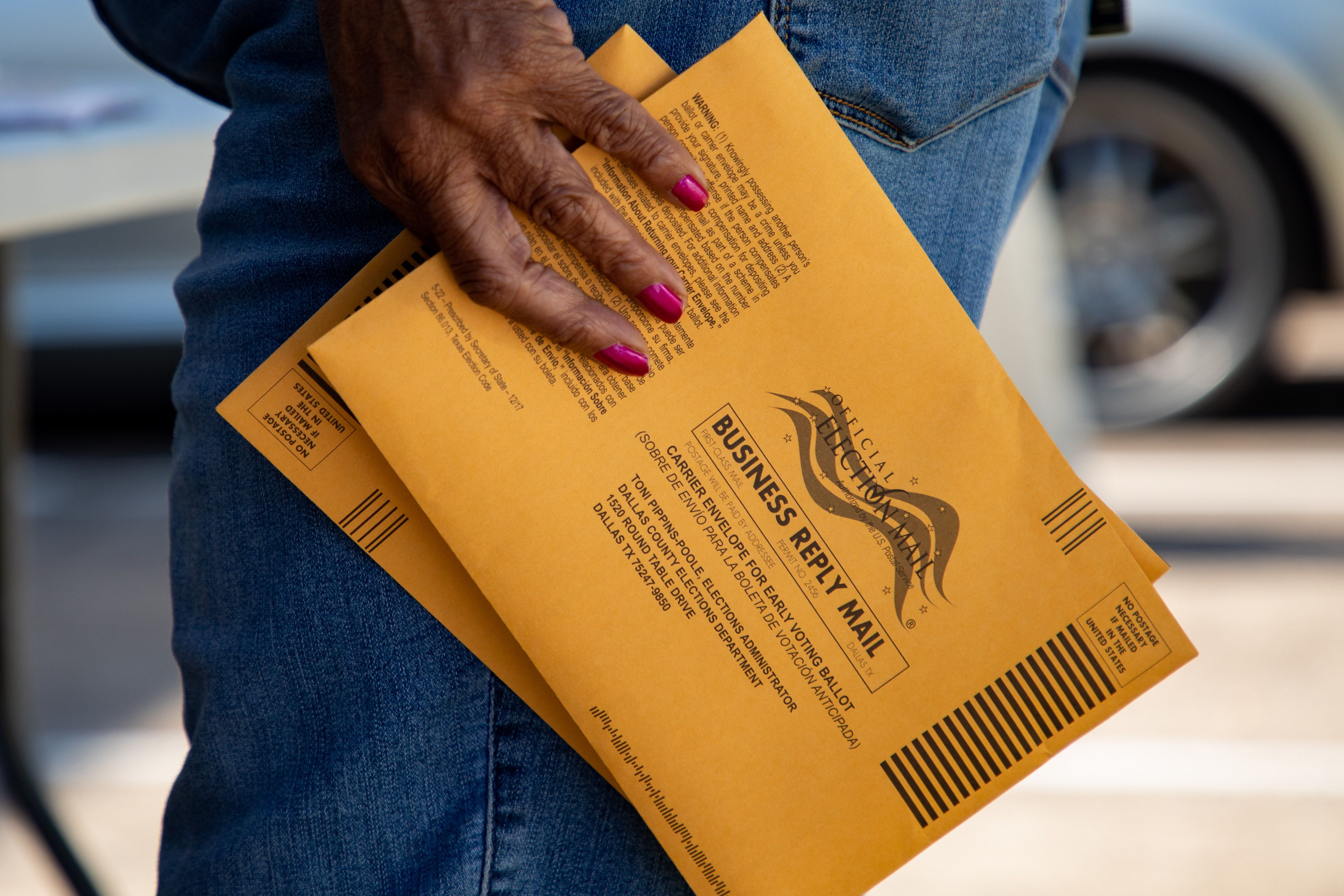
Ballot (carrier envelope) cure in plain English: If your returned mail ballot is flagged because the carrier envelope is missing an ID number or the number does not match what is on your voter record, Texas law provides a notice-and-cure (corrective action) procedure administered through the early voting clerk and the EVBB or SVC. This is governed by Texas Election Code § 87.0271 and related provisions in Chapter 87.
Baseline statutory deadline: Under § 87.0271, the cure process runs through the voter’s local early voting clerk and must generally be completed no later than the sixth day after Election Day (unless the notice you receive sets an earlier practical deadline based on when the defect is discovered and processed). Always follow the specific instructions in your county’s notice and do not wait.
How cure is submitted: Many counties direct voters to cure through a county cure portal (an online tool run by the county or the state), or to cure in person with the early voting clerk, or by another method described in the notice. Use only the method your county directs for your specific defect and keep confirmation records if you submit online.
Application problems: If the problem is with your application to vote by mail, the remedy is usually different. Often the practical fix is to submit a corrected application promptly, or vote in person if you remain eligible and time allows. Your county elections office can tell you what remedy applies and what deadlines still allow a mail ballot to be issued.
Voter assistance rules
SB 1 also tightens rules around voter assistance, including assistance tied to mail ballots. States can regulate assistance to deter coercion and improper influence, but federal statutes and constitutional protections still matter, particularly when regulation burdens voters with disabilities or limited English proficiency.
What SB 1 requires
SB 1’s assistance provisions are detailed. The requirements that most often affect real voters and well-meaning helpers include the following categories of rules:
- Disclosures and attestations. When a voter receives assistance in completing a ballot or certain election documents, Texas law requires the assistant to provide identifying information and make specified statements about the assistance. See Texas Election Code § 64.034 (assistant’s name and address, relationship, and oath requirements, as applicable) and § 64.036 (criminal offenses and unlawful assistance conduct).
- Limits on conduct. Texas law restricts assistance that amounts to pressuring, intimidating, or coercing a voter, and it prohibits an assistant from marking a ballot in a way that does not reflect the voter’s directions. See Texas Election Code § 64.036.
- Handling and return rules. SB 1 tightened rules governing who may possess or return certain election materials, especially where “ballot harvesting” concerns are alleged. Depending on the conduct, relevant provisions can include Texas Election Code § 86.006 (delivery of marked ballot and carrier envelope and related restrictions) and Chapter 64 for in-person assistance rules.
- Penalties and compliance risk. SB 1 increased potential criminal exposure for certain election-related conduct, which is why helpers should follow the Texas Secretary of State’s current guidance and county instructions closely.
Federal law is part of the backdrop. Section 208 of the Voting Rights Act protects a voter’s ability to receive assistance from a person of the voter’s choice, with limited exceptions. A commonly cited exception is that the assister cannot be the voter’s employer or an agent of the employer, or an officer or agent of the voter’s union. The Americans with Disabilities Act and the Rehabilitation Act can also matter where election rules impede access for voters with disabilities. Those protections are often central to assistance litigation, including challenges to SB 1.
Why states control elections
This dispute lives inside a constitutional design choice that many Americans only encounter when there is a lawsuit.
State authority
The Constitution largely assigns election administration to the states. Article I, Section 4, often called the Elections Clause, says the “Times, Places and Manner” of congressional elections are set by state legislatures, although Congress can alter those regulations.
For presidential elections, Article II gives states the power to direct the manner of appointing electors, again subject to limits imposed by the Constitution and federal law.
Federal limits
States do not get unlimited discretion. Their rules must still comply with:
- The Fourteenth Amendment (equal protection and due process constraints on state election rules)
- The Fifteenth, Nineteenth, Twenty-Fourth, and Twenty-Sixth Amendments (limits on discrimination in voting and poll taxes)
- Federal voting statutes, including the Voting Rights Act and laws that protect access for voters with disabilities
That is the tension in one sentence: states run elections, but they run them inside federal guardrails.
How courts review rules
Election cases rarely turn on a single “right to vote” clause. Instead, challenges usually argue that a rule burdens voting in a way that violates constitutional protections or federal statutes.
The usual test
In constitutional challenges to election administration rules, courts often apply the Anderson-Burdick framework, a burden-versus-justification approach. As the burden on voting grows, the state generally needs a stronger justification and a tighter fit. When the burden is modest, courts generally give states more room to regulate for administrative order and fraud prevention.
Mail-ballot ID-number rules illustrate the push and pull. States argue that matching requirements help confirm the ballot is tied to the registered voter. Challengers argue that mismatch systems can reject eligible voters for paperwork errors, and that the burden may fall unevenly on certain groups. Whether a particular system is lawful depends on details like the matching rule, notice, cure procedures, and how errors are handled in practice.
Why timing matters
Courts also often consider the risk of late-breaking changes to election rules close to an election, a concern frequently discussed under the Purcell principle. It does not resolve the merits by itself, but it can affect whether courts allow an injunction to reshape procedures midstream.
Who is most affected
SB 1’s mail-voting rules can hit hardest when a voter is eligible to vote by mail but is more likely to encounter paperwork friction. That can include:
- Older Texans and voters with disabilities who vote by mail regularly and may rely on others for limited assistance
- Voters who registered long ago and are unsure which identifier they used, especially if they later obtained a Texas driver license or state ID
- Voters with recent updates to their registration records, including name changes or data-entry corrections
- First-time mail voters who have not previously navigated the application, carrier envelope, and tracking steps
What Texas voters should do
If you vote by mail in Texas, the most durable advice is procedural rather than political:
- Confirm your voter file early, including which ID type is linked to your record for mail-ballot matching.
- Use one consistent ID number across your application and ballot materials, and make sure it matches what election officials have on your record.
- Track your mail ballot through county tools where available, and read every notice you receive.
- If you assist a voter, follow current Texas Secretary of State guidance and your county’s instructions so your help does not accidentally create a compliance problem.
Cases like this are not only about ID numbers on envelopes. They are about the boundary line between a state’s authority to structure its elections and the federal courts’ role in deciding when those structures violate higher law.
Quick FAQ
Does the Constitution require mail voting?
No. Vote by mail is a policy choice states can expand or restrict, so long as they still comply with constitutional protections and federal statutes.
Is mail ballot voter ID automatically unconstitutional?
Not automatically. Courts generally allow identification requirements if they are not unduly burdensome and are justified by legitimate state interests. Outcomes depend on details like matching rules, notice, cure procedures, and how errors are handled.
Can Congress override Texas rules?
For federal elections, Congress has authority under the Elections Clause to regulate parts of the “Times, Places and Manner” of congressional elections. That power has limits and is politically contested, but it exists.