
When people argue about mail-in voting, they usually argue about security or access. But the fight underneath those words is more mechanical than moral: who gets to set the deadline for a ballot that travels through the mail.
In recent years, some Republicans, including allies of President Donald Trump, have floated federal legislation to require mail ballots to be received by Election Day, often pointing to Florida as a model. That sounds like a simple national standard. Constitutionally, it raises a deceptively hard question: can Congress impose a single receipt deadline nationwide, or do states get the final word?
Join the Discussion
The short constitutional answer
Yes, Congress likely can require that mail ballots for federal elections be received by Election Day, because the Constitution gives Congress broad authority to regulate the “Times, Places and Manner” of congressional elections.
But three caveats matter in practice:
- It is strongest for House and Senate elections. Presidential elections have a different constitutional structure because states appoint electors, and Congress sets the day for choosing them.
- Congress cannot rewrite state rules for purely state offices. A federal receipt deadline would not automatically control a governor’s race or a state legislature race, unless a state chooses to align them.
- Even a valid rule can be challenged if it burdens protected voting rights in ways courts find unconstitutional, or if it conflicts with other federal statutes.
Who runs elections?
Americans are told “states run elections.” That is mostly true operationally. Counties hire poll workers, print ballots, verify signatures, and tabulate results. But the Constitution does not leave the rules entirely to the states.
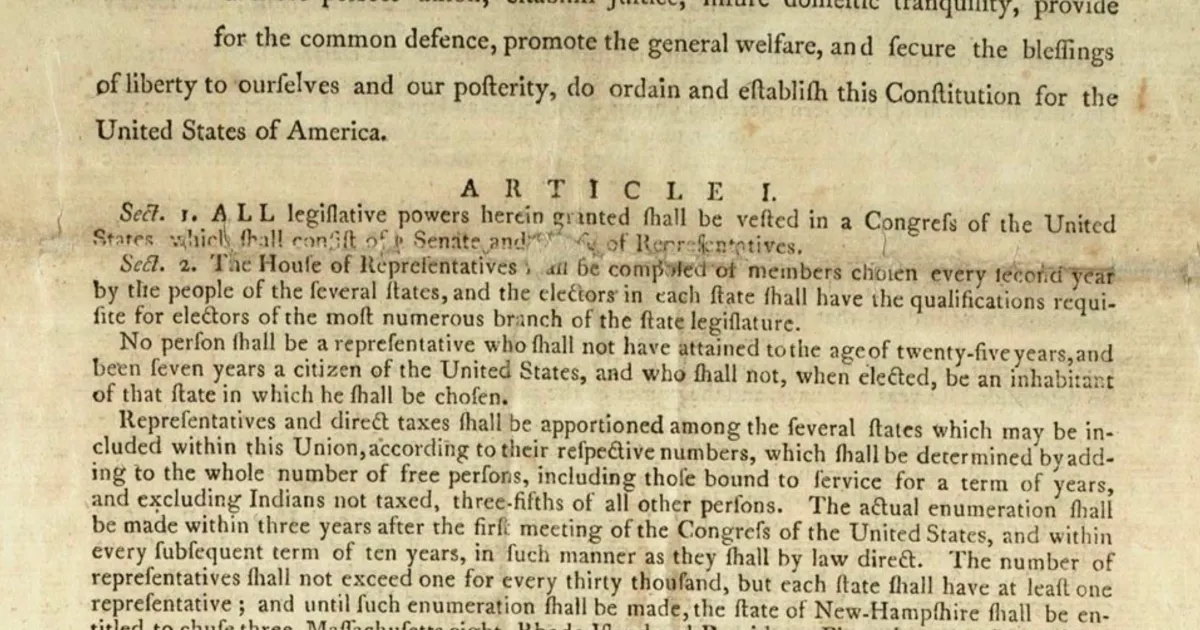
For congressional elections, the key text is the Elections Clause in Article I, Section 4:
“The Times, Places and Manner of holding Elections for Senators and Representatives, shall be prescribed in each State by the Legislature thereof; but the Congress may at any time by Law make or alter such Regulations…”
That last phrase is the hinge. States go first. Congress can override. In Supreme Court cases describing this power, the Court has repeatedly treated Congress’s authority here as broad and capable of preempting contrary state rules for federal races.
Is a receipt deadline a “manner” rule?
Almost certainly. Courts have treated “manner” as a wide category that includes the procedural nuts and bolts of casting and counting ballots, including rules that define what counts as a timely vote.
A rule that says “count only ballots received by Election Day” is not abstract theory. It is a deadline that determines whether a mailed ballot is valid in a federal election. That fits comfortably inside “manner.”
This is also why states can set these rules now. If a state chooses an Election Day receipt requirement, it is regulating the manner of its own elections. If Congress chooses the same rule for federal races, it is regulating the manner of federal elections in every state, and it generally does so through ordinary preemption: the federal rule controls where it conflicts with state law for the covered federal contests.
What about presidential elections?
Presidential elections are where people talk past each other, because the Constitution allocates authority differently.
Article II says each state appoints presidential electors “in such Manner as the Legislature thereof may direct.” But Congress also has explicit authority to set the day on which electors are chosen. Federal law currently sets a uniform Election Day for president and Congress.
So a nationwide receipt deadline tied to Election Day has a clearer constitutional hook for the presidential contest when it is framed as an incident of Congress’s power to set the time of choosing electors, plus Congress’s ability to structure federal election timing through statutes that states must administer. That is a less direct fit than Article I, Section 4 is for House and Senate rules, and it is one reason the presidential side would attract closer briefing and more litigation risk.
One ballot, multiple races
Here is the practical problem that turns a tidy constitutional sentence into litigation.
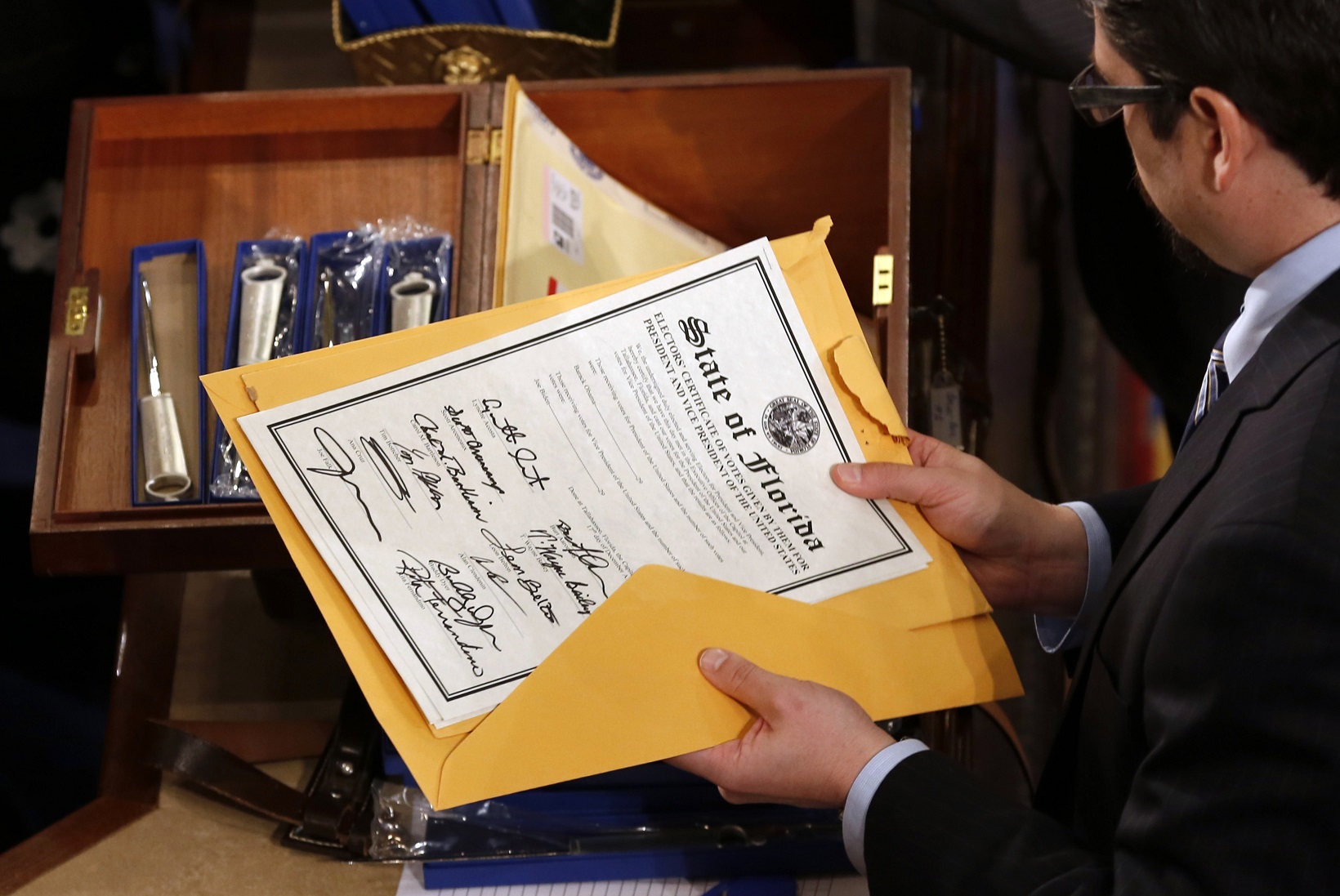
In most states, voters receive one ballot that includes federal offices (House, Senate, president) and state offices (governor, attorney general, state legislature). If Congress imposes a receipt deadline for federal races only, states face a choice:
- Align state deadlines with the federal deadline for simplicity, which would effectively change state elections too, even if Congress did not directly control them.
- Split the counting rules, meaning a ballot might be counted for governor but not for Congress, depending on timing and state law.
One concrete version: a voter mails a ballot on Monday, it arrives Thursday after Election Day, and the state’s law treats a timely postmark as enough for state offices. Under a federal receipt-by-Election-Day rule, that same paper could be counted for governor but rejected for the U.S. House.
Both options are administratively messy. That messiness is not automatically unconstitutional, but it becomes fertile ground for lawsuits arguing unequal treatment, voter confusion, or burdens on the right to vote.
How courts would review challenges
If Congress passed a national receipt-by-Election-Day rule, the first wave of challenges would likely focus on authority, and the second wave would focus on burden.
1) Authority: does Congress have power here?
For House and Senate elections, the answer is usually “yes” unless Congress is doing something the Constitution forbids. The Supreme Court has repeatedly described Congress’s Elections Clause power in sweeping terms, including the ability to displace state procedural rules for federal races.
That does not mean unlimited. But a receipt deadline is exactly the kind of procedural regulation the clause contemplates.
2) Burden: does it unconstitutionally burden voting rights?
Even if Congress has power, election rules can still be challenged under the Constitution, especially under the Fourteenth Amendment. Courts often evaluate these disputes using what election lawyers call the Anderson-Burdick framework, which weighs a rule’s burdens on voters against the government’s interests in orderly administration and election integrity.
Receipt-by-Election-Day rules tend to generate predictable arguments on both sides:
- Burdens: mail delays, rural delivery gaps, overseas and military voters, voters with disabilities, and voters who reasonably rely on postmarks.
- Government interests: prompt results, uniformity, reduced disputes over postmarks, and clearer standards for counting.
Courts do not treat every inconvenience as unconstitutional. But they do look closely at whether rules are arbitrary, whether exceptions are warranted or constitutionally required in specific contexts, and whether the system provides reasonable opportunities to vote.
What federal statutes already do
Congress has not been shy about legislating in election administration before. Federal law already sets nationwide rules for the timing of federal Election Day, and Congress has also created protections for specific voters.
One especially relevant area is voting by military and overseas citizens under the Uniformed and Overseas Citizens Absentee Voting Act (UOCAVA). Among other requirements, UOCAVA generally pushes states to provide ballots far enough in advance to make return mail feasible. In practice, UOCAVA is closely associated with a 45-day transit window because federal law requires states to transmit absentee ballots to UOCAVA voters at least 45 days before a federal election (with limited exceptions), and many states pair that with extended receipt deadlines for these ballots.
A blanket receipt-by-Election-Day rule would have to be drafted carefully to avoid colliding with those protections, or it would need explicit accommodations so that the law does not become a trap for the voters Congress has already tried to protect.

Florida as a model
Pointing to Florida’s system is an argument from feasibility: if a large state can do it, others can too. Constitutionally, it is not the whole story.
Florida’s baseline rule for vote-by-mail ballots is straightforward: they generally must be received by 7 p.m. on Election Day. But even Florida operates with important timing nuances, particularly for certain military and overseas ballots governed by federal and state law. Any national “Florida-style” rule would need to be equally clear about what it does, and does not, change.
A national rule would also apply to states with very different:
- geography and mail logistics
- election infrastructure and staffing
- ballot volume
- state constitutional protections for voting
“It works there” is evidence. It is not proof that it imposes no meaningful burden everywhere else, especially for voters who depend on the mail as their only realistic method of voting.
Uniform rules vs local control
The Elections Clause is a built-in compromise. States run elections day-to-day, but Congress holds a trump card because federal elections are not purely local affairs. A House seat in Arizona and a House seat in New York both help form the same national legislature.
That is why Congress can standardize procedures when it believes national uniformity matters.
But every time Congress uses that power, it pulls against a real tradition of local control. The constitutional question is not whether that tension exists. It is whether Congress is acting within the powers the Constitution actually grants, and whether the resulting rule respects the constitutional rights that voters still carry into the voting booth, and into the mailbox.
Quick answers
Can Congress change mail voting rules two months before midterms?
Congress can pass election laws at any time, but implementation is the practical bottleneck. Courts also sometimes view last-minute election changes skeptically because they can confuse voters and administrators. Even a valid law can become a litigation magnet if it demands rapid changes.
Would the rule apply to state and local races?
Not automatically. Congress’s strongest authority is over federal elections. States could choose to harmonize their own deadlines to avoid running two systems.
What if my ballot is postmarked by Election Day but arrives later?
Under a pure receipt-by-Election-Day rule, that ballot would not count for the races covered by the federal requirement. Whether it counts for state offices would depend on your state’s separate rules, if any.
Does the Constitution guarantee mail voting?
No. Mail voting is a method states provide. The Constitution protects the right to vote against certain kinds of discrimination and unconstitutional burdens, but it does not require a specific voting method in every election.
Bottom line
If Congress tries to impose a nationwide rule requiring mail ballots to be received by Election Day, the Constitution gives it a strong argument under the Elections Clause, at least for congressional races, and the federal rule would generally preempt conflicting state rules for those federal contests.
The harder fights would come afterward: how the rule interacts with one-ballot elections that include state offices, how it fits with UOCAVA and other federal voting protections, whether the burdens on specific groups are legally acceptable under the Anderson-Burdick framework, and whether Congress built enough flexibility into the statute to handle the real-world fact that the U.S. mail does not move at the same speed in every county in America.