
Springfield, Ohio has become a kind of national looking glass. Not because it asked to be, and not because the people building lives there are doing anything remarkable in the headline sense. It is a looking glass because a Supreme Court ruling just turned a legal category into a trapdoor.
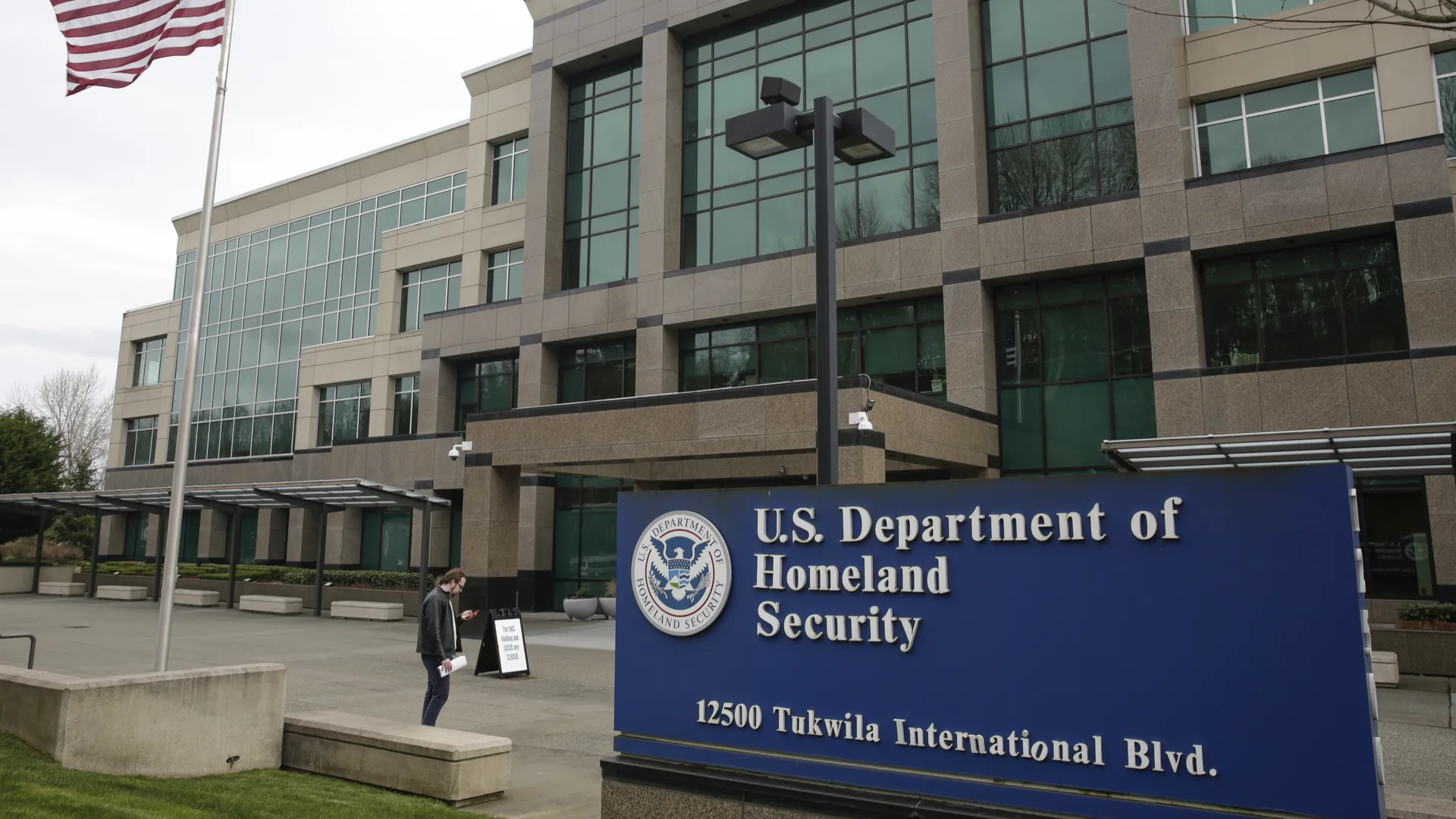
When the Court decided Mullin v. Doe by a 6–3 vote, it cleared the way for the Department of Homeland Security to cancel Temporary Protected Status (TPS) for Haitian and Syrian recipients. For many families, that single shift in paperwork meant something blunt and terrifying: in mere moments, hundreds of thousands of immigrants across the country became undocumented, and fears for mixed-citizenship families mounted.
Join the Discussion
TPS and the question of who gets a day in court
TPS is not amnesty. It is not citizenship. It is a temporary permission slip issued because sending people back to certain countries would be unsafe or unrealistic due to disaster, violence, or other extraordinary conditions.
That is the policy side. The constitutional side is harder, and it is where this story cuts.
Congress wrote the TPS statute to give the executive branch wide latitude. The Court’s majority leaned into that design, emphasizing language that bars judicial review of certain TPS determinations. Justice Samuel Alito wrote: “The TPS statute plainly bars consideration of respondents’ non-constitutional claims. It allows ‘no judicial review of any determination … with respect to the … termination of a TPS designation.’”
Pause on that phrase: no judicial review. We tell ourselves, as a civic bedtime story, that courts are where power goes to be restrained. But here the Court essentially said: not this time, not in this lane, not for these people.
It is a reminder that “rights” in America often depend on the legal box you are placed in before you ever open your mouth.
How this case got here
This did not begin with one ruling. Organizations representing Haitian TPS holders sued DHS in March 2025, after then-Homeland Security Secretary Kristi Noem first attempted to terminate TPS. Over the last year, federal courts undid Noem’s partial vacation of the legal status, which sought to revoke the Biden administration’s February 2026 extension and force recipients to return to Haiti in August 2025, and blocked the government from ending the program.
The Trump administration appealed the case to the Supreme Court in March, asking the justices to consider whether the TPS statute prevents courts from reviewing the secretary’s designation of status. The ruling was sweeping in scope and doubly crushing after counsel for the Haitian respondents asked the Court to dismiss the case due to newly discovered evidence they believed would support their equal protection claim.
What legal language looks like in a sanctuary
In Springfield, the ruling hit like a body blow. Chaos set in quickly among its roughly 15,000 TPS holders. People already exhausted by rumors, harassment, unemployment, housing insecurity, and food insecurity suddenly had to calculate what comes next when your legal status can vanish.
Vilès Dorsainvil, executive director of the Haitian Community Support Center in Springfield, put the grief into plain words during a virtual press conference Thursday morning. “Today was the saddest day since I’ve been here because, as a foreigner in this land, I expected what I knew about the U.S.,” he said. “I used to know a USA, where human dignity was valued — justice was valued — but it’s no longer this.”
Dorsainvil sat beside Pastor Carl Ruby in the sanctuary of Central Christian Church, shoulders slumped, arms crossed over his stomach, his gaze far away. “Coming from a country where it is not safe, and there will be some family separation, I expected the Supreme Court to take those into consideration and do a better ruling, but unfortunately, this is not the case,” he said.
This is not just sadness. It is a civic rupture. When people who followed the rules learn the rules can be revoked without meaningful court supervision, the lesson they absorb is not “law.” The lesson is precarity.

Unity in public, fear up close
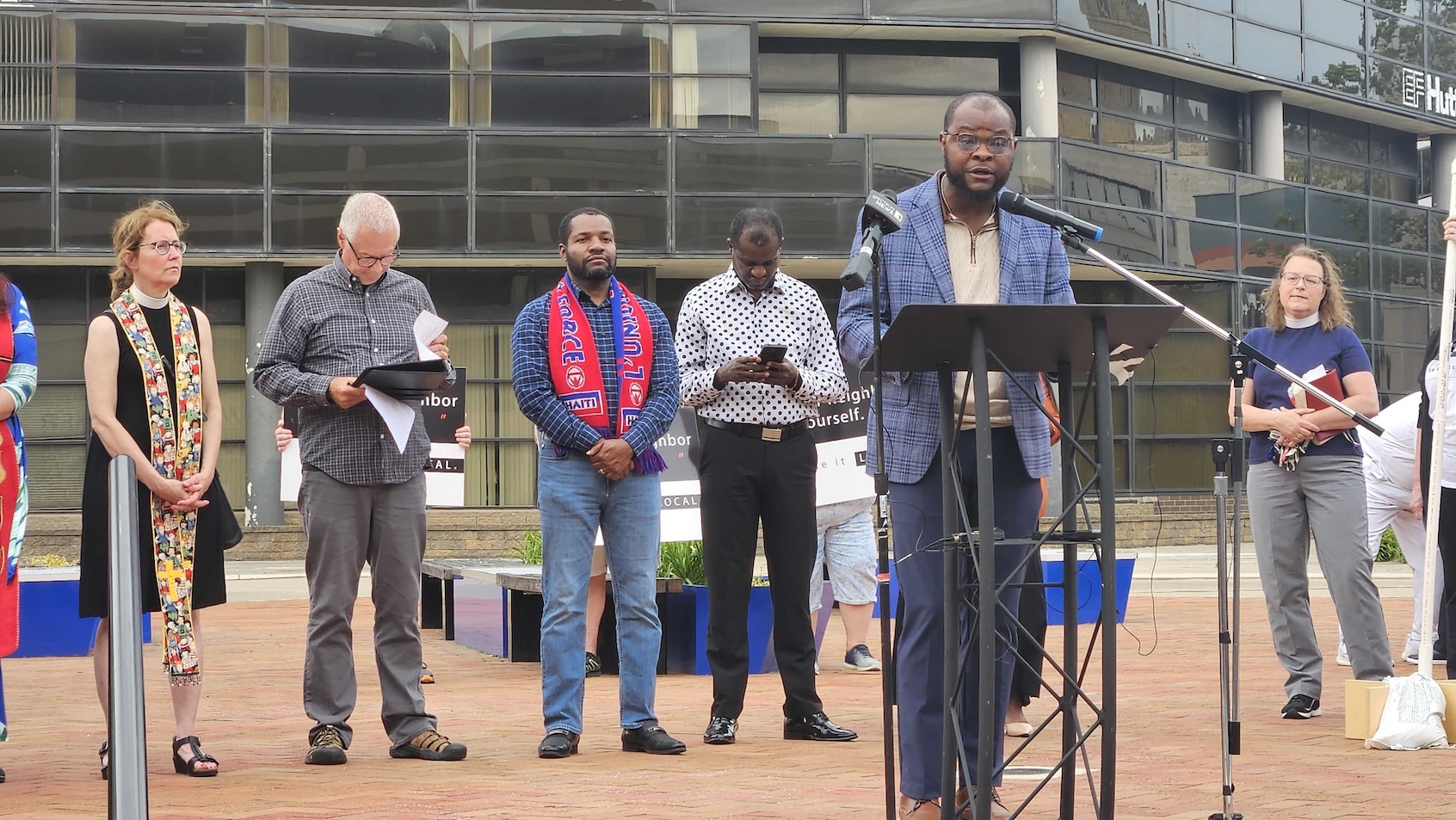
That evening, hundreds gathered in the stone courtyard outside Springfield City Hall around 6 p.m. They sang, prayed, held signs, and made a point that is easy to mock until you need it yourself: a community can decide it will not abandon its neighbors simply because the law shifted.
Pastor Carl Ruby, a leader in a local advocacy coalition, framed the moment as a moral conflict. “There’s a strong commitment in Springfield for the faith community to stand with Haitians who are at risk of deportation,” he said, explaining that the coalition’s name comes from the 92 times the Hebrew word “ger,” meaning foreigner, is mentioned in the Bible’s Old Testament. “We’ve had to think about the issue of providing sanctuary. When there’s a conflict between man’s laws and God’s laws, we have an obligation to side with God’s laws.”
And then there was the kind of fear that does not need a constitutional theory to be real. Margery Koveleski, a freelance interpreter, described a mother hearing the news and clinging to her baby. “This woman clung to her baby, and said, ‘I just had this baby. I’m still bleeding from my cesarean, and to say they will start deportation, will they rip my child away?’” Koveleski said. “She said, ‘I literally would commit suicide if they take me into detention and they take my child away.’”
Now, civics teacher in me has to ask the uncomfortable follow-up: what happens when Americans start treating constitutional outcomes as merely optional, depending on whether they fit their moral framework?
The honest answer is that this is not new. The United States has always been a place where conscience and law collide: abolitionists and the Fugitive Slave Act, civil rights marchers and local injunctions, war resisters and federal prosecutions. The question is whether we can admit the collision without pretending it is harmless.
The courthouse door narrows
Lawyers for Haitian TPS holders warned that the decision does not just change one program. It changes the relationship between immigrants and the judiciary. Geoff Pipoly, lead attorney for the Haitian respondents, said: “The new rule from the Supreme Court is that when it comes to TPS decisions, the administration, any executive branch agency, can break the law flagrantly, openly and make no secret of it, and the federal courts can’t stop it.”
You can disagree with that rhetoric and still recognize the structural worry underneath it: if Congress writes “no judicial review,” and the Court enforces it, the normal checks on arbitrary government action shrink. What remains are constitutional claims, political pressure, and whatever mercy an administration decides to show.
Justice Clarence Thomas, concurring, went further into the deeper philosophical dispute by claiming that “aliens” did not have federal protections under the 14th Amendment’s Equal Protection Clause.
This is where Springfield stops being a local story.
If equal protection is narrowed by status, not personhood, then equality becomes less of a principle and more of a membership benefit.
“Where are we going to send 300,000 Haitians?”
The policy debate over TPS often floats above the ground, as if the question is purely administrative: forms, dates, categories, enforcement priorities.
But people at the vigil insisted on the reality underneath, especially the conditions in Haiti that made TPS necessary in the first place.
Marc Joseph, who provides immigration and legal services through Catholic Charities Southwestern Ohio, recalled the horrors he and his family faced living in Haiti. “I don’t really understand why this decision come up because where are we going to send 300,000 Haitians?” he asked. “This situation in Haiti is still a reality.”
That number matters not only as a humanitarian concern but as a civics concern. When law detaches from logistics and human cost, it becomes easier to treat people as clutter to be cleared instead of families to be governed fairly.
What belonging looks like at City Hall
The vigil was not just symbolic. Organizers passed around cards for attendees to fill out, urging Ohio’s senators, Bernie Moreno and Jon Husted, to vote for SB 4814, which would designate TPS for Haitians through the end of President Trump’s term. That is politics as it is supposed to function: people petitioning elected officials, using the tools available when courts close the door.
A Springfield teacher, worried about repercussions, spoke about Haitian students carrying distress into the school day. Another attendee described plans for food drives and donations, anticipating that families could fall into crisis quickly.
This is where America’s lofty language gets its only real meaning. Not in a marble building. In whether a city chooses to treat neighbors as disposable.
Dorsainvil, addressing the crowd, tried to hold the community together with words that sounded like a thank-you and a warning at once: “Your compassion has reminded us of the very best of America,” he said. “You have welcomed your neighbors, spoken out against injustice, defended vulnerable families and refused to let hate and division have the final word.”
The question Springfield is forcing
Here is the question I would have put on the board for my seniors, and then made them sit in the discomfort:
If lawful presence can be granted and then effectively withdrawn with minimal court oversight, what does the Constitution actually promise to noncitizens who have built lives here in good faith?
Some readers will answer: it promises very little, and that is the point. Others will answer: it promises basic fairness because personhood, not paperwork, is what gives the Constitution legitimacy.
Springfield is living the argument in real time. The nation can pretend this is a niche immigration issue. Or it can admit the broader truth: a government that can make a class of people legally invisible on short notice is practicing a form of power that should unsettle anyone who takes constitutional limits seriously.