
When the Supreme Court narrows the ability of lower courts to block an immigration policy, many people assume that is the end of the story. But immigration cases often have a second chapter, because the legal theories can change even when the underlying human stakes do not.
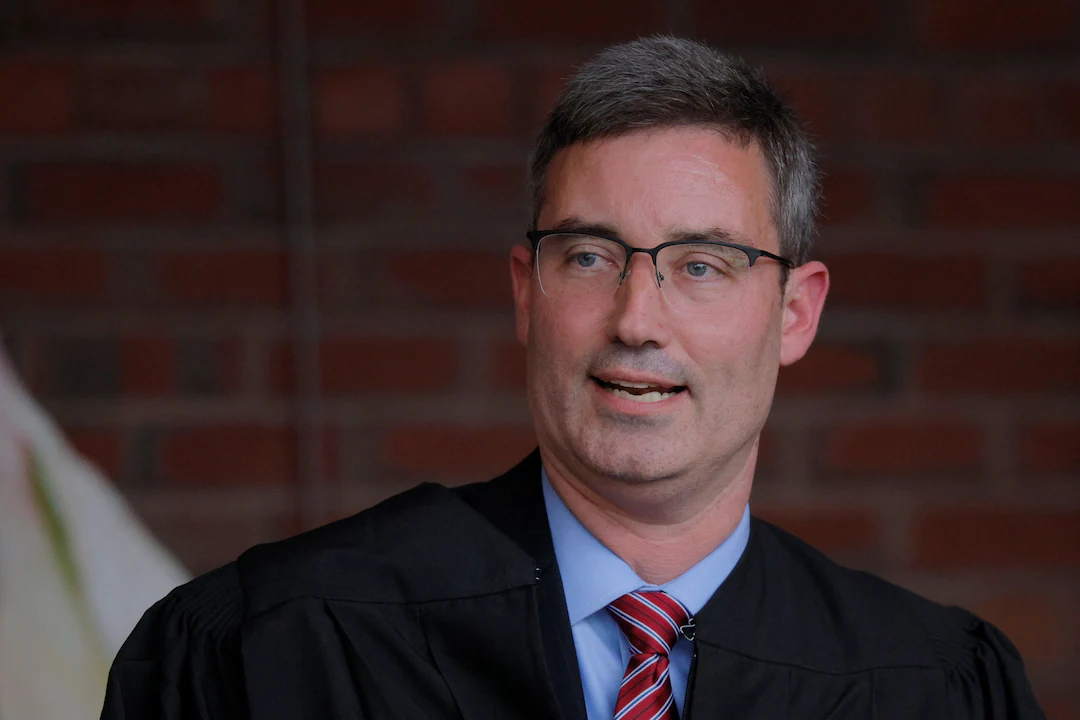
That is what we are seeing in Massachusetts, where U.S. District Judge Brian Murphy temporarily preserved Temporary Protected Status (TPS) protections for Ethiopian nationals after the Supreme Court’s recent TPS ruling. The justices held that most challenges under the Administrative Procedure Act (APA) are not the kind of lawsuits lower courts can hear in this context. Yet Judge Murphy still entered an administrative stay, giving the parties time to sort out whether different, constitutional claims can go forward.
Join the Discussion
What happened with Ethiopian TPS
TPS is a humanitarian program Congress created for people already in the United States who cannot safely return home because of conditions like war or major disasters. It does not create a direct path to citizenship, but it can provide work authorization and protection from removal while the designation remains in effect.
Ethiopians were granted TPS in 2022 after the federal government determined that armed conflict and a deepening humanitarian crisis made return unsafe. Then-DHS Secretary Alejandro Mayorkas cited ongoing armed conflict, widespread violence, human rights abuses, and food insecurity, among other reasons. The protections took effect on Dec. 12, 2022, and were later extended through Dec. 12, 2025. DHS estimated that about 26,700 Ethiopian nationals in the United States could qualify for TPS.
In December 2025, the Department of Homeland Security (DHS), led at the time by Secretary Kristi Noem, concluded that conditions no longer justified Ethiopia’s TPS designation and announced that it would terminate. DHS set a 60-day wind-down period, with protections scheduled to end on Feb. 13, 2026.
Litigation followed. Earlier this year, Judge Murphy postponed DHS’s termination of Ethiopia’s TPS designation, concluding that challengers were likely to succeed on claims that DHS did not follow the procedures Congress set out for ending TPS.
The Supreme Court’s June ruling
On June 25, the Supreme Court decided Mullin v. Doe by a 6–3 vote. The practical effect was to narrow what lower courts can do in TPS fights, especially when plaintiffs rely on the APA as their main tool for challenging DHS decisions to designate or terminate TPS.
This is an important separation-of-powers moment. The APA is the statute that often lets courts review whether agencies followed required procedures or acted arbitrarily. When the Supreme Court says that a particular kind of agency decision is not reviewable under the APA in the usual way, it changes the terrain for TPS lawsuits that were built primarily on that foundation.
But the Supreme Court’s ruling also left a door open. Even if APA-based challenges are largely blocked, the Court left open whether constitutional claims might still be litigated. That distinction is now doing much of the work in the lower courts.
Why a judge could still pause things
Judge Murphy’s latest move was an administrative stay, which is best understood as a short-term hold rather than a final determination that one side is right. In plain terms, it preserves the status quo while the court decides what claims are still legally viable after the Supreme Court’s decision.
That matters because the Ethiopian TPS challengers revised their complaint to focus on constitutional arguments after the Supreme Court’s ruling undercut the APA theory that had formed the backbone of their case. Murphy’s stay keeps TPS protections in place while he considers whether those amended claims can proceed and what, if any, relief is lawful.
In practice, the sequence often looks like this:
- The Supreme Court narrows one pathway (here, APA review).
- Plaintiffs re-plead under another pathway (here, constitutional claims).
- Lower courts manage the transition with temporary orders to avoid irreversible consequences before the legal questions are fully resolved.
A second Massachusetts stay
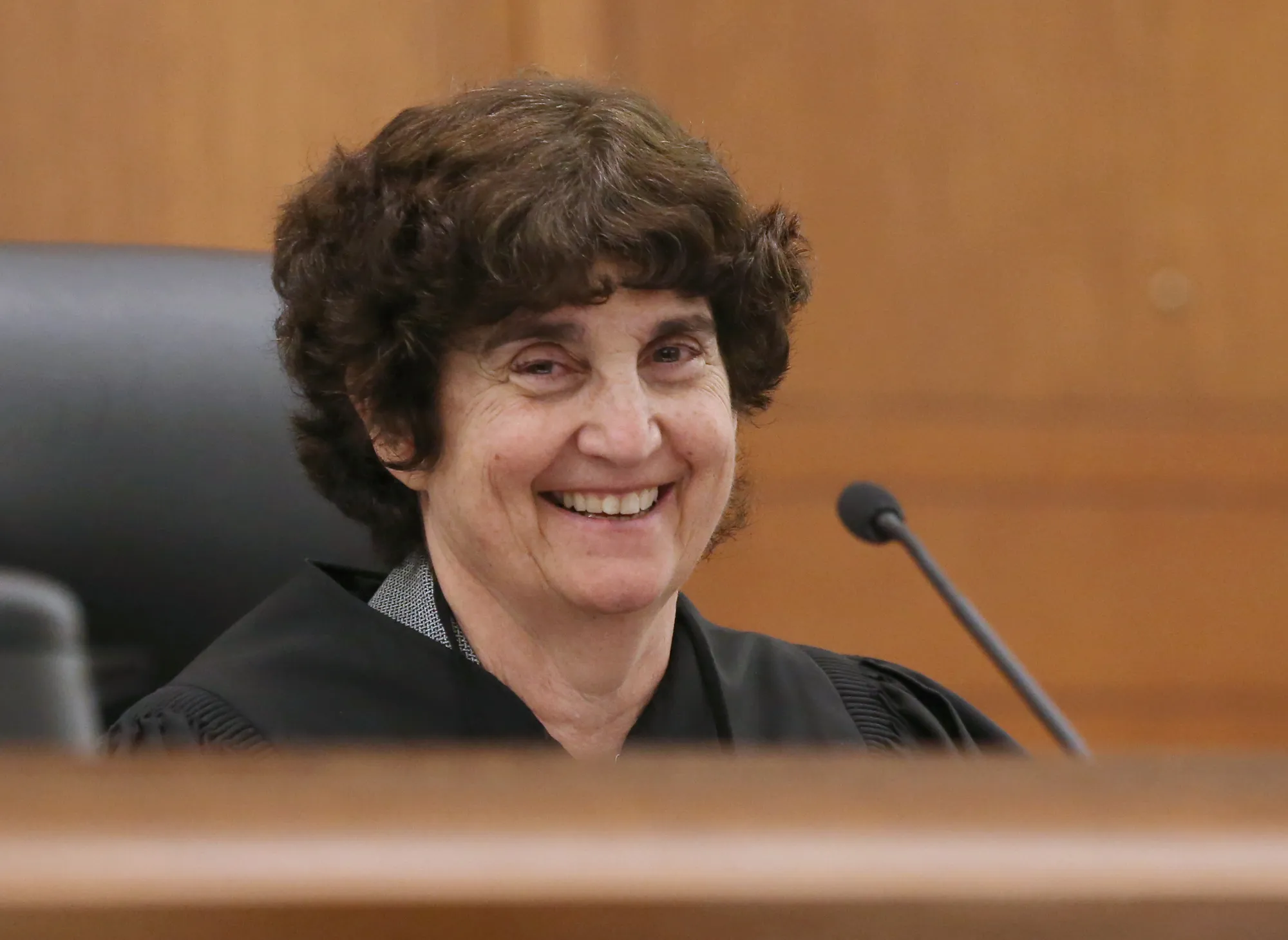
Murphy was the second jurist in Massachusetts to temporarily block a TPS termination effort. Senior U.S. District Judge Patti Saris also entered an administrative stay that temporarily preserved TPS protections for South Sudanese nationals, emphasizing that her order was intended to maintain the status quo while she considered whether plaintiffs could amend their case after the Supreme Court’s TPS decision. She described the stay as “not a ruling on the merits.”
DHS response and the ignore-courts debate
Executive officials sharply criticized Judge Murphy’s stay. DHS General Counsel James Percival accused the judge of defying the Supreme Court, calling it “mutiny” in a post on X. Percival also pointed back to an earlier dispute involving Murphy and deportation flights, including a May 2025 order that, in DHS’s telling, forced a deportation flight headed for South Sudan to land in Djibouti. DHS said that situation left ICE personnel at a U.S. military base in Djibouti, where officials described risks including malaria exposure and the threat of rocket attacks from terrorist groups in neighboring Yemen.
At the same time, some public commentators urged the administration to disregard the district court orders altogether.
That is where it helps to slow down and remember the basic constitutional structure. In our system, court orders are not optional simply because the executive branch disagrees with them. The executive may appeal, seek a stay from a higher court, or argue that the lower court exceeded its authority. But the idea of simply ignoring a federal court order collides with the rule of law and with the judiciary’s role under Article III.
What the clash shows
This episode is not just about one immigrant group or one judge. It is a live illustration of how separation of powers works in practice.
1) The Supreme Court sets boundaries, not every answer
The Supreme Court’s TPS decision limited a common legal vehicle, APA challenges. It did not necessarily eliminate every possible claim tied to TPS terminations. That means lower courts still have work to do, especially where plaintiffs pivot to constitutional arguments.
2) District courts deal with immediacy
Removal is often irreversible in a practical sense. Even if a person could later win in court, being removed now can make it impossible to meaningfully litigate later. Temporary orders like administrative stays are one tool judges use to prevent a case from becoming moot before it can be decided.
3) Enforcement power is not unilateral finality
Immigration enforcement is largely executed by the executive branch through DHS and its components, including ICE. That enforcement power is significant. But when the executive’s actions are challenged in court, enforcement can be slowed, narrowed, or conditioned by judicial orders, at least until higher courts resolve the dispute.
What to watch next
- Whether the amended constitutional claims survive: If the court concludes there is no viable constitutional cause of action, the stay may be lifted.
- Emergency appeals and stays: The administration can ask an appellate court, and ultimately the Supreme Court, to halt a district court’s order while litigation continues.
- How broadly courts read the Supreme Court’s TPS ruling: The line between “APA review is limited” and “no court can do anything” is exactly what the next round of filings will fight over.
For readers trying to make sense of the push and pull, the takeaway is simple: even after the Supreme Court speaks, lower courts often remain the place where the Constitution’s checks and balances are tested in real time, with real consequences for families and for government power.