
When Americans hear the words national emergency, they tend to picture troops, disaster zones, and urgent speeches. But a huge share of modern emergency power is quieter and more technical. It runs through banks, shipping insurers, payment rails, export licenses, and corporate compliance departments.
The statute that makes that possible is the International Emergency Economic Powers Act, usually shortened to IEEPA.
IEEPA is not a general blank check for a president to run the economy. It is a specific delegation of power in a specific situation: an emergency involving an unusual and extraordinary threat from abroad. Still, when presidents invoke it, it can reshape what Americans can buy, sell, invest in, export, insure, and pay for.
Join the Discussion
What IEEPA is
Congress enacted IEEPA in 1977. The goal was to separate peacetime economic emergencies from wartime powers and to put a framework around a kind of presidential authority that had expanded during the Cold War era.
IEEPA lives in federal law at 50 U.S.C. §§ 1701 to 1708. In plain English, it authorizes the president, after declaring a qualifying national emergency, to regulate a wide range of financial and commercial activity involving a foreign threat.
It is statute-focused for a reason: the Constitution does not itself list “sanctions” or “asset freezes” as named presidential tools. What makes those tools routine today is Congress delegating authority and presidents using it.
The trigger
IEEPA does not activate just because something is bad or politically urgent. The statute requires a presidential finding of an unusual and extraordinary threat that has its source in whole or substantial part outside the United States, and that threat must be to the nation’s national security, foreign policy, or economy.
That sounds narrow, but it covers a lot of modern problems: hostile governments, transnational criminal networks, cyber operations, election interference, terrorism financing, and certain global supply chain risks.
How the declaration works
- IEEPA is typically activated through the National Emergencies Act framework. The president declares a national emergency and specifies that IEEPA is being used.
- IEEPA also brings its own requirements. Once invoked, the statute requires reporting to Congress about the actions taken under the emergency authority.
- The proclamation is the key, but it is not the whole machine. The declaration opens the door. The operational rules usually arrive in an executive order that defines targets and prohibited conduct.
The practical effect is that IEEPA becomes the legal engine behind many sanctions programs. The emergency declaration is what turns that engine on.
How it works in practice
Most IEEPA programs follow a recognizable sequence:
- Declaration: the president declares a national emergency tied to a foreign-sourced threat.
- Executive order: the order describes the program, such as country-based restrictions, sector-based limits, or conduct-based targeting.
- Rules: Treasury, usually through OFAC, issues regulations and guidance that define terms, set deadlines, and explain what is allowed.
- Listings and blocks: OFAC may designate people or entities and add them to the SDN List, which triggers blocking and related restrictions.
- Licensing: OFAC issues general licenses (automatic authorizations for defined activity) and specific licenses (case-by-case permissions).
One common real-world example is a bank freezing a transfer because a counterparty is an SDN, then reporting the blocked property to OFAC. Another is a humanitarian organization relying on a general license to send certain permitted aid into a heavily sanctioned jurisdiction.
What powers IEEPA unlocks
Once IEEPA is properly invoked, the president may regulate or prohibit a broad set of transactions involving property in which a foreign country or national has an interest, and related dealings that pass through U.S. jurisdiction. The statute’s language is intentionally expansive. It is designed to reach modern finance and commerce, not just cargo ships and suitcases of cash.
1) Blocking property and freezing assets
The best-known IEEPA tool is the blocking order, often described as an asset freeze. A blocked person’s property and interests in property that come under U.S. jurisdiction cannot be transferred, paid, exported, withdrawn, or otherwise dealt in.
Because much of the world touches U.S. dollars or U.S. financial institutions at some point, an IEEPA blocking order can be devastating. It often functions like a modern economic quarantine.
2) Banning transactions
IEEPA also supports prohibitions on specific transactions: certain services, investments, imports, exports, and payments. Think less like a single “ban” and more like a list of switches a president can flip on and off.
For example, a program might prohibit new investment in a targeted sector, restrict the export of certain technology, or bar U.S. persons from providing particular financial services to a listed entity.
3) Administration and enforcement through Treasury
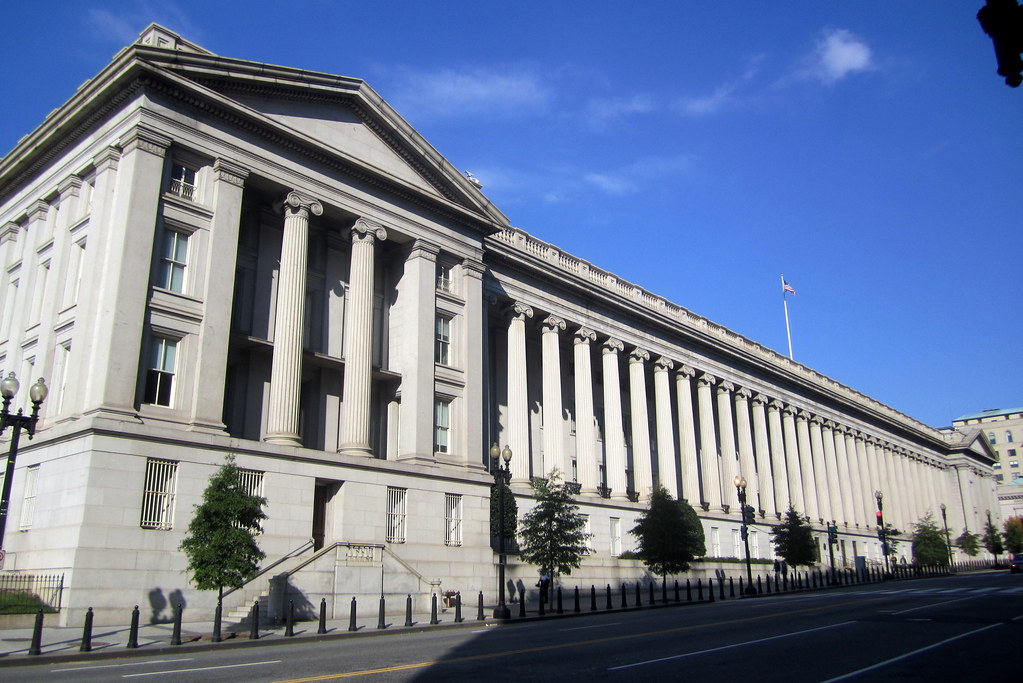
In practice, IEEPA programs are commonly administered and enforced through the Treasury Department’s Office of Foreign Assets Control, known as OFAC. OFAC issues regulations, general licenses, specific licenses, and enforcement penalties.
That structure matters. A president can announce an emergency, but the compliance world lives in the details: definitions, license categories, deadlines, and penalties.
4) Civil and criminal penalties
Violating IEEPA-based regulations can carry significant civil fines and, in some circumstances, criminal penalties. The compliance incentive is not subtle.
What IEEPA does not do
Because IEEPA is so frequently mentioned in breaking news, it can start to sound like a generic presidential economic power statute. It is not. Several limits are built into the law.
Not a general domestic emergency statute
The threat must have a substantial foreign source. That requirement is one of the statute’s constitutional pressure valves. It helps keep IEEPA connected to foreign affairs where Congress and the courts have historically tolerated broader delegations.
Blocking is not confiscation
Blocking freezes property. It does not automatically transfer ownership to the government. Permanent seizure, sometimes described as vesting, generally requires additional legal authority beyond the typical IEEPA blocking framework.
Not a clean tariff statute
Tariffs are usually associated with different legal authorities, including trade statutes that specifically address import duties. IEEPA is written around regulating transactions and property interests related to a foreign threat, not around setting across-the-board import tax rates.
That said, this is a live controversy. Some argue that IEEPA’s broad power to regulate or prohibit certain transactions could be used in tariff-like ways depending on how an order is structured. The stronger claim is the modest one: IEEPA is not designed as general tariff authority, and aggressive uses are likely to be tested in courts and politics.
Carve-outs are real, but narrow
IEEPA includes limitations often called “carve-outs,” including protections for many informational materials and some personal communications. These are not unlimited. The boundaries have an interpretive history and statutory exceptions, and disputes often turn on whether the government is regulating protected information flow or regulating a paid service or transaction wrapped around that information.
IEEPA and sanctions
IEEPA is frequently described as a “sanctions law,” and functionally it often is. But sanctions are a policy tool. IEEPA is a legal framework that makes many sanctions legally possible.
That distinction matters because presidents use IEEPA in different ways:
- Country-based programs that target a government or key sectors.
- Conduct-based programs that target terrorism, cyber-enabled theft, narcotics trafficking, or corruption.
- Entity and individual designations that operate through lists, often with major downstream effects on banks and business partners.
The legal questions also differ. A country-wide restriction raises different issues than an individual designation, and both differ from broad rules that reshape an industry.
Congressional oversight
IEEPA is a delegation. Congress did not disappear. It built oversight into the emergency framework, and it always retains the power to revise or retract what it delegated.
Reporting and transparency
When a president invokes IEEPA, the executive branch must provide reports to Congress describing the authorities exercised and the actions taken under them. In theory, that creates a paper trail that allows oversight to be specific rather than abstract.
Renewal dynamics
IEEPA emergencies often persist because they are renewed annually. Some have lasted for many years because the underlying threat is described as ongoing and because ending the emergency can unwind the legal basis for restrictions already in place.
The hard truth
Oversight is political, not automatic. Congress can hold hearings, restrict funds, amend IEEPA, or pass legislation to terminate or narrow emergency authorities. In practice, terminations and major rewrites are unusual, and the system’s default setting is continuation unless Congress actively intervenes.
How courts police limits
Courts do review IEEPA actions, but they tend to do it with a particular posture: deference in foreign affairs, paired with scrutiny when individual rights, clear statutory limits, or procedural fairness are at stake.
1) Statutory fit
Courts can ask whether the president has identified the sort of foreign-sourced threat IEEPA requires, and whether the challenged action plausibly addresses it.
2) Big power from broad text
Modern administrative law includes an increasing sensitivity to agencies claiming vast power from modest or ambiguous statutory language. Even when IEEPA grants broad authority, litigants often argue that a particular use is too transformative to rest on general language alone.
3) Due process for designations
When the government blocks property or designates individuals and entities, courts may consider what process is due. The executive branch often relies on classified or sensitive information. That creates a recurring tension: national security secrecy on one side, procedural fairness on the other. Due process challenges to designations have been a recurring feature of post-9/11 litigation under IEEPA-linked sanctions programs.
4) Speech and informational materials
Restrictions that touch speech, publishing, or information flow can trigger constitutional concerns, along with the statute’s informational materials carve-out. Disputes in this zone have reached federal courts, including challenges where the government argues it is regulating a transaction or service, while challengers argue the restriction is really about information and communication.
Tariffs and sanctions disputes
Every few years, the same argument resurfaces in a new form.
When presidents face a foreign policy crisis, a supply chain shock, a cyber campaign, or a geopolitical standoff, there is a temptation to use the emergency toolbox for speed and leverage. When critics object, they often say the same thing in different words: this looks like legislating by emergency.
IEEPA sits at the center of that tension because it is both:
- Flexible enough to respond fast, even in a complex global economy.
- Vulnerable enough to be stretched beyond what Congress envisioned.
That is why tariff-adjacent debates and sanctions disputes keep returning to IEEPA. Not because the statute is new, but because the modern presidency keeps discovering new ways to treat economic pressure as a form of national defense.
IEEPA in one glance
- What it is: A 1977 statute letting presidents regulate certain international economic transactions during a qualifying emergency.
- Trigger: A national emergency involving an unusual and extraordinary threat with a substantial foreign source.
- Main tools: Blocking property, prohibiting transactions, licensing systems, and enforcement penalties.
- Key limits: Foreign-source requirement, carve-outs for informational materials and personal communications, and the difference between blocking and confiscation.
- Oversight: Reporting to Congress, renewals, and the possibility of legislative restriction or termination.
- Judicial limits: Courts can test statutory fit, procedural fairness, constitutional rights, and whether the action exceeds delegated authority.
The constitutional question
The Constitution gives Congress power over foreign commerce. It makes the president the nation’s chief diplomat and commander in chief. IEEPA is one of the places where those authorities overlap, and where the modern national security state asks a recurring question:
How much economic power should a president be able to deploy alone, simply by declaring an emergency?
IEEPA answers: a lot, but not everything. It is broad, but not boundless. And because it is statutory, not constitutional, its ultimate shape is not fixed by the Founders. It is fixed by Congress, interpreted by courts, and tested by events.