
When the Supreme Court hears a case, we often picture the big moment as oral argument, the public hour where lawyers and justices volley questions back and forth. It is the most visible part of the Court’s work, and it is also the easiest part to measure.
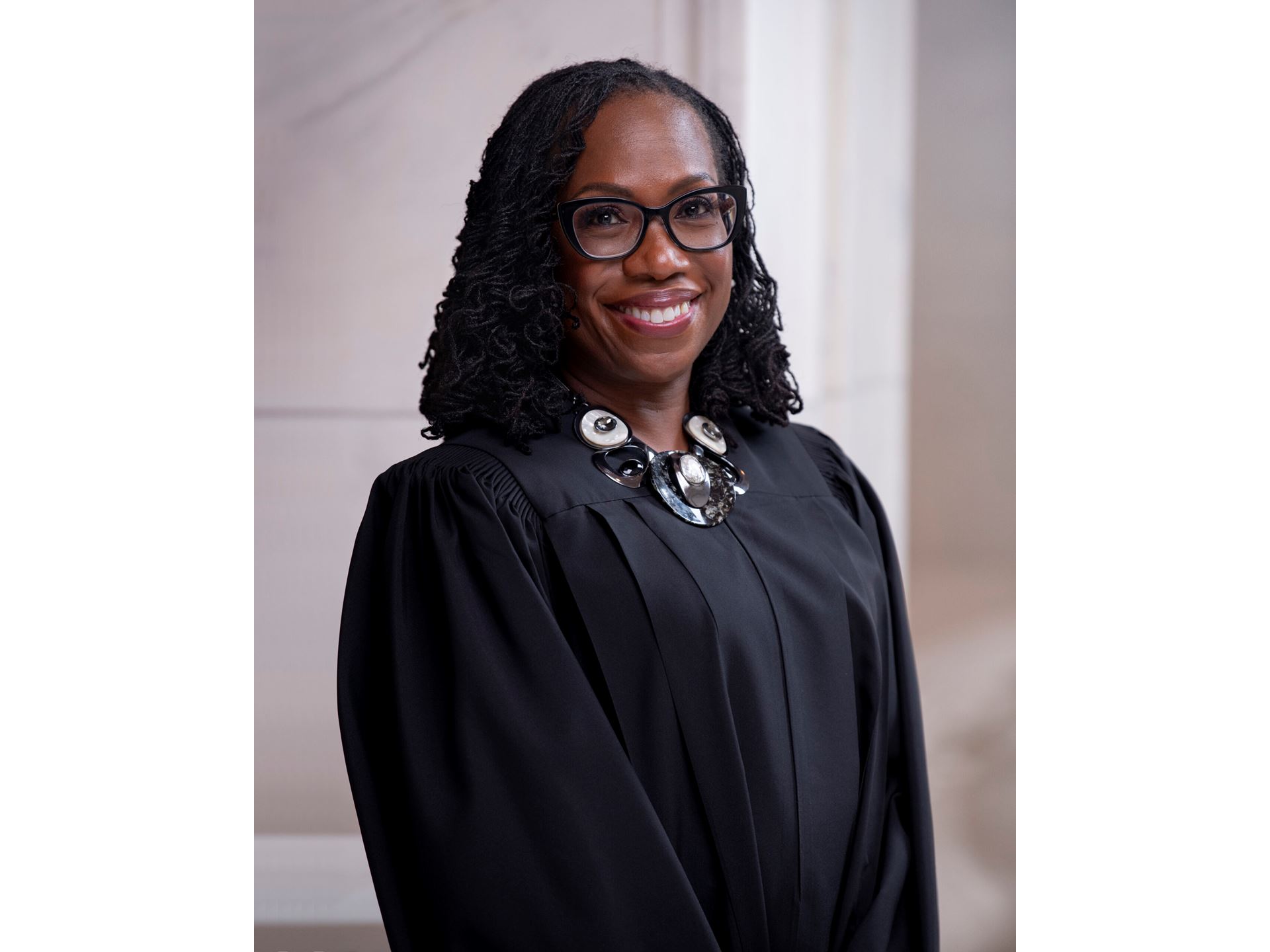
So here is the headline fact: by word count in oral-argument transcripts, Justice Ketanji Brown Jackson has been the Court’s most talkative member, and by a wide margin.
Join the Discussion
Who talks the most?
An analysis of Supreme Court oral-argument transcripts spanning October 2005 through April 2026 found Justice Jackson is “by far the most talkative justice” in that period. In the four short years she has been on the Court, she averaged 1,263 words per case.
To be clear about the metric: “words per case” refers to how many words a justice spoke in the oral-argument transcript for each argued case included in the dataset. Justice Jackson’s figure was described as more than double the justices’ average.
That is not just a little more. It is a different scale of participation. The same analysis credited her with about 23 percent of the words uttered by the justices during oral arguments.
The next-highest average in the overall timeframe went to retired Justice Stephen Breyer, at 818 words per case. In the years Justice Jackson has been on the Court, the second-place spot belongs to Justice Sonia Sotomayor.
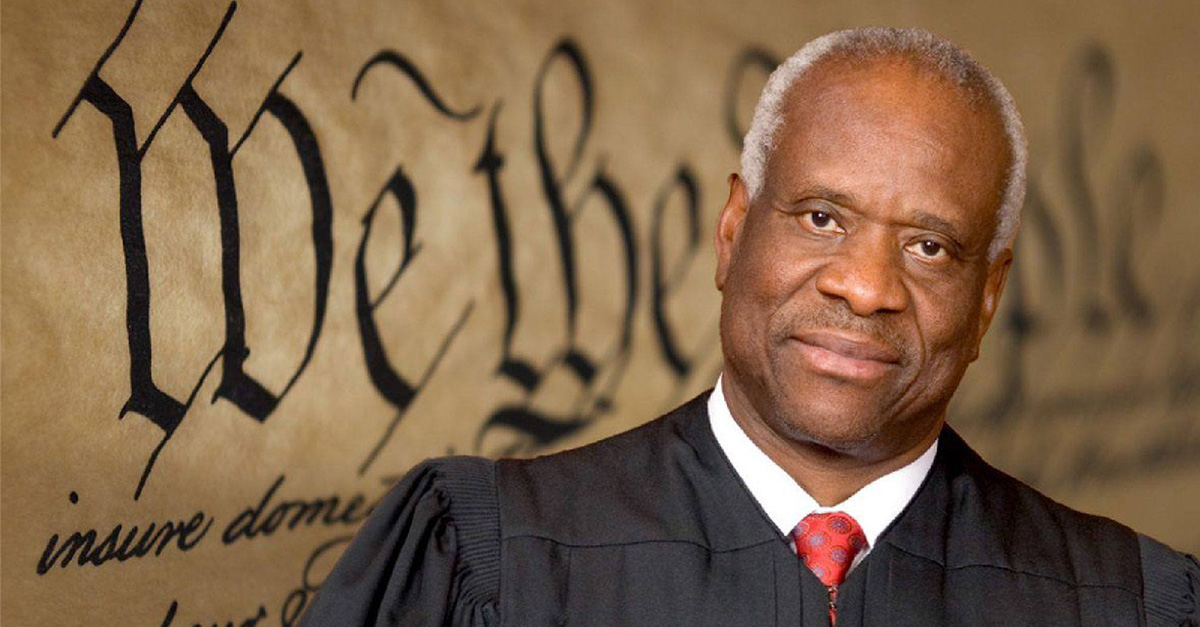
At the other end of the spectrum, Justice Clarence Thomas averaged 16 words per case. Other comparative figures cited in the same breakdown included Justice Brett Kavanaugh at 527 and Justice Samuel Alito at 395.
What it looks like
People sometimes imagine oral argument as nine justices politely taking turns. In reality, it can be rapid and crowded, especially when a justice is pressing a theory or pushing a lawyer to confront a weak spot.
Justice Jackson’s questioning style has drawn attention for long, scenario-driven lines of inquiry. During arguments about birthright citizenship, for example, she posed a scenario about committing a crime abroad and asked what “allegiance” means in that setting: “If I steal someone’s wallet in Japan, the Japanese authorities can arrest me and prosecute me… I’m still locally owing allegiance in that sense.”
Another example highlighted from the same period came during arguments over the use of race in redistricting. In that context, she said states should consider race in the process because black Americans are systemically “disabled” and do not have legitimate access to voting systems.
Why it matters
Word count is a useful signpost, but it is not a full measure of influence. Still, talk time can tell you something about how a justice uses oral argument and what they think it is for.
1) It can be pressure-testing
The justices already have extensive written briefs before they take the bench. Oral argument often becomes a live stress test: pushing the parties to define a rule, defend its limits, and explain how it works in hard cases.
2) Critics say she dominates the time
High participation is not universally viewed as constructive. Critics argue that Justice Jackson has often monopolized speaking time during the Court’s hearings to advance leftist talking points, including what they describe as nonsensical arguments and, in one dispute, “unintelligible commentary.” Supporters, by contrast, view the same long questioning as an effort to force clarity and expose weak assumptions.
3) It can be a way to speak beyond the room
One explanation offered for very high participation is strategic: if a justice expects to be on the liberal losing end of closely watched disputes, oral argument can become an opportunity to reach beyond the courtroom and communicate with the public.
4) Talk time is not a scoreboard
The Court’s decisions are ultimately shaped in conference (the justices’ private meeting after argument) and in the drafting and negotiation of opinions. Those steps are not public, and word counts from oral argument do not tell us who changed whose mind behind closed doors.
A justice can speak rarely in public and still exert enormous influence through strategic voting, careful edits to draft opinions, or building coalitions for a narrow holding.
Beyond the transcripts
The talk-time numbers sit alongside broader controversies that are not really about transcript metrics at all, but still shape how people interpret them. One recurring criticism points to her confirmation hearing, where she said she was unable to define “woman.” Another frames her appointment in “DEI” terms. And another points to her appearance on Michelle Obama’s podcast, raised by critics in connection with concerns about avoiding even the appearance of political bias.
Why some talk less
Low talk time can reflect temperament, strategy, or simply a different view of the job. Justice Thomas is the most famous example of a justice who has often asked few or no questions at argument. But quiet does not mean disengaged. A justice may be listening for a particular concession, watching how an advocate reacts, or saving arguments for internal discussion and writing.
Takeaways
- Justice Ketanji Brown Jackson speaks the most at oral argument by word count, averaging 1,263 words per case in her four years on the bench, and about 23% of justices’ words overall in the measured period.
- The comparisons are stark: Stephen Breyer averaged 818, Brett Kavanaugh 527, Samuel Alito 395, and Clarence Thomas 16.
- Talk time cuts both ways. Critics say she has often monopolized speaking time to advance leftist talking points, including what they label nonsensical or “unintelligible” commentary. Supporters see rigorous probing.
- Oral argument is only one stage. Conference and opinion drafting are where votes harden and legal rules are finalized.
If you want to understand how the Court makes decisions, oral argument is worth watching, but it is best treated like a trailer, not the full film. The real work is the slow process of turning a legal dispute into a rule that will bind the country.
Quick FAQ
Does the most talkative justice control the outcome?
Not necessarily. Outcomes depend on votes and coalitions, and those are cemented through internal deliberation and written opinions, not just questioning from the bench.
Is oral argument mainly for the public?
It serves multiple audiences. It helps the justices probe the arguments, but it also creates a public record of what concerns the Court and which legal principles are under stress.
Why would a justice talk more when they expect to lose?
Because today’s dissent can become tomorrow’s majority view. A justice may use oral argument to frame a disagreement clearly for future litigants, lawmakers, and courts.